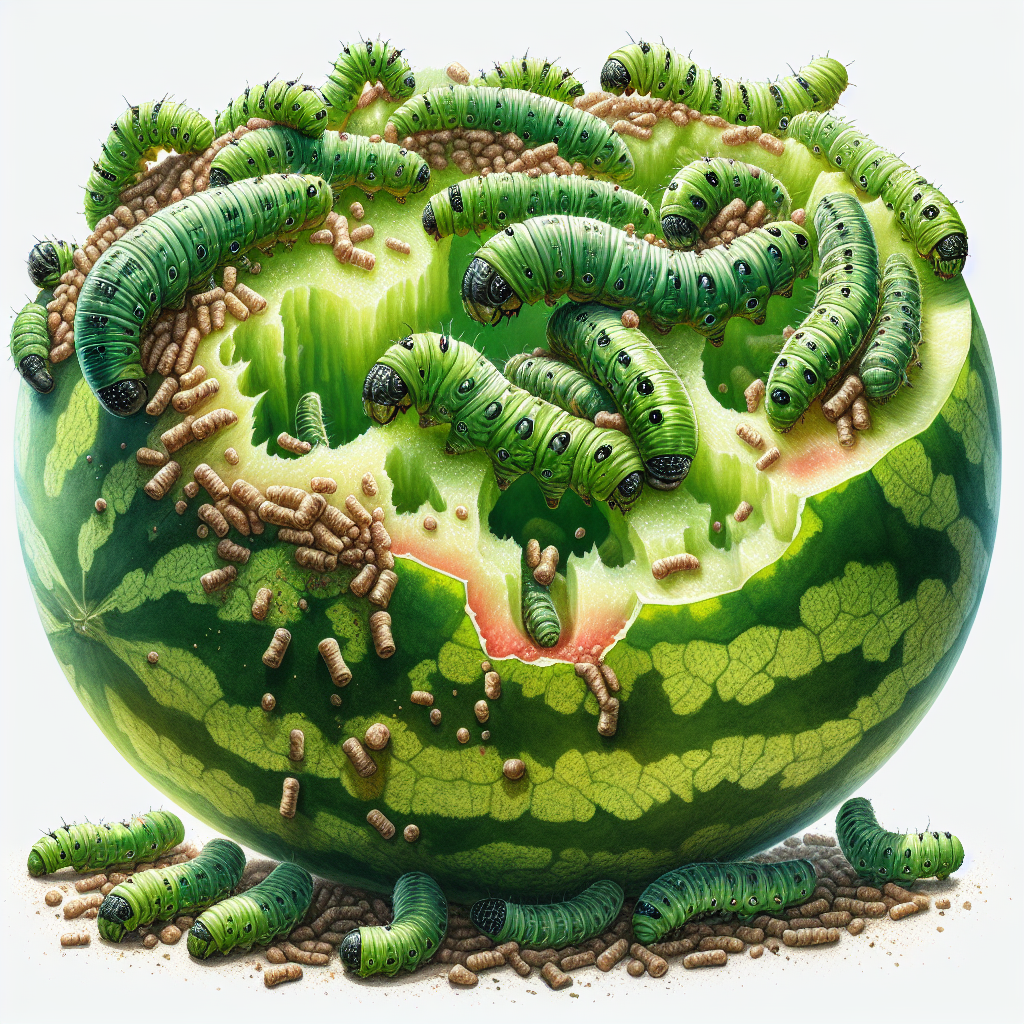
Introduction to Rindworm Caterpillars
Rindworm caterpillars, often referred to as rind-feeding caterpillars, represent a group of destructive larval pests primarily from the Noctuidae family, including species like those in Helicoverpa species and Corn Earworm. These caterpillars specialize in chewing through the tough outer rinds of fruits, gourds, melons, and citrus, leading to scarring, rot entry points, and substantial crop losses. Particularly devastating in warm, humid climates, rindworms can reduce marketable yields by 30-50% in severe outbreaks, making them a top concern for commercial growers of watermelon, cantaloupe, pumpkin, and mango.
Farmers first notice rindworms during fruit development stages, when plump, maturing fruits become prime targets. Unlike foliar caterpillars, these pests focus on the fruit surface, tunneling shallowly under the rind or girdling stems. Early intervention is critical, as mature fruits are most vulnerable. This definitive guide equips agricultural professionals with diagnostic tools, lifecycle knowledge, organic controls, and prevention strategies to manage rindworm populations effectively. By integrating cultural, biological, and organic chemical methods, growers can minimize damage without synthetic pesticides, preserving soil health and market appeal for organic produce. Learn how to spot early signs, disrupt lifecycles, and implement IPM tailored to high-value crops. For small farms, timely scouting paired with Spring Pest Patrol: Organic AI Strategies to Shield Your Crops from Common Invaders can transform pest pressure into manageable challenges.
Identifying Symptoms & Damage
Diagnosing rindworm caterpillar damage starts with visual scouting of fruit surfaces. Primary symptoms include irregular chew marks on rinds—shallow, scalloped grooves 1-5 mm deep, often with frass (dark, pellet-like excrement) nearby. Unlike vine borers that tunnel deeply, rindworms create surface scarring, exposing flesh to secondary pathogens like anthracnose or fruit rots. Heavily infested fruits show girdling around stems, causing wilting or premature drop.
Inspect undersides of leaves and vines for small, greenish-to-brown larvae (1-4 cm long) with dark heads and longitudinal stripes. Entry holes are ragged, not clean like those from pickleworms. Damage peaks at night; use blacklight traps for confirmation. Differentiate from squash bugs (which suck sap, causing yellowing) or cucumber beetles (vectoring bacterial wilt). On Hass Avocado or orange, rindworms leave bronze scarring, reducing grade 1 fruit by up to 40%.
Secondary signs: sooty mold on honeydew excretions, wilting vines from girdling, and increased powdery mildew due to wounds. Quantify damage by sampling 50 fruits per acre: >10% scarred signals action threshold. Use magnification to confirm larvae presence; eggs are white clusters on leaf undersides. Prompt identification prevents escalation, especially in mixed infestations with aphids or mites.
Lifecycle and Progression of Rindworm Caterpillars
Rindworm caterpillars complete 4-6 generations annually in tropical zones, with lifecycle spanning 25-45 days depending on temperature (optimal 25-32°C). Adults are nocturnal moths (3-4 cm wingspan, mottled brown) emerging at dusk to lay 200-500 eggs singly or in clusters on fruit rinds, leaves, or stems. Eggs hatch in 3-5 days into tiny larvae that initially mine leaves before migrating to fruits.
Larval stage (15-25 days) has 5-6 instars: early ones skeletonize leaves, later bore rinds. Full-grown caterpillars (4-5 cm) drop to soil, pupate 5-10 cm deep for 7-14 days. Pupae are reddish-brown, overwintering in mild climates. Progression accelerates in humid conditions; monitor with pheromone traps peaking moth flights.
In cooler areas, diapause extends pupal stage. Multiple overlaps mean all stages coexist, complicating control. Target eggs/young larvae for best efficacy; mature ones are mobile and frass-protected. Understanding this cycle enables timed interventions, like BT applications during peak egg-lay.
Environmental Triggers & Risk Factors
Rindworms thrive in warm (24-35°C), humid (>70% RH) conditions, with outbreaks following mild winters or downy mildew outbreaks reducing natural enemies. Over-fertilization with nitrogen promotes lush rinds, attracting moths; excess irrigation creates moist microclimates ideal for egg survival. Monocultures of squash or cucumber amplify risks, as do nearby corn fields harboring alternate hosts like sweet corn.
Weed hosts (e.g., pigweed, nightshades) serve as reservoirs. Drought stress weakens plants, making rinds softer targets. Windless nights favor moth dispersal. Risk spikes post-rainy season; scout 7-10 days after heavy precipitation. Poor airflow in dense canopies exacerbates humidity. Climate change extends seasons, increasing generations in subtropical zones.
Organic Control & Treatment Plans
Organic management emphasizes IPM: scout weekly, use thresholds (1-2 larvae/10 fruits). Cultural: Hand-pick larvae/eggs at dusk, destroy pupae by tilling. Biological: Release Trichogramma wasps (egg parasitoids) at 100,000/acre; apply Bacillus thuringiensis (BT kurstaki) at 1-2 lbs/acre weekly during larval hatch—targets young instars, safe for bees. Neem oil (0.5-2%) disrupts feeding/molting; spinosad (OMRI-approved) at 4-6 oz/acre for heavy pressure.
Trap crops: Plant perimeter blue Hubbard squash to lure moths. Pheromone traps monitor/disorient adults. Kaolin clay sprays create physical barriers on rinds. Encourage predators like lacewings, birds via hedgerows. Rotate with non-hosts like onion. For pumpkin, row covers until vining. Integrate with caterpillar pests strategies. Reapply post-rain; rotate modes to prevent resistance. Yields recover 80% with consistent plans.
Preventing Rindworm Caterpillars in the Future
Prevention starts with resistant varieties: choose rind-thick butternut squash or honeydew. Crop rotation (2-3 years off cucurbits), clean tillage buries pupae. Reflective mulches deter moths; yellow sticky traps capture adults. Plant nasturtium or marigold as traps. Maintain 4-6 ft alleys for airflow, reducing humidity. Pre-plant soil solarization kills pupae.
Monitor with delta traps (5-10/acre); apply BT preemptively at first flight. Beneficial nematodes (Steinernema carpocapsae) target soil pupae. Avoid broad-spectrum sprays preserving predators. Scout transplants for eggs. Post-harvest, destroy residues. Long-term: diverse rotations with clover, Thai basil. Annual plans cut incidence 70%.
Crops Most Affected by Rindworm Caterpillars
Rindworms devastate Cucurbitaceae: watermelon (40% losses), cantaloupe, cucumber, squash, pumpkin, zucchini. Tropicals like mango, avocado, papaya, guava. Minor on tomato, eggplant, bell pepper, citrus. Global impact: millions in damages yearly.