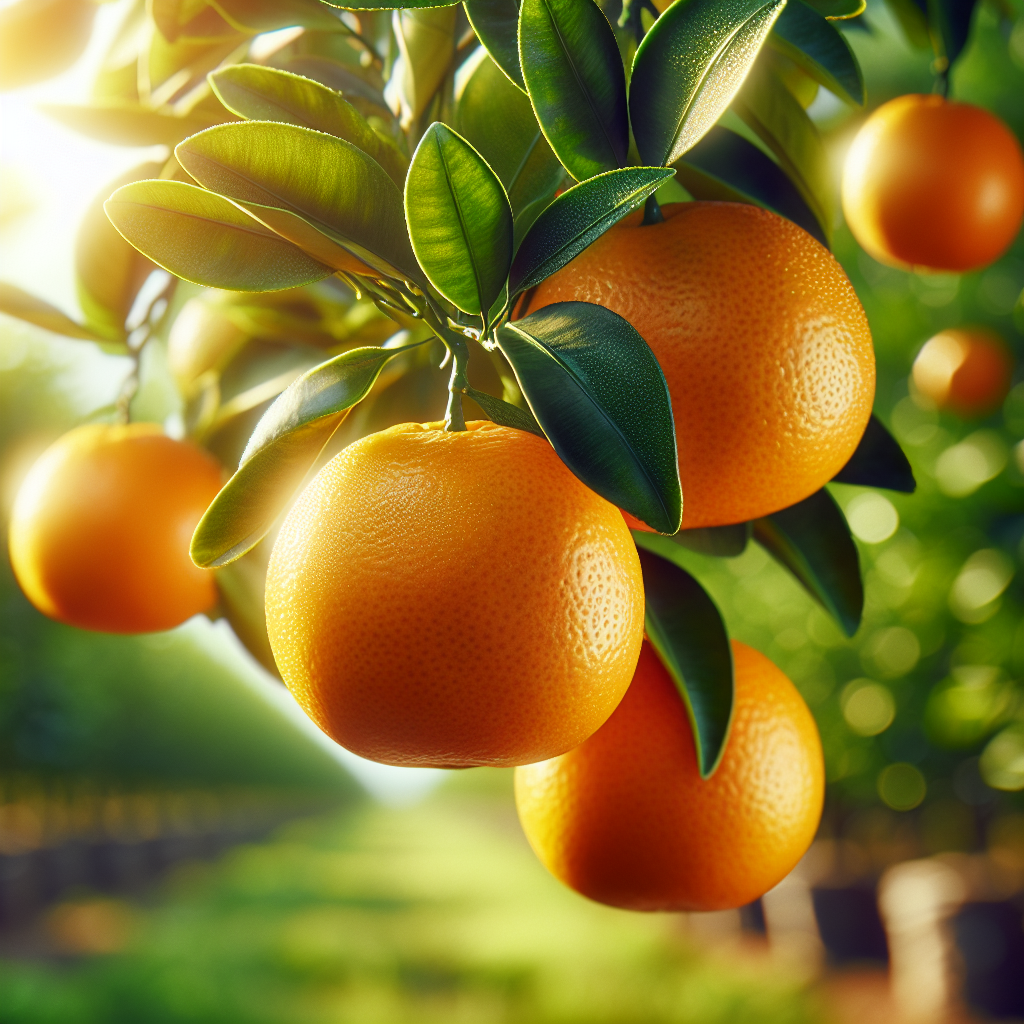
Introduction to Navel Orange
One of the most widely grown fresh-market oranges in the world, this fruit is distinguished by the small secondary fruit embedded at the blossom end, which creates the characteristic “navel.” Navel types are valued primarily for table use rather than juice because they are typically seedless, aromatic, easy to segment, and often develop internal bitterness when held too long after harvest or processed into juice. Historically, modern navel oranges trace back to a mutation selected in Brazil in the 19th century and then disseminated globally through clonal propagation, especially through California’s citrus industry. Because they are sterile and do not come true from seed, every commercial tree is effectively a clone of earlier selections, propagated by budding onto rootstocks chosen for soil adaptation, vigor, salinity tolerance, and disease pressures.
Compared with late-season sweet oranges such as Valencia Orange, navel types generally ripen earlier, produce excellent fresh fruit quality, and command premium prices when color, rind texture, and sugar-acid balance are well managed. Common commercial and home-orchard selections include Washington Navel, Cara Cara, Lane Late, and Navelina, each differing in maturity window, flesh color, rind finish, and climate adaptation.
Botanical Profile of Navel Orange
This evergreen citrus tree belongs to the Rutaceae family. It is a broadleaf perennial with glossy, dark green leaves, winged petioles that are usually narrow in sweet orange types, fragrant white flowers, and a rounded canopy that can reach 4-8 meters tall depending on rootstock, pruning, and planting density. On vigorous rootstocks in deep soils, trees may exceed this range if left unmanaged.
The fruit is technically a hesperidium, with a leathery peel rich in essential oils and segmented pulp inside. Navel types are parthenocarpic or functionally seedless under most growing conditions, which makes fruit quality especially dependent on canopy health and carbohydrate balance rather than seed development. The “navel” itself is a persistent secondary fruit structure formed within the apex of the primary fruit. This is a varietal hallmark rather than a defect.
Flowering usually occurs in spring after a cool rest period or after winter-to-spring warming, though climate and irrigation can shift timing. Citrus blooms on mature wood, and floral induction is influenced by temperature, water status, and tree energy reserves. Navel orange tends toward alternate bearing if heavily cropped one year and inadequately nourished or watered the next. Fruit mature internally before external color always fully develops in warm regions, so harvest decisions should be based on soluble solids, acid ratio, juice content, and flavor rather than rind color alone.
Rootstock selection is a major botanical and agronomic decision. Trifoliate orange and its hybrids improve cold tolerance and often produce high-quality fruit on suitable soils, but they dislike calcareous or saline conditions. Sour orange historically performed well in many citrus regions but is highly vulnerable to tristeza virus. Carrizo and Troyer citranges are widely used in well-drained soils; Cleopatra mandarin and some modern rootstocks are preferred where salinity, calcareous soils, or specific disease pressures are present.
Soil, pH, and Climate Requirements for Navel Orange
Deep, well-drained soil is non-negotiable. Citrus roots require oxygen as much as moisture, and navel orange is especially unforgiving of waterlogging. Ideal soil texture is a sandy loam to loam with good internal drainage, though clay loams can work if raised berms, subsurface drainage, and careful irrigation are used. Avoid sites where water stands for more than 24 hours after heavy rain. Chronic saturation encourages Phytophthora root rot, feeder root death, nutrient lock-up, weak flushes, and poor fruit size.
Optimal soil pH is 6.0-7.0, with acceptable production often possible from about 5.5-7.5. Above pH 7.5, iron, zinc, and manganese deficiencies become common, especially on calcareous soils, causing interveinal chlorosis on young leaves. Below pH 5.5, root stress and imbalances in calcium and magnesium can develop. Before planting, run a full soil analysis including pH, electrical conductivity, cation exchange capacity, organic matter, calcium, magnesium, sodium, chloride, bicarbonates if irrigation water is suspect, and micronutrient status. A leaf analysis program after establishment is even more valuable than soil testing for guiding citrus fertility.
Climate should be frost-light, sunny, and relatively dry during bloom and fruit maturation. Navel orange performs best in subtropical, warm Mediterranean, and some warm semi-arid citrus regions. Ideal annual temperatures are roughly 15-30°C, with best vegetative growth around 25-30°C. Extended heat above 38°C can cause sunburn, leaf curl, rind coarsening, and fruit dehydration, especially when accompanied by hot winds. Mature trees may tolerate very brief dips near -2 to -3°C with damage, but flowers, young fruit, and tender flush can be injured even by light frost. Repeated freezes can kill scaffold wood or entire young trees.
Dry air during flowering can improve pollination conditions generally, but severe desiccating winds reduce flower retention and scar fruit. High humidity combined with warm conditions increases disease pressure, especially for fungal rind diseases and foliar pathogens. Choose a site with full sun, at least 8 hours daily, good air drainage, and protection from prevailing winds. Windbreaks can be helpful, but do not create dense shade or stagnant humidity around the orchard.
Irrigation water quality matters enormously. Citrus is moderately sensitive to salinity. If water electrical conductivity is high or sodium and chloride levels are elevated, leaf burn, defoliation, reduced fruit size, and yield decline may follow. On marginal water, frequent light irrigations are worse than well-managed deeper irrigations because salts accumulate in the active root zone. Leaching fractions and good drainage become essential. For general soil improvement principles, see soil health strategies.
Step-by-Step Planting & Propagation
Commercial propagation is done by budding a chosen navel selection onto a compatible rootstock. Seed propagation is not recommended for true-to-type production because navel orange is a clonal variety and seedlings will not reliably match the parent in vigor, fruit quality, or bearing behavior.
Select certified disease-free nursery stock. This is critical. Buy from a reputable citrus nursery using clean budwood and rootstocks tested for major pathogens. Trees should have a straight trunk, a healthy graft union, no circling roots, no bark cracking, and dense, dark green foliage without chlorosis or pest infestation.
Prepare the site well before planting. Remove perennial weeds, correct drainage, rip compacted layers if present, and form planting berms in heavier soils. Citrus feeder roots occupy the upper 30-60 cm of soil but need depth below that for resilience. If hardpan exists, roots perch and irrigation becomes difficult to manage.
Plant at the correct time. Early spring after frost danger passes is ideal in climates with cool winters. In hotter desert regions, planting in late winter to early spring allows root establishment before summer stress. In mild Mediterranean climates, autumn planting can work if soils remain warm and frost is unlikely.
Space properly. Standard spacing ranges from about 4-6 m between trees and 5-7 m between rows, depending on rootstock vigor, soil fertility, and equipment needs. Smaller garden trees on dwarfing rootstocks may be kept tighter, but airflow and sunlight penetration should not be sacrificed.
Set the tree high rather than low. Plant so the root ball top sits slightly above finished soil grade, especially in heavier soil. Keep the graft union clearly above soil level, typically 10-20 cm above grade. Buried unions can encourage scion rooting and disease problems.
Backfill with native soil. Do not heavily amend only the planting hole; this can create a bathtub effect. Break up root circling gently if container-bound. Water in thoroughly to settle soil and eliminate air pockets.
Create a watering basin or install drip/micro-sprinkler irrigation. Apply enough water immediately after planting to wet the root ball and surrounding soil uniformly. Young trees need frequent but not constant moisture. The goal is evenly moist soil, not saturation.
Mulch carefully. Apply 5-8 cm of organic mulch over the root zone to conserve moisture and moderate soil temperature, but keep mulch 15-20 cm away from the trunk to prevent collar rot and rodent damage.
Protect the trunk. Whitewash exposed trunks in hot climates using diluted interior white latex paint or a commercial tree wrap approach to reduce sunburn. Young citrus bark is thin and easily damaged by heat.
For topworking existing citrus, shield budding or T-budding during active bark slip is standard, though success depends on sanitation, compatible cambial alignment, and post-bud forcing techniques. In regions where citrus greening or quarantine diseases are concerns, topworking should follow local regulations and certified budwood rules.
Care & Maintenance regimes for Navel Orange
Irrigation should be managed by tree age, soil type, evaporative demand, and crop stage. Young trees need a small but consistently moist root zone. In sandy soil this may mean watering 2-4 times weekly during hot weather; in loam, 1-2 deep irrigations may suffice. Mature trees should be irrigated deeply enough to wet most of the active root zone, usually 45-90 cm deep depending on soil. Allow the upper few centimeters of soil to begin drying between irrigations, but do not let the root zone swing from saturation to severe drought.
Practical moisture targets are more useful than vague advice. In coarse soils, irrigate when soil tension approaches roughly 20-30 kPa; in loams, around 30-50 kPa; in heavier soils, before roots experience prolonged oxygen stress or severe drying. Overwatering signs include persistently wet soil, yellowing leaves without clear nutrient pattern, leaf drop, dull canopy color, twig dieback, algae or moss near emitters, sour-smelling soil, and small fruit with poor flavor despite ample water. Underwatering signs include leaf folding, midday wilt that persists into evening, fruit drop, reduced flush length, dry surface cracking in basins, and thickened rind on harvested fruit.
Nutrition is best guided by annual leaf testing, but general citrus principles apply. Young trees need nitrogen for canopy establishment, split into several small applications through the active growing season. Mature bearing trees require balanced nitrogen, potassium, calcium, magnesium, sulfur, and micronutrients. Excess nitrogen causes rampant vegetative growth, delayed color, coarse rind, and greater pest susceptibility; too little nitrogen reduces canopy density, fruit size, and total yield. Potassium is central for fruit sizing and peel quality. Zinc and manganese deficiencies often show as small, chlorotic, narrow leaves; iron deficiency appears first on young leaves in high-pH soils with green veins and yellow tissue between them.
A practical program for home and small orchard trees is 3-5 split fertilizer applications from spring through midsummer, stopping early enough to avoid forcing tender late growth before cold weather. Use citrus-specific fertilizers where possible. Compost can support soil biology, but it is not a complete fertility program for high-yielding citrus.
Pruning is light compared with deciduous fruit trees. Remove dead, diseased, crossing, or low-hanging branches; eliminate vigorous rootstock suckers immediately; and open crowded areas just enough to admit dappled light. Avoid severe canopy thinning because fruit and limbs exposed abruptly to intense sun can sunburn. Navel orange bears well on a natural rounded framework, and overpruning often stimulates unproductive water sprouts.
Fruit thinning is usually unnecessary, but in very heavy set years or on young trees, selective thinning can improve size and reduce limb breakage. Support heavily laden branches if needed. Maintain weed-free strips around the trunk at least through the establishment phase, since grasses compete aggressively for nitrogen and moisture. Cover vegetation in row middles is useful for trafficability and soil conservation, provided irrigation and fertility are adjusted accordingly.
In containers, choose the largest feasible pot with excellent drainage, use a coarse citrus mix, and expect much more frequent irrigation and feeding. Container trees often suffer from salt build-up; periodic leaching is necessary.
Pests, Diseases & Organic Management
The major pests vary by region, but common issues include aphids, citrus leafminer, scale insects, mealybugs, mites, whiteflies, thrips, and fruit flies where present. aphids distort tender flush and can promote sooty mold through honeydew. Leafminer tunnels in young leaves, reducing photosynthetic area and making nursery or young trees especially vulnerable. Scale and mealybugs weaken trees, contaminate fruit, and attract ants that protect them from natural enemies.
Organic management starts with monitoring, not spraying. Inspect flush growth, leaf undersides, fruit stems, and inner canopy every 7-14 days during active growth. Preserve beneficial insects by avoiding broad-spectrum insecticides. Ant control is often the hidden key to biological control because ants disrupt parasitoids and predators. Sticky trunk barriers, bait stations, and habitat management can dramatically improve control of scale and mealybugs.
Horticultural oil is one of the most effective low-toxicity tools for scale, mites, and some soft-bodied pests when applied thoroughly at proper temperatures. Do not spray oils during extreme heat, drought stress, or within incompatible spray intervals with sulfur products. Neem-based products can help suppress small infestations, though coverage and timing are crucial. Flush timing also matters: protecting young leaf flush from leafminer is more effective than reacting late.
Disease risks include Phytophthora root rot and gummosis, Alternaria in susceptible citrus types, greasy spot in humid regions, melanose, citrus canker where present, tristeza virus on susceptible rootstocks, and the devastating bacterial disease huanglongbing (citrus greening) spread by Asian citrus psyllid. Root rot is largely an irrigation and drainage disease. Symptoms include sparse foliage, small pale leaves, twig dieback, weak flush, gummy lesions near the crown, and feeder root loss. The best organic strategy is prevention through drainage, correct irrigation frequency, mulching without trunk contact, and clean nursery stock.
huanglongbing management is region-specific and often regulated. Symptoms can include blotchy mottled leaves, misshapen bitter fruit, lopsided development, poor coloration, and progressive decline. There is no simple cure, so source clean trees, comply with quarantine rules, and monitor for psyllids. Sanitation, vector suppression, and rapid removal of infected material may be required in affected areas.
Birds and rodents occasionally damage ripe fruit or bark. Tree guards, trunk hygiene, orchard floor sanitation, and prompt harvest help reduce losses. Good airflow, balanced nutrition, and sunlight distribution are foundational disease prevention tools. For a broader overview of ecologically based crop protection, see organic farming guide.
Harvesting, Curing & Optimal Storage
Harvest timing is based on eating quality, not just orange color. Navel fruit should reach adequate sugar with sufficient acid reduction to give a bright, balanced taste. Depending on region and cultivar, harvest often begins from late autumn through winter and may extend into early spring. Fruit do not continue ripening significantly after picking in the same way as climacteric fruits, so immature harvest leads to permanently disappointing flavor.
Use pruning clippers or careful twisting to remove fruit without tearing the rind. Avoid long stem stubs that puncture neighboring fruit in bins. Harvest only dry fruit when possible to reduce postharvest rind breakdown and decay. Handle gently; impacts cause invisible oil gland injury that later appears as pitting or breakdown.
Unlike some curing-dependent crops, navel oranges are not “cured” in the classic sense, but postharvest conditioning matters. Fruit should be shaded quickly after harvest and cooled gradually. Optimal storage is generally around 5-9°C with 85-90% relative humidity, though exact temperature depends on local postharvest protocols and intended storage duration. Too warm and fruit lose moisture rapidly; too cold and chilling injury may appear as pitting, off-flavor, or rind discoloration, especially after extended storage.
For home storage, keep fruit in a cool, well-ventilated place rather than sealed plastic. Refrigeration extends life, but fruit are best eaten before prolonged storage dulls aroma and texture. Check regularly and remove damaged fruit because one decaying orange can spread mold in closely packed containers.
A key quality point for this variety is that internal flavor can decline if fruit are held too long on the tree after maturity. Some navel oranges also develop bitterness when juiced and stored, so they are best consumed fresh soon after harvest. If marketing, grade fruit by size, rind smoothness, color uniformity, absence of wind scar, and firmness. Thin rind, high juice content, and rich aroma generally indicate premium eating quality.
Companion Planting for Navel Orange
Useful companions around young orchards and home plantings should support pollinators and beneficial insects, suppress weeds, improve soil cover, or provide light pest disruption without competing heavily with the tree root zone. In citrus, companion planting works best outside the immediate trunk area. Keep at least 45-60 cm around the trunk free of dense vegetation and mulch only lightly against erosion if necessary.
clover is one of the best orchard floor companions because it acts as a living mulch, moderates weed pressure, supports beneficial insects when flowering, and can contribute biologically fixed nitrogen over time. Manage it by mowing before it becomes too competitive in dry periods.
Thai Basil can attract beneficial insects and is especially useful in diversified garden settings where citrus is grown near vegetables and herbs. It prefers warmth and good drainage similar to citrus, though it needs more regular shallow moisture than established trees.
Garlic is often planted in rings or strips away from the trunk to help occupy open soil during the cool season and may deter some pests through strong scent, though its biggest benefit is efficient use of space and added biodiversity rather than a guaranteed repellency effect.
Sunflower can be used on orchard margins as an insectary and wind-filtering seasonal companion, drawing pollinators and predatory insects. Keep it out of the immediate root zone of young trees because of competition for moisture.
Avoid aggressive, thirsty companions directly under the canopy, especially in dry climates. Heavy feeders such as large brassicas or sprawling annuals can interfere with irrigation efficiency and nutrient management. The best companion strategy for citrus is usually a managed, low-competition understory plus diverse insectary plants at the orchard edge rather than dense interplanting right against the trunk.