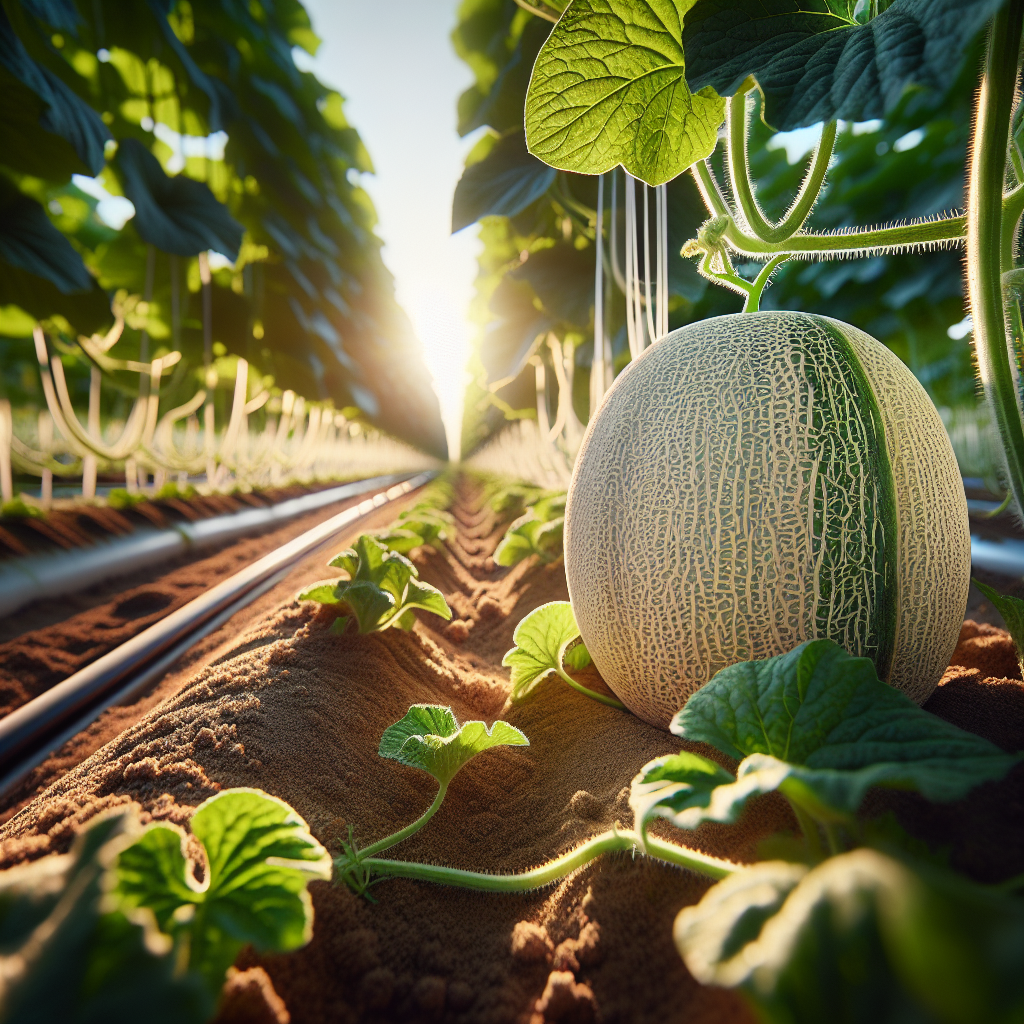
Introduction to Honeydew
Honeydew is one of the most commercially important dessert melons in the inodorus group of Cucumis melo, a category known for relatively late maturity, smooth skin, and better storage life than many netted melons. Unlike aromatic cantaloupes, honeydews are often subtler in fragrance but can develop exceptional sweetness, crisp-juicy texture, and refined flavor when grown under warm days, full sun, and disciplined irrigation. The fruit is typically round to slightly oval, with a creamy white to pale yellow rind at maturity and green, white-green, or occasionally orange flesh depending on cultivar.
Historically, honeydew-type melons are associated with West Asian and Mediterranean melon lineages, and modern commercial selections were refined for shipping durability, uniformity, and sugar content. The inodorus group includes winter melons in the old horticultural sense, meaning they keep longer after harvest rather than being grown in winter. This storage ability makes honeydew especially attractive for market gardeners and small farms seeking a melon with better shelf life than highly perishable muskmelons.
For growers, honeydew sits in an interesting middle ground: it is not difficult in the way some perennial fruit crops are, but it is unforgiving of cold soils, waterlogging, nutrient imbalance, and poor pollination. Many crop failures come not from seed quality but from planting too early, overwatering during fruit ripening, or harvesting before physiological maturity. If managed correctly, honeydew can produce highly marketable fruit with soluble solids commonly reaching 10-16° Brix depending on cultivar, climate, and cultural practices.
Botanical Profile of Honeydew
Honeydew belongs to the family Cucurbitaceae, the same family as cucumber, squash, pumpkin, and watermelon. Growers familiar with cucumber culture will recognize the sprawling vine habit, tendrils, separate male and female flowers, and sensitivity to root-zone stress, though honeydew generally needs a longer warm season and more careful fruit-ripening management.
Key botanical and horticultural traits include:
- Species: Cucumis melo
- Botanical group: Inodorus group
- Growth habit: Warm-season annual trailing vine
- Pollination biology: Monoecious in most cultivars, producing separate male and female flowers on the same plant; insect pollination is essential for strong fruit set
- Root system: Moderately deep but most active roots occupy the upper 20-40 cm of soil, making moisture consistency critical
- Fruit type: Pepo, botanically a specialized berry with a thick rind
- Maturity window: Commonly 75-110 days from sowing depending on cultivar and growing conditions
Honeydew plants typically begin with vigorous vegetative growth, producing long runners and large, rough, lobed leaves. Male flowers usually appear first, followed by female flowers identified by the tiny swollen ovary behind the petals. Fruit size ranges from about 1.5 to 4 kg in many cultivars, though commercial and regional types can exceed this.
Cultivar choice matters greatly. Green-fleshed honeydews are the standard, with flesh color varying from pale celadon to deeper mint-green near maturity. Orange-fleshed honeydew hybrids combine the smooth rind and storage profile of honeydew with richer carotenoid pigmentation. Some cultivars are bred for fusarium resistance, improved uniformity, smaller fruit size for retail markets, or tolerance to hot production zones. In commercial production, the best varieties are chosen not only for flavor but also for rind integrity, resistance package, cavity size, transport tolerance, and consistent sugar accumulation.
Unlike slip-stage muskmelons, honeydew does not detach cleanly from the vine when ripe. This makes harvest maturity more technical. The absence of a strong external signal is one reason professional growers monitor days from pollination, rind color transition, blossom-end feel, and sugar development rather than relying on one visual cue alone.
Soil, pH, and Climate Requirements for Honeydew
Honeydew performs best in fertile, well-drained sandy loam or loam soils with high biological activity and excellent aeration. Heavy clay can work if extensively improved, but poorly drained soils are a major risk because cucurbits are highly susceptible to root stress, oxygen deprivation, and soilborne disease under saturated conditions.
The ideal soil pH is 6.0 to 6.8, with acceptable performance generally between 5.8 and 7.2. Below pH 5.8, nutrient availability can become limiting and root growth slows. Above pH 7.2, iron, manganese, and zinc deficiencies become more likely, especially in calcareous soils. A pre-plant soil test is strongly recommended. Honeydew is a relatively heavy feeder, but it responds best to balanced fertility rather than excessive nitrogen.
Soil structure is just as important as nutrient content. For optimum establishment:
- Aim for soil organic matter around 3-5% where possible.
- Ensure water infiltrates readily but the soil still retains moderate moisture between irrigations.
- Avoid compacted layers, especially in the top 30 cm, because restricted roots reduce fruit size and increase stress during hot periods.
- Raised beds are strongly beneficial in humid climates or on marginally drained land.
Temperature is critical. Honeydew is distinctly warm-season and should never be rushed into cool ground. Seeds germinate best at 25-32°C (77-90°F). Below about 18°C (64°F), germination becomes slow and erratic; below 15°C (59°F), seedling vigor drops sharply. Established plants grow best with daytime temperatures of 24-32°C (75-90°F) and nighttime temperatures above 16°C (61°F). Extended exposure to cool weather reduces growth, delays flowering, and compromises sweetness.
Honeydew requires a long frost-free period, ideally 90-120 warm days depending on cultivar. Full sun is non-negotiable: at least 8 hours of direct light daily is preferred, and all-day sun is best for sugar accumulation. Excess cloud cover during fruit finishing often lowers Brix.
Humidity influences disease pressure and fruit quality. Dry to moderately dry air with good airflow is ideal. In very humid regions, foliar diseases increase and fruit surface disorders become more common. Mulch, spacing, and drip irrigation are especially useful there. In arid climates, fruit quality can be outstanding, but irrigation scheduling must be precise to avoid rapid moisture swings that can lead to bland fruit or cracking.
For broad principles of building resilient growing media and structure, see soil health tips.
Step-by-Step Planting & Propagation
Honeydew is propagated almost exclusively from seed. Direct seeding is standard in warm regions with long summers, while transplants are useful in shorter seasons, though cucurbits dislike root disturbance and must be handled carefully.
1. Select the site and prepare beds
Choose a field or bed in full sun with no recent history of cucurbit disease if possible. Practice at least a 3-4 year rotation away from melons, cucumbers, squash, and other cucurbits to reduce Fusarium wilt, Gummy stem blight, and pest carryover. Form raised beds 15-25 cm high in areas with drainage concerns.
Incorporate well-finished compost before planting, but avoid fresh manure, which can stimulate excessive vine growth and increase food safety risk. Base fertilizer on soil test results. As a general field guideline, many growers target moderate pre-plant phosphorus and potassium with restrained starter nitrogen.
2. Warm the soil before sowing
Plant only when soil temperatures at 5-10 cm depth are consistently above 18°C (64°F), with 21°C (70°F) or higher preferred for fast establishment. Black plastic mulch or biodegradable warming mulch can accelerate early growth in temperate climates.
3. Direct sow or raise transplants
For direct seeding, sow 2-3 seeds per station at a depth of 1.5-2.5 cm. Thin to the strongest seedling once true leaves develop. For transplants, start seeds 2-3 weeks before field setting, not earlier, in individual cells or biodegradable pots to minimize root disturbance. Transplants should be young, stocky, and never root-bound.
4. Space properly
Spacing depends on cultivar vigor and production system:
- Home garden hills: 120-180 cm between hills, 2 plants per hill after thinning
- In-row field spacing: 45-90 cm between plants
- Row spacing: 180-240 cm for sprawling culture
- Trellised protected culture: closer spacing is possible, but fruit support is needed
Crowding reduces airflow, increases disease pressure, and can decrease pollinator efficiency.
5. Mulch and irrigate immediately
After emergence or transplanting, apply organic mulch once soil is warm, or use plastic mulch from the start. Irrigate thoroughly to settle the root zone. The goal is evenly moist but not saturated soil. In practical terms, the top 2-3 cm may dry slightly between irrigations, but the root zone below that should remain uniformly damp during establishment.
6. Support pollination
Because female flowers depend on insect visitation, place plantings near pollinator habitat or maintain managed bees where needed. Poor pollination leads to misshapen fruit, fruit abortion, or very low set.
Care & Maintenance regimes for Honeydew
High-quality honeydew comes from consistency. Wild swings in moisture, fertility, or canopy health almost always reduce fruit quality.
Irrigation management
During early vegetative growth, maintain soil moisture at roughly 65-80% of field capacity in the active root zone. In practical terms, soil should feel cool and lightly cohesive when squeezed, not dusty and not sticky-sodden. Leaves may wilt slightly in intense afternoon heat even when soil moisture is adequate, so always check soil before irrigating.
General irrigation pattern by stage:
- Establishment: Frequent, light-to-moderate watering to keep the seed zone and young roots moist
- Vining and flowering: Deeper irrigation less often, encouraging roots to explore
- Fruit enlargement: Most critical stage for water consistency; avoid drought stress, which reduces fruit size
- Ripening: Slightly reduce irrigation once fruits approach full size to concentrate sugars and reduce watery flesh, but never allow severe wilting
Overwatering signs in honeydew include persistently pale foliage, sluggish growth despite fertility, edema-like leaf issues, root browning, increased stem disease, and fruit with diluted flavor. Underwatering signs include morning wilting, leaf edge scorch, slow fruit expansion, and net carbohydrate stress that lowers yield. Drip irrigation is far superior to overhead watering because it keeps foliage dry and allows exact root-zone control.
Fertility management
Honeydew needs enough nutrition for vigorous vine growth early, followed by strong potassium support for fruit sizing and quality. Excess nitrogen is a common error. It produces lush vines, delayed maturity, fewer female flowers relative to vegetative growth, and lower sugar concentration.
A practical nutrient strategy is:
- Moderate nitrogen early, often split between pre-plant and sidedress/fertigation
- Adequate phosphorus at planting if soil test indicates need, to support root growth and flowering
- Strong potassium availability from pre-bloom through fruit fill
- Calcium and magnesium kept balanced, especially in sandy soils
- Micronutrient correction where tests indicate deficiencies, especially boron and zinc in deficient soils
Foliar feeding can correct minor deficiencies, but the main nutrition program should come through the soil or fertigation. Tissue testing during vining and early fruit set is valuable in commercial systems.
Weed control
Keep the crop weed-free for the first 4-6 weeks, when competition most strongly reduces vine establishment. Once vines run, the canopy suppresses many weeds. Mechanical cultivation should be shallow to avoid damaging feeder roots. Mulching is highly effective.
Pruning and vine management
In open-field culture, pruning is usually minimal. However, in protected or high-value systems, some growers limit fruit numbers or manage laterals for uniformity. If fruit size and premium sweetness are the priority, avoid setting too many fruits per plant in weak conditions. Strong, well-grown plants can support multiple fruits, but overloaded vines often produce smaller, less sweet melons.
Pollination management
Peak bee activity is crucial during flowering. Avoid spraying even organic insecticides during open bloom unless absolutely necessary, and if treatment is unavoidable, apply at dusk after pollinators leave. Misshapen fruits often trace back to incomplete pollination.
Pests, Diseases & Organic Management
Honeydew is vulnerable to a fairly standard cucurbit pest and disease complex, but timing and environmental management make a substantial difference.
Common insect pests
- Aphids: Cause leaf curling, sticky honeydew, and virus transmission. Strong infestations stunt vines and reduce fruit quality.
- Whiteflies: Common in hot climates and protected culture; weaken plants and transmit viruses.
- Cucumber beetles: Feed on foliage and flowers; may vector bacterial wilt in susceptible regions.
- Spider mites: Thrive in hot, dry conditions; stipple leaves, reduce photosynthesis, and can escalate rapidly.
- Thrips: Can damage flowers and tender foliage, and may contribute to virus spread.
- Cutworms and Seedcorn maggots: Threaten emergence and young seedlings.
Organic pest management
- Use floating row cover early, removing it at flowering to permit pollination.
- Maintain field sanitation and remove weed hosts around the crop.
- Encourage beneficial insects with habitat strips and reduced broad-spectrum spraying.
- Apply insecticidal soap or neem-based products carefully for Aphids and Whiteflies, targeting undersides of leaves.
- Use sulfur or biological controls cautiously for mites where appropriate and legal.
- Scout twice weekly during rapid vegetative growth and flowering.
Major diseases
- Powdery mildew: White fungal growth on leaves, common in warm, dry-ish conditions with humid canopies.
- Downy mildew: Angular yellow lesions and gray-purple sporulation beneath leaves, often explosive in humid weather.
- Fusarium wilt: Soilborne, causes one-sided or whole-vine collapse and vascular discoloration.
- Gummy stem blight: Stem lesions, leaf spots, fruit rot, severe under humid conditions.
- Anthracnose: Leaf, stem, and fruit lesions, often spread by splashing water.
- Pythium/Phytophthora root issues: Triggered by saturated soils and poor drainage.
- Viruses: Cucumber mosaic virus, Watermelon mosaic virus, Zucchini yellow mosaic virus, and others can cause mottling, distortion, and deformed fruit.
Organic disease management
- Rotate out of cucurbits for multiple seasons.
- Keep foliage dry with drip irrigation.
- Space plants for airflow and avoid overfertilizing with nitrogen.
- Remove heavily infected vines early to slow spread.
- Use resistant or tolerant cultivars whenever available.
- Apply approved copper, sulfur, potassium bicarbonate, or biological fungicides preventively, not after severe infection is established.
- Sanitize tools and avoid working in the crop when foliage is wet.
The most effective organic strategy is preventive: healthy soil, clean rotation, dry foliage, and regular scouting. Once vine canopies are badly diseased, sugar accumulation and fruit finish decline quickly.
Harvesting, Curing & Optimal Storage
Honeydew maturity is subtle, and this is where many growers lose quality. Unlike cantaloupe, honeydew usually does not “slip” from the vine. Harvest too early and the fruit may soften somewhat after picking but will never reach full flavor or sweetness.
Reliable harvest indicators include:
- Rind color change: Green exterior transitions toward creamy white, ivory, or pale yellow depending on cultivar
- Surface feel: Rind becomes slightly waxier or smoother in appearance
- Blossom end: Develops a slight springiness under gentle pressure in mature fruit, though it should not be soft or collapsing
- Tendril/vine condition: Nearby tendrils may begin to dry, but this is not sufficient alone
- Days from fruit set: Useful for consistency when records are kept
- Brix testing: Professional growers may sample representative fruit to confirm market maturity
Harvest with a clean knife or shears, leaving a short stem stub. Do not yank fruit off the vine, as rind damage and stem tearing reduce storage life. Handle gently; even though honeydew stores better than many melons, bruises invite rot.
Honeydew is not typically “cured” in the same sense as onions or winter squash, but a short postharvest conditioning period in a clean, shaded packing area can help field heat dissipate before storage. Never leave harvested melons baking in the sun.
For best storage:
- Pre-cool soon after harvest if growing in hot weather
- Store at 7-10°C (45-50°F) with 85-90% relative humidity
- Avoid storing below about 5°C (41°F) for extended periods, as chilling injury may occur depending on fruit maturity and cultivar
- Keep away from ethylene-sensitive and ethylene-producing mismatches where practical, though honeydew is less reactive than some fruits
Under good conditions, honeydew may store 2-3 weeks, sometimes longer for firm, well-matured fruit with intact rinds. Cut fruit should be refrigerated immediately and used quickly.
For fresh market sales, harvest at near-full maturity for local customers and slightly earlier, but still physiologically mature, for longer shipping channels. Flavor peaks when fruit reaches full field maturity without over-softening.
Companion Planting for Honeydew
Companion planting for honeydew should be based on agronomy rather than folklore. The best companions are plants that support pollination, help suppress weeds, attract beneficial insects, or fit a sound rotation.
Useful companions include:
- Flowering insectaries near but not inside the melon row: Sweet alyssum, dill, coriander, and other beneficial-attracting flowers can draw hoverflies, parasitoids, and pollinators
- Low-competition herbs at margins: Basil and similar aromatic herbs may support beneficial insect activity if they do not crowd vines
- Early crops harvested before vine run: Lettuce, radish, or short-cycle greens can occupy space temporarily in wider systems if removed before honeydew canopy expands
- Trap or border crops: In some systems, carefully managed borders can help intercept pest movement, though this requires local knowledge
Avoid companions that:
- Compete heavily for water and nutrients
- Shade the vines
- Belong to the cucurbit family and increase shared pest pressure
- Interfere with bee access to flowers
Honeydew also fits well into rotations after legumes or well-managed cover crops that improve tilth without leaving the soil cold and soggy. A living mulch system can work in advanced operations, but only if competition is tightly controlled. In most cases, clean beds with drip irrigation and targeted insectary strips nearby outperform overly crowded polycultures.
When planning companions, think in zones: keep the melon root zone resource-rich and uncrowded, while placing beneficial flowering species on borders, ends of rows, or dedicated strips. This preserves fruit yield and simplifies scouting while still increasing ecological resilience.