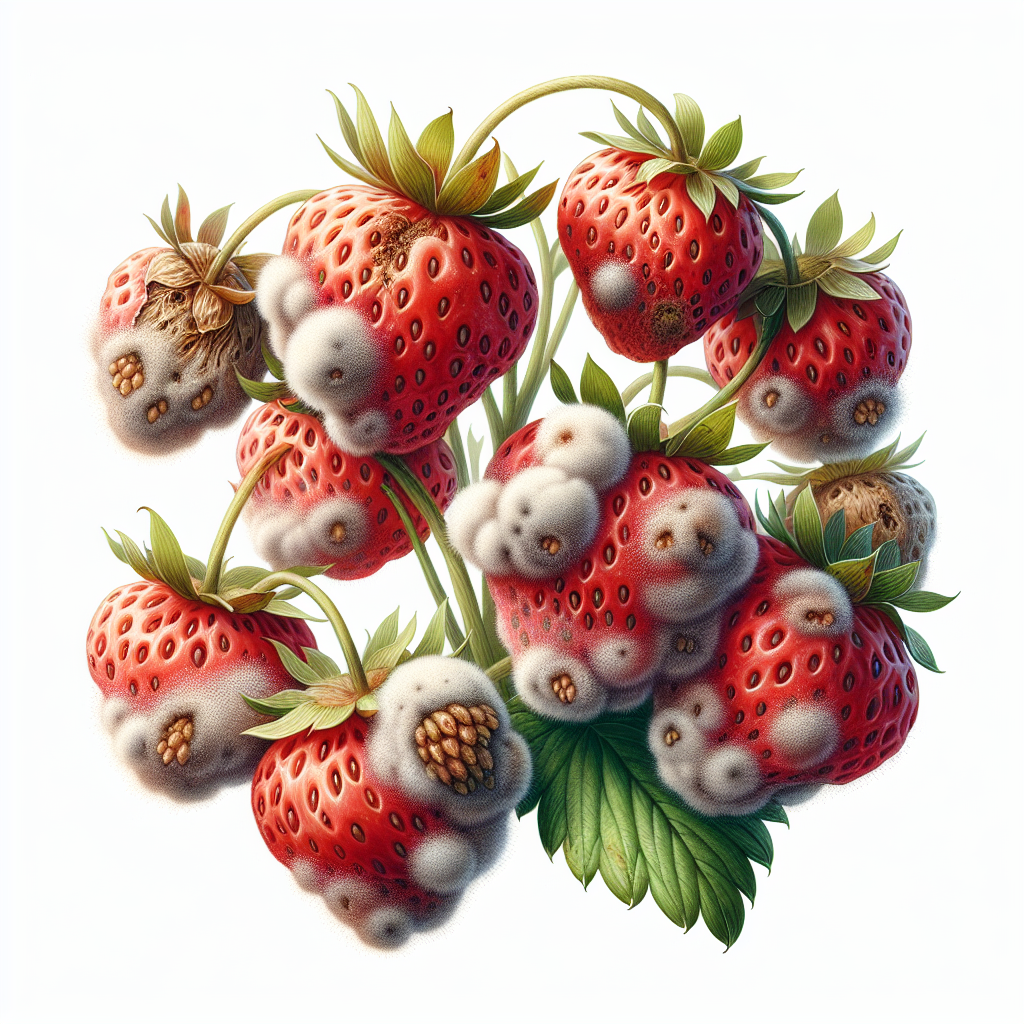
Introduction to Fruit rots
Fruit rots represent one of the most economically damaging disease complexes in fruit production worldwide, affecting everything from backyard berry patches to commercial orchards. These diseases are primarily caused by a suite of fungal pathogens, including Colletotrichum spp. (anthracnose), Botrytis cinerea (gray mold), Phytophthora spp., Rhizopus stolonifer (soft rot), and Monilinia spp. (brown rot), with occasional bacterial involvement. They thrive in warm, humid environments, exploiting wounds, senescing tissues, and overripe fruits to initiate infection.
The impact is profound: pre-harvest rots can destroy 20-80% of yields in severe epidemics, while post-harvest losses compound during storage and transport. For growers of strawberry, grape, tomato, and stone fruits like peach, fruit rots are a perennial threat that demands vigilant monitoring and integrated management. Early detection is key, as infections spread via splashing rain, wind, insects, or contaminated tools, turning a promising harvest into a mushy mess overnight. This guide provides professional-grade diagnostics, organic treatments, and prevention strategies to safeguard your crops. Read our comprehensive Spring Pest Patrol blog post for integrated approaches combining disease and pest control.
Identifying Symptoms & Damage
Accurate diagnosis begins with recognizing the telltale signs of fruit rots, which vary by pathogen but share common themes of tissue breakdown. Initial symptoms often appear as small, water-soaked spots on ripening fruits, progressing to soft, sunken lesions with fuzzy mycelial growth, spore masses, or concentric rings.
- Anthracnose (Colletotrichum spp.): Sunken, dark brown to black lesions with orange-pink spore masses in humid conditions. Fruits of mango, avocado, and papaya show 'pepper spots' that expand rapidly.
- Gray Mold (Botrytis cinerea): Gray, fluffy fungal growth on strawberry, grape, and raspberry. Infected fruits become mushy and emit a musty odor.
- Brown Rot (Monilinia spp.): Brown, firm-to-soft rots with tufts of gray-brown spores on cherry, plum, and peach. Twigs may show blossom blight.
- Phytophthora Fruit Rot: Firm, brown rot starting at the calyx end in tomato and cucurbits like watermelon.
- Rhizopus Soft Rot: Explosive, watery decay with black sporangia, common post-harvest on wounded fruits.
Damage extends beyond aesthetics: rotted fruits drop prematurely, contaminate healthy ones, and serve as reservoirs for secondary pathogens like soft rots. Yield losses can exceed 50% in strawberry fields with prolonged wet weather. Differentiate from physiological issues like blossom end rot (dry, leathery) or pest damage from fruit flies (entry holes). Use a hand lens to spot mycelium or spores, and submit samples for lab confirmation if unsure.
Lifecycle and Progression of Fruit rots
Fruit rots follow a predictable lifecycle tied to fruit maturity and weather. Pathogens overwinter as mycelium in mummified fruits, cankers, or soil, producing vast spore quantities (up to 10^9 per lesion) in spring.
- Dormancy: Survives in crop debris, soil, or alternate hosts.
- Spore Production: Conidia or sporangia form on infected tissues during warm (20-30°C), wet periods (>12 hours leaf wetness).
- Dispersal: Rain splash, wind, insects, or tools carry spores to healthy fruits.
- Infection: Germination occurs in wounds or through natural openings; latent infections activate at veraison (color change).
- Progression: Lesions expand 1-5 cm/day, fruits collapse, releasing more spores.
- Cycle Repeat: Secondary infections amplify epidemics.
In grape, Botrytis enters via micro-cracks during bunch closure; in tomato, Phytophthora zoospore swimming infects during rain. Progression accelerates post-veraison, with full crop loss in 7-14 days under optimal conditions. Understanding this cycle underscores the need for pre-bloom sanitation.
Environmental Triggers & Risk Factors
Fruit rots are facultative saprophytes, exploding under specific conditions:
- High Humidity/Rain: >90% RH and frequent wetting events favor spore germination.
- Warm Temperatures: 22-28°C optimal for most pathogens.
- Dense Canopies: Poor airflow traps moisture; common in overcrowded apple or orange orchards.
- Fruit Wounds: Hail, insects like aphids, or mechanical injury provide entry.
- Excess Nitrogen: Soft, succulent growth is susceptible.
- Overripe Fruits: Natural senescence triggers infection.
Risk spikes during rainy summers or in low-lying, poorly drained fields. Susceptible varieties like susceptible strawberry cultivars amplify losses. Soilborne Phytophthora thrives in waterlogged clay soils.
Organic Control & Treatment Plans
Organic management emphasizes prevention but includes curative options:
- Sanitation: Remove and destroy infected fruits/debris immediately. Prune for airflow.
- Biologicals: Apply Trichoderma spp. or Bacillus subtilis (e.g., Serenade) pre-bloom and post-rain to outcompete pathogens.
- Biopesticides: Copper hydroxide/oxychloride (e.g., Cueva) at 1-2 gal/acre, 7-day intervals. Rotate with potassium bicarbonate.
- Bicarbonates: For grape Botrytis, MilStop at 2-4 lbs/acre.
- Neem Oil: Suppresses spore germination; apply with hort oil.
- Post-Harvest: Dips in 1% baking soda or hot water (48°C for 20 min) for small batches.
Treatment Protocol:
- Scout weekly from bloom.
- Apply at 10% incidence threshold.
- Rotate modes of action.
- Integrate with Botrytis management.
For tomato, stake for drying; in strawberry, mulch with straw. Yields can recover 70% with timely intervention.
Preventing Fruit rots in the Future
Long-term prevention builds resilient systems:
- Resistant Varieties: Plant 'Jewel' strawberry, 'Chandler' strawberry, or disease-tolerant grape.
- Site Selection: Well-drained slopes, full sun.
- Canopy Management: Prune 20-30% wood annually; thin clusters.
- Irrigation: Drip only; avoid overhead.
- Mulching: Suppresses splash; 3-4 inches organic matter.
- Nutrition: Balanced K/Ca; avoid excess N.
- Crop Rotation: 3-4 years away from host.
- Monitoring: Use weather-based models for spray timing.
Annual cleanup reduces inoculum 90%. Combine with powdery mildew controls for synergy.
Crops Most Affected by Fruit rots
Berries: Strawberry (Botrytis/leather rot), blueberry, raspberry, blackberry.
Tree Fruits: Apple (Bitter rot), peach, cherry, plum, pear.
Citrus/Subtropicals: Orange, mango, avocado.
Vines: Grape (bunch rot).
Vegetable Fruits: Tomato, cucumber, watermelon.
Global losses exceed $10B annually, hitting small farms hardest without IPM.