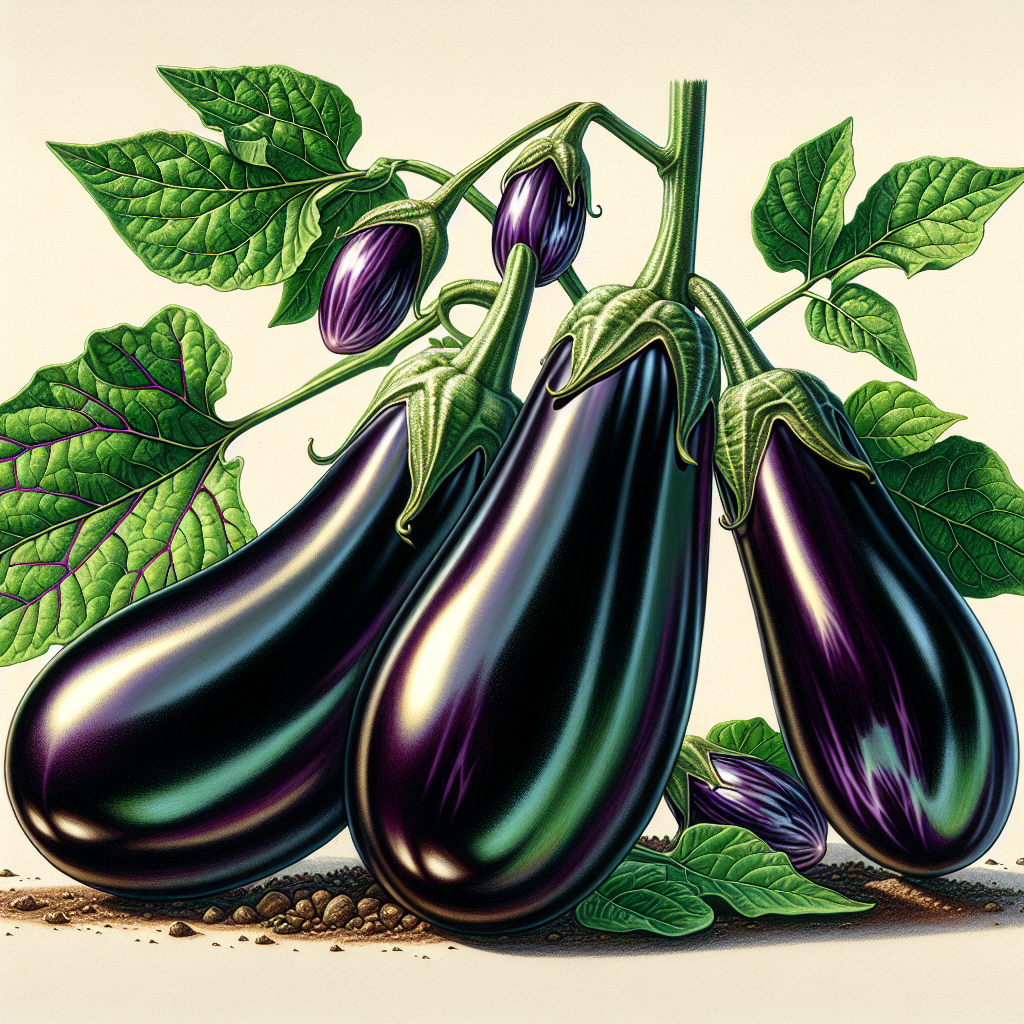
Introduction to Black Beauty Eggplant
Black Beauty Eggplant (Solanum melongena 'Black Beauty') stands as one of the most beloved heirloom varieties among gardeners and commercial growers alike. Introduced in 1902 by Burpee Seeds, this open-pollinated cultivar has earned its timeless reputation through exceptional vigor, high yields, and fruits that embody the quintessential eggplant shape and flavor profile. The plants produce glossy, deep purple-black skins encasing creamy white flesh that's remarkably mild and low in bitterness, even without the need for traditional salting methods.
What sets Black Beauty apart is its adaptability and productivity. Mature plants can reach 2-3 feet tall and wide, bearing 8-12 inch long, pear-shaped fruits weighing 1-2 pounds each. A single healthy plant can yield 6-10 fruits over a 2-3 month harvest window, making it a powerhouse for small farms and home gardens. Its disease resistance, particularly to common Eggplant (crop) issues like Verticillium wilt, adds to its appeal. For detailed cultivation strategies, check out this Why Companion Planting Feels Like Guesswork for Small Farms - And How AI Makes It Foolproof.
Nutritionally, Black Beauty eggplant is low in calories (25 per cup) but rich in fiber, antioxidants like nasunin, and essential vitamins such as K, C, and B6. It's a staple in Mediterranean, Middle Eastern, Indian, and Asian cuisines, versatile for baba ganoush, ratatouille, curries, or simply grilled with olive oil. Growers appreciate its market appeal—uniform size and striking color command premium prices at farmers' markets.
Botanical Profile of Black Beauty Eggplant
Black Beauty belongs to the Solanaceae family, sharing kinship with Tomato (crop), Bell Pepper (crop), and potato. As an annual in temperate zones (perennial in frost-free tropics), it features an upright, bushy growth habit with large, lobed green leaves covered in a starry pubescence. Stems are stout, often tinged purple, supporting a canopy that demands staking or caging for fruit-laden branches.
Flowers emerge from leaf axils: large (1.5-inch), pendulous lavender-purple stars with fused petals and prominent yellow anthers forming a cone. These are perfect flowers (both male and female parts), primarily bee-pollinated, though self-fertile. Fruit set peaks in warm weather (75-90°F days), with pollination faltering below 65°F or above 95°F.
Fruits develop rapidly, expanding from pinhead size to harvest maturity in 65-80 days from transplant. The calyx remains green and pointed, clasping the fruit base. Botanically a berry, the flesh contains few to no seeds in prime specimens, with a thin, edible skin. Varietal purity is maintained through open pollination, though isolation (100+ feet) from other eggplant types prevents crossing.
Root systems are fibrous and deep (up to 3 feet), demanding loose soil for optimal nutrient uptake. Black Beauty exhibits moderate heat tolerance but poor cold resilience—seed germination requires 75-90°F soil temps, and transplants perish below 50°F.
Soil, pH, and Climate Requirements for Black Beauty Eggplant
Thriving in fertile, well-drained loams, Black Beauty eggplant demands soil rich in organic matter. Optimal texture is sandy loam or silt loam with 3-5% organic content; heavy clays compact roots, while pure sands leach nutrients. Incorporate 2-4 inches of aged compost or well-rotted manure pre-planting to boost tilth and microbial activity.
pH range: 6.0-6.8, with 6.5 ideal. Test soil annually; amend acid soils with dolomitic lime (1-2 lbs/100 sq ft) applied 4-6 weeks prior. Alkaline soils (>7.2) benefit from sulfur or peat moss. Eggplant's shallow feeder roots excel in soils testing 150-200 ppm N, 50-80 ppm P, 200-300 ppm K at planting—avoid high N to prevent lush foliage at fruiting's expense.
Climate sweet spot: USDA zones 5-11, with 70+ consecutive frost-free days. Day temps 70-90°F, nights >60°F. Full sun (8+ hours) essential; less yields leggy growth and small fruits. Humidity tolerance high, but stagnant air fosters foliar diseases—aim for breezy sites. Mulch with straw or black plastic to retain moisture and suppress weeds, maintaining 1-1.5 inches weekly irrigation.
In cooler climates (zone 5-6), use black plastic mulch, row covers, or season extenders. Heaters or high tunnels boost production in marginal areas. Drought stress reduces fruit set; consistent moisture prevents blossom-end rot.
Step-by-Step Planting & Propagation
Seed Starting (6-8 weeks pre-last frost): Sow ¼-inch deep in 72-85°F plug trays using soilless mix (e.g., 50% peat, 30% perlite, 20% vermiculite). Germination: 7-14 days. Thin to 2-3 inches; harden off over 7-10 days.
Direct Sowing (frost-free zones): Plant ½-inch deep, 18 inches apart in rows 30-36 inches. Not recommended north of zone 8 due to slow establishment.
Transplanting: Acclimate 6-8 week, 6-8 inch seedlings post-frost. Space 24-36 inches in rows 36-48 inches. Harden holes 6 inches deep/wide, amended with compost. Set deep (bury stem to first leaves) for robust roots. Water deeply post-plant.
Propagation Alternatives: Stem cuttings (4-6 inches) root in perlite under mist; save seed from ripe fruits (ferment pulp 3 days, dry, store cool/dark).
Spacing Yields: 18x30 inches = 10,000 plants/acre, ~20-30 tons potential.
Care & Maintenance regimes for Black Beauty Eggplant
Watering: Deep, infrequent—1-2 inches/week. Drip irrigation ideal; avoid overhead to prevent disease. Mulch 3-4 inches suppresses evaporation.
Fertilization: Side-dress 4-6 weeks post-transplant: 5-10-10 at 1 lb/100 sq ft. Foliar calcium (Epsom salts) curbs blossom-end rot. Rotate with legumes to fix N.
Support: Stake or cage at 12-18 inches tall; fruits weigh branches heavily.
Pruning: Pinch tops at 24 inches for bushiness; remove suckers below first flower cluster. Thin flowers if overloaded.
Weeding: Shallow cultivation until mulch established; fabric suppresses effectively.
Monitor growth: 50-60 days to first bloom, 65-80 to harvest.
Pests, Diseases & Organic Management
Pests: Aphids cluster undersides—blast with water, release ladybugs, neem oil. Flea beetles skeletonize leaves—row covers, diatomaceous earth. Hornworms devour foliage—Bt kurstaki. Spider mites—mitigate with predatory mites, insecticidal soap.
Diseases: Verticillium wilt—resistant variety, but rotate 4 years. Powdery mildew—improve air flow, potassium bicarbonate spray. Blossom end rot—consistent Ca/Mo. Bacterial spot—copper sprays, sanitation.
Organic IPM: Scout weekly, trap crops (marigold), beneficials. For more, see Spring Pest Patrol: Organic AI Strategies to Shield Your Crops from Common Invaders. Avoid nightshade family rotation partners.
Harvesting, Curing & Optimal Storage
Harvest when fruits are glossy, firm, thumbprint rebounds—65-80 DAP. Cut with shears, leave 1-inch stem. Yield: 8-12 fruits/plant. Overripe fruits seedy, bitter.
Curing unnecessary; use fresh. Refrigerate 1-2 weeks at 45-50°F, 90% RH. Freezes well (blanch, cube), dries (slices), or pickles.
Market tips: Cluster harvest, grade uniform. Peak flavor at 1 lb.
Companion Planting for Black Beauty Eggplant
Benefits pollinators, deters pests, optimizes space. Good: Thai Basil repels hornworms; beans fix N; peppers/marigolds confuse beetles; onions/garlic deter aphids.
Avoid: Potato, tomatoes, peppers (disease shared); fennel.
Layout: Eggplant central, basil/legumes edges. Interplant Nasturtium traps. For mastery, explore Fall Companion Planting Guide: Boost Yields and Soil Health for Small Farms and Gardens.
Trap crops: Collards for cabbageworms.