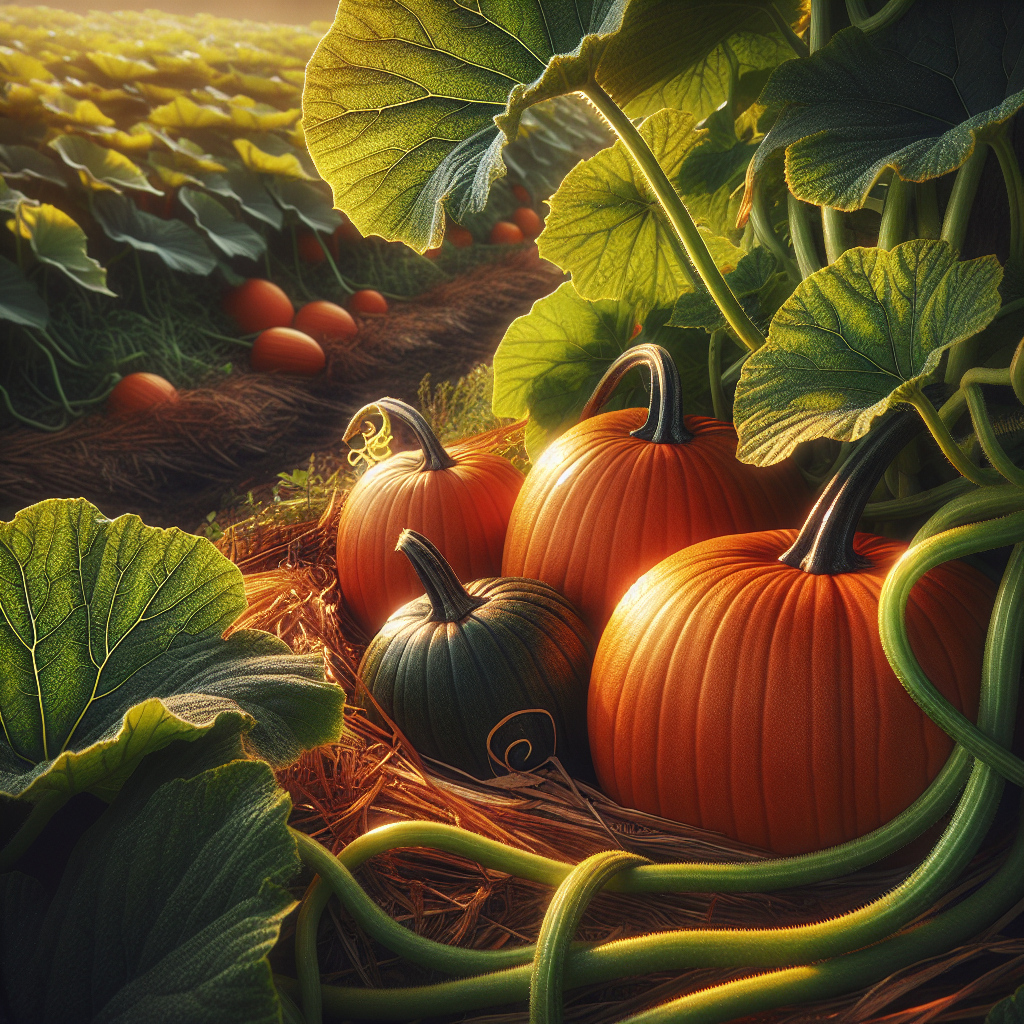
Introduction to Pumpkin
Pumpkin is one of the oldest domesticated food crops in the Americas, with archaeological evidence showing cultivation thousands of years before modern agriculture. Although many growers use the word “pumpkin” as a market category, it actually includes several species and a wide range of fruit shapes, rind colors, flesh textures, and storage behaviors. Some types are bred for pies and dense orange flesh, some for carving, some for seed production, and others for giant-fruit competition.
From a production standpoint, pumpkin behaves like a vigorous warm-season vine with high demand for sunlight, space, potassium, and pollinator activity. It is closely related to winter squash, and in many cases the distinction is commercial rather than botanical. For growers, the practical differences matter: pie pumpkins are usually smaller, sweeter, and finer-textured; carving pumpkins are often larger with thinner walls; long-keeping storage types often have tougher rinds and stronger field tolerance.
Pumpkin is widely adaptable but not forgiving of cold soils, waterlogging, or chronic foliage wetness. Where conditions are favorable, it can be highly productive, but quality depends on timing. Fruit set during periods of active bee movement, warm nights, and steady soil moisture usually produces the most uniform harvest. Growers using mixed cucurbit systems may also benefit from understanding related crops such as Squash, since many pest, fertility, and rotation principles overlap.
Botanical Profile of Pumpkin
Pumpkin belongs to the family Cucurbitaceae, the same family as cucumbers, melons, gourds, and squash. The common market term includes three principal cultivated species:
- Cucurbita pepo: includes many field pumpkins, jack-o'-lantern types, some pie pumpkins, and summer squash relatives. These often mature relatively early and show wide variation in fruit shape.
- Cucurbita maxima: includes giant pumpkins and many large-fruited storage types. Fruit can be very large, with softer peduncles and often rich flesh quality in some cultivars.
- Cucurbita moschata: includes certain tropical-adapted or disease-tolerant pumpkins, often with stronger resistance to vine borers and better performance in heat and humidity.
Pumpkin plants are usually monoecious, meaning separate male and female flowers are borne on the same plant. Male flowers appear first and in greater numbers. Female flowers are identified by the miniature swollen ovary directly behind the petals. Flowers open early in the morning and are receptive for only a short period, making bee activity during the first few hours after sunrise especially important.
The root system is relatively shallow in its densest feeding zone, though vines can produce adventitious roots at nodes where they contact moist soil. This means pumpkins respond strongly to surface soil conditions, mulching, and irrigation uniformity. Leaves are broad and coarse, giving the crop excellent ground shading once established, but also creating a humid microclimate that favors foliar disease if spacing is too tight.
Botanically, the fruit is a pepo, a specialized berry with a hard rind. Rind hardness, stem character, flesh thickness, seed cavity size, and dry matter content differ significantly among cultivars. Professional selection should be based on end use:
- Pie pumpkins: 1.5-4 kg fruit, thick sweet flesh, small seed cavity.
- Carving pumpkins: larger fruit, uniform shape, sturdy handles, thinner flesh.
- Seed pumpkins: selected for large or hull-less seeds.
- Processing pumpkins: high solids, deep color, uniform ripening.
- Giant pumpkins: bred for extreme fruit expansion and heavy feeding.
Days to maturity generally range from 85 to 130 days depending on species, cultivar, and weather. Cool weather during fruit fill can delay maturity and reduce rind hardening.
Soil, pH, and Climate Requirements for Pumpkin
Pumpkin performs best in deep, fertile, well-drained loam or sandy loam with strong organic matter content and good water-holding capacity. The ideal soil pH is typically 6.0 to 6.8, though the crop can tolerate slightly broader conditions if nutrient balance is maintained. Below pH 5.8, nutrient availability declines, calcium and magnesium issues become more common, and plant vigor often weakens. Above pH 7.2, micronutrient deficiencies, especially iron and manganese, may appear as interveinal chlorosis on young leaves.
For commercial-quality growth, soil should have:
- At least moderate organic matter, ideally 3-5% in mineral soils.
- Good infiltration without standing water after rain.
- Low compaction in the top 20-30 cm.
- Adequate potassium, because fruit sizing and rind quality are strongly linked to K availability.
Pumpkin is highly sensitive to poor drainage. Even 24-48 hours of saturated root-zone conditions can trigger stunting, yellowing, root rot, and later fruit collapse. If your site puddles after storms, use raised beds or hills. On heavy clay, form beds 20-30 cm high to improve oxygen around roots.
Temperature is a major determinant of success. Seeds germinate best at 25-32°C, though they can sprout more slowly down to about 18°C. Below 15°C, germination becomes erratic and seedlings are vulnerable to damping-off. Established plants prefer daytime temperatures of 22-30°C and nighttime temperatures above 16°C. Growth slows sharply in cool weather, and frost is lethal.
Pumpkin needs a long frost-free season and full sun, ideally 8 or more hours of direct light daily. Fruit set may be reduced when daytime temperatures exceed 35°C, especially if accompanied by hot dry winds that desiccate flowers or suppress bee activity. In tropical lowlands, planting is often timed so flowering avoids the most intense heat and peak disease pressure.
Water demand is moderate to high, especially from vining through fruit enlargement. The target is consistent moisture in the top 20-30 cm of soil. As a practical benchmark, pumpkins usually perform best when soil moisture is maintained near 60-80% of field capacity. In field terms, the soil should feel cool and slightly moist below the surface, not sticky and anaerobic, and not powder-dry. Severe fluctuations between drought and saturation can cause blossom drop, misshapen fruit, cracking, and poor flesh quality.
A pre-plant soil test is strongly recommended. If fertility is weak, improve the site before sowing. For broader soil building principles, see soil health tips.
Step-by-Step Planting & Propagation
Pumpkin is almost always propagated by seed. Direct sowing is preferred in warm soils because cucurbits dislike root disturbance, though transplants can be useful in short-season regions.
1. Select the right cultivar for your purpose. Choose based on maturity length, disease tolerance, market goal, and local climate. In humid regions, prioritize Powdery mildew tolerance and strong field-holding ability. In very warm regions, consider moschata-derived types for better resilience.
2. Prepare the bed. Incorporate well-finished compost or aged manure 2-3 weeks before planting. Avoid fresh manure immediately before sowing, as excessive available nitrogen can create rampant vine growth with delayed fruiting and more disease. Form mounded hills or raised rows if drainage is uncertain.
3. Time sowing correctly. Direct sow only after all frost danger has passed and soil at planting depth is consistently above 18°C, with 21°C or higher being preferable for rapid emergence. In cool regions, start seeds indoors 2-3 weeks before transplanting, using biodegradable pots to reduce root shock.
4. Plant at proper depth. Sow seeds 2.5-4 cm deep in moist soil. Shallower sowing in hot dry weather can dry the seed zone; excessively deep planting slows emergence and increases rot risk.
5. Space generously. Spacing depends on vine habit:
- Bush or semi-bush types: 90-120 cm between plants, 1.8-2.4 m between rows.
- Vining pie pumpkins: 1.2-1.8 m between plants, 2.4-3 m between rows.
- Large carving or giant types: 2-3 m between plants, 3-4.5 m between rows.
In hill planting, sow 3-5 seeds per hill and thin to the strongest 1-2 plants once true leaves develop.
6. Use mulches strategically. Black plastic mulch warms soil, speeds early growth, and suppresses weeds. Organic mulch should be applied only after the soil has warmed, otherwise it can slow establishment. Keep mulch slightly back from the stem base to reduce crown rot.
7. Transplant carefully if needed. Harden seedlings for 5-7 days before planting out. Transplant when they have 1-2 true leaves, not when rootbound. Set the root ball intact and water immediately.
8. Support pollination. Because female flowers open for a short window, low bee activity can dramatically cut yield. In tunnels or isolated gardens, hand pollination in early morning may be useful: transfer pollen from a freshly opened male flower to the stigma of a female flower.
Emergence typically occurs in 5-10 days under warm conditions. Early growth should be steady and deep green; pale or stalled seedlings usually indicate cold stress, root damage, waterlogging, or nutrient imbalance.
Care & Maintenance regimes for Pumpkin
Pumpkin management is fundamentally about balancing vegetative vigor and fruiting. Overfed plants produce enormous vines and few marketable fruits; underfed plants set fruit early but lack the leaf area to size and mature them properly.
Irrigation: During establishment, keep the seed zone evenly moist but never saturated. Once vines begin to run, provide roughly 25-40 mm of water per week, increasing to 40-50 mm per week during fruit bulking in hot weather on lighter soils. Drip irrigation is ideal because it keeps foliage dry and reduces mildew pressure. Water deeply enough that moisture reaches 15-20 cm depth, then allow slight surface drying before the next cycle.
Signs of proper watering include vigorous midday recovery, even leaf color, and steady fruit enlargement. Underwatering shows up as afternoon wilting that persists into evening, dull gray-green foliage, blossom abortion, and fruits that stop sizing. Overwatering causes chronically limp leaves despite wet soil, yellow lower leaves, sour-smelling soil, edema, crown softening, and increased root disease.
Fertilization: Pumpkins are heavy feeders but should not receive excessive early nitrogen. A common professional approach is:
- Moderate nitrogen at planting.
- Side-dress once vines start running.
- Shift emphasis to potassium and balanced fertility during flowering and fruit set.
As a general field guideline, fertile soils may need only modest supplemental feeding, while depleted soils often require staged inputs. Calcium is important for cell integrity and fruit quality, but it must be supported by even moisture because calcium moves with transpiration.
If leaves are pale green and growth is weak, nitrogen may be low. If vines are lush, dark, and excessively long with delayed female flowering, nitrogen is likely too high. Leaf tissue testing during the vegetative-to-flowering transition is useful in intensive systems.
Weed control: Control weeds aggressively for the first 4-6 weeks, before vines cover the ground. After canopy closure, vigorous pumpkins usually suppress later weed flushes. Cultivate shallowly to avoid damaging feeder roots. Organic mulches, stale seedbeds, and landscape fabric around planting holes can all be effective.
Pruning and fruit load management: Most field pumpkins are not heavily pruned, but selective management can improve uniformity. Removing late weak fruit allows the plant to mature a smaller number of higher-quality pumpkins. In giant pumpkin culture, growers often limit to one fruit per vine and bury secondary vine nodes to encourage extra rooting.
Pollination management: Poor pollination causes misshapen, undersized, or aborted fruit. Encourage bees by avoiding insecticide applications during bloom, planting pollinator habitat nearby, and irrigating adequately before flowering. Fruits that swell briefly then yellow and abort usually suffered incomplete pollination.
Monitoring schedule: Walk plantings at least twice weekly. Inspect the crown, undersides of leaves, newest growth, and developing fruit. Early detection is crucial because cucurbit problems escalate fast in warm weather.
Pests, Diseases & Organic Management
Pumpkin shares many threats common to cucurbits, and integrated prevention is far more effective than reactive treatment.
Cucumber beetles are among the most damaging early pests. They chew cotyledons, scar young leaves, attack flowers, and can transmit Bacterial wilt. Use floating row covers immediately after planting where practical, removing them at flowering for pollination. Kaolin clay, trap cropping, and targeted vacuuming or hand removal can help on small plantings.
Squash vine borer is a major issue particularly in Cucurbita pepo types. Larvae tunnel into stems, causing sudden wilt of individual runners or whole plants despite apparently moist soil. Look for frass at the stem base. Preventive row covers, timing plantings to avoid peak flights, and choosing more tolerant moschata genetics are useful. In small-scale systems, stems can sometimes be slit, larvae removed, and the wounded section covered with moist soil to encourage rerooting.
Squash bugs suck sap, causing stippling, wilting, and reduced vigor. Eggs are typically laid in bronze clusters on leaf undersides. Crush eggs early, remove crop debris after harvest, and destroy volunteer cucurbits that act as reservoirs.
Aphids can build rapidly, especially on stressed plants, transmitting viruses and causing curled growth. Strong plants often tolerate low populations, but outbreaks should be controlled with insecticidal soap, neem-based products, or by conserving beneficial insects.
Powdery mildew is the most common late-season disease. It begins as white powdery spots on older leaves and can quickly reduce photosynthesis, exposing fruit to sunscald and reducing sugar accumulation. Prevention includes wide spacing, drip irrigation, good airflow, resistant cultivars, and sulfur or potassium bicarbonate sprays applied early at first detection.
Downy mildew produces angular yellow lesions and gray-purple sporulation under leaves, especially in humid weather. It can defoliate fields rapidly. Avoid overhead irrigation, monitor local alerts, and remove infected residue after harvest.
Phytophthora blight thrives in saturated soils and causes crown rot, vine collapse, and fruit rot where fruit contacts wet ground. This disease is strongly linked to poor drainage and splash dispersal. Raised beds, long rotations, and keeping fruit off saturated soil are essential.
Bacterial wilt causes rapid irreversible wilting, often beginning on single runners. It is vectored mainly by Cucumber beetles, so vector suppression is key.
Viral diseases such as Zucchini yellow mosaic virus, Cucumber mosaic virus, and Watermelon mosaic virus can cause mottling, distorted leaves, and deformed fruit. Control Aphids and beetles, remove infected plants early, and eliminate weed hosts.
Organic management works best as a system:
- Rotate away from cucurbits for 3-4 years where disease pressure is significant.
- Use disease-free seed and adapted cultivars.
- Mulch to reduce soil splash.
- Water early in the day and keep leaves dry.
- Remove cull fruit and infected residue promptly.
- Maintain balanced nutrition; overly lush plants attract sap-feeding insects and are slower to dry after dew.
Harvesting, Curing & Optimal Storage
Harvest timing depends on intended use. For immature use, fruits can be picked young like squash, but most pumpkins are harvested fully mature when rind color is developed, the skin is hard, and the stem begins to cork.
Key maturity indicators include:
- Full characteristic cultivar color.
- Rind hard enough that a fingernail does not easily puncture it.
- Drying or corking stem.
- Dull rather than glossy rind in many cultivars.
- Days-to-maturity reached under normal growing conditions.
Use pruners or a sharp knife to cut fruit, leaving 5-10 cm of stem if possible. Do not carry pumpkins by the stem; broken handles invite rot. Harvest before frost. Even light frost can injure rind tissue and shorten storage life.
Handle fruit gently. Bruises may not be visible at first but often become storage rot within weeks. Keep harvested fruit out of rain and direct intense afternoon sun while awaiting curing.
Curing is critical for long storage. Cure pumpkins at 25-30°C with good ventilation for 10-14 days if conditions allow. This hardens the rind, heals minor surface wounds, and improves shelf life. In humid climates, ensure airflow is strong enough to prevent condensation.
After curing, store at 10-15°C with relative humidity around 50-70%. Higher humidity can encourage surface mold and stem rot; very low humidity causes shriveling and weight loss. Never store pumpkins in refrigeration temperatures near 4°C for extended periods, as chilling injury can develop in warm-season cucurbits.
Storage life varies by species and cultivar:
- Thin-rinded carving pumpkins: often 1-3 months.
- Pie pumpkins: often 2-4 months.
- Some hard-rinded moschata and maxima types: 4-6 months or longer under ideal conditions.
Inspect stored fruit weekly. Remove any pumpkin showing soft spots, stem mold, leakage, or collapsing tissue. Good spacing between fruits and slatted shelving improve air circulation and reduce spread of decay.
Seeds can also be harvested from mature fruit, washed, and dried thoroughly for eating or planting. For seed saving, isolate cultivars adequately because pumpkins cross readily within the same species via insect pollination.
Companion Planting for Pumpkin
Pumpkin fits well into traditional polycultures when the system is designed around light, spacing, and pest ecology rather than folklore alone. The classic example is the “Three Sisters” model, where pumpkin sprawls beneath upright maize and climbing beans. In this arrangement, pumpkin suppresses weeds and shades soil, corn offers vertical structure, and beans contribute biological nitrogen fixation. If using this system, ensure spacing is wider than in ornamental companion beds so pumpkin does not overwhelm young corn. See our Corn guide for compatible growth timing.
Good companion choices include:
- Corn for partial soil shading and structural diversity in broad plantings.
- Beans planted where they will not smother pumpkin crowns.
- Nasturtium, dill, yarrow, and alyssum near field edges to attract beneficial insects.
- Sunflowers on borders, where they can support pollinators without casting too much shade.
- Radish as an early sacrificial trap or quick pre-canopy crop in some gardens.
Avoid pairing pumpkin too closely with other heavy sprawling cucurbits such as melons, watermelons, or vigorous squash unless space is abundant. Shared pests and diseases can amplify quickly in dense mixed plantings. Also avoid shading companions planted to the south of pumpkin rows in the Northern Hemisphere, since mature vines can occupy much more area than expected.
Companion planting works best when combined with sound agronomy: wide airflow, strong pollinator access, disciplined rotation, and residue management. The goal is not merely to mix species, but to create a field environment where soil remains cooler, beneficial insects remain active, and pest outbreaks are slower to spread.