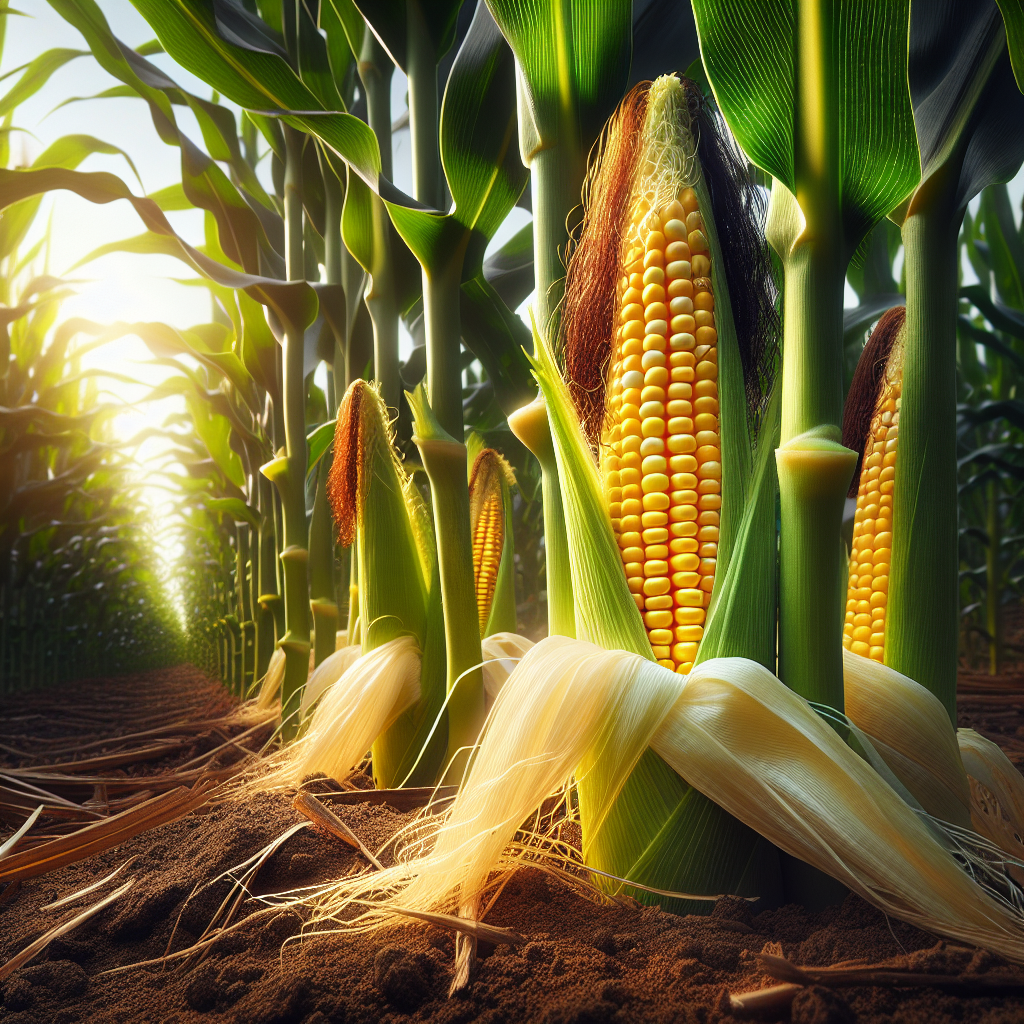
Introduction to Sweet Corn (Honey Select)
A standout bicolor sweet corn, this cultivar is prized for its attractive mix of creamy white and golden kernels, rich sugary flavor, and unusually good eating quality for a garden-scale hybrid. 'Honey Select' is often classified as a synergistic type, meaning it carries a blend of kernel genetics that improve sweetness and tenderness while maintaining better texture balance than older standard sugary cultivars. In practical terms, growers get ears that taste distinctly sweet, remain palatable slightly longer after maturity than conventional sweet corn, and present well for fresh market sales.
The plant itself behaves much like other sweet corn types but benefits from especially careful isolation from field corn, popcorn, and some supersweet types because cross-pollination can reduce eating quality. Gardeners who have only grown generic sweet corn often notice that this variety rewards precision: well-timed sowing, even moisture during tasseling and ear fill, and sufficient nitrogen translate directly into larger, fuller ears. For a broader look at maize biology and crop habit, see our Corn guide.
Historically, modern sweet corn breeding focused on improving sugar retention, tenderness, and shipping quality without sacrificing the classic “just-picked” flavor. 'Honey Select' became popular because it sits in a productive middle ground: sweeter and more refined than old-fashioned sugary cultivars, yet often more forgiving in the garden than some highly specialized sh2 supersweet types. That makes it especially suitable for serious home gardens, diversified vegetable farms, and roadside stands.
Botanical Profile of Sweet Corn (Honey Select)
This crop belongs to the grass family, Poaceae, and is a warm-season annual monocot. Like all maize, it produces separate male and female flowers on the same plant. The tassel at the top of the stalk sheds pollen, while the ears form at leaf nodes along the stem. Each silk emerging from an ear corresponds to an individual kernel; successful pollination of each silk is required for full kernel set. Poor pollination leads to blank spots on the cob, especially at the tip.
'Honey Select' typically grows on sturdy stalks around 5 to 7 feet tall, though height varies by fertility, temperature, planting density, and irrigation. Plants usually produce one prime marketable ear and may produce a second smaller ear under favorable conditions. Ear size commonly ranges around 8 to 9 inches with 14 to 16 kernel rows, and the kernels are bicolor, combining yellow and white grains for strong visual appeal.
As a sweet corn rather than field corn, it is harvested at the milk stage, long before physiological maturity. At this stage, kernels are swollen, glossy, and full of sweet milky sap. If left too long, sugars convert to starch, the pericarp toughens, and the eating quality declines. The root system is fibrous and relatively extensive in good soil, but much of the active feeding zone remains in the upper 12 to 18 inches, which explains why consistent surface moisture and fertility matter so much.
Genetically, synergistic sweet corn types like this one are bred so that different kernel types coexist on the same ear, helping combine sweetness, tenderness, and shelf life. That is one reason the cultivar is favored by growers who want fresh flavor without the sometimes more finicky germination behavior associated with certain supersweet categories.
Soil, pH, and Climate Requirements for Sweet Corn (Honey Select)
This cultivar performs best in full sun with a minimum of 8 hours of direct light daily, though 10 or more hours is ideal for maximum sugar production and strong ear fill. Corn is not a shade-tolerant crop. Even light competition from trees, fences, or tall trellised vegetables can reduce stalk vigor and ear size.
The ideal soil is a deep, fertile, well-drained loam or sandy loam rich in organic matter. Heavy clay can work if improved with compost and managed carefully, but waterlogging is a major risk because saturated soil reduces oxygen around roots, slows nutrient uptake, and predisposes seedlings to damping-off and uneven stands. Very light sandy soils warm quickly and encourage early growth, but they require closer attention to irrigation and nitrogen because nutrients leach readily.
Target a soil pH between 6.0 and 6.8, with 6.2 to 6.5 being especially reliable. Below pH 5.8, phosphorus availability often declines and root development can be compromised. Above pH 7.2, micronutrient availability, especially zinc and iron, may become less favorable. Corn has a relatively high demand for nitrogen, but it also responds strongly to adequate phosphorus for root establishment and potassium for water regulation, stalk strength, and ear development.
Before planting, a professional approach is to incorporate 2 to 4 inches of finished compost into the top 6 to 8 inches of soil, then apply fertilizer based on a soil test. In the absence of a test, a balanced preplant fertilizer can be worked in, followed by sidedressing nitrogen later. If you are building long-term fertility, practices like cover cropping and residue cycling are especially valuable; see soil health strategies.
Temperature is critical. Seeds germinate best when soil temperatures are 65 to 86°F (18 to 30°C). They may sprout in cooler soil, but emergence is slower and more uneven, increasing risk from rot and insects. Wait until the soil is consistently at least 60°F (16°C), and preferably 65°F or warmer for fast, uniform emergence. The crop grows best in air temperatures of 70 to 86°F (21 to 30°C). Growth slows below 60°F and can suffer above 95°F, especially during pollination if hot, dry winds desiccate silks.
This is a temperate to warm-summer crop. It does not tolerate frost. A season length of roughly 75 to 85 frost-free days is typically enough for harvest, though local conditions can shift maturity slightly. In humid climates, disease pressure may be higher; in arid climates, irrigation must be steady during tasseling and grain fill.
Step-by-Step Planting & Propagation
Propagation is by seed only. Sweet corn does not transplant well compared with many vegetables because root disturbance can check growth and delay maturity. Direct seeding is strongly preferred.
Choose a block, not a single row. Corn is wind-pollinated, so planting in short blocks of at least 4 rows gives better pollination than one long row. A minimum block width of 4 feet improves kernel set.
Prepare a fine but not powdery seedbed. Break up clods, remove perennial weeds, and rake the surface level. Good seed-to-soil contact is essential for even germination.
Plant after frost danger passes and the soil has warmed adequately. For succession harvests, sow every 10 to 14 days for 3 to 4 plantings, provided your season is long enough.
Sow seeds 1 to 1.5 inches deep in moist soil. In lighter, sandy soils or in warmer weather, 1.5 inches is appropriate. In heavier soils, stay closer to 1 inch to reduce crusting issues.
Space seeds 8 to 12 inches apart within rows. Space rows 30 to 36 inches apart. For intensive garden blocks, some growers use 12 inches in all directions in a square pattern, but this only works well with strong fertility and irrigation.
Thin if necessary once seedlings reach 3 to 4 inches tall. Final spacing of about 10 to 12 inches usually balances ear size and total yield well. Overcrowding leads to thinner stalks, smaller ears, and poorer pollination.
Water immediately after sowing if soil is not already evenly moist. The seed zone should remain consistently damp but not saturated until emergence.
Isolate from other corn types if seed purity or eating quality matters. Separate by distance or by maturity timing. Cross-pollination from field corn or popcorn can negatively affect kernel quality in the current crop.
For market gardeners, staggered plantings are preferable to one large sowing because harvest comes fast and ears must be picked in a narrow window for top quality. Mulch may be applied after seedlings are established and soil has warmed, but keep mulch slightly back from stems to reduce rot and rodent issues.
Care & Maintenance regimes for Sweet Corn (Honey Select)
Uniform growth is the main goal. Any stress during the first 6 weeks, tasseling, or ear fill can noticeably reduce sweetness, ear length, and kernel set.
Water demand is highest from knee-high growth through silking and ear fill. Aim for about 1 to 1.5 inches of water per week from rain or irrigation under mild conditions, and up to 2 inches in hot, windy weather or sandy soil. A useful professional benchmark is to keep the top 6 to 8 inches of soil consistently moist, not alternating between dust-dry and soggy. If you squeeze soil from root depth, it should feel cool and hold together lightly, then crumble with a poke. If it forms a sticky, airless mass, it is too wet. If leaves roll tightly by mid-morning rather than only in peak afternoon heat, the crop is already under water stress.
Overwatering signs include yellowing lower leaves despite adequate fertility, stunted growth, sour-smelling soil, algae on the surface, and plants that look dull green rather than vigorous. Prolonged saturation can also cause shallow rooting, making the stand more vulnerable to lodging.
Nitrogen management is especially important. Corn is a heavy feeder, and 'Honey Select' responds very clearly to timely nitrogen. Apply a preplant base, then sidedress when plants are 12 to 18 inches tall, and again just before tasseling if growth is pale or soil is low in organic matter. Organic growers often use blood meal, feather meal, composted poultry manure, or fish-based products; conventional growers may use urea, calcium ammonium nitrate, or similar materials. Avoid placing concentrated nitrogen directly against stems.
A practical visual cue: healthy plants should be a strong medium to deep green, with steady weekly height gain. Pale striping may indicate nitrogen deficiency or sometimes sulfur or zinc imbalance. Purple-tinged seedlings can reflect cool soils limiting phosphorus uptake.
Weed control matters most early. Corn is not highly competitive at the seedling stage. Keep beds weed-free for at least the first 4 to 6 weeks. Shallow hoeing is effective, but avoid deep cultivation once roots spread near the surface. Organic mulches can help suppress weeds and stabilize moisture, though they should be used only after soil warmth is adequate.
Hilling soil lightly around the base of stalks when plants are 12 to 18 inches tall can improve anchorage, especially in windy sites. This also buries small weeds. In fertile conditions, prop roots may develop from lower nodes, further stabilizing plants.
Because pollination is wind-driven, avoid overhead irrigation during peak pollen shed if possible, especially in humid weather, though occasional irrigation is less damaging than drought. Dry conditions during silking are much more harmful than brief wet foliage. If weather is still and planting is small, gently shaking stalks at midday for a few days during pollen shed can improve pollination.
Pests, Diseases & Organic Management
The most common pest issues vary by region, but several are especially important. Corn earworm is often the primary quality pest in fresh sweet corn. Moths lay eggs on fresh silks, and larvae feed into the ear tip. Early detection is difficult because infestation begins at silking. In small plantings, applying mineral oil with Bacillus thuringiensis or spinosad to silk channels after pollination begins can reduce damage, though timing must be precise. Prompt harvest also limits larval development.
European corn borer and Fall armyworm may attack whorls, tassels, or stalks, causing ragged leaves, frass accumulation, and sometimes broken stalks. Regular scouting is essential: inspect the whorl and upper leaves weekly. Young larvae are much easier to control with Bt than older, protected stages.
Seedcorn maggot, Wireworms, and Birds can damage seed and seedlings. Rapid germination in warm soil is the best defense. Avoid planting into cold, undecomposed organic matter, which attracts Seedcorn maggot.
Raccoons, Deer, and Squirrels can be devastating near harvest. Electric fencing, secure perimeter fencing, and harvest timing are often more effective than repellents. Raccoons are notorious for sampling ears just as they reach peak ripeness.
Disease concerns include Common rust, Northern corn leaf blight, Anthracnose, Smut, and Seedling damping-off. Many foliar diseases worsen in humid weather with overhead irrigation and dense plantings. Good spacing, crop rotation, residue management, and watering early in the day all help. Corn Smut, while edible in some culinary traditions, distorts ears and tassels and reduces marketability.
Organic disease management relies on prevention: rotate away from corn and other grasses for at least 2 to 3 years when disease pressure is high, remove heavily infected residues, maintain balanced fertility, and avoid excessive nitrogen that produces lush but more disease-prone growth. Drip irrigation reduces leaf wetness duration. Healthy soil biology and airflow are more valuable than late rescue treatments.
For companion-supportive pest management, interplanting edges with Peas early in the season can diversify the bed, while Sunflower can support beneficial insect activity around the plot if placed so it does not shade the corn block.
Harvesting, Curing & Optimal Storage
Sweet corn is harvested for immediate eating quality rather than storage maturity. The best stage is the milk stage, when kernels are fully expanded but still tender and juicy. Most plantings of 'Honey Select' mature in roughly 79 days, though heat units and local conditions influence this.
Use multiple indicators rather than the calendar alone. Silks should be brown and drying, but the husk should remain mostly green. Ears should feel firm and full to the tip. Peel back a small section of husk and puncture a kernel with a fingernail: if the fluid is clear, it is immature; if it is creamy white and milky, it is ready; if it is doughy with little juice, harvest is late.
Harvest in the cool morning when sugar levels and crispness are highest. Grasp the ear, twist downward, and snap cleanly from the stalk. Avoid tearing the stalk if you want secondary ears to continue developing. Market growers should move harvested ears into shade immediately.
Unlike dry grain corn, there is no curing phase for fresh sweet corn. In fact, quality declines rapidly after picking because sugars convert to starch. This conversion is one of the central postharvest realities of sweet corn. Rapid cooling is essential. Hydrocooling or immediate refrigeration near 32°F (0°C) with high relative humidity, around 95%, preserves sweetness and tenderness far better than room-temperature holding.
For home storage, keep ears unshucked in the refrigerator and use within 1 to 3 days for best quality, though they may remain acceptable up to about 5 days if very fresh and properly cooled. If freezing, blanch whole or cut kernels briefly, cool quickly in ice water, drain, and freeze in airtight packaging. Because 'Honey Select' has strong fresh flavor, it is excellent for freezing, but harvest at peak milk stage for best results.
Companion Planting for Sweet Corn (Honey Select)
The most effective companions are those that support soil fertility, suppress weeds, or diversify the insect habitat without competing heavily for light and water. Classic corn-centered polycultures often include climbing legumes and broadleaf groundcovers, but the layout must be adapted to modern sweet corn spacing so the corn is not overrun.
Peas can be used as an early-season nitrogen-contributing companion in cool shoulder periods, especially before corn reaches full size. They are less of a classic warm-season partner than beans, but in succession systems they can help occupy nearby space before the corn canopy closes.
Sunflower is useful along borders or on the north side of a plot in northern hemisphere gardens. It can attract pollinators and beneficial insects, provide wind buffering in some layouts, and diversify the farm ecosystem. Do not let it shade the corn block.
Clover works especially well as a living mulch between wider rows or as an off-season underseeding if moisture is sufficient. It helps protect soil structure, reduce erosion, and contribute nitrogen over time. Keep it mowed or suppressed if growth becomes competitive during early corn establishment.
Pumpkin can function as a sprawling groundcover around the perimeter, shading soil and reducing weed pressure. However, this pairing demands generous fertility and water because both crops are hungry. Leave enough air movement to reduce foliar disease.
The guiding rule is simple: companions should support the corn, not crowd it. Because 'Honey Select' is grown for premium ear quality, avoid dense intercrops that reduce airflow, intercept pollen, or compete during tasseling and kernel fill.