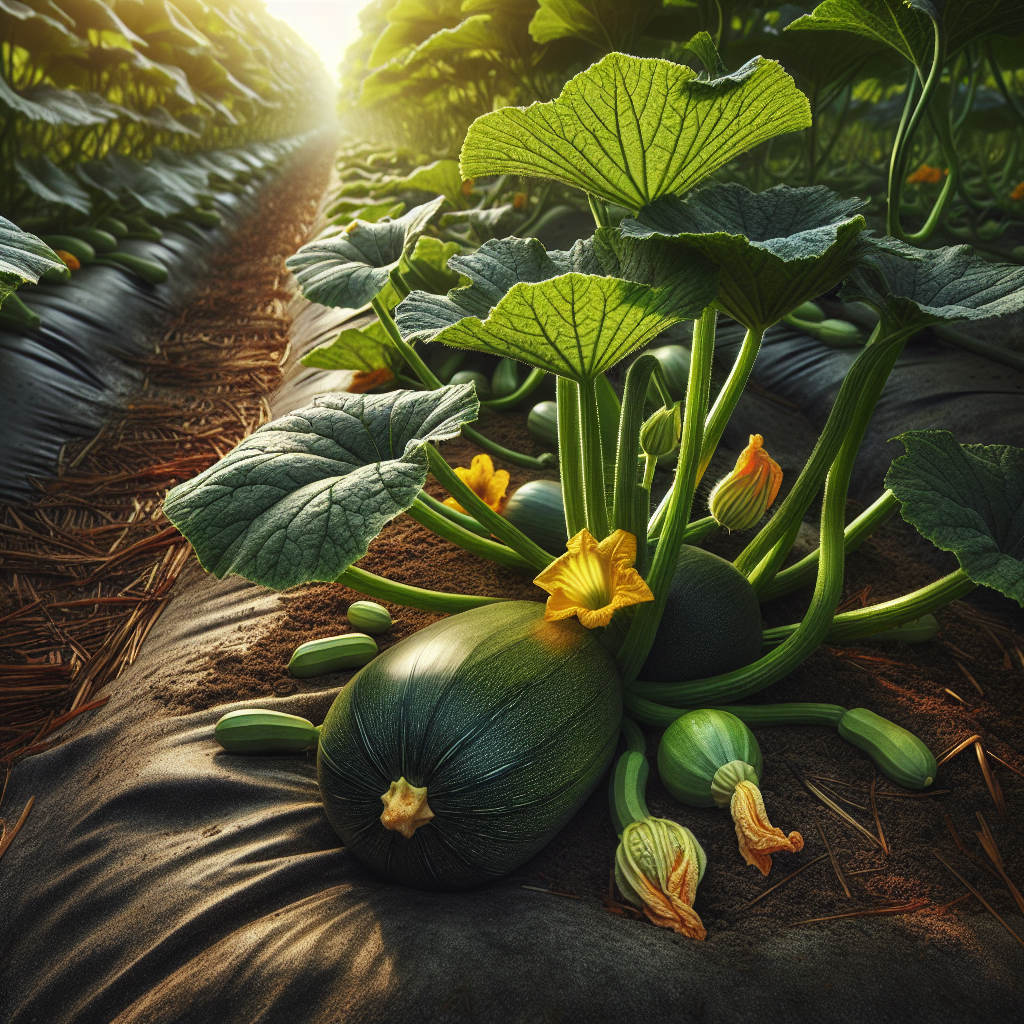
Introduction to Squash
Among the most useful and diverse garden and farm crops, squash includes summer squash harvested immature for immediate eating and winter squash harvested mature for storage. The name covers multiple domesticated species in the genus Cucurbita, chiefly C. pepo, C. maxima, C. moschata, and to a lesser extent C. argyrosperma. This diversity explains why one “squash” may be a compact zucchini bush while another is a sprawling butternut vine capable of running several meters.
Squash was domesticated in the Americas thousands of years before European contact and formed part of the classic Indigenous intercropping system often called the Three Sisters, where squash, maize, and beans supported one another ecologically. In modern production, squash remains valuable because it is relatively fast growing, high yielding, and adaptable from market gardens to large-scale mixed farms. Some types are grown for thin-skinned, tender fruits with high water content, while others develop thick rinds and dense, carbohydrate-rich flesh suitable for months of storage.
From a grower’s perspective, the single biggest mistake is treating all squash types the same. Bush zucchini, scallop squash, acorn, delicata, butternut, kabocha, and specialty heirlooms differ in vine habit, days to maturity, disease tolerance, and storage behavior. Understanding species and cultivar characteristics allows better spacing, nutrition, pest prevention, and harvest timing.
Botanical Profile of Squash
Squash belongs to the family Cucurbitaceae, the same family as melon and Cucumber guide. Plants are annual, frost-sensitive, fast-growing vines or bushes with coarse leaves, hollow stems, tendrils in vining types, and separate male and female flowers on the same plant. This flowering habit is called monoecious. Male flowers usually appear first and in greater numbers, while female flowers are identified by the miniature ovary, or baby fruit, directly behind the petals.
The principal cultivated squash species differ in useful ways:
- Cucurbita pepo: includes zucchini, yellow crookneck, straightneck, acorn, spaghetti squash, delicata, many pumpkins, and ornamental gourds. Often earlier maturing but more vulnerable to Squash vine borer and some mildew issues.
- Cucurbita moschata: includes butternut types and some tropical calabaza forms. Typically better tolerance to heat, humidity, and vine borer pressure; fruits often store well.
- Cucurbita maxima: includes hubbard, kabocha, buttercup, red kuri, and banana squash. Fruits can be very large, often with rich dry flesh and excellent eating quality, but many cultivars need a longer season.
- Cucurbita argyrosperma: less common in home gardens, but important in some regions for seeds and culinary fruit use.
Leaves are large, hairy, and moderately transpiring, meaning the crop can move a lot of water on hot windy days. Roots are relatively shallow overall, though vigorous in fertile loosened soil. Most feeding roots occupy the upper 20 to 30 cm of soil, which is why consistent moisture and mulching are so important. Flowers are large, yellow to orange, and open for a brief period, usually early in the day. Pollination is primarily by bees, especially squash bees (Peponapis and Xenoglossa species), honeybees, and bumblebees.
Fruit type is technically a pepo, a berry with a hard rind. Summer squash are harvested when epidermal tissues are still tender and seeds are immature. Winter squash remain on the vine until seeds mature fully, starch accumulates, and rind tissues harden.
Soil, pH, and Climate Requirements for Squash
Squash performs best in deep, well-drained, biologically active loam or sandy loam rich in organic matter. Heavy clay can produce strong growth if drainage is corrected, but waterlogged roots quickly reduce vigor and invite crown and root diseases. The ideal soil pH is generally 6.0 to 6.8, though squash can tolerate roughly 5.8 to 7.2 if nutrients remain available. Below pH 5.8, calcium, magnesium, and phosphorus availability often decline, and growth becomes less efficient. Above pH 7.2, micronutrient deficiencies, especially iron and manganese, may appear as interveinal chlorosis on young leaves.
A target organic matter content of 3% to 6% is excellent for field production. In lighter soils, compost improves moisture retention and cation exchange. In heavier soils, compost improves aggregation and aeration. Well-finished compost is preferable to raw manure immediately before planting, because excessive soluble nitrogen can cause rank vine growth at the expense of fruiting and may increase disease susceptibility.
Soil temperature matters as much as air temperature. Seeds germinate best when soil is 25 to 35°C, with practical field emergence becoming much more reliable once soil is above 18°C. In cool soil below about 15°C, seeds may rot or emerge unevenly. Ideal daytime air temperatures are 22 to 30°C. Growth slows significantly below 18°C, and plants are damaged or killed by frost. Extended heat above 35°C may reduce pollen viability and female flower retention, especially under drought stress.
For moisture, squash prefers evenly moist but never saturated soil. A useful field target is approximately 60% to 80% of field capacity in the active root zone. In practical terms, the soil at 10 to 15 cm depth should feel cool and slightly moist, forming a weak ball when squeezed, not powdery dry and not sticky or anaerobic-smelling. Overwatered squash often shows yellow lower leaves, slowed growth, edema, soft stems near the crown, and increased incidence of root rots. Underwatered plants wilt in the midday heat and fail to recover fully by evening; leaves may feel dull rather than turgid, and fruits can become misshapen from interrupted cell expansion.
Squash needs full sun, ideally 8 or more hours daily. Good air movement reduces foliar disease, but exposed windy sites can desiccate seedlings and interfere with bee activity. In cool temperate zones, black plastic mulch, low tunnels, or row covers can dramatically improve early growth. In humid subtropical zones, wider spacing and mildew-tolerant cultivars are often more important than heat accumulation.
If building fertility from scratch, practices similar to those in soil health strategies are especially useful because squash is a heavy feeder that responds strongly to biologically active soil.
Step-by-Step Planting & Propagation
Propagation is almost always by seed. Direct sowing is standard because squash seedlings grow quickly and dislike root disturbance. Transplanting works best when using biodegradable pots or large plug cells and moving plants before roots circle.
Choose cultivar by end use and season length. Bush zucchini and yellow squash suit short seasons and intensive gardens. Butternut and many moschata types perform better in hot, humid climates. Kabocha and hubbard need more space and usually a longer frost-free period.
Prepare the bed. Incorporate 2.5 to 5 cm of finished compost into the top 15 to 20 cm of soil. If soil is poor, work in a balanced pre-plant fertility program based on a soil test. As a broad starting point, squash responds well to moderate nitrogen, ample potassium, and sufficient phosphorus for root establishment. Avoid concentrating fresh high-salt fertilizer directly under the seed.
Form hills, mounds, or raised rows if drainage is marginal. Traditional hills are not required agronomically, but slightly elevated planting zones warm faster, drain better, and reduce crown wetness.
Wait for warm soil. Direct sow after the last frost when soil temperatures are consistently above 18°C. In cooler regions, pre-warm the bed with plastic mulch for 1 to 2 weeks.
Sow at correct depth. Plant seeds 2 to 3 cm deep in fine, moist soil. In sandy soils or hot dry conditions, depth can increase slightly to around 4 cm to reach stable moisture.
Space according to growth habit. Bush summer squash: 60 to 90 cm between plants and 120 to 180 cm between rows. Semi-vining acorn or delicata: 90 to 120 cm between plants. Large winter squash and pumpkins: 120 to 180 cm or more between plants with 180 to 300 cm between rows. Crowding increases mildew, poor airflow, and harvesting difficulty.
Thin early. If multiple seeds are sown per station, thin to the strongest one or two seedlings once true leaves develop. Cut extras at soil level instead of pulling if roots are entangled.
Use transplants carefully if needed. Start indoors 2 to 3 weeks before planting out, not earlier. Harden off for 5 to 7 days and transplant only after nights are reliably mild. Plants with 1 to 2 true leaves establish best; older root-bound seedlings often stall.
Protect from early pests and temperature swings. Floating row cover can accelerate establishment and exclude Cucumber beetles and vine borer moths, but it must be removed at flowering unless hand pollination is planned.
Mulch after establishment. Straw, leaf mulch, or plastic mulch suppresses weeds and stabilizes moisture. Keep organic mulch a few centimeters away from the stem to avoid crown rot.
Care & Maintenance regimes for Squash
Irrigation should shift with plant stage. During germination and early seedling growth, keep the upper soil profile consistently moist but not saturated. Once established, deep irrigation is better than frequent shallow sprinkling. As a rule of thumb, squash needs about 25 to 40 mm of water per week in mild weather and 40 to 50 mm or more during hot fruiting periods, depending on soil type and evapotranspiration. Sandy soils may need watering every 2 to 3 days in heat, while loams may hold adequately for 4 to 6 days. Drip irrigation is ideal because it keeps foliage dry and delivers water to the root zone with less disease pressure.
Nutrient demand rises sharply once vines elongate and fruit set begins. Excess nitrogen early in the season can create huge leaves with poor flowering, especially in zucchini. A professional approach is to supply moderate base fertility, then sidedress when plants begin to run or just before first female flowers. Nitrogen deficiency shows as pale older leaves and reduced vigor; potassium deficiency may cause marginal scorching and poorer fruit fill. Calcium problems are less dramatic than in tomato but can contribute to weak tissue and irregular fruit development in stressed soils.
Weed management is most important in the first 3 to 5 weeks after emergence. Once vines spread, canopy closure suppresses many later weeds. Cultivate shallowly because feeder roots occupy the topsoil and are easily damaged. Mulch reduces competition and splashing that spreads disease spores.
Pollination is central to yield. Poorly pollinated fruits may be short, bulbous, curved, or abort while still small. In rainy, cold, or insect-poor conditions, hand pollination can rescue production: collect fresh pollen from a newly opened male flower and brush it onto the stigma in the center of the female flower during the morning. One male flower can pollinate several females. Avoid insecticides during bloom, especially morning sprays when pollinators are active.
Pruning is usually unnecessary, but selective vine management helps in tight spaces. Remove dead, diseased, or heavily mildewed leaves to improve airflow, but never strip plants excessively because leaves drive fruit filling. On sprawling winter squash, some growers pinch late-season vine tips so the plant directs resources to maturing existing fruit rather than setting new ones that will not finish before frost.
For trellising, only smaller-fruited types are suitable unless fruit slings are used. Vertical culture improves airflow and fruit cleanliness but requires stronger support and more frequent training.
Common physiological issues include:
- Blossom drop: normal on early male flowers, but excessive female drop may indicate poor pollination, heat stress, or drought.
- Misshapen fruit: usually incomplete pollination or irregular watering.
- Sudden wilt of one runner: often vine borer.
- Large plant with low yield: too much nitrogen, insufficient pollinators, or high heat disrupting flower balance.
Succession planting is effective with summer squash. Sow every 2 to 3 weeks for a prolonged harvest and to outrun pest buildup. Winter squash is usually planted once per season, timed so fruits mature in dry weather before hard frost.
Pests, Diseases & Organic Management
Squash is productive but highly visible to pests. The best control strategy is integrated: rotation, sanitation, exclusion, resistant cultivars, balanced fertility, and close scouting.
Squash vine borer is among the most destructive pests, especially on C. pepo. The moth lays eggs near stems; larvae bore into vines, causing sudden wilting despite moist soil. Frass that looks like moist sawdust near the stem is diagnostic. Organic management includes crop rotation, row cover until flowering, wrapping the lower stem with foil or fabric barriers, mounding soil over vine nodes to encourage secondary rooting, and destroying infested vines after harvest. C. moschata cultivars like butternut are often less susceptible.
Cucumber beetles chew cotyledons, leaves, and flowers and can spread Bacterial wilt in susceptible cucurbits. Use row cover on young plants, remove covers for pollination, maintain weed control around beds, and use yellow sticky traps only for monitoring rather than primary control. Kaolin clay can deter feeding in some systems.
Squash bugs cluster on leaf undersides and feed by sucking sap, causing speckling, bronzing, and plant decline. Their coppery egg masses are often laid in groups along veins. Crush eggs, hand-remove nymphs early, and clear plant debris after harvest. Boards or shingles placed near plants can trap adults overnight for collection in the morning.
Aphids can distort growth and spread viruses. A strong water spray, insecticidal soap, and habitat for beneficial insects often keep them below damaging thresholds.
Powdery mildew is the most common late-season disease. It appears as white powdery growth on upper leaf surfaces and eventually reduces photosynthesis and fruit quality. Prevention includes wider spacing, good airflow, avoiding excess nitrogen, choosing tolerant cultivars, and applying organic protectants such as sulfur or potassium bicarbonate early, before severe coverage. Once the canopy is heavily infected, control becomes much harder.
Downy mildew causes angular yellow lesions and gray-purple sporulation on leaf undersides, often moving quickly in humid weather. Good airflow, sanitation, and prompt removal of badly affected leaves help, but regional weather patterns strongly influence outbreaks.
Bacterial wilt can cause rapid irreversible wilting and is vectored by Cucumber beetles. Control the vector early; infected plants should be removed.
Viruses such as Zucchini yellow mosaic virus, Cucumber mosaic virus, and Watermelon mosaic virus cause mottling, distorted leaves, and malformed fruits. There is no cure. Rogue infected plants, control Aphids where practical, remove weed hosts, and start with clean seed.
Root and crown rots increase in compacted or soggy soils. Symptoms include yellowing, collapse, dark crown tissue, and stunted growth. Improve drainage, avoid overwatering, and rotate out of cucurbits for at least 3 years when disease pressure is high.
Rotation is critical. Do not plant cucurbits in the same area year after year. A 3- to 4-year gap reduces buildup of many insects and pathogens.
Harvesting, Curing & Optimal Storage
Harvest timing depends entirely on whether the crop is a summer or winter squash.
For summer squash, pick immature fruits frequently, usually every 1 to 3 days in warm weather. Zucchini are often ideal at 15 to 20 cm long, yellow straightneck at 10 to 15 cm, and pattypan at 5 to 8 cm across, though market preference varies. The key indicators are glossy skin, tender rind that scratches easily with a fingernail, and small undeveloped seeds. Delayed harvest reduces tenderness and slows new fruit production because the plant shifts energy toward seed maturation. Use a knife or pruners rather than twisting hard, which can damage stems.
For winter squash, wait until fruits are fully mature. Indicators include deep mature color, a hard rind that resists fingernail pressure, drying or corking of the stem, and the approach of cultivar-specific days to maturity. Harvest before a hard frost, though a very light frost may only damage exposed leaves. Leave 5 to 8 cm of stem attached when cutting; stemless fruits often decay first.
Curing improves skin hardness and storage life, especially for C. moschata and many C. maxima types. Cure at about 24 to 29°C with good ventilation for 10 to 14 days if possible. In humid climates, provide airflow and avoid stacking fruits tightly. Acorn squash is an exception: prolonged high-temperature curing can reduce eating quality, so a shorter gentle drying period is often enough.
Storage conditions differ by type:
- Summer squash: 7 to 10°C and 90% to 95% relative humidity for roughly 1 to 2 weeks. Colder storage can cause chilling injury.
- Butternut and many winter squash: 10 to 15°C with 50% to 70% relative humidity, often storing 2 to 6 months.
- Hubbard and some maxima types: similar temperatures, with potential for several months if fully mature and disease-free.
- Acorn and delicata: shorter storage life, often 1 to 3 months, and quality may decline faster than butternut.
Inspect stored fruits every 1 to 2 weeks. Remove any with soft spots, weeping lesions, or mold to prevent spread. Never wash winter squash before storage unless necessary; dry brushing is safer because free moisture on the rind encourages rot organisms.
Companion Planting for Squash
The best companion planting for squash is functional rather than folkloric. Pair it with crops and habitat that improve pollination, reduce pest pressure, or use space efficiently.
Corn and pole beans remain the classic association. Corn provides light structural support and vertical layering, beans contribute nitrogen cycling through their residues, and squash shades the soil to suppress weeds. For modern production, spacing must be adjusted so squash does not overwhelm young corn. This system works best when corn is established first and squash is planted once the corn is sturdy.
Flowering insectary plants such as dill, alyssum, yarrow, fennel in dedicated borders, calendula, and sunflower can attract pollinators and beneficial insects. Keep strong insectary strips nearby rather than packed directly into the squash canopy, where airflow may be reduced.
Radishes and quick lettuce can be interplanted early before squash vines spread, making use of otherwise open ground. Later, the squash canopy dominates. Avoid overcrowding with other heavy feeders that compete for water and nutrients in the same root zone.
Alliums such as onions or garlic along bed edges may help diversify the planting visually and spatially, though they are not a standalone pest solution. Nasturtiums are sometimes used to attract Aphids away from the main crop, but their effectiveness varies by site.
Avoid placing squash immediately beside crops requiring persistently dry foliage or distinctly different irrigation schedules. Also avoid repeating cucurbits together in the same ground year after year, as shared pests and diseases can intensify.
In companion systems, the most important measurable benefits come from three things: preserving pollinator access, reducing bare soil, and preventing monoculture-level pest buildup. If a companion plant obstructs harvesting, increases humidity around the canopy, or competes during fruit fill, it is not helping, no matter how attractive the combination looks.