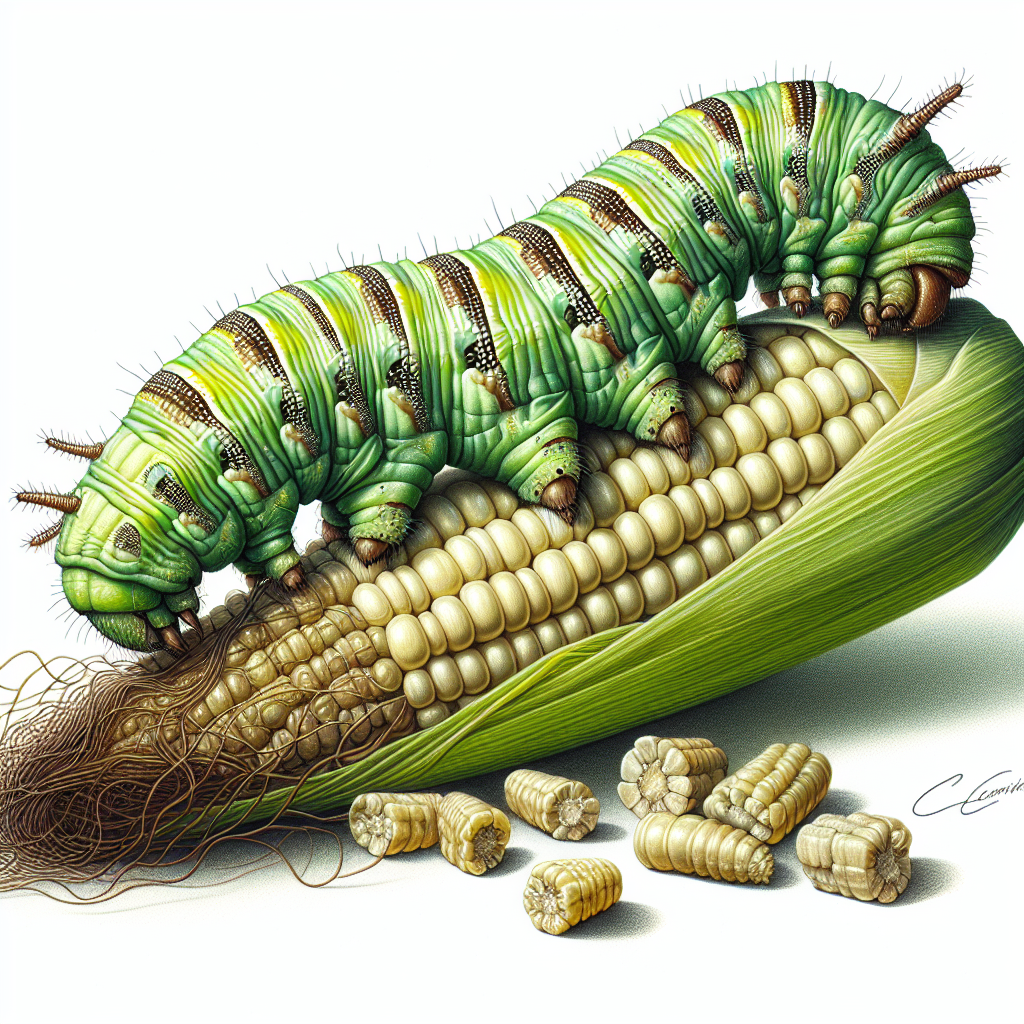
Introduction to Corn Earworm
The Corn Earworm, scientifically known as Helicoverpa zea, is one of the most notorious pests in North American agriculture, infamous for devastating corn crops and extending its appetite to over 30 other vegetables and field crops. Also called the tomato fruitworm or cotton bollworm, this moth's larvae bore into corn ears, silks, and kernels, leading to mold contamination, reduced grain quality, and yield losses up to 50% in severe infestations. Native to the Americas, it thrives in warm climates and migrates long distances, making it a persistent challenge for growers from small farms to large operations.
Understanding Corn Earworm is crucial for timely intervention. Adults are tan to brown moths with a wingspan of 1-1.5 inches, marked by a dark spot on the hind wing. Larvae vary from green to brown or pinkish, with longitudinal stripes and scattered spines, growing up to 2 inches long. This pest's adaptability and multiple generations per season demand integrated pest management (IPM) approaches. For detailed insights on its relatives, see Helicoverpa species. Early scouting and organic controls can protect your harvest effectively.
Identifying Symptoms & Damage
Corn Earworm damage is unmistakable once larvae establish in the ear. Scout by checking 20-25 ears per field: shake plants over a white tray to dislodge frass (insect poop), a key sign. Primary symptoms include:
- Silk Clipping: Fresh silks severed 1/2 inch from the ear tip, often with a small larva entry hole.
- Ear Feeding: Larvae tunnel into kernels from the tip, creating sticky frass masses mixed with corn silk. Damage starts at the tip and progresses inward.
- Kernel Damage: Grazed or tunneled kernels, especially silk channel and top 1/3 of the ear. In sweet corn, this renders ears unmarketable.
- Mold Growth: Fungal invasion (e.g., ear rots) follows feeding wounds, producing mycotoxins harmful to livestock and humans.
- Secondary Pests: Frass attracts sap beetles and rodents like raccoons.
In field corn, larvae may feed on whorls or stalks, mimicking European Corn Borer damage but distinguished by larger size and frass patterns. Thresholds: 10-20% ears clipped or one larva >1/4 inch per ear in sweet corn; adjust for dent corn. Differentiate from Fall Armyworm by spotting (absent in earworm) and inverted 'Y' on head capsule.
Lifecycle and Progression of Corn Earworm
Corn Earworm completes 1-4 generations yearly, depending on climate, with faster cycles in southern regions. Lifecycle spans 25-30 days at 85°F:
- Eggs: Adult females lay 500-3000 pearly white eggs singly on silks, leaves, or tassels. Eggs hatch in 2-4 days.
- Larvae: Six instars over 14-21 days. Young larvae (1st-2nd) web silks; mature (4th-6th) bore into ears. Color shifts from pale to dark green/brown/pink.
- Pupae: Larvae drop to soil, pupate 1-3 inches deep. Pupal stage: 12-16 days.
- Adults: Moths emerge, mate, and lay eggs within 2-3 nights. Active dusk fliers, attracted to lights.
Overwinter as pupae in southern soils; northern populations migrate. Peak flights coincide with corn silking. Monitor with pheromone traps: 10-20 moths/trap/week signals risk. For small farms, learn more from Spring Pest Patrol: Organic AI Strategies to Shield Your Crops from Common Invaders.
Environmental Triggers & Risk Factors
Corn Earworm thrives above 60°F, with optimal development at 77-89°F. Key triggers:
- Warm Weather: Continuous generations in mild winters; migrations from South in spring.
- Crop Phenology: Targets silking corn (R1-R3 stages); staggered planting extends vulnerability.
- Nearby Hosts: Residue from tomato, sorghum, cotton, or soybeans harbors overwintering pupae.
- Agronomic Practices: No-till fields retain pupae; excessive N increases silk attractiveness.
- Moth Migration: Winds carry adults 100-300 miles; scout after storms.
High-risk zones: Southeast U.S., Gulf Coast. Drought stresses corn, making silks more appealing. Avoid monocultures; rotate with non-hosts like wheat.
Organic Control & Treatment Plans
Organic management emphasizes IPM: monitor, thresholds, then layered controls.
1. Scouting & Timing: Pheromone traps 3-4 ft above crop. Treat sweet corn if >8% ears infested or larvae >1/4 inch.
2. Biological Controls:
- Trichogramma wasps: Release 50,000-100,000/acre weekly during silking to parasitize eggs.
- Bt Products: Dipel DF or Javelin (Bacillus thuringiensis) on silks Day 1 post-emergence, reapply every 5-7 days. Efficacy drops on older larvae.
- NPV Virus: Gemstar or Heligen sprays target larvae.
3. Cultural Controls:
- Mineral oil on silks (1-2 tsp/ear) at 50% silking suffocates small larvae.
- Early planting varieties escape peak moth flights.
4. Mechanical: Hand-remove larvae from small plantings; till soil post-harvest to expose pupae.
Treatment Plan:
- Pre-silking: Trap monitoring.
- Silking: Bt + oil rotation.
- Post-peak: Natural enemies (big-eyed bugs, lacewings). Avoid broad-spectrum sprays to preserve predators.
Preventing Corn Earworm in the Future
Long-term prevention disrupts lifecycle:
- Crop Rotation: 2-3 years away from hosts; interplant with repellents like marigold.
- Trap Crops: Plant early tomato borders to lure moths.
- Varieties: Choose tight-husked hybrids like Bt corn (organic-approved Refuge-in-Bag).
- Sanitation: Deep plow residues; destroy volunteers.
- Timing: Plant when moth flights low; multiple small plantings.
- Reflective Mulches: Deter adults in small fields.
- Natural Enemies: Encourage birds, wasps via hedgerows.
Integrated plans reduce populations 70-90%. Track with local extension data.
Crops Most Affected by Corn Earworm
Corn Earworm attacks 30+ crops, prioritizing:
- Primary: Corn (sweet, field, popcorn), tomato, cotton.
- Vegetables: Peppers, sorghum, okra, squash.
- Others: Soybeans, peanuts, grain sorghum.
In corn, ear damage dominates; tomatoes suffer fruit boring. Economic threshold varies by crop value.