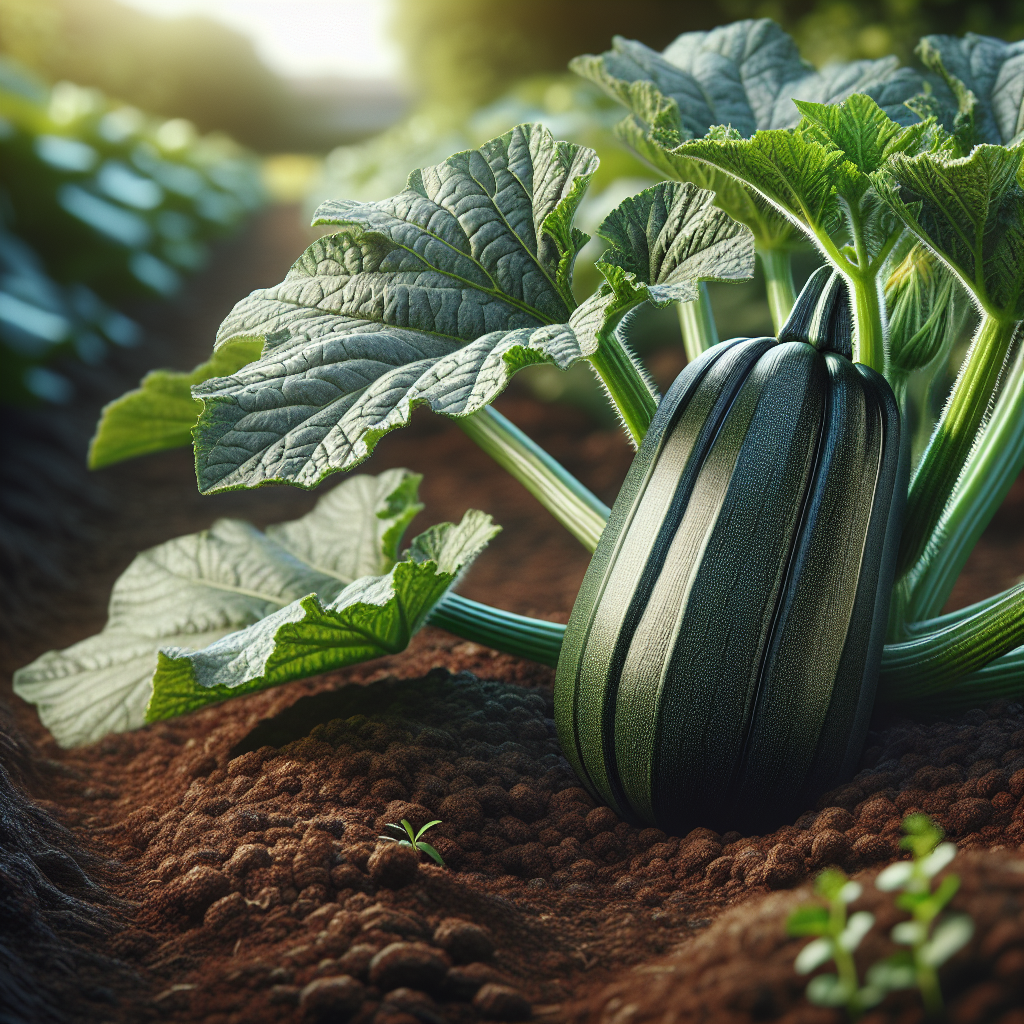
Introduction to Black Beauty Zucchini
Among summer squashes, this cultivar remains one of the most widely recognized standards because it combines strong vigor, attractive nearly black-green skin, and a long harvest window. Introduced in the early 20th century and popularized through American seed catalogs, it became a benchmark zucchini for gardeners who wanted uniform cylindrical fruit, quick maturity, and reliable productivity.
It is best understood as a warm-season, frost-tender annual grown for immature fruits rather than mature storage squash. Compared with pale or striped zucchini types, Black Beauty usually develops a deeper, lustrous skin color and a compact to moderately bushy plant habit that makes repeated harvesting relatively easy. Fruits are most tender when picked small, but the plants can produce oversized marrow-like squash if harvest is delayed.
Commercially and in kitchen gardens, its appeal lies in speed. Under warm conditions, fruit can begin forming roughly 45 to 60 days from sowing, and once the first female flowers open, harvests can become almost daily. That productivity is excellent when supported with fertile soil and pollinator activity, but it also means nutrient and water demand rise sharply during the fruiting phase.
For growers comparing summer squash types, it is helpful to review broader squash basics, because pest pressure, pollination biology, and crop rotation principles are shared across many cucurbits. For improving the root-zone fertility that drives sustained zucchini yields, practical soil-building methods are discussed in this soil health guide.
Botanical Profile of Black Beauty Zucchini
This cultivar belongs to Cucurbita pepo, a species that also includes many pumpkins, ornamental gourds, crookneck squash, and some pattypan types. Black Beauty is a summer squash subgroup selection, meaning the fruit is harvested immature when the rind is still soft and the seeds are undeveloped.
Plants are usually bush-forming rather than long-vining, though stems can sprawl somewhat as the season progresses. Leaves are large, rough-textured, and palmately lobed, often with natural silver mottling that inexperienced growers sometimes mistake for disease. The foliage carries stiff hairs and prickles, a normal trait in zucchini that can irritate bare skin during harvest.
Flowering biology is central to good production. Plants bear separate male and female blossoms on the same plant. Male flowers appear first on slender stems and release pollen for a relatively short period in the morning. Female flowers have a swollen ovary behind the petals that resembles a miniature zucchini. If pollination is incomplete, that young fruit often yellows, shrivels, or rots from the blossom end while still small.
Black Beauty fruits are typically cylindrical, slightly tapered, and dark green to almost black at market stage. Ideal harvest size is commonly 6 to 8 inches long, though baby fruit can be picked smaller and still show excellent flavor. If allowed to mature beyond 10 to 12 inches, texture becomes more watery, seeds enlarge, and the plant diverts energy away from continued flowering.
As an open-pollinated cultivar, Black Beauty can be saved from seed if isolated from other Cucurbita pepo varieties. However, seed saving is more complex than many growers expect because crossing with nearby zucchini, pumpkins, and some summer squash is easy when pollinators are active.
Soil, pH, and Climate Requirements for Black Beauty Zucchini
This crop performs best in warm, frost-free conditions with full sun for at least 6 to 8 hours daily, though 8 to 10 hours is preferable for maximum flowering and dense canopy health. Optimum air temperature for growth is about 70 to 85°F (21 to 29°C). Germination is strongest when soil temperatures are 70 to 95°F (21 to 35°C), with noticeably slower emergence below 60°F (16°C). Prolonged cool weather can stunt seedlings, reduce nutrient uptake, and increase susceptibility to root disease.
Black Beauty thrives in well-drained, fertile loam rich in organic matter. Sandy soils warm quickly and can produce early crops, but they require more frequent irrigation and tighter fertility management. Heavy clay can support high yields if deeply amended and structured, yet compacted, wet clay is one of the quickest ways to cause poor root aeration and weak growth.
The preferred soil pH is 6.0 to 7.0, with an ideal target near 6.3 to 6.8. Below pH 5.8, calcium and magnesium availability may decline while manganese toxicity risk can increase. Above pH 7.2, micronutrients such as iron and zinc become less available, sometimes producing pale new growth and sluggish vigor. A pre-plant soil test is strongly recommended because zucchini is a fast feeder and responds visibly to nutrient imbalance.
Before planting, incorporate 2 to 4 inches of mature compost into the top 8 to 12 inches of soil. In low-organic-matter ground, this improves water-holding capacity while preserving drainage. Avoid fresh manure immediately before planting, as it can contribute excessive nitrogen, lush foliage, delayed fruiting, and food safety concerns.
Moisture consistency is especially important. Aim to keep the root zone evenly moist to a depth of roughly 6 inches without prolonged saturation. In practical terms, soil should feel cool and slightly damp when pressed in the hand, not sticky or anaerobic. Overwatered zucchini often shows drooping despite wet soil, yellow lower leaves, slowed growth, and sometimes a sour smell from the bed. Underwatered plants wilt in afternoon heat but should recover by evening; if they remain limp overnight, moisture stress is severe.
Good air movement matters almost as much as soil quality. Dense, humid canopies favor powdery mildew and reduce pollinator movement. Space and orient rows to allow leaves to dry quickly after dew or irrigation.
Step-by-Step Planting & Propagation
Direct seeding is the preferred method in most climates because roots establish quickly and seedlings dislike disturbance. Sow only after all frost danger has passed and the top 2 inches of soil are consistently above 65°F (18°C), ideally warmer. In cool regions, black plastic mulch or biodegradable warming mulch can raise soil temperature and speed establishment.
- Prepare the bed by loosening soil 8 to 12 inches deep and incorporating compost plus any soil-test-based amendments.
- Form slightly raised rows or low mounds if drainage is marginal. A raised profile is especially helpful in spring rains.
- Sow seeds 1 inch deep, placing 2 to 3 seeds per station.
- Space stations 24 to 36 inches apart in rows 4 to 6 feet apart. Tighter spacing increases humidity and disease pressure.
- Thin to the strongest seedling once plants have 1 to 2 true leaves.
For transplants, start seeds indoors 2 to 3 weeks before planting out in biodegradable pots or large cells to reduce root disturbance. Do not hold transplants too long. Ideal transplant size is just 1 to 2 true leaves; older rootbound plants stall badly after setting out. Harden off for 5 to 7 days, then transplant carefully when nights are reliably above 55°F (13°C).
Succession planting every 2 to 3 weeks through early summer can stabilize yields and reduce the risk of the entire crop declining from pests or mildew at once. In regions with long growing seasons, a second sowing often outperforms the first once early insect pressure passes.
Because zucchini depends heavily on insect pollination, avoid row covers once flowering begins unless you remove them daily or hand-pollinate. If pollinator activity is poor, use a freshly opened male flower to transfer pollen onto the central stigma of a female flower early in the morning.
Care & Maintenance regimes for Black Beauty Zucchini
This cultivar can look effortless when conditions are good, but high-quality production depends on disciplined maintenance. The key management areas are watering, nutrition, canopy hygiene, and harvest frequency.
Water deeply rather than lightly. A mature planting generally needs about 1 to 1.5 inches of water per week, rising to 2 inches in hot, sandy, or windy conditions. The goal is to wet the root zone deeply, then allow the top inch of soil to begin drying before the next irrigation. Drip irrigation is ideal because it keeps foliage dry and reduces mildew risk. If using overhead irrigation, water early in the day so leaves dry fast.
Mulch with clean straw or shredded leaves once soil is warm. A 2- to 3-inch mulch layer stabilizes moisture, reduces soil splash, suppresses weeds, and keeps fruit cleaner. Keep mulch a couple of inches back from the stem crown to avoid rot.
Nutrient demand changes through the season. At planting, prioritize balanced fertility with moderate nitrogen and ample phosphorus and potassium. Once plants begin running into heavy vegetative growth, too much nitrogen can cause oversized leaves and fewer female flowers. During fruit set, side-dress with compost, a balanced organic fertilizer, or a potassium-supportive feed if soil tests indicate need. Calcium is important for cell wall strength, but most deficiency symptoms in zucchini are caused less by lack of calcium in soil than by erratic watering that interrupts uptake.
Watch leaves closely. Healthy Black Beauty plants have broad, turgid foliage with a deep medium-green tone. Pale older leaves may indicate nitrogen depletion. Interveinal chlorosis on younger leaves can signal micronutrient lockup in high-pH soil. Marginal scorch during hot spells may be from salt buildup, drought stress, or root damage.
Weed management is most critical in the first month after emergence. Once the canopy closes, the crop shades competitors effectively. Cultivate shallowly to avoid damaging feeder roots near the soil surface.
Harvest frequency drives yield. Pick every 1 to 2 days once fruiting starts. Removing fruit at 6 to 8 inches encourages continued flowering and prevents the plant from shifting toward seed maturation. Oversized fruits left on the plant for even a few days can noticeably reduce subsequent production.
In high-pressure squash vine borer areas, staggered sowings, stem mounding, and physical exclusion early in the season can be more reliable than reactive control. In humid climates, selective removal of a few oldest leaves near the base can improve airflow, but do not over-prune; the plant still needs a strong canopy to power fruit production.
Pests, Diseases & Organic Management
The major insect threats are squash bugs, striped or spotted cucumber beetles, squash vine borers, aphids, and spider mites. Each behaves differently, so effective management starts with correct identification.
squash bugs cluster on leaf undersides and stems, sucking sap and causing stippling, wilting, and eventual scorch. Their bronze egg masses are often laid in neat groups on the underside of leaves. Hand-removal of eggs and early nymphs is highly effective in small plantings. Keep debris down, rotate crops, and avoid letting old vines remain after harvest.
Cucumber beetles chew leaves and flowers, but their greater danger is transmitting bacterial wilt. Plants may look healthy, then suddenly wilt and fail to recover. Exclusion with row covers before bloom, rapid removal of infected plants, and strong sanitation are key. Diverse flowering borders can support beneficial insects, and nasturtium nearby may help distract some pests while attracting pollinators and predatory insects.
squash vine borers are especially destructive in warm regions. The adult moth lays eggs near the stem base; larvae tunnel inside, causing sudden wilting despite moist soil. Look for frass resembling moist sawdust at stem entry points. Preventive stem wrapping, exclusion netting until bloom, and injecting or surgically removing larvae in small gardens are common organic responses. Mounding soil over lower stems can encourage secondary rooting if stems are damaged.
aphids and mites flourish in hot or drought-stressed plantings. aphids distort new growth and excrete honeydew; mites cause fine stippling and bronzing, especially in dusty conditions. Strong water sprays, insecticidal soap, preserved beneficials, and avoiding excess nitrogen all help.
Disease pressure is often led by powdery mildew, downy mildew, bacterial wilt, and assorted root rots. powdery mildew appears as white, talc-like patches on older leaves and is extremely common late in the season. It reduces photosynthesis and fruit quality but is manageable with spacing, morning irrigation, resistant rotation planning, and sulfur or potassium bicarbonate products where appropriate. downy mildew tends to produce angular yellow lesions and grayish growth on leaf undersides, particularly in humid weather.
Blossom-end rot is less common than in tomatoes but misshapen or aborted fruit often results from erratic watering and incomplete pollination rather than true disease. If female flowers open during cool, rainy, or pollinator-poor periods, fruit may enlarge briefly, then yellow and collapse.
Organic management works best as an integrated system: rotate out of cucurbits for 2 to 3 years when possible, keep weeds and residues controlled, scout twice weekly, protect pollinators by spraying only at dusk if needed, and destroy spent vines promptly after final harvest.
Harvesting, Curing & Optimal Storage
Harvest begins when fruits are glossy, firm, and still immature, usually at 6 to 8 inches long and about 1.5 to 2.5 inches wide. At this stage the skin is tender, seeds are soft, and flavor is mild and slightly sweet. A dull skin finish usually indicates the fruit is passing peak tenderness.
Use a knife or pruners rather than twisting aggressively, which can split stems or damage the plant crown. Harvest with a short stem stub attached to reduce postharvest water loss. Wear gloves if the leaf spines irritate your skin.
Check plants every day during peak production. Fruits can jump from ideal size to oversized in 48 hours under hot weather. Large neglected fruit suppresses new flower set and reduces overall seasonal yield.
Unlike winter squash, zucchini is not cured for long-term storage. It is a high-moisture vegetable best cooled promptly after harvest. Remove field heat quickly by moving fruit into shade immediately, then refrigerate at about 45 to 50°F (7 to 10°C) with relative humidity around 90 to 95%. Temperatures below about 41°F (5°C) can cause chilling injury, showing as pitting, soft spots, and accelerated breakdown.
Under ideal conditions, high-quality fruit stores for roughly 7 to 14 days, though best eating quality is within the first week. Do not wash until just before use unless food safety requires it; surface moisture shortens shelf life. Handle gently because bruising and skin abrasion quickly lead to decay.
Oversized fruits are still usable for baking, stuffing, soups, and seed saving, but they are not the premium market stage. Blossoms can also be harvested, though doing so reduces potential fruit set if too many female flowers are removed.
Companion Planting for Black Beauty Zucchini
Good companions do three things for this crop: attract pollinators, confuse or distract pests, and use space efficiently without competing too aggressively for light and nutrients. The best partnerships are usually low-growing flowers, aromatic herbs, or upright crops placed with generous spacing.
Nasturtium is one of the strongest companions because it attracts pollinators, offers a visual trap for aphids and some beetles, and does not heavily compete with zucchini roots when planted near bed edges. Thyme works well as a low border herb that attracts beneficial insects and helps keep soil covered without shading the crop crown. Radish can be used as a quick intercrop early in the season, maturing before zucchini reaches full spread. Corn may serve as a nearby wind filter and structural companion in larger polycultures, though spacing must be wide enough to prevent excessive shading and nutrient competition.
Avoid pairing with crops that create dense, stagnant humidity around the canopy or that require identical heavy feeding in a cramped bed. Potatoes, for example, compete strongly below ground and complicate harvest access. Other cucurbits placed too close can amplify shared pest and disease problems.
For the most practical companion design, ring the planting with flowering insectary species, keep strong-scented herbs on the sunny perimeter, and maintain enough access paths that you can inspect stems, leaf undersides, and fruit daily. In zucchini, companion planting succeeds only when combined with proper spacing, sanitation, and harvest discipline.