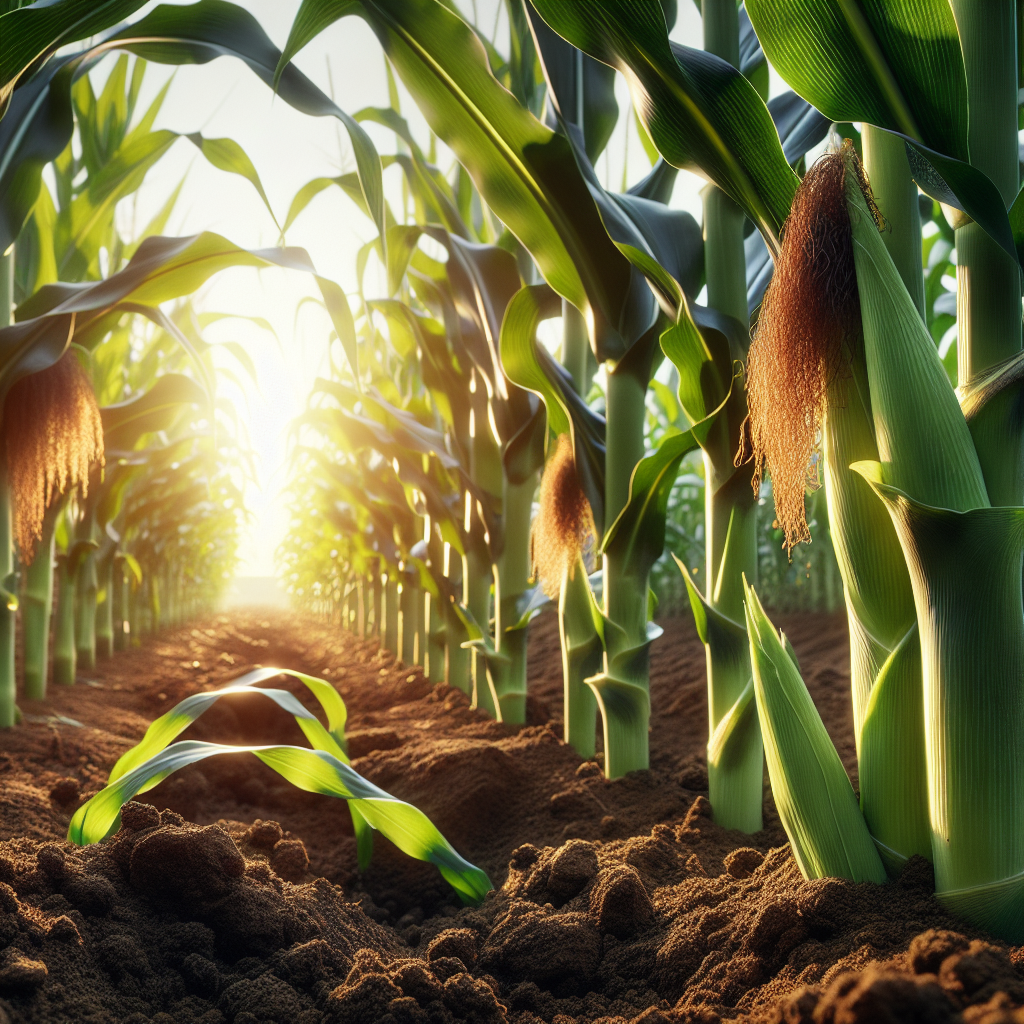
Introduction to Corn
A staple crop domesticated in Mesoamerica thousands of years ago, corn has been shaped by Indigenous breeding into a remarkably diverse species that now includes dent corn, flint corn, flour corn, popcorn, and sweet corn. Although all are the same species, their end use, sugar-to-starch conversion rate, kernel structure, and harvest timing differ substantially, so growers should choose seed according to market purpose rather than appearance alone.
Corn is botanically a grass, but agronomically it behaves like a high-performance annual that responds strongly to management quality. Yield is heavily influenced by even establishment, adequate nitrogen, correct plant population, and uninterrupted moisture from rapid vegetative growth through silking and grain fill. Unlike many garden crops, corn is wind-pollinated, so field layout matters: short, wide blocks pollinate far better than long, single rows. For mixed-grain planning, see Wheat guide.
Professional growers often divide corn production into four major use categories: fresh-market sweet corn, grain corn, silage corn, and specialty heirloom or ornamental types. Sweet corn is harvested at the milk stage, before sugars fully convert to starch. Grain corn remains in the field until kernels reach physiological maturity and dry down. Silage corn is harvested when the whole plant reaches an ideal moisture balance for fermentation, usually with kernels at half milk line to early dent depending on hybrid and storage system.
Botanical Profile of Corn
Corn belongs to the family Poaceae, the grass family, and is a monoecious annual, meaning male and female flowers are separate but carried on the same plant. The tassel at the top of the plant is the male inflorescence and releases pollen over several days, usually most heavily in the morning once humidity drops. The ears that form at leaf axils are the female inflorescences. Each silk is connected to a single ovule, so every potential kernel requires successful pollination of its own silk. Poor pollen shed, drought during silking, heat stress, or asynchronous tasseling and silking can all reduce kernel set.
The root system includes seminal roots from the seed, crown roots from below-ground stem nodes, and brace roots from above-ground nodes that help anchor tall plants. Most active roots are concentrated in the top 30 to 60 cm of soil, but under well-structured conditions roots can explore much deeper. This is why corn needs both good topsoil fertility and a subsoil free of severe compaction.
Leaves emerge alternately from stem nodes, with a sheath clasping the stem and a blade extending outward. Modern hybrids vary widely in height, maturity, disease package, and response to population density. Sweet corn tends to be shorter and more sensitive to stress affecting ear quality, while field corn hybrids are often bred for standability, disease resistance, and harvest dry-down.
Kernel types are important. Dent corn has soft starch in the center and develops a characteristic dent as it dries; it dominates grain and feed production. Flint corn has a harder outer endosperm and is often better suited to traditional food uses and decorative markets. Flour corn has soft starch and mills easily. Popcorn has a hard, dense endosperm that traps steam until kernels explode when heated. Sweet corn carries genetic traits that increase sugar content and slow starch conversion, but these same traits can make seed less vigorous in cold soils.
Soil, pH, and Climate Requirements for Corn
Corn performs best in deep, fertile, well-drained loam or silt loam soils with strong water-holding capacity and good aeration. Sandy soils can produce excellent crops with irrigation and frequent nutrient management, but they are less forgiving because they dry quickly and leach nitrogen more readily. Heavy clays can also support high yields if drainage is adequate, yet poorly drained clay is one of the most common causes of stunting, yellowing, and root disease.
An ideal soil pH is generally 6.0 to 6.8. Corn can tolerate a somewhat broader range, roughly 5.8 to 7.5, but nutrient efficiency declines outside the optimum. Below pH 5.8, phosphorus availability often drops and aluminum or manganese toxicity can begin affecting roots in acidic soils. Above pH 7.2, zinc and iron deficiencies may show up, especially in calcareous soils, producing interveinal chlorosis on young leaves.
Soil organic matter improves aggregation, microbial activity, moisture buffering, and cation exchange capacity. A target of at least 3% organic matter is beneficial in many field situations, though productive corn is grown under both lower and higher levels depending on climate and management. Before planting, a complete soil test should include pH, phosphorus, potassium, sulfur, calcium, magnesium, and micronutrients where regional deficiencies are known.
Temperature is critical. Corn germinates best when soil temperatures at seed depth are at least 10 to 12°C, but emergence is much faster and more uniform at 16 to 18°C. Sweet corn in particular suffers in cold, wet soils, where seed rot and uneven emergence are common. Optimal daytime growing temperatures are around 24 to 30°C. Growth slows markedly below 10°C and pollen viability declines when daytime temperatures rise above about 35°C, especially under low humidity and water stress.
Corn needs full sun and is not shade tolerant. For high productivity, the crop should receive uninterrupted light throughout the day. Water demand is substantial, often totaling 500 to 800 mm over the season depending on climate, soil, maturity class, and yield target. The most sensitive period is from about two weeks before tasseling to two weeks after silking. Even short drought during this window can sharply reduce ear fill.
Uniform moisture is more important than simply frequent irrigation. Ideally, soil in the root zone should remain consistently moist but never saturated. As a practical field benchmark, the top 15 to 20 cm should feel slightly damp and form a weak ball in the hand without oozing water. If the soil stays sticky, smells sour, or plants show pale lower leaves, slow growth, and purplish stress coloration in wet conditions, overwatering or poor drainage may be limiting root oxygen.
For broader soil management principles, see Soil Health Mastery.
Step-by-Step Planting & Propagation
Corn is propagated by seed and is almost never transplanted in commercial practice because transplant shock, root distortion, and delayed establishment usually reduce uniformity. Direct seeding is standard.
Select the right cultivar or hybrid. Choose based on end use, days to maturity, disease resistance, and climate. In short-season areas, early hybrids are safer. In warmer regions with a long frost-free period, mid- or full-season hybrids often yield more. Sweet corn growers should note genetic classes such as su, se, sh2, and synergistic types, because seed vigor, sweetness, and isolation requirements differ.
Prepare a firm, fine seedbed. Corn benefits from good seed-to-soil contact. The ideal seedbed is loose enough for easy root penetration but firm enough that a footprint does not sink deeply. Large clods create uneven planting depth and patchy emergence.
Wait for suitable soil temperature. Plant when soil at 5 cm depth is reliably above 10°C for field corn and preferably 13°C or higher for sweet corn. Cold planting can delay emergence for weeks and increase seedling disease losses.
Set planting depth correctly. Typical depth is 3 to 5 cm in moist, medium-textured soils. In lighter soils or when the surface is dry, 5 to 6 cm may be better to place seed into moisture. Avoid very shallow planting, which encourages weak anchorage and rootless corn syndrome under dry surface conditions.
Use correct spacing. In home gardens, sow in blocks rather than single rows to improve pollination. A common spacing is 20 to 30 cm between plants and 60 to 90 cm between rows. For field production, target population depends on hybrid, rainfall, fertility, and use type. Grain corn often performs well around 55,000 to 85,000 plants per hectare, while silage systems may go higher. Sweet corn populations are often lower to preserve ear size and quality.
Plant more than one row. Since corn is wind-pollinated, at least four short rows are preferable to one long row. Poor layout causes missing kernels and poorly filled ears.
Thin promptly if over-seeded. Thin when seedlings reach 10 to 15 cm tall. Remove weak, off-type, or crowded plants. Delayed thinning wastes soil moisture and nutrients.
Isolate sweet corn classes when necessary. Different sweet corn types and field corn can cross-pollinate. This may not affect the current grain crop in field corn, but it can reduce eating quality in sweet corn. Maintain distance isolation or stagger planting dates so silking periods do not overlap.
Use succession sowing for fresh harvest. For steady sweet corn supply, sow every 10 to 14 days over the local planting window, or mix cultivars with different maturity dates.
Care & Maintenance regimes for Corn
Corn has a rapid growth curve and should never be allowed to stall. Early vigor sets the foundation for root expansion, leaf area, and eventual ear size.
Irrigation: Young corn needs moderate but steady moisture to establish a strong root system. Once plants enter the 6-leaf stage and begin rapid stem elongation, water demand climbs sharply. A typical target is 25 to 40 mm of water per week early in growth, increasing to 40 to 60 mm or more during tasseling, silking, and grain fill depending on evaporative demand and soil type. Sandy soils may require smaller, more frequent applications; heavier loams can be watered more deeply and less often. Drought stress shows first as rolled leaves by midday, dull bluish-green foliage, and delayed silk emergence. Overwatering shows as persistently wet soil, yellowing lower leaves, reduced vigor, and in severe cases a sour smell from anaerobic conditions.
Nutrient management: Corn is a heavy feeder, especially for nitrogen. Approximate nutrient removal and demand depend on yield target and use type, but high-yield grain or sweet corn typically requires substantial nitrogen, moderate phosphorus, and high potassium. A common professional approach is to apply part of the nitrogen at planting and the remainder as side-dress when plants are 20 to 45 cm tall or around the V4 to V8 growth stages. Splitting nitrogen reduces leaching losses and better matches uptake. Phosphorus is especially important early for root growth and vigor; deficiency often appears as purpling of young plants, particularly in cool soils. Potassium supports water regulation, standability, and disease tolerance.
Micronutrients that matter most in some regions include zinc and sulfur. Zinc deficiency causes pale banding on young leaves, often near the base. Sulfur deficiency resembles nitrogen deficiency but appears first on younger leaves because sulfur is less mobile in the plant.
Weed control: Corn is especially vulnerable to early weed competition during the first 4 to 6 weeks after emergence. Keep rows clean through shallow cultivation, mulching in garden systems, stale seedbed methods, or approved herbicide programs where used. Avoid deep cultivation near established plants, as crown roots are easily damaged.
Hilling and support: Light hilling around the base can help support plants in small-scale systems, especially after cultivation. Brace roots should be left exposed if they form above ground; they help stabilize the plant naturally.
Pollination management: In small plantings with poor wind movement, gently shaking tassels around mid-morning over several days can improve pollination. Stress at tasseling and silking is one of the main reasons ears develop missing kernels.
Crop rotation: Rotate away from corn and other grasses when possible to reduce residue-borne disease and insect pressure. Corn following legumes often benefits from improved nitrogen supply.
Pests, Diseases & Organic Management
Corn is attacked by a wide range of insects and pathogens, and successful management depends on scouting, sanitation, resistant genetics, and timing.
Common insect pests:
- Corn earworm damages ear tips and kernels, especially in sweet corn. Adult moths lay eggs on fresh silks. Organic growers often use mineral oil plus Bacillus thuringiensis (Bt) applied to silks shortly after silk emergence, repeated according to pressure.
- European corn borer tunnels into stalks and ears, causing lodging and secondary rot. Destroying crop residues and encouraging natural enemies helps. Bt sprays are only effective when larvae are small and exposed.
- Fall armyworm feeds in whorls and ears, leaving ragged leaves and frass. Early scouting is crucial.
- Cutworms cut seedlings at the base, especially in weedy or recently sod ground.
- Corn rootworm larvae feed on roots, causing lodging and poor nutrient uptake; rotation is one of the most effective controls where species biology permits.
- Birds and Raccoons can devastate sweet corn just before harvest. Netting, fencing, and timely picking are often necessary.
Major diseases:
- Common rust produces cinnamon-brown pustules on leaves; severe infection reduces photosynthesis.
- Northern corn leaf blight causes long gray-green lesions that can coalesce under humid conditions.
- Gray leaf spot is common in warm, humid regions and thrives in reduced till systems with infected residue.
- Smut forms swollen, silvery galls on ears, tassels, and stalks. It enters through wounds and rapidly growing tissues.
- Seedling blights and Damping-off occur in cold, wet soils.
- Stalk rots and Ear rots are often linked to stress, insect injury, and late-season weather.
Organic and cultural management: Start with certified, disease-free seed and resistant cultivars suited to your region. Rotate crops for at least one to two years away from corn where pest cycles are severe. Incorporate or compost residues thoroughly if disease pressure was high, though residue management should be balanced with erosion control goals. Maintain balanced fertility; excessive nitrogen without adequate potassium can worsen lodging and some disease outcomes. Avoid overhead irrigation during evening hours in disease-prone periods, as extended leaf wetness favors fungal infection. Encourage beneficial insects with flowering borders, but keep the crop edge mowed enough to reduce alternate hosts for pests. Scout at least weekly, and twice weekly during silking in sweet corn.
Harvesting, Curing & Optimal Storage
Harvest timing depends entirely on intended use.
Sweet corn: Pick when ears are full-sized, silks have turned brown, and kernels at the middle of the ear release a milky fluid when punctured. This is the classic milk stage. Harvest is usually 18 to 24 days after silking, but temperature and cultivar strongly affect timing. Overmature sweet corn quickly becomes starchy and loses tenderness. Pick in the cool morning, handle gently, and chill immediately. Sugar loss begins as soon as ears are harvested, especially in standard sugary types. Store near 0 to 2°C with very high humidity, ideally 95% or greater. Even under excellent storage, quality declines within days.
Grain corn: Harvest at physiological maturity, indicated by kernel black layer formation and husk drying, then allow field dry-down where conditions permit. Mechanical harvest usually begins around 20 to 25% kernel moisture, followed by artificial drying, or later if weather is favorable. For safe storage, dry grain to about 15% moisture for short-term holding and 13 to 14% for longer storage, with even lower moisture preferred in warm climates. Grain stored too wet is highly vulnerable to heating, mold, and insect infestation.
Silage corn: Harvest when whole-plant moisture is typically around 60 to 70%, depending on silo system, and kernels are often at half milk line. Chop length and kernel processing should match storage method and animal ration goals.
Seed saving: Open-pollinated corn can be saved for seed, but isolation is essential to prevent unwanted crossing. Select from healthy, vigorous plants with well-filled ears, allow ears to dry fully on the plant if climate allows, then finish drying under cover until kernels are hard and moisture is low enough for shelling. Store in cool, dry, rodent-proof conditions.
Postharvest handling: Whether grain or sweet corn, cleanliness matters. Remove damaged ears, maintain airflow, and never store product while field heat remains high. For dry ear corn in small-scale systems, cure in a covered, well-ventilated space until kernels are fully hard and husks papery.
Companion Planting for Corn
Corn is often associated with the Indigenous "Three Sisters" system: corn as a living trellis, beans to climb and contribute nitrogen biologically, and squash to shade soil and suppress weeds. This polyculture can work well on a garden or small-farm scale when spacing is adjusted so corn establishes first. Plant corn, wait until it is roughly 15 to 20 cm tall and well rooted, then sow climbing beans. Add squash around the outer area once soil is warm. If beans are planted too early, they can overtake young corn; if squash is planted too densely, airflow suffers and nutrient competition increases.
Good companions include pole beans, bush beans at field edges, pumpkins, winter squash, cucurbits with room to sprawl, and insectary flowers nearby but not so close that they shade the crop. Marigold and flowering herbs can support beneficial insects in garden systems, though they are not substitutes for proper pest scouting. For legume rotations and nutrient planning, see Soybeans.
Avoid placing corn beside crops that will be heavily shaded or that require very different irrigation patterns. Tall corn can suppress low-growing sun-loving vegetables if orientation is poor. In dense plantings, airflow reduction may increase foliar disease in neighboring crops. Heavy-feeding companions should be balanced with added compost or fertilizer so the corn does not become nitrogen-limited.
For market gardens, companion planting should be evaluated against mechanization, harvest access, and disease management. While mixed planting can improve biodiversity and land use, block planting of corn still gives the most reliable pollination and the easiest irrigation scheduling. The best system is the one that preserves sunlight, airflow, fertility, and access while matching the intended scale of production.