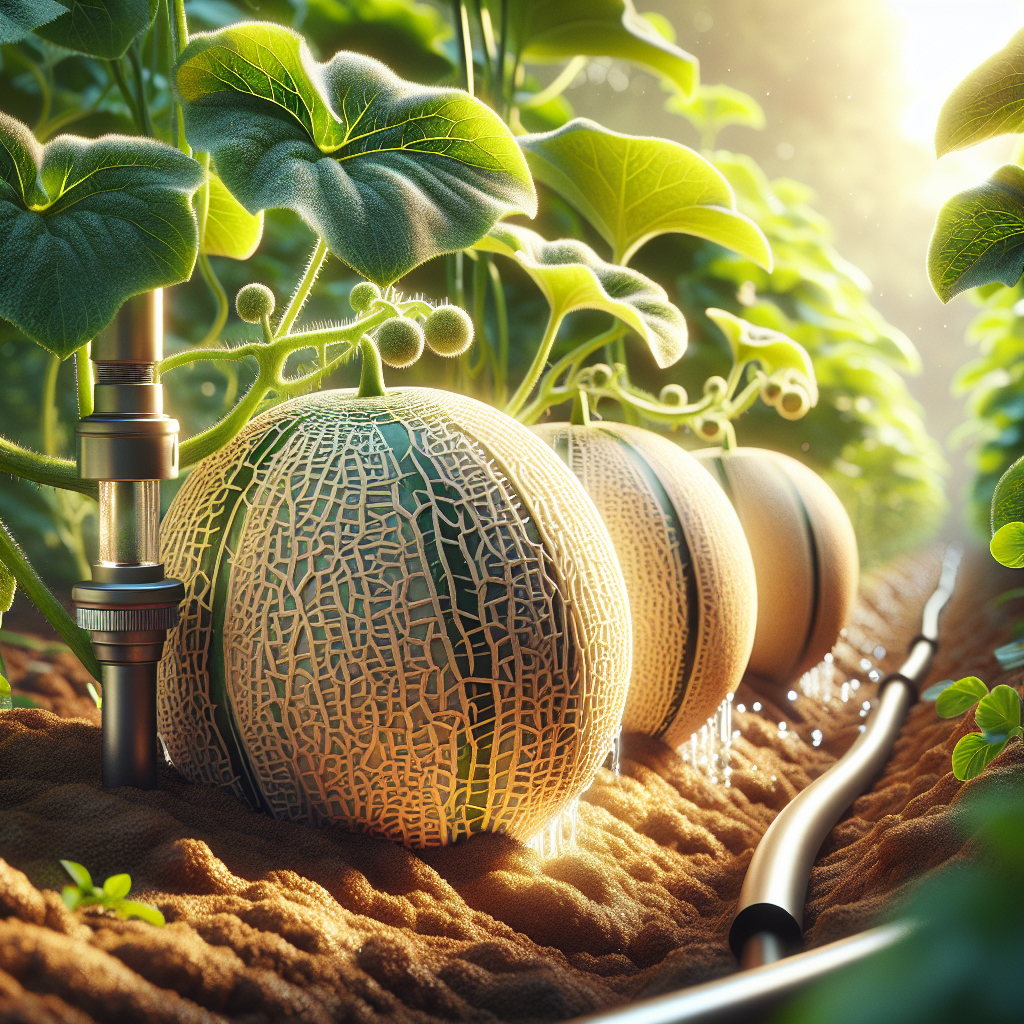
Introduction to Cantaloupe
A classic summer melon, cantaloupe belongs to the species Cucumis melo, the same highly diverse species that includes many muskmelons and specialty melons. In common North American usage, “cantaloupe” often refers to netted muskmelons with orange flesh, although true European cantaloupes are somewhat different in rind texture and appearance. Most growers today cultivate netted, aromatic melons bred for sweetness, disease resistance, transportability, and uniform harvest timing.
Cantaloupe is valued not only for flavor but also for its efficient use of summer heat. When managed well, the crop converts warm temperatures, bright light, and moderate fertility into high-Brix fruit with strong aroma and dense orange flesh rich in beta-carotene. Historically, melons have been selected for centuries across the Mediterranean, Middle East, and Asia, and modern cultivars reflect that deep genetic history through a wide range of days to maturity, vine vigor, rind netting, and tolerance to Powdery mildew, Fusarium wilt, and other production constraints.
For growers, cantaloupe rewards precision. Small mistakes in irrigation, nitrogen rate, spacing, or disease timing can noticeably reduce sugar development and fruit quality. In contrast, a well-run crop delivers fruit with distinct slip, pronounced fragrance, and balanced sweetness. If you already grow related cucurbits, compare management principles with Watermelon, but note that cantaloupe is generally less forgiving of prolonged leaf wetness and often more sensitive to quality losses from uneven watering.
Botanical Profile of Cantaloupe
This crop is a frost-sensitive annual vine in the Cucurbitaceae family. Botanically, it is usually treated within Cucumis melo, with cantaloupe and muskmelon types grouped under cultivated varietal complexes. Plants are monoecious in most standard cultivars, producing separate male and female flowers on the same vine, though some hybrids may show andromonoecious tendencies with perfect flowers as well.
The root system is relatively shallow compared with deep-rooted field crops, with the majority of active feeder roots concentrated in the top 20 to 45 cm of soil, though roots can explore deeper in loose, sandy ground. This is one reason cantaloupe responds strongly to consistent moisture and excellent tilth. Stems are trailing, pubescent, and brittle when young; leaves are broad, rough-textured, and moderately lobed, designed for rapid light capture under high-sun conditions.
Flowers are bright yellow and insect-pollinated, with bees being essential for full fruit set and well-shaped melons. Poor pollination often causes misshapen fruit, aborted young fruit, or low fruit numbers despite strong vegetative growth. Fruit itself is a pepo, characterized by a leathery rind and fleshy interior. Commercially important traits include rind netting, sutures, cavity size, flesh color, aroma intensity, sugar accumulation, firmness, and “full slip” behavior, where mature fruit detaches cleanly from the stem.
Cultivars differ considerably. Some are bred for local fresh eating and outstanding flavor but have soft flesh and short shelf life. Others are designed for shipping, with firmer flesh, more uniform size, and better resistance packages. Days to maturity commonly range from about 70 to 95 days from transplant, depending on cultivar and environment. Smaller-fruited eastern types may mature earlier, while larger western shipper types often require a longer warm season.
Soil, pH, and Climate Requirements for Cantaloupe
The crop performs best in loose, well-drained sandy loam or loam with high biological activity and rapid spring warming. Heavy clay can produce acceptable yields if beds are raised and drainage is excellent, but it increases the risk of root stress, delayed growth, fruit rots, and inconsistent sugar accumulation. Avoid compacted layers; if roots encounter dense subsoil at 15 to 25 cm depth, vines often look adequate early on but later struggle during fruit fill because water and nutrient uptake become erratic.
Ideal soil pH is generally 6.0 to 6.8, with 6.2 to 6.5 being especially favorable for balanced nutrient availability. Below pH 5.8, calcium, magnesium, and molybdenum availability can decline while manganese toxicity may rise. Above pH 7.2, iron, manganese, zinc, and boron deficiencies become more likely, especially in calcareous soils. A pre-plant soil test is essential because cantaloupe quality is tightly linked to balanced fertility rather than simply high fertility.
Cantaloupe needs warmth from establishment through ripening. Optimal germination occurs around 27 to 35°C, while vigorous vegetative growth is best around 24 to 30°C in the day and 18 to 21°C at night. Growth slows sharply below 18°C, and chilling injury can occur if seedlings are exposed to prolonged temperatures below 10°C. Frost is lethal. Fruit sweetness and aroma are best under hot days, warm nights, and abundant sunlight, provided the root zone never becomes waterlogged.
Choose a site with full sun, ideally 8 or more hours of direct light daily. Cloudy weather during ripening often reduces Brix. Wind protection can help in exposed areas because persistent strong wind abrades leaves, disrupts bee activity, and increases evapotranspiration. Still, avoid enclosed sites with stagnant air, since poor airflow encourages foliar disease.
Drainage deserves special emphasis. Cantaloupe roots require oxygen. In saturated soil, roots lose function quickly, causing pale foliage, sudden wilt despite wet ground, and increased susceptibility to fusarium and pythium. A practical target is soil moisture that feels evenly damp but never sticky or anaerobic in the top 10 to 15 cm. If a squeezed handful of soil forms a shiny, dense mass that smears rather than crumbles, it is too wet for optimal melon root health.
Raised beds covered with plastic mulch are highly effective in many systems. Black plastic warms soil, suppresses weeds, and keeps fruit cleaner. In very hot climates, reflective or lighter mulches may reduce excessive root-zone temperatures. For deeper background on building resilient fertile ground before planting, see soil health strategies.
Step-by-Step Planting & Propagation
Cantaloupe is almost always propagated by seed. Direct seeding is common in warm regions with long summers, while transplants are useful in shorter-season climates or for earlier harvest. Because cucurbits resent root disturbance, use large cell trays or biodegradable pots and avoid allowing seedlings to become root-bound.
Schedule around soil warmth. Direct seed only after all frost danger has passed and soil temperature at 5 to 10 cm depth is consistently at least 18°C, preferably 21°C or warmer. Cold soil delays emergence and increases seed decay.
Prepare the bed thoroughly. Incorporate well-finished compost, but do not overload the soil with raw manure or excessive nitrogen. Overly rich beds produce lush vines with delayed fruiting and diluted sweetness. Shape raised beds 15 to 25 cm high where drainage is imperfect.
Install irrigation before planting. Drip irrigation is strongly preferred. It keeps the canopy dry, reduces foliar disease, and allows precise moisture control during fruit expansion and ripening.
Direct seeding method. Sow seeds 1.5 to 2.5 cm deep. In hills, place 3 to 4 seeds per hill and thin to the strongest 1 to 2 plants. In rows, final spacing is typically 45 to 90 cm between plants and 1.8 to 2.4 m between rows, depending on cultivar vigor, equipment, and whether mulch is used.
Transplant method. Start seedlings 2 to 4 weeks before field setting. Transplant when they have 1 to 2 true leaves, not when oversized. Harden off gradually over 5 to 7 days. Set transplants carefully to avoid disturbing the root ball, at the same depth they grew in the tray.
Use row covers strategically. Floating row cover can speed establishment, conserve heat, and protect from Cucumber beetles during the early phase. Remove covers at first flowering so pollinators can access blooms unless managed pollination is provided.
Thin and standardize the stand. Gaps reduce yield, but overcrowding is equally costly. Dense canopies trap humidity, promote Powdery mildew, and reduce spray coverage if intervention is needed.
For professional plant populations, exact spacing depends on cultivar architecture. Compact bushy types can be somewhat closer, while aggressive vining types need more room. Commercial growers targeting premium fruit size often reduce plant density slightly to improve air movement and sugar concentration per fruit.
Care & Maintenance regimes for Cantaloupe
Irrigation management is the single most important cultural lever after temperature. During establishment, keep the root zone consistently moist but not saturated. A useful practical target is moisture in the top 15 to 20 cm that allows a formed soil ball to hold shape briefly, then crumble with slight pressure. If it drips, smears, or smells sour, it is too wet. If the top 5 to 8 cm becomes dusty and plants show midday wilt that persists into evening, it is too dry.
Seedlings need light, frequent watering until roots expand. Once vines begin running, shift to deeper, less frequent irrigation to encourage broader root exploration. During flowering and fruit set, avoid moisture swings. Severe dry-down followed by heavy irrigation can cause fruit cracking, hollow development, reduced sweetness, or blossom drop. During final ripening, reduce water moderately but do not induce severe stress. Mild deficit irrigation near maturity can improve Brix, but excessive stress shrinks fruit size and may produce tough flesh.
As a broad field guideline, many plantings need roughly 25 to 40 mm of water per week early, increasing to 40 to 50 mm during peak vine growth and fruit fill depending on heat, soil texture, and mulch use. Sandy soils may need shorter, more frequent drip cycles; loams can handle longer intervals. Monitor by checking moisture 10 to 20 cm deep rather than relying only on surface appearance.
Fertility should be balanced and staged. Excess nitrogen is a common error. It produces rank vines, delayed maturity, more Aphids, and lower sugar concentration. Apply a moderate pre-plant fertility base according to soil test, then side-dress or fertigate as vines begin to run and again around early fruit set if needed. Potassium is especially important for sugar movement, fruit size, and rind quality. Calcium supports cell wall integrity and shelf life, though soil application works better than late foliar rescue in most situations. Magnesium is essential for sustained leaf photosynthesis, especially in sandy soils.
A practical nutrient program often emphasizes early nitrogen for canopy establishment, then shifts toward potassium support once flowering begins. If leaves are dark green, highly succulent, and internodes are long with sparse fruiting, reduce nitrogen. If older leaves yellow prematurely and vines stall, a carefully measured supplemental feeding may be warranted.
Pollination must be protected. Honeybees and native bees should be active throughout bloom. Avoid spraying even low-toxicity materials during open flowering, especially in the morning when bees are working. Uneven pollination causes misshapen fruit, narrow blossom ends, and premature fruit abortion.
Pruning is limited in field culture, but some greenhouse or trellised systems prune to one or two leaders and hand-support fruit. In open-field systems, maintenance usually focuses on weed control, irrigation precision, and disease scouting rather than vine pruning.
Mulching helps regulate soil moisture, reduce weed competition, and prevent fruit-soil contact. Organic straw mulch can work after soils are fully warm, but if applied too early it may cool the ground. Plastic mulch remains the more common professional choice for earliness and cleanliness.
Weeds are most damaging in the first 4 to 6 weeks after planting, before vines cover the row middles. Once the canopy closes, competition pressure declines, but early weed stress can permanently reduce yield by limiting vine development during the crop’s critical establishment window.
Pests, Diseases & Organic Management
Cucumber beetles are among the most serious early-season pests. They feed on cotyledons and young leaves and can vector Bacterial wilt. Scout immediately after emergence or transplanting. Row covers, trap crops, timely hand removal in small plantings, kaolin clay, and maintaining vigorous early growth all help reduce damage. Severe feeding on seedlings can kill plants outright.
Aphids can colonize rapidly, especially in overfertilized plantings. They distort young leaves, excrete honeydew, and transmit viruses such as Cucumber mosaic virus, Watermelon mosaic virus, and Zucchini yellow mosaic virus. Organic control includes preserving beneficial insects, avoiding excessive nitrogen, using reflective mulches in some systems, and applying insecticidal soap with complete coverage when populations are still light.
Spider mites thrive in hot, dusty conditions and often flare in dry weather. Look for stippling, bronzing, and fine webbing on leaf undersides. Dust reduction, adequate irrigation, and biological control preservation are essential. Sulfur use for disease management can sometimes worsen mite issues under some conditions, so integrated planning matters.
Squash bugs are less central on cantaloupe than on squash, but they may still cause stress in mixed cucurbit plantings. Clean borders and residue management reduce carryover.
Powdery mildew is one of the most predictable cantaloupe diseases. It appears as white powdery patches on leaves, especially later in the season or under humid nights and dry days. Even moderate infection reduces photosynthesis, which directly reduces fruit sweetness. Prevention includes good spacing, resistant cultivars, balanced nitrogen, and early organic fungicide rotation such as sulfur, potassium bicarbonate, or biologicals where allowed and appropriate.
Downy mildew is more destructive in humid regions and can defoliate plantings quickly. Symptoms begin as angular yellow lesions that later turn brown, often with gray-purple sporulation on leaf undersides under moist conditions. Because it spreads rapidly, frequent scouting is critical, particularly during warm wet spells.
Fusarium wilt is soilborne and difficult to manage once present. Infected plants may wilt one side first, then collapse, often despite adequate moisture. Crop rotation away from cucurbits for at least 3 to 4 years, resistant cultivars, and well-drained soils are the main defenses. Do not assume wilting always means drought; root and vascular diseases often mimic water stress.
Anthracnose, Gummy stem blight, Alternaria leaf blight, and various fruit rots also affect cantaloupe. Their severity increases with overhead irrigation, poor airflow, old crop debris, and continuous cucurbit production. Sanitation is foundational: remove crop residues, rotate fields, disinfect tools in intensive systems, and avoid working among wet vines when disease is active.
Organic management works best preventively, not reactively. Build a system around crop rotation, resistant seed, drip irrigation, mulching, insect exclusion early, and regular scouting twice weekly minimum during rapid growth. Once fruit are present, maintain leaf area as long as possible; every healthy leaf contributes to final sugar accumulation.
Harvesting, Curing & Optimal Storage
Harvest timing determines eating quality more than any other single step after growing. Unlike some melons that are cut before full aroma develops, many cantaloupes are best harvested at or near “full slip,” when the fruit naturally separates from the stem with gentle pressure. The background rind color usually shifts from greenish to tan or buff, the netting becomes more pronounced, and a characteristic sweet fragrance develops at the blossom end.
Do not rely on size alone. Marketable size varies by cultivar and spacing. Instead, assess slip stage, aroma, rind color, and days from pollination or planting. Immature fruit lack full sugar, have weaker aroma, and often show firmer, less juicy flesh. Overmature fruit soften rapidly, develop internal breakdown, and attract insects.
Harvest in the cool morning when fruit temperature is lower. Handle gently; cantaloupe bruises more easily than the rind suggests. Keep harvested fruit shaded immediately. Field heat removal is important for maintaining shelf life, especially in commercial channels.
Curing in the classic sense is not as central for cantaloupe as it is for onions or winter squash. However, a short period of careful postharvest drying and cleaning in a shaded, ventilated area can help surface moisture evaporate before packing. Do not wash fruit unless necessary, and if washing is done, use clean sanitized water and dry fruit thoroughly. Wet fruit held warm is highly prone to postharvest rot.
For storage, ideal conditions are generally around 2 to 5°C with 90 to 95% relative humidity for short-term holding, though very cold storage can injure some melon types if prolonged. Fully ripe cantaloupes are best consumed quickly, often within 5 to 14 days depending on cultivar, harvest stage, and handling quality. For best flavor, bring chilled fruit to cool room temperature before serving.
Signs of good harvest maturity include full aroma, well-developed netting, slight stem-end softening, and a clean abscission layer. Signs of storage decline include water-soaked spots, soft blossom ends, fermented odor, rind collapse, and internal mealiness.
Companion Planting for Cantaloupe
Companion planting around cantaloupe should be guided by agronomy, not folklore alone. The most useful companions are those that improve pollinator activity, reduce exposed soil, confuse pest movement, or avoid direct competition with the melon root zone. Low-growing flowering herbs and insectary plants placed at bed ends or row borders can support beneficial insects without crowding vines. Alyssum, dill, and select basil plantings are often used this way; for another aromatic companion crop, see Thai basil.
Legumes such as bush beans can be used nearby in diversified gardens, but they should not shade vines or impede airflow. In larger systems, flowering borders with buckwheat or native pollinator mixes can increase beneficial insect presence, though they must be managed so they do not harbor pests or compete for water.
Good companions are usually planted adjacent to, not directly among, the melon crowns. Cantaloupe needs open air around the base to reduce humidity and disease pressure. Dense interplanting may sound efficient but often increases mildew, complicates harvest, and reduces bee movement to melon flowers.
Avoid planting cantaloupe immediately beside very vigorous cucurbits such as sprawling pumpkins or large winter squash that can overrun the space. Likewise, do not follow or repeatedly neighbor cantaloupe with other cucurbits in the same location year after year, since they share pests and diseases. Rotation remains more powerful than companion planting when managing Cucumber beetles, soilborne wilts, and foliar pathogens.
Useful companions in practical terms include pollinator-attracting flowers on borders, shallow-rooted herbs that do not compete aggressively, and alliums nearby but not close enough to impede access or cultivation. The goal is a biologically active, pest-resilient field edge paired with a clean, airy melon canopy. In professional production, that strategy consistently outperforms overcrowded polycultures that sacrifice disease management for novelty.