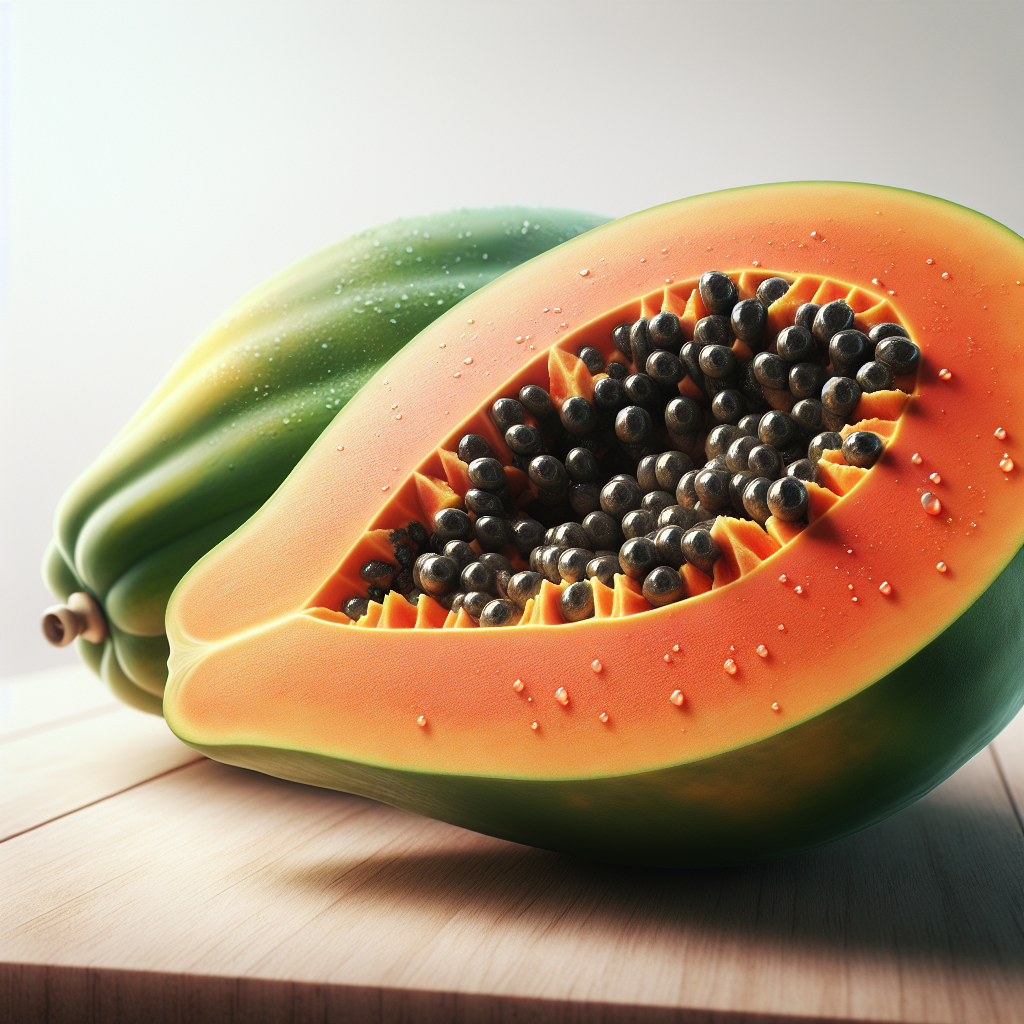
Introduction to Solo Papaya
Solo Papaya (Carica papaya 'Solo') stands out as one of the most rewarding tropical fruit trees for home gardeners and small-scale farmers. Originating from the Caribbean and popularized in Hawaii, this dwarf variety grows to just 8-10 feet tall, making it perfect for backyards, patios, or container cultivation. Unlike larger papaya varieties, Solo Papaya produces hermaphroditic flowers, ensuring self-pollination and consistent fruit set without needing multiple plants. Fruits are pear-shaped, weighing 1-2 pounds, with vibrant orange flesh that's exceptionally sweet (Brix 12-15) and low in fibers, ideal for fresh eating, smoothies, or salads.
This variety matures quickly, often fruiting within 9-12 months from seed, and can yield 50-100 fruits per tree annually under optimal conditions. Its compact size suits subtropical zones (USDA 9-11) and even cooler climates with protection. For growers interested in general papaya cultivation, see the comprehensive Papaya (crop) wiki page. Discover why companion planting feels like guesswork for small farms—and how AI makes it foolproof in this insightful blog post.
Rich in vitamins A and C, papain enzyme, and antioxidants, Solo Papaya offers nutritional and commercial value. Whether you're a novice or experienced grower, mastering Solo Papaya unlocks year-round tropical bounty with minimal space.
Botanical Profile of Solo Papaya
Solo Papaya belongs to the Caricaceae family, a herbaceous perennial often grown as an annual in non-tropical areas. It features a single, hollow, herbaceous stem with prominent leaf scars, topped by a canopy of large, deeply lobed leaves up to 3 feet across on 2-foot petioles. Leaves emerge in a spiral, creating an umbrella-like structure.
The plant is gynodioecious but 'Solo' is predominantly hermaphroditic, producing perfect flowers that self-pollinate efficiently. Flowers are pendulous, 1-2 inches long, white to cream-colored, borne in clusters along the trunk. Pollination occurs via wind or insects, with hermaphroditic types yielding elongated, pear-shaped fruits.
Fruits develop from the apex downward, ripening in 3-4 months. Skin turns from green to yellow-orange, enclosing orange flesh surrounding a central cavity filled with black seeds. Trees have shallow, fibrous roots, spreading 3-4 feet wide, making them sensitive to drought and root disturbance. Lifespan is 3-5 years, after which productivity declines, prompting replanting.
Growth is rapid, reaching 6 feet in 6 months. It prefers short days for flowering but fruits year-round in tropics. For comparison, it's smaller than Red Maradol Papaya, suiting container growth.
Soil, pH, and Climate Requirements for Solo Papaya
Solo Papaya demands well-draining, fertile soil rich in organic matter. Loamy or sandy loams are ideal; heavy clays lead to root rot. Incorporate 20-30% compost or aged manure at planting. Soil pH should be 6.0-7.0; test and amend with lime if below 5.8 or sulfur if above 7.5.
Climate-wise, it thrives in full sun (8+ hours daily) with temperatures 70-90°F (21-32°C). It tolerates brief dips to 32°F (-0°C) but growth stalls below 60°F (15°C). High humidity (60-80%) aids fruit quality, but excellent drainage prevents fungal issues. Annual rainfall of 40-60 inches is optimal; supplement with drip irrigation during dry spells.
In cooler zones, grow in pots for mobility or use greenhouses. Mulch heavily with organic matter to retain moisture and suppress weeds. Avoid frost pockets; windbreaks protect from drying winds. Salt tolerance is low, so avoid coastal exposures without leaching.
Step-by-Step Planting & Propagation
Seed Propagation (Primary Method)
- Seed Selection & Prep: Harvest seeds from ripe Solo fruits, wash off gelatinous coating, and dry 1-2 days. Viability lasts 1-2 months.
- Germination: Sow in 4-inch pots with seed-starting mix (pH 6.5). Plant ½ inch deep, 4-5 seeds per pot. Keep at 80-85°F (27-29°C) using heat mats; germinate in 2-3 weeks.
- Thinning: Thin to strongest seedling at 4-6 inches tall.
- Transplant: Harden off after 8-10 weeks (6-12 inches tall). Space 6-8 feet apart in-ground or 5-gallon pots.
Stem Cuttings (Advanced)
Use 2-3 foot tip cuttings from healthy trees, dipped in rooting hormone. Plant in sterile mix under mist; root in 4-6 weeks.
Planting
Choose sunny, sheltered sites. Dig holes 2x root ball width, amend with compost. Plant at soil line; water deeply. Stake if windy. For containers, use 15-20 gallon pots with drainage holes.
Care & Maintenance regimes for Solo Papaya
Watering: Consistent moisture is key—1-2 inches weekly, more in heat/fruiting. Allow top 2 inches to dry; overwatering invites Phytophthora. Drip irrigation prevents wet foliage.
Fertilization: High nitrogen initially: 10-5-20 monthly. Switch to 6-6-6 + micronutrients during fruiting. Foliar feed with seaweed extract biweekly. Avoid excess potassium pre-fruit.
Pruning: Remove lower leaves as they yellow. Pinch apex for bushier growth if desired (reduces height). Thin crowded fruit clusters to 4-6 per stalk for larger fruits.
Mulching: 4-6 inches organic mulch conserves water, moderates soil temp.
Support: Stake young trees; mature ones self-support but benefit from ties.
Monitor for nutrient deficiencies: yellowing lower leaves = nitrogen lack; mottled leaves = calcium.
Pests, Diseases & Organic Management
Common Pests:
- Aphids: Blast with water; neem oil sprays.
- Mealybugs: Alcohol swabs, insecticidal soap.
- Whiteflies: Yellow sticky traps, reflective mulch.
- Papaya fruit fly: Bait traps, sanitation.
Diseases:
- Powdery mildew: Sulfur sprays, improve air flow.
- Anthracnose: Copper fungicide, prune for ventilation.
- Root rot: Ensure drainage; solarize soil.
- Ringspot virus: Remove infected plants; use certified seeds.
Organic IPM: Introduce ladybugs, predatory mites. Neem oil weekly preventatively. Remove debris to break cycles.
Harvesting, Curing & Optimal Storage
Harvest when 75-80% color change (yellow/orange shoulders), as fruits ripen off-tree. Cut with shears, leaving ½-inch stem. Yield peaks 18-24 months.
Cure at 77-86°F (25-30°C), 85-90% humidity for 2-3 days to even ripening. Store ripe fruit at 45-50°F (7-10°C) up to 2 weeks. Unripe: 50°F (10°C), 85% RH, 3-4 weeks.
Companion Planting for Solo Papaya
Pair with Thai Basil to deter flies; nasturtiums trap aphids. Marigold suppresses nematodes. Avoid Potato or nightshades due to shared pests. Guava provides shade/windbreak. Legumes like pigeon pea fix nitrogen. Read our Fall Companion Planting Guide for more.