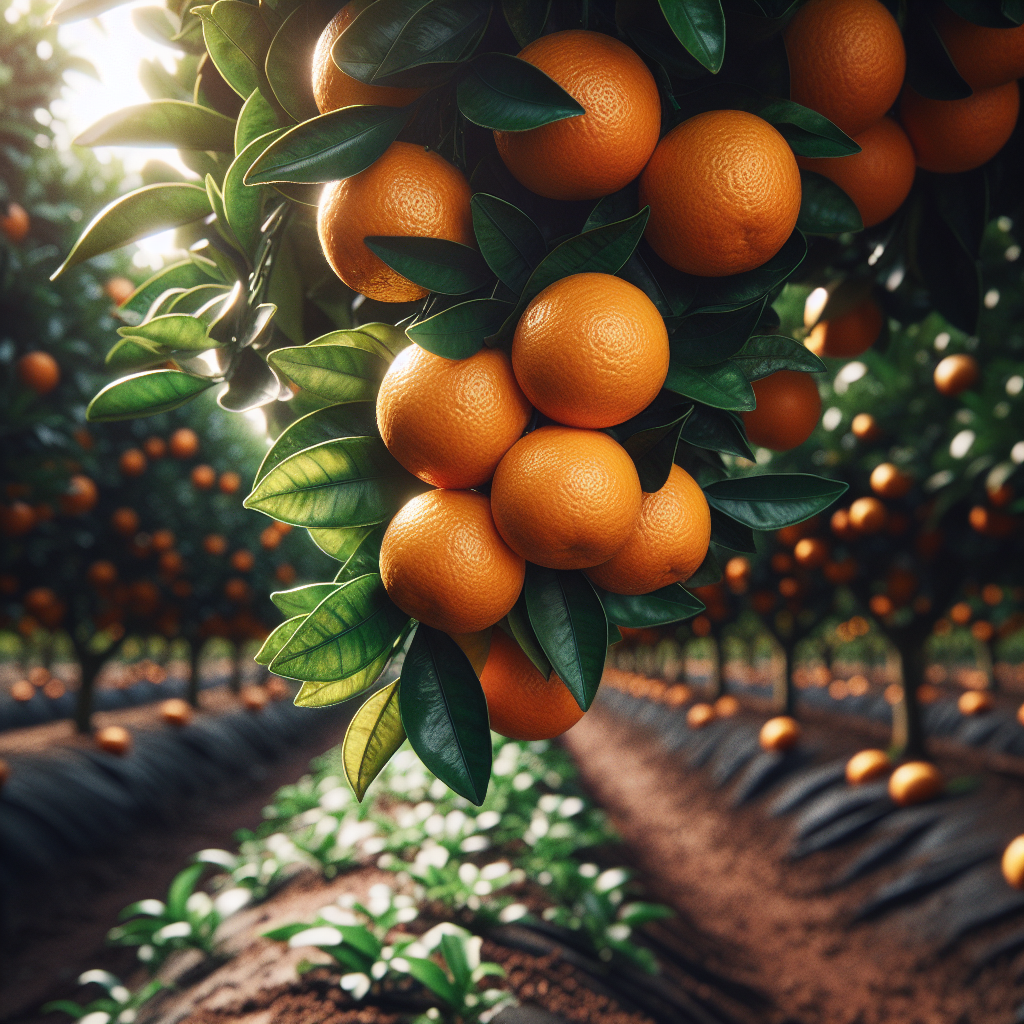
Introduction to Orange
Sweet orange is a subtropical evergreen fruit tree grown commercially across Mediterranean, tropical-subtropical, and warm temperate regions. It belongs to a complex citrus lineage shaped by ancient hybridization, and most cultivated sweet oranges are classified as Citrus × sinensis. Unlike mandarins, oranges typically produce larger, firmer fruit with a balanced sweet-acid flavor profile and a rind that may be tight or moderately loose depending on cultivar.
Historically, oranges moved from Southeast Asia through India and the Middle East into Europe, then into the Americas via colonial trade routes. Over centuries, growers selected for eating quality, peel color, seedlessness, juice content, and harvest season. Modern production includes navel oranges for fresh consumption, Valencia types for juicing, and numerous local or regional strains adapted to climate, soil, and market preference. If you also grow related citrus, compare management principles in this Lemon guide.
For growers, oranges are both rewarding and exacting. A tree can remain productive for decades, but yield and fruit quality respond strongly to rootstock choice, water consistency, nutrition, canopy light penetration, and biosecurity. Good orange production is not just about keeping the tree alive; it is about producing fruit with high soluble solids, good peel finish, adequate size, internal juiciness, and marketable color without inducing physiological stress.
Botanical Profile of Orange
Orange trees are evergreen, medium-sized citrus trees that commonly reach 3 to 9 meters tall depending on rootstock, pruning, soil vigor, and whether they are grown in orchards, home gardens, or containers. The canopy is typically rounded to spreading. Young shoots may carry small thorns, especially on vigorous juvenile growth. Leaves are glossy, dark green, oval to elliptic, and aromatic due to the oil glands common to citrus foliage.
Flowers are white, waxy, and highly fragrant, usually appearing in flushes associated with seasonal warming and moisture conditions. A single main bloom is typical in many climates, though warm irrigated regions may see scattered off-season flowering. Orange trees are largely self-fertile, so a single tree can set fruit, but pollinator activity often improves fruit set under favorable conditions.
The fruit is a hesperidium: a specialized berry with a leathery rind and segmented interior. The outer colored layer, or flavedo, contains aromatic oil glands; the white inner albedo varies in thickness among cultivars. Flesh color ranges from pale orange to deep orange, and blood oranges develop red pigmentation through anthocyanin accumulation when cool nights coincide with fruit maturation.
Commercially, oranges are often grouped into major classes:
- Navel oranges: seedless to nearly seedless, easy to peel, excellent fresh quality, early to mid-season, but generally less suitable for juice processing because of limonin-related bitterness after extraction.
- Valencia oranges: late-season, highly juicy, thin-skinned, and widely preferred for juice.
- Blood oranges: distinctive flavor and internal red coloration under suitable temperature patterns.
- Common or round oranges: broad category including many seeded and local cultivars.
Rootstock strongly affects final tree performance. Trifoliate orange hybrids, sour orange, rough lemon, Cleopatra mandarin, and Volkamer lemon have all been used depending on soil conditions, salinity, disease pressure, and climate. Rootstock can influence vigor, cold tolerance, disease susceptibility, fruit size, bearing age, and tolerance to calcareous or poorly drained soils.
Soil, pH, and Climate Requirements for Orange
Orange trees demand one non-negotiable soil condition: drainage. They do not tolerate prolonged root-zone saturation. The ideal soil is a deep, well-aerated sandy loam to loam with moderate water-holding capacity and at least 1 to 1.5 meters of penetrable profile. Heavier soils can be used if they are structured, drained, and managed carefully, but compacted clay or any site with a perched water table is risky.
A practical target soil pH is 6.0 to 7.5, with best nutrient availability often occurring around 6.2 to 6.8. Trees can survive outside this range, but performance declines. In alkaline soils above pH 7.8, iron, manganese, and zinc deficiencies become common, often appearing as interveinal chlorosis on young leaves. In strongly acidic soils below pH 5.5, root growth may be restricted and nutrient imbalances become more likely.
Ideal climate is frost-free or nearly frost-free subtropical to warm temperate. Oranges perform best where:
- Mean growing-season temperatures are roughly 20 to 32°C.
- Winter lows seldom drop below -2 to -3°C for extended periods.
- Heat above 38°C is occasional rather than constant.
- Relative humidity is moderate, with air movement sufficient to reduce disease pressure.
Temperature affects both tree health and fruit quality. Warm days promote sugar accumulation, while mild to cool nights can improve color development in many cultivars. However, persistent high nighttime temperatures often reduce external coloration even when internal maturity is acceptable. This is why tropical oranges may remain greenish outside while being fully ripe inside.
Rainfall of 900 to 1,500 mm annually can support healthy trees if distributed reasonably and soils drain well. Where rain is erratic, supplemental irrigation is essential, especially during flowering, fruit set, and fruit enlargement. Water stress at the wrong stage causes fruit drop, reduced size, rind coarseness, and alternating heavy and light cropping.
Wind matters more than many beginners expect. Strong dry winds shred young flush, scar fruit, increase evapotranspiration, and can twist roots in newly planted trees. Windbreaks should reduce force without completely blocking airflow, because stagnant humid conditions favor disease.
For long-term soil performance, maintain mulch and organic matter while avoiding a permanently wet collar around the trunk. Orchard floor health is central to citrus productivity; broader principles in this soil health article apply well to citrus blocks.
Step-by-Step Planting & Propagation
Most professional growers establish oranges using grafted nursery trees, not seedlings. Seed-grown orange trees are variable, slower to bear, often more vigorous than desired, and may not replicate the parent fruit quality. Grafting a named scion onto a suitable rootstock produces earlier cropping and predictable orchard performance.
Site selection
Choose a location with:
- Full sun for at least 8 hours daily.
- Excellent surface and internal drainage.
- Minimal frost pocket risk.
- Protection from severe prevailing winds.
- Access to irrigation water with low to moderate salinity.
Avoid low-lying hollows where cold air accumulates. Even a slight slope can significantly reduce frost damage.
Land preparation
Before planting, test soil for pH, electrical conductivity, organic matter, and major nutrients. Correct drainage problems first; fertility amendments cannot compensate for oxygen-starved roots. Subsoil compacted layers if needed, incorporate well-decomposed organic matter only where appropriate, and form raised beds or mounds in marginally heavy soils.
Planting time
The best planting season is generally early spring after frost risk in cooler subtropical regions, or the beginning of the rainy season in tropical climates where waterlogging is not severe. Avoid planting during extreme heat, cold, or periods of saturated soil.
Spacing
Spacing varies with cultivar, rootstock, and mechanization goals. Common orchard spacing ranges from:
- 4 to 5 m between trees and 6 to 7 m between rows for moderate-vigor systems
- Closer in high-density plantings on dwarfing rootstocks
- Wider on vigorous rootstocks or in low-input systems
Trees need adequate light penetration for flowering wood and fruit color development. Overcrowding leads to shaded interiors, poor spray coverage, and disease pressure.
Planting procedure
- Dig a hole only as deep as the root ball and 2 to 3 times as wide.
- Keep the graft union clearly above soil level, typically 10 to 20 cm above the final grade.
- Remove container restrictions carefully; tease circling roots only if severely pot-bound.
- Backfill with native soil rather than a radically different amended mix, which can create a perched moisture zone.
- Water thoroughly to settle the soil.
- Mulch in a broad ring 5 to 10 cm deep, but keep mulch 15 to 20 cm away from the trunk.
- Stake only if wind exposure demands it, and remove ties before girdling occurs.
Propagation details
Commercial propagation usually involves budding, especially T-budding or chip budding, onto rootstocks grown from seed or clonal propagation systems. Budding is performed when bark slips easily and cambial contact can be secured. Budded plants are then headed back to force the scion. Virus-free, certified nursery stock is essential in modern citrus culture because systemic pathogens can devastate orchards for years.
Care & Maintenance regimes for Orange
Orange trees need a stable regime rather than sporadic attention. The key pillars are irrigation, nutrition, canopy management, weed control, and crop-load balance.
Irrigation
Young trees need frequent but moderate watering while roots establish. Mature trees need deeper, less frequent irrigation adjusted to soil type and phenological stage.
A useful practical target is to keep the active root zone moist but aerated, not saturated. In sandy soils, irrigation may be needed 2 to 4 times per week during hot weather; in loams, 1 to 2 deep irrigations weekly may suffice; in clay loams, intervals are longer but each event must be carefully managed to avoid prolonged waterlogging.
Critical stages for moisture consistency:
- Flower initiation and bloom
- Fruit set
- Early fruit enlargement
- Final sizing period before maturity
Signs of underwatering include dull, slightly folded leaves during the morning, persistent leaf curl, increased fruit drop, undersized fruit, and dry soil below the top mulch layer. Signs of overwatering include yellowing leaves without obvious nutrient pattern, soft lush shoot growth, sour-smelling soil, algae on the basin surface, gum formation near the crown, and fruit splitting in susceptible cultivars after irregular moisture swings.
Drip or microsprinkler systems are preferred because they deliver precise water to the root zone while keeping the trunk drier than flood systems. In mature orchards, irrigation should ideally wet a broad percentage of the root area rather than a tiny point source. As trees expand, widen the wetted zone.
Nutrition
Orange trees are heavy feeders compared with many perennial fruits. Nitrogen drives canopy growth and yield, but excessive nitrogen produces coarse rind, delayed coloring, softer tissues attractive to pests, and lower flavor concentration. A balanced program also requires phosphorus, potassium, calcium, magnesium, sulfur, zinc, manganese, boron, and iron.
General principles:
- Feed little and often for young trees.
- Split annual nitrogen into multiple applications, especially on sandy soils.
- Increase potassium demand during heavy cropping years.
- Use foliar sprays for micronutrients where soil availability is poor.
Typical deficiency symptoms:
- Nitrogen: general pale green foliage, weak growth, smaller leaves.
- Magnesium: yellowing on older leaves with green area near the leaf base or along midrib depending on severity.
- Iron: interveinal chlorosis on the youngest leaves, common in calcareous soils.
- Zinc: small leaves, rosetting, mottled chlorosis.
- Manganese: interveinal chlorosis on young to mid-aged leaves, often confused with iron.
- Boron: misshapen fruit, poor set, brittle tissue in severe cases.
Pruning and canopy management
Orange trees generally require less pruning than apples or grapes. The goal is not heavy annual cutting but canopy correction. Remove:
- Dead, diseased, or crossing branches
- Water sprouts crowding the center
- Rootstock suckers from below the graft union
- Limbs touching the ground or interfering with orchard access
Young trees should be trained to a balanced framework with scaffold limbs beginning above knee height in orchard systems. Avoid over-pruning, which stimulates excessive vegetative regrowth and sunburn on exposed branches.
Mulching and weed control
A mulch ring moderates temperature, reduces evaporation, and supports biological activity. Organic mulches such as composted bark, leaf mold, straw, or chipped prunings work well if not piled against the trunk. Keep a weed-free strip around young trees because grasses and broadleaf weeds compete aggressively for nitrogen and moisture.
Fruit thinning and alternate bearing
Some orange cultivars or stressed trees tend toward alternate bearing, with one heavy crop followed by a lighter one. Excessive crop load reduces fruit size and weakens return bloom. In severe cases, selective thinning of immature fruit or disciplined post-harvest nutrition and irrigation can improve regularity.
Pests, Diseases & Organic Management
Orange trees face a broad pest and disease complex that varies by region. The most important principle is integrated management: sanitation, monitoring, biological balance, and only then targeted intervention.
Key pests
Aphids attack flush and can distort young leaves while transmitting viral diseases. Strong infestations produce sticky honeydew and sooty mold.
Citrus leafminer tunnels through tender new leaves, causing silvery serpentine trails and distorted flush. Damage is most serious on nursery stock and young trees.
Scale insects and mealybugs feed on sap, weaken trees, and encourage sooty mold from honeydew deposits.
Mites, especially rust mites and spider mites, can scar fruit and bronzed foliage under hot, dry conditions.
Whiteflies, thrips, and some fruit flies may also be important depending on location.
Organic management tools include:
- Encouraging natural enemies such as lady beetles, lacewings, hoverflies, and parasitic wasps
- Avoiding excessive nitrogen, which attracts soft-bodied pests
- Pruning for airflow and spray penetration
- Releasing beneficial insects where commercially available
- Applying horticultural oils during appropriate temperature windows to suppress scale, mites, and some eggs
- Using insecticidal soaps on early infestations of soft-bodied insects
- Removing water sprouts and infested flush when practical
Major diseases
Phytophthora root rot and collar rot are among the most destructive problems in poorly drained sites. Symptoms include leaf yellowing, reduced vigor, dieback, gumming near the crown, and root decay. Prevention through drainage and correct irrigation is more effective than rescue.
Citrus canker causes corky lesions on leaves, twigs, and fruit, often with yellow halos. It spreads through wind-driven rain, tools, and infected material. Sanitation, windbreaks, and strict plant material hygiene are critical.
Greasy spot, melanose, anthracnose, and Alternaria brown spot affect foliage and fruit depending on cultivar and climate. Humid orchards with dense canopies are most vulnerable.
Huanglongbing (HLB, citrus greening), where present, is the most serious citrus disease globally. It is associated with phloem-limited bacteria spread by citrus psyllids. Symptoms may include asymmetrical blotchy mottling on leaves, misshapen bitter fruit, reduced vigor, and progressive decline. Certified planting material, vector management, and regional sanitation protocols are essential.
Organic disease suppression principles
- Plant only disease-free nursery stock
- Maintain wide enough spacing for rapid leaf drying
- Irrigate at the root zone rather than wetting foliage unnecessarily
- Sanitize pruners between suspect trees
- Remove fallen diseased fruit where relevant
- Avoid trunk injury from tools and sunscald
- Use copper-based products judiciously where permitted and appropriate for bacterial or fungal disease suppression
- Build soil health and root resilience rather than relying solely on reactive sprays
Harvesting, Curing & Optimal Storage
Oranges do not continue to ripen in the same way as climacteric fruits once picked, so harvest timing matters. External peel color alone is not a perfect maturity indicator, especially in warm regions where fruit may stay greenish. The best indicators are a combination of fruit size, juice content, sugar-acid balance, ease of detachment, and characteristic flavor.
When to harvest
Depending on cultivar and region, oranges are harvested from late autumn through spring, and some Valencia types can hang longer into warm months. Fruit intended for fresh market should be fully developed, disease-free, and handled carefully to preserve rind quality.
Harvest method
Harvest by clipping or twisting gently without tearing the rind. A torn button or punctured peel becomes an entry point for post-harvest decay. Pick into padded bags or bins and avoid dropping fruit. Morning harvest after surface moisture dries is ideal to reduce disease spread and packinghouse problems.
Field handling
Keep harvested fruit shaded. Direct sun on harvested oranges raises rind temperature quickly, increasing moisture loss and reducing storage life. Sort out damaged, cracked, insect-stung, or diseased fruit immediately.
Curing and post-harvest conditioning
Oranges are not typically cured in the same manner as onions or sweet potatoes, but a short conditioning period in clean, ventilated conditions can help surface moisture dissipate before storage or packing. Wash water, if used, must be sanitized and temperature-managed to avoid drawing pathogens into the fruit.
Storage conditions
Optimal storage generally falls around 3 to 9°C depending on cultivar and intended duration, with 85 to 90% relative humidity to reduce shrivel. Very low temperatures can induce chilling injury in susceptible fruit, especially some tropical-grown oranges. Symptoms include pitting, rind discoloration, and poor flavor retention. For short home storage, a cool room or refrigerator crisper works well, but avoid sealing fruit in non-breathable bags that trap condensation.
Under good commercial storage, many oranges keep for 2 to 8 weeks, though exact longevity varies by cultivar, harvest maturity, disease status, and handling quality. Thin-skinned, overripe, or bruised fruit store less well than carefully harvested, moderately mature fruit.
Companion Planting for Orange
In orange orchards, companion planting should be approached as orchard floor design, not casual intermixing. The goals are to improve pollinator presence, suppress erosion, support beneficial insects, moderate soil temperatures, and reduce weed pressure without creating competition or humidity problems.
Good companions are typically low-growing, non-invasive species with manageable water demands. Useful categories include:
- Flowering insectary plants such as alyssum, dill, fennel, yarrow, and certain native wildflowers placed in strips rather than at the trunk line
- Leguminous cover crops such as clovers or vetch in suitable climates to contribute nitrogen biologically and protect soil
- Mulch-producing grasses in row middles that are regularly mowed and kept from competing directly with the feeder root zone
- Herbs such as basil or selected aromatic species in garden settings, provided irrigation is adjusted appropriately
Keep the immediate trunk zone clear. Dense vegetation right against the trunk traps moisture, encourages rodents, increases collar disease risk, and competes with shallow feeder roots. In commercial citrus, the best system is often a clean strip under trees with managed cover in alleys.
Avoid aggressive companions that:
- Demand frequent irrigation near the trunk
- Shade the lower canopy
- Harbor shared pests excessively
- Require heavy tillage that damages citrus roots
A mixed flowering alley can improve pollinator and predator activity, but mowing schedules must avoid removing all bloom at once. Rotate strips or mow selectively so beneficial insects always have resources available. In water-limited climates, companion planting must never compromise the tree’s moisture priority. Orange production remains the main enterprise, and companion species should function as support, not competition.