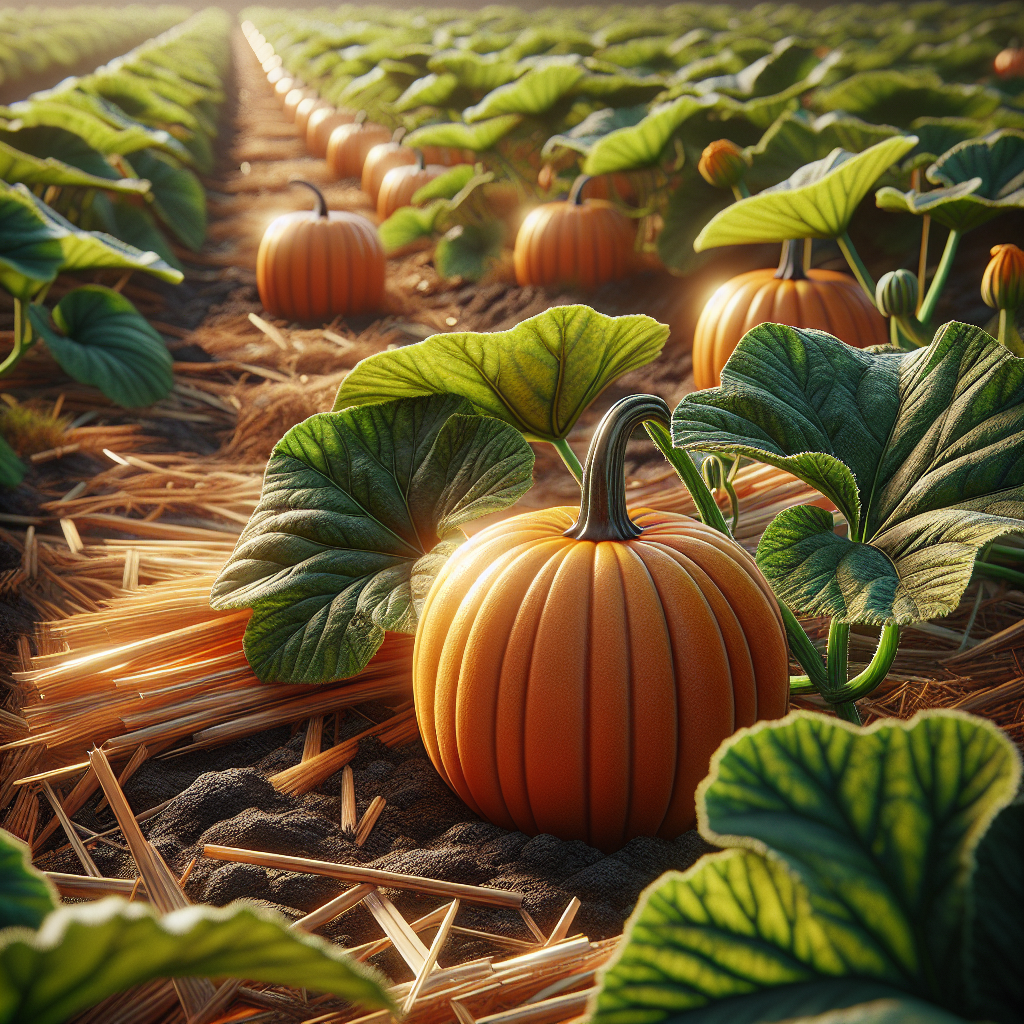
Introduction to Sugar Pie Pumpkin
Sugar Pie Pumpkin is one of the best-known culinary pumpkins in North America, grown specifically for eating rather than decoration. It belongs to the same species as many summer squashes and some ornamental pumpkins, but this strain has been selected for small, round fruits with fine-grained orange flesh, a relatively thin but durable rind, and flavor that improves after harvest and curing.
Most fruits weigh about 4-8 pounds, though size varies with spacing, fertility, and fruit load. That size is important agronomically: smaller fruits mature more evenly, cure faster, and are easier to handle than large field pumpkins. Sugar Pie types are often preferred by bakers because they offer smoother texture and lower stringiness than coarse carving pumpkins. They also tend to have a higher usable flesh-to-cavity ratio, making them efficient for kitchen production.
Historically, pie pumpkins descend from long traditions of selecting Cucurbita for culinary quality rather than spectacle. In practical growing terms, Sugar Pie is not difficult, but it is unforgiving of cold soil, chronic leaf wetness, nutrient excess, and poor pollination. The crop rewards careful timing, warm ground, steady moisture, and disciplined disease prevention. If you want a compact processing pumpkin with classic flavor, this is one of the most reliable choices.
Botanical Profile of Sugar Pie Pumpkin
Sugar Pie Pumpkin is an annual warm-season cucurbit in the family Cucurbitaceae. Botanically, it is typically classified as Cucurbita pepo, a species that includes pumpkins, some winter squashes, zucchini, and certain ornamental gourds. This matters because cross-pollination can occur with other C. pepo types during seed production, though it does not affect the fruit quality of the current season's crop.
The plant has a vigorous vining habit, usually producing trailing stems 6-12 feet long, sometimes more under high fertility and warm conditions. Stems are angular, bristled, and somewhat hollow. Leaves are large, broad, rough-textured, and typically dark to medium green, with mild lobing. Healthy foliage should look expansive and turgid; drooping in the morning usually indicates a water problem or root stress, while drooping in late afternoon can be normal under heat.
Like most pumpkins, it is monoecious: separate male and female flowers occur on the same plant. Male flowers appear first and usually in greater numbers. Female flowers can be identified by the miniature swollen ovary directly behind the petals. Pollination is primarily carried out by bees, especially squash bees and honeybees. Poor pollination causes misshapen fruit, fruit abortion, or small pumpkins that yellow and rot while still immature.
Sugar Pie typically reaches harvest maturity in about 90-110 days from sowing, depending on temperature, soil fertility, and strain. Fruits are usually round to slightly flattened, with a deep orange rind and moderate ribbing. Mature flesh is thick, orange, and firm, with a dry matter content suitable for pies and purées. Compared with large Pumpkin guide types bred for carving, Sugar Pie has superior culinary texture and a more concentrated flavor.
Soil, pH, and Climate Requirements for Sugar Pie Pumpkin
This crop performs best in deep, fertile, well-drained loam or sandy loam rich in stable organic matter. Heavy clay can work if drainage is improved and the soil is structured with compost, cover-crop residue, and raised rows. Waterlogging is one of the quickest ways to stunt Sugar Pie Pumpkin because cucurbit roots need oxygen. In poorly drained soils, roots become shallow, nutrient uptake drops, and susceptibility to root rots and foliar disease increases.
Ideal soil pH is 6.0-6.8, with 6.2-6.5 often giving the best balance of nutrient availability and microbial activity. Below pH 5.8, calcium and magnesium may become limiting and plant vigor can decline. Above pH 7.2, micronutrient availability, especially iron and manganese, can tighten enough to cause pale new growth on calcareous soils.
A target organic matter range of 3-5% is excellent for field production, though productive gardens may exceed this. Too much fresh manure or high-nitrogen compost immediately before planting can produce excessive vine growth and delayed fruiting. Well-finished compost incorporated several weeks before planting is preferable.
Sugar Pie Pumpkin is a heat-loving crop. Seeds germinate best when soil temperature is 80-95°F (27-35°C), though they will sprout more slowly around 70°F (21°C). Wait until all frost danger is past and the soil at 2 inches deep is consistently at least 65°F (18°C), preferably 70°F (21°C) or warmer. Cool soils invite seed rot, uneven emergence, and weak early growth.
The ideal air temperature range for active growth is about 70-85°F (21-29°C). Growth slows below 60°F (16°C), and blossom or fruit set may falter during prolonged heat above 95°F (35°C), especially when nights remain hot. The crop needs full sun, meaning at least 8 hours of direct light daily. Shade reduces flowering, encourages mildew, and lowers sugar accumulation in the fruit.
Consistent soil moisture is critical, but the soil should never remain saturated. A useful field target is moisture comparable to a wrung-out sponge in the upper root zone. If you squeeze a handful of soil and it forms a weak ball that breaks apart easily, moisture is often near ideal. If it smears, shines, or stays sticky, it is too wet. If it feels dusty and will not hold shape at all, it is too dry.
Mulch and improved soil structure are especially helpful. For broader fertility planning and long-term bed preparation, see soil health tips.
Step-by-Step Planting & Propagation
Propagation is almost always by direct seeding, although transplants can be used in short-season climates. Direct seeding is preferred because pumpkins resent root disturbance and quickly outgrow small cells.
Start by selecting a site with excellent drainage, full sun, and enough room for vine spread. Avoid planting where other cucurbits grew in the previous 2-3 years if you have had issues with Powdery mildew, Downy mildew, or Cucumber beetles. Incorporate finished compost and, if needed, balanced preplant fertility based on a soil test.
For direct sowing, shape low hills or broad mounded rows if drainage is marginal. Hills should be 3-5 feet apart for compact management, or 5-6 feet apart if you want generous vine run and larger fruits. Rows are commonly spaced 6-10 feet apart depending on equipment and whether vines are allowed to sprawl fully.
Sow seeds 1-1.5 inches deep. In heavy soil, stay closer to 1 inch; in light sandy soil, 1.5 inches is usually safe. Place 3-4 seeds per hill, then thin to the strongest 1-2 plants after the first true leaves expand. If row planting, space seeds 18-36 inches apart and thin later according to system intensity.
For transplants, seed into biodegradable pots or large soil blocks 2-3 weeks before outdoor planting. Maintain warm conditions, ideally 75-85°F (24-29°C), and strong light. Transplant only when seedlings have 1-2 true leaves and roots have not circuited the container. Set them out carefully without breaking the root ball, after hardening off for 5-7 days.
If using plastic mulch, lay drip irrigation underneath before planting. Black plastic can warm soil, speed maturity, and improve weed control in cooler climates. In hot climates, organic straw mulch applied after the soil has warmed can moderate temperature and conserve moisture.
After emergence, thin decisively. Overcrowding reduces airflow and increases disease pressure. Once vines begin to run, avoid unnecessary repositioning because brittle stems can crack, reducing transport of water and carbohydrates to developing fruit.
Pollination usually occurs naturally, but fruit set may be improved by protecting pollinator activity. If bee activity is low, hand-pollinate early in the morning using a freshly opened male flower to transfer pollen to female blossoms.
Care & Maintenance regimes for Sugar Pie Pumpkin
Nutrient management should emphasize early establishment, then balanced support for flowering and fruit fill. Excess nitrogen is one of the most common mistakes. It creates lush, dark foliage at the expense of female flowering and fruit maturity. A moderate nitrogen program paired with sufficient phosphorus, potassium, calcium, and magnesium is usually ideal.
As a general guide, provide modest fertility at planting, then side-dress when vines begin to run and again at early fruit set if growth is pale or soil reserves are low. Potassium is especially important for fruit development, rind strength, and storage performance. If leaf margins scorch or older leaves yellow prematurely despite good irrigation, review potassium status.
Water deeply and consistently. Most plantings need about 1-1.5 inches of water per week, increasing to as much as 2 inches during hot weather on sandy soils, especially from flowering through fruit enlargement. The best practice is fewer, deeper irrigations rather than frequent shallow sprinkling. Aim to moisten the top 8-12 inches of soil where most feeder roots are active.
Signs of underwatering include dull gray-green foliage, persistent midday wilt that extends into evening, flower drop, and fruit that stops sizing. Severe irregular watering can produce coarse texture and poor flavor development. Signs of overwatering include constantly wet soil, yellow lower leaves, slow vine extension, edema-like blistering, and sudden collapse from root disease. If footprints remain shiny and compacted between rows hours after irrigation, watering is excessive or drainage is inadequate.
Drip irrigation is strongly preferred. It keeps foliage dry, reduces foliar disease, and delivers water directly to the root zone. Overhead irrigation should be restricted to early morning if unavoidable, allowing leaves to dry quickly.
Weed control is most important in the first 4-6 weeks. Once vines cover the ground, the crop becomes more competitive. Shallow cultivation is best early on because roots spread near the surface. Mulching with clean straw after soil warming suppresses weeds, stabilizes moisture, and keeps fruit cleaner.
Fruit load management can improve uniformity. A healthy plant may mature several fruits, but if exceptionally large, high-quality pie pumpkins are desired, allow a moderate number of fruits per plant rather than encouraging an excessive set. Remove clearly misshapen or poorly pollinated young fruit early if plant stress is high.
Watch leaves closely. Healthy mature leaves should be broad and richly green without extensive speckling, marginal burn, or angular lesions. A small amount of natural aging late in the season is normal, but rapid canopy loss before fruit maturity reduces sugar accumulation and exposes fruit to sunscald.
Pests, Diseases & Organic Management
Sugar Pie Pumpkin shares the common pest complex of cucurbits. Cucumber beetles are among the most damaging early pests because they chew cotyledons, scar young plants, and transmit Bacterial wilt. Use floating row cover immediately after planting in areas with chronic pressure, removing it when female flowers appear to allow pollination. Kaolin clay, trap cropping, sanitation, and timely succession all help reduce damage.
Squash vine borer is a major issue in many warm regions. Adults lay eggs near the base of stems; larvae bore inside, causing sudden wilting of individual runners or whole plants despite adequate moisture. Look for sawdust-like frass at the vine base. Preventive tactics include row covers before bloom, wrapping lower stems with foil or fabric collars, mounding soil over nodes to encourage secondary rooting, and destroying crop residues promptly after harvest.
Squash bugs suck sap from leaves and stems, leading to stippling, bronzing, and wilting. Eggs are typically laid in clusters on leaf undersides. Hand removal of egg masses, board traps, habitat reduction, and early intervention are essential because large nymphs and adults are much harder to manage organically.
Aphids can build on tender growth, especially where nitrogen is excessive. They also contribute to virus spread. Encourage beneficial insects, avoid overfertilization, and use insecticidal soap only when populations exceed tolerable thresholds and temperatures are not excessively hot.
Disease pressure often increases later in the season. Powdery mildew is the most common foliar disease, appearing as white talcum-like growth on older leaves first. It reduces photosynthetic area and accelerates defoliation. Good spacing, full sun, restrained nitrogen, and dry foliage help. Organic sprays such as potassium bicarbonate, sulfur products, or biofungicides can slow spread when started early.
Downy mildew causes angular yellow lesions bounded by veins, often with gray-purple growth on the undersides in humid conditions. It moves quickly during cool, wet weather. Maintain airflow, avoid overhead irrigation, and remove severely affected foliage where practical.
Bacterial wilt, vectored by Cucumber beetles, causes sudden irreversible vine collapse. Cut a wilted stem and slowly pull it apart; sticky bacterial strands may be visible. Control focuses almost entirely on beetle suppression because infected plants usually do not recover.
Phytophthora and other fruit rots develop where fruit rests on wet soil or where drainage is poor. Keep fruit off persistently wet ground using straw, breathable pads, or well-drained mulch. Do not handle vines or fruit when foliage is wet if disease is active.
Crop rotation, sanitation, and resistant site selection are fundamental. Remove all infected residue after harvest, compost only if your system reliably reaches sanitizing temperatures, and avoid planting cucurbits in the same place continuously.
Harvesting, Curing & Optimal Storage
Harvest timing determines both eating quality and storage life. Sugar Pie Pumpkin is ready when the rind has turned a full deep orange, the skin resists puncture with a fingernail, and the stem begins to harden and cork slightly. The vine may start to decline naturally, but do not wait for complete vine death if frost or disease threatens.
Use pruning shears or a sharp knife to cut fruits from the vine, leaving 3-5 inches of stem attached. Never carry pumpkins by the stem alone; stem breakage creates an easy entry point for storage rot. Handle gently to avoid bruising, which can remain invisible until rot develops in storage.
If fruit is mature but surface moisture is high, let it dry before curing. Cure at 80-85°F (27-29°C) with good airflow and about 50-70% relative humidity for 10-14 days. This allows minor surface injuries to heal, firms the rind, and improves keeping quality. In smaller operations, a warm covered porch, tunnel edge, or airy shed can work if temperatures remain stable and direct sun is avoided.
After curing, store at 50-55°F (10-13°C) with relative humidity around 50-70%. Warmer storage speeds respiration and shortens shelf life; colder storage can cause chilling injury, pitting, or internal breakdown if temperatures dip much below 50°F (10°C) for extended periods. Never store on bare concrete if condensation is an issue. Use slatted shelves, cardboard, straw, or wood to allow airflow.
Inspect stored pumpkins every 1-2 weeks. Remove any fruit with soft spots, stem mold, or seepage immediately. Under proper conditions, Sugar Pie Pumpkin often stores for 2-3 months, sometimes longer depending on strain and harvest condition. Flavor is often best after a brief post-cure rest, when starches and sugars balance and the flesh becomes more uniformly dry.
For processing, roast or steam promptly after cutting. If the flesh is watery, the fruit was either harvested immature, overirrigated late, or from a less-select strain. Well-grown Sugar Pie fruits should yield dense flesh suited to smooth purée.
Companion Planting for Sugar Pie Pumpkin
The most useful companions are those that improve pollination, suppress pests, or share space efficiently without competing heavily at the same root depth. Traditional interplanting with Corn can work in larger plantings where corn provides visual structure and partial wind buffering, though spacing must remain generous so pumpkins still receive full sun and airflow.
Nasturtium is one of the best flowering companions for this crop. It can act as a decoy for some sap-feeding pests, attracts beneficial insects, and fills edge spaces without creating the dense overhead canopy that increases mildew risk. Thyme is useful along bed borders, where its aromatic foliage and low habit support beneficial insects while leaving the pumpkin root zone largely undisturbed. Radish can be used as a quick pre-canopy intercrop, harvested long before pumpkin vines dominate the area.
In companion systems, keep the pumpkin root crown free from crowding. Avoid pairing with aggressive heavy feeders planted too close to the hill. Also avoid dense tall crops on the south side of the planting, where they can reduce light and trap humidity.
Good companions should support ecosystem function, not just occupy space. Flowering insectary borders, living mulches kept away from the crown, and strategic early intercrops often work better than random mixed planting. For Sugar Pie Pumpkin, airflow and pollinator access remain the two priorities that should guide all companion decisions.