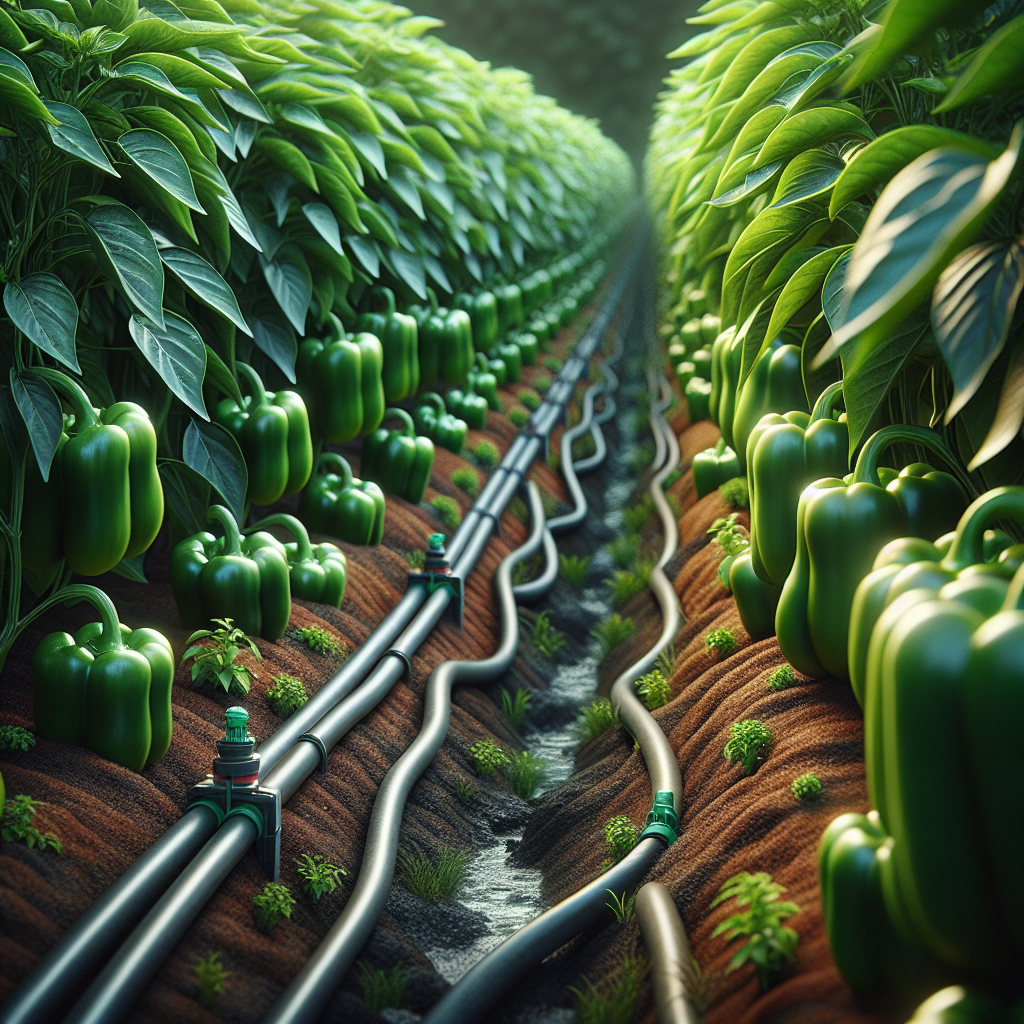
Introduction to California Wonder Bell Pepper
A foundational heirloom-type bell pepper in North American gardens, this variety has been grown for generations because it is reliable, versatile, and broadly adapted. California Wonder is typically grown for large, blocky fruits with thick flesh, a crisp texture, and mild sweetness when harvested green; if allowed to fully ripen, the fruits deepen to red and develop noticeably more sugars and vitamin C.
Its popularity comes from a practical balance of traits: good productivity, sturdy fruit shape for stuffing and slicing, and seeds that can be saved because it is open-pollinated rather than a modern hybrid. In production terms, it is best understood as a warm-season, frost-tender crop that performs most consistently where daytime temperatures are warm but not brutally hot, nights are mild, and soil remains uniformly moist without becoming saturated. Growers familiar with Bell Pepper production principles will recognize that this cultivar behaves like a classic sweet pepper, but it is especially valued for uniform blocky fruits and dependable home-scale performance.
Historically, California Wonder became one of the defining bell pepper cultivars in American seed catalogs during the 20th century. Many later bell pepper breeding lines were selected for earliness, disease resistance, or color variation, but California Wonder persisted because it meets the core expectations of gardeners and small farmers: recognizable fruit form, good kitchen quality, and seed-saving potential. That persistence is a sign of genetic stability and culinary relevance, not merely nostalgia.
Botanical Profile of California Wonder Bell Pepper
This cultivar belongs to Capsicum annuum, the same species that includes many sweet peppers, hot chiles, and paprika types. The “var. grossum” grouping is commonly used for large-fruited sweet peppers with non-pungent flesh, though modern taxonomy and horticultural naming often emphasize cultivar identity more than botanical rank.
Plants are generally compact to medium-sized, often reaching about 18 to 30 inches tall and 16 to 24 inches wide under field conditions, though greenhouse or highly fertile sites can push growth larger. The canopy is upright to semi-bushy, with smooth green leaves that provide moderate fruit cover. That leaf cover matters because bell peppers are prone to sunscald if foliage is sparse or damaged.
Flowers are typically white, star-shaped, and self-pollinating, though insect movement can still transfer pollen between nearby pepper varieties. If seed saving is a goal, isolate plants from hot peppers and other sweet peppers to preserve true-to-type fruit shape and flavor. Fruits are usually 3.5 to 4.5 inches long, blocky, thick-walled, and commonly 3- to 4-lobed. Immature fruit are glossy green; fully mature fruit turn red if left on the plant long enough.
Days to maturity vary by climate and management, but green harvest often begins around 70 to 80 days from transplanting, while red ripe harvest may require 85 to 100 days or longer. Fruit wall thickness is one of the cultivar’s key strengths. Thick walls improve stuffing quality, postharvest handling, and culinary texture, but they also mean the plant must have steady calcium transport and consistent moisture to reduce blossom-end rot and misshapen fruits.
Like most peppers, the root system is relatively modest compared with large vining crops. Most feeder roots occupy the upper 8 to 12 inches of soil, making the plant sensitive to shallow drought, compaction, and erratic irrigation. That shallow rooting pattern explains why mulching, regular moisture, and loose, aerated soil are so important.
Soil, pH, and Climate Requirements for California Wonder Bell Pepper
This variety performs best in fertile, well-drained loam or sandy loam with high organic matter and strong moisture-holding capacity. Ideal soil pH is 6.2 to 6.8. It can still produce acceptably from about pH 6.0 to 7.0, but outside that range nutrient uptake becomes less efficient, especially for phosphorus, calcium, magnesium, and key micronutrients. In acidic soils below 5.8, peppers often become stunted and may show nutrient stress even when fertilizers are present. In alkaline soils above 7.2, iron and manganese deficiencies become more likely, showing up as interveinal chlorosis on younger leaves.
Drainage is non-negotiable. Bell peppers do not tolerate waterlogged root zones for long. A good target is soil that remains evenly moist at roughly 60 to 80% field capacity through the main fruiting period. In practical terms, that means when you squeeze a handful of soil from the root zone, it should feel cool and cohesive but not drip water or smear into a sticky anaerobic mass. If the soil stays shiny-wet, smells sour, or causes lower leaves to yellow while growth stalls, overwatering or poor drainage is likely. If soil becomes dusty in the top 2 inches and the plants wilt by late morning rather than only during peak afternoon heat, they are too dry.
Temperature strongly affects fruit set. Optimal daytime temperatures are about 70 to 85°F (21 to 29°C), with nighttime temperatures around 60 to 70°F (16 to 21°C). Below 55°F (13°C), growth slows and flowers may abort. Above 90°F (32°C), especially when nights remain above 75°F (24°C), pollen viability declines and fruit set often drops. In very hot regions, light afternoon shade or shade cloth in the 20 to 30% range can preserve flower retention and reduce sunscald.
California Wonder needs full sun, ideally 8 or more hours daily, but the phrase “full sun” should be balanced against heat load. In cool or coastal climates, maximum sun improves earliness and yield. In desert or heat-dome conditions, relentless reflected heat from bare soil or hardscape can damage fruit and reduce pollination. Organic mulch helps moderate this stress by cooling the root zone and reducing evaporation.
Before planting, incorporate well-finished compost at 1 to 2 inches over the bed, or roughly 3 to 6 cubic yards per 1,000 square feet. Avoid fresh manure immediately before planting, as excessive nitrogen can produce lush foliage with delayed flowering and softer, more pest-prone tissues. For deeper soil improvement and long-term fertility strategies, see soil health tips.
Step-by-Step Planting & Propagation
Start seeds indoors 8 to 10 weeks before the last expected frost. Pepper seeds germinate best at 80 to 90°F (27 to 32°C), with 85°F often producing the fastest and most uniform emergence. At lower temperatures, germination becomes slow and erratic; at 65°F, seed may take weeks or fail unevenly.
Sow seeds 1/4 inch deep in a sterile, fine-textured seed-starting mix. Use trays, cell packs, or soil blocks with strong drainage. Maintain consistent moisture, not saturation. The medium should remain slightly damp throughout germination, like a wrung-out sponge. Excess wetness at this stage can trigger damping-off fungi.
Once seedlings emerge, provide 14 to 16 hours of strong light daily. Insufficient light causes lanky stems, delayed branching, and poor transplant quality. Air temperatures of 70 to 75°F during the day and 65 to 68°F at night produce sturdy seedlings. Pot up when roots fill the initial cell but before circling becomes severe.
Transplant outdoors only after all frost danger has passed and soil temperature is at least 65°F (18°C), with 70°F preferred for rapid establishment. Harden off plants over 7 to 10 days by gradually increasing outdoor exposure to sun, wind, and cooler nights. If transplants are moved suddenly from protected conditions into bright sun or dry wind, leaves can bleach or stall for 1 to 2 weeks.
Space plants 18 to 24 inches apart in rows 24 to 36 inches apart. In intensive beds, 18-inch spacing in staggered double rows works well if fertility, airflow, and disease monitoring are strong. Wider spacing improves airflow in humid climates and lowers foliar disease pressure.
Plant transplants at the same depth they were growing in the pot. Unlike tomatoes, peppers do not typically benefit from deep stem burial. Water each transplant in thoroughly to settle soil around roots. A diluted transplant solution containing phosphorus and seaweed extract can reduce shock, but avoid overly concentrated fertilizers at the root zone.
Direct seeding is possible in long-season warm climates, but it is rarely preferred because emergence is slower, weed competition is greater, and early growth is less uniform. For most growers, transplanting gives a far more predictable crop.
Mulch after the soil has warmed. Black plastic mulch is useful in cool regions because it raises soil temperature and reduces weeds. In hot climates, straw or leaf mulch is often better because it cools the root zone and buffers moisture swings.
Care & Maintenance regimes for California Wonder Bell Pepper
Irrigation should be steady and measured rather than frequent and shallow. Most established plants need about 1 to 1.5 inches of water per week, but the real requirement depends on soil type, temperature, wind, and crop stage. During early vegetative growth, allow the upper inch of soil to dry slightly between waterings while keeping the root zone uniformly moist. Once flowering and fruit enlargement begin, avoid wide wet-dry swings. Inconsistent moisture is a leading cause of blossom-end rot, fruit cracking, small fruit, and aborted blossoms.
Drip irrigation is ideal. Apply water slowly enough to wet the root zone 6 to 10 inches deep. In sandy soils, this may require more frequent irrigation with shorter runtimes; in loam, longer intervals are possible. Signs of under-watering include dull leaf color, upward cupping, blossom drop, and fruits that remain undersized with thin walls. Signs of overwatering include yellowing lower leaves, soft lush growth, edema-like blistering, and roots that appear tan-brown rather than bright white.
Nutrition should be balanced, not nitrogen-heavy. A general target is moderate nitrogen with ample phosphorus, potassium, calcium, magnesium, and micronutrients. Too much nitrogen early produces oversized plants with delayed fruiting. Too little nitrogen produces pale leaves and reduced canopy, which then exposes fruit to sunscald. A sensible program is to prepare the bed with compost plus a balanced preplant fertilizer, then side-dress lightly once first fruits set. If using soluble feed, a formulation slightly higher in potassium during bloom and early fruiting often improves fruit size and wall thickness.
Calcium management is especially important, but the solution is not simply adding calcium products to dry soil. Blossom-end rot in peppers is most often a transport problem caused by inconsistent moisture, root damage, salinity, or excessive ammonium nitrogen rather than absolute calcium shortage. Keep soil moisture even, avoid root disturbance, and maintain pH in the optimal range.
Support is often overlooked. Although California Wonder is not the tallest pepper, heavy fruit load can cause stems to lean or snap, especially after rain or under fertile conditions. Single stakes, Florida weave adapted for peppers, or low mesh support help keep fruit off the soil and improve airflow.
Pruning is minimal. Remove only damaged leaves, branches dragging on soil, or crowded interior growth if humidity is very high. Excess pruning can expose fruit to sunburn. In short seasons, pinching the first crown flower is sometimes recommended to encourage branching, but in many garden settings it is optional and not essential.
Weed control is important because peppers compete poorly early in life. Keep the first 6 to 8 weeks after transplanting as weed-free as possible. Shallow cultivation is safer than deep hoeing because feeder roots sit close to the surface.
Pests, Diseases & Organic Management
Aphids, Thrips, Flea beetles, Spider mites, Pepper weevils in some regions, Hornworms occasionally, and Cutworms on young transplants are the most common insect problems. Aphids cluster on tender growth and leaf undersides, causing curling and honeydew buildup. Thrips scar leaves and flowers and can vector viruses. Spider mites become serious in hot, dusty weather, causing stippling and bronzing.
Organic management begins with prevention: reflective mulch for aphid and Thrips suppression, insect netting on young plants where feasible, strong weed control around the planting, and avoidance of excess nitrogen that creates lush pest-attracting tissue. A forceful water spray can suppress Aphids early. Insecticidal soap works on soft-bodied pests if thorough coverage reaches leaf undersides. Neem-based products can help, but spray in the evening to reduce leaf burn and protect pollinators.
Major diseases include Bacterial leaf spot, Anthracnose, Phytophthora blight, Powdery mildew in some regions, Mosaic viruses, and blossom-end rot as a physiological disorder. Bacterial leaf spot appears as small dark greasy lesions on leaves and fruit, often worsened by overhead irrigation and warm wet weather. Phytophthora is especially destructive in poorly drained soils, causing sudden wilt, crown rot, and fruit rot. Viruses often show mottling, distorted leaves, and stunted plants; infected plants usually do not recover.
To manage disease organically, rotate out of peppers and other solanaceous crops for at least 3 years where possible, avoid working plants when foliage is wet, use drip irrigation, stake or mulch to keep fruit off bare soil, and remove symptomatic plants promptly if viral disease is suspected. Copper-based sprays may suppress Bacterial leaf spot when used preventively, though they are not a cure. Biofungicides based on Bacillus species can help limit some foliar and soilborne problems when integrated early.
Healthy airflow matters. Dense canopies, tight spacing, and constant leaf wetness create the perfect environment for foliar disease. Morning irrigation is better than evening if overhead watering is unavoidable, but drip remains superior.
Harvesting, Curing & Optimal Storage
Green fruit are usually ready when they reach full size, develop glossy firm walls, and feel heavy for their size. For California Wonder, that means blocky peppers with squared shoulders and crisp flesh. Harvesting at the green stage encourages continued fruit production because the plant is not investing as long in full seed maturity.
For red ripe harvest, allow fruit to remain on the plant until they color fully and evenly. Expect fewer total fruits if you consistently leave peppers to turn red, because maturity time is longer. However, flavor becomes sweeter, aroma fuller, and nutritional value higher, especially carotenoids and vitamin C.
Use pruners or a sharp knife rather than pulling fruit by hand. Pepper stems are brittle, and rough harvest can break branches or strip nearby flowers. Leave a short stem attached to the fruit for better shelf life.
Do not wash peppers until just before use unless they are heavily soiled and need immediate cooling. Free surface moisture shortens storage life. Sort out bruised, sunscalded, insect-damaged, or soft fruit; these should be used quickly, roasted, or frozen.
Bell peppers are not “cured” in the same sense as onions or winter squash. Instead, postharvest handling focuses on rapid cooling and humidity control. Store at 45 to 50°F (7 to 10°C) with 90 to 95% relative humidity. Colder than about 45°F for extended periods can cause chilling injury, seen as pitting, water-soaked spots, and accelerated decay once fruits return to room temperature. Under proper conditions, green fruit may hold for 2 to 3 weeks; fully red fruit usually store somewhat less time.
For kitchen-scale storage, the refrigerator crisper can work if fruit are kept in a perforated bag and used relatively quickly, but household refrigerators are often colder than ideal. Freeze sliced peppers for cooked dishes, or roast and peel before freezing for premium flavor retention.
Companion Planting for California Wonder Bell Pepper
Useful companions are those that either help with pest management, improve space efficiency, or avoid strong competition in the same root zone. Onion is an excellent neighbor because its pungent foliage can help confuse some pests and it occupies a different canopy profile. Garlic offers similar benefits and fits well at bed edges or between wider-spaced pepper rows. Thai Basil is often planted nearby because its flowers attract beneficial insects while its compact form does not heavily shade pepper plants. Carrot also pairs well because it uses deeper soil layers and can share bed space without major competition if fertility is good.
Avoid planting peppers immediately next to aggressive, sprawling crops that reduce airflow or monopolize moisture. Also avoid repeated succession with tomatoes, potatoes, or eggplants in the same ground because they share many pests and diseases.
Companion planting should support, not replace, sound agronomy. Proper spacing, crop rotation, mulch, consistent irrigation, and sanitation remain far more important than any single neighbor plant arrangement.