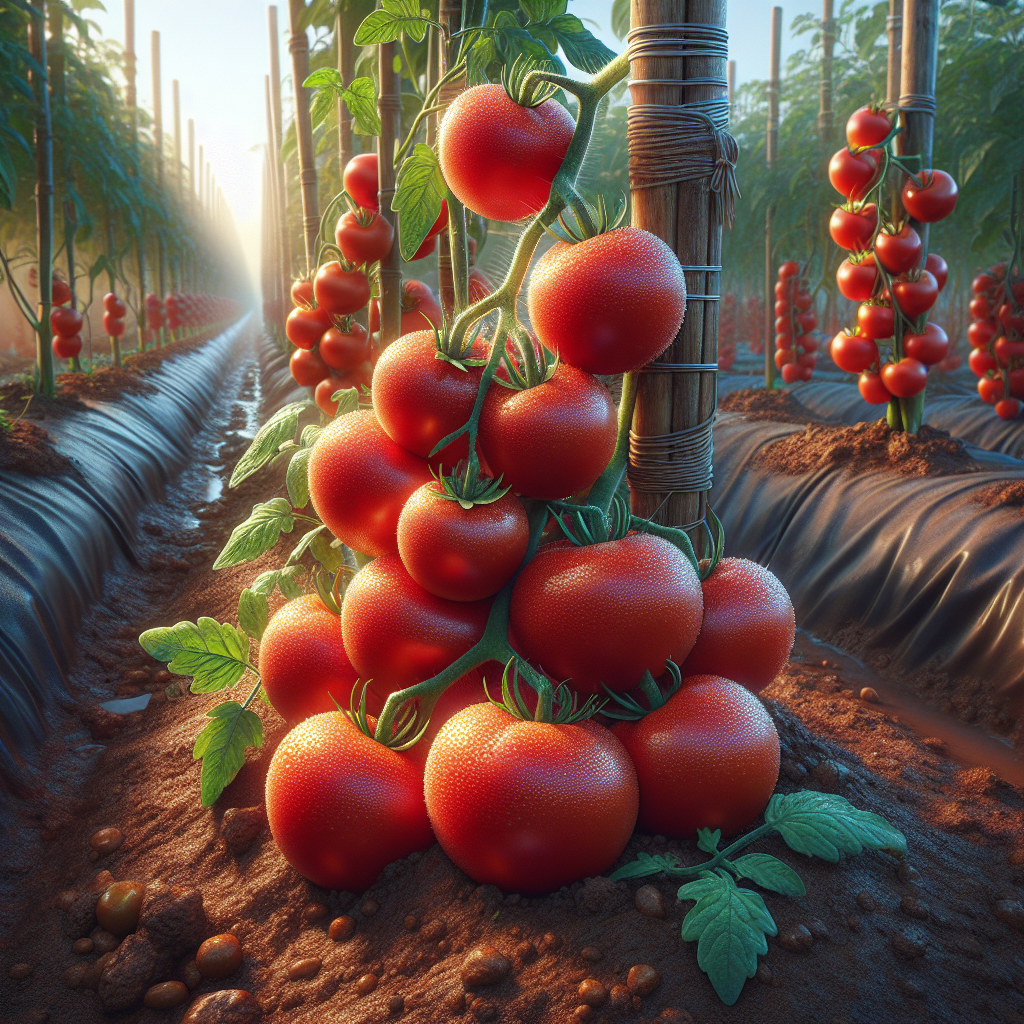
Introduction to Tomato
Tomatoes (Solanum lycopersicum) rank among the most cultivated vegetables globally, with over 180 million tons produced annually according to FAO data. Native to western South America, particularly the Andes region of modern-day Peru and Ecuador, tomatoes were domesticated by indigenous peoples around 500 BC before Spanish explorers brought them to Europe in the 16th century. Initially feared as poisonous due to their nightshade family relation, they gained popularity in Italian cuisine by the 17th century, evolving into the diverse cultivars we know today—from cherry types bursting with sweetness to massive beefsteaks ideal for slicing. Botanically a fruit but culinarily a vegetable, tomatoes offer vitamins A, C, and K, lycopene antioxidants, and potassium, making them a nutritional powerhouse. Home gardeners and commercial farmers alike prize them for high yields, with indeterminate varieties producing continuously for months in optimal conditions. Success hinges on warmth, consistent moisture, and vigilant pest control; neglect these, and blossom-end rot or cracking ensues. This guide equips you with professional techniques to grow bumper crops, whether in raised beds, greenhouses, or fields.
Botanical Profile of Tomato
Tomatoes belong to the Solanaceae family, sharing lineage with potatoes, eggplants, and peppers. Solanum lycopersicum is an annual herbaceous plant, though in frost-free zones it behaves as a tender perennial. Stems are angular, often hairy, and can reach 2-10 feet (0.6-3 meters) tall depending on cultivar—indeterminate types vine indefinitely, requiring staking, while determinate bush varieties stay compact at 3-5 feet (1-1.5 meters). Leaves are compound, odd-pinnate with 5-9 leaflets, exuding a pungent aroma from glandular trichomes that deter some insects. Flowers are perfect (hermaphroditic), yellow, star-shaped clusters in cymes, typically 1-2 cm wide; pollination occurs via buzz by bumblebees or wind, though high humidity (>80%) hinders it, leading to poor fruit set. Fruits are berries varying wildly: cherry tomatoes (1-2 cm, 5-20g), grape (slender, crack-resistant), plum/roma (oval, meaty for sauces), slicing/beefsteak (up to 1kg), and heirlooms like Brandywine with mottled skins and complex flavors. Seeds number 100-300 per fruit, embedded in jelly-like locular tissue. Growth stages include vegetative (4-6 weeks), flowering (week 6+), fruit set, and maturation (50-90 days from transplant). Photoperiod neutral but thermoperiodic: optimal day temps 70-85°F (21-29°C), nights 62-68°F (17-20°C). Cultivars differ in disease resistance (e.g., VFNT hybrids resist Verticillium, Fusarium, nematodes, tobacco mosaic virus) and traits like parthenocarpy for greenhouse production without pollination.
Soil, pH, and Climate Requirements for Tomato
Tomatoes demand well-drained, fertile loam or sandy loam soils rich in organic matter; heavy clays compact roots, causing rot, while pure sands leach nutrients. Aim for 5-6% organic matter—incorporate 2-4 inches (5-10 cm) compost pre-planting to boost tilth and microbial activity. Soil pH 6.0-6.8 is ideal; below 5.5, aluminum toxicity locks out phosphorus, stunting growth, while above 7.2, iron and manganese deficiencies yellow leaves (chlorosis). Test soil annually and amend with lime (for acidity) or sulfur (for alkalinity) 2-3 months prior. Tomatoes are heat-loving C3 plants thriving in USDA zones 5-11, with 2500-4000 growing degree days (GDD, base 50°F/10°C) needed for maturity. Daytime highs of 75-85°F (24-29°C) promote photosynthesis; nights above 70°F (21°C) cause poor pollen viability, fruit puffiness. Frost tolerance is nil—seedlings die at 32°F (0°C), mature plants at 28°F (-2°C). Full sun (8+ hours) is non-negotiable; partial shade reduces yields 20-50%. Mulch with straw or plastic to maintain 60-70% volumetric water content (VWC) in top 6 inches (15 cm)—use a meter or finger test: soil moist 1-2 inches deep. Avoid waterlogging; oxygen-starved roots yellow and wilt. For high tunnels or outdoors, select wind-sheltered sites. In cooler climates, black plastic mulch warms soil 4-6°F (2-3°C), hastening harvest by 2 weeks.
Step-by-Step Planting & Propagation
Start with certified disease-free seeds or transplants. Seed propagation: Sow indoors 6-8 weeks pre-last frost at 75-85°F (24-29°C) soil temp in 72-cell trays with sterile soilless mix (peat-perlite-vermiculite 1:1:1). Cover lightly (1/4 inch/6mm), germinate in 70-90% humidity under 14-hour lights. Thin to 2-3 true leaves, harden off 7-10 days by gradual outdoor exposure. Transplanting: Plant after soil warms to 60°F (16°C), spacing 24-36 inches (60-90 cm) in rows 4-5 feet (1.2-1.5 m) apart. Dig 12-inch (30 cm) holes, bury stems to first leaves to spur adventitious roots. Determinate: 18-24 inches apart; indeterminate: trellis-ready. Add 1 tbsp (15g) balanced 10-10-10 fertilizer or compost per hole. Water deeply (1 inch/2.5 cm) post-plant. For succession, plant every 2 weeks. Grafted plants (scion on disease-resistant rootstock like 'Maxifort') boost vigor 20-30% in poor soils. Direct sow in warm climates only post-frost, but transplants yield 20% more. Prune suckers (axillary shoots) weekly on indeterminates for airflow.
Care & Maintenance regimes for Tomato
Watering: Deliver 1-2 inches (2.5-5 cm) weekly, deeply to 12-18 inches (30-45 cm) root zone; inconsistent moisture causes cracking or blossom-end rot (BER)—calcium deficiency symptom with black sunken bottoms. Maintain even 60-75% VWC; overwatering (>80%) shows yellowing lower leaves, wilting despite wet soil. Drip irrigation minimizes leaf wet. Fertilization: Side-dress at flowering with 5-10-10 (1 lb/100 sq ft/0.5 kg/10 m²), then calcium nitrate biweekly for fruit swell. Foliar seaweed kelp supplies micronutrients. Avoid excess N post-fruit set to prevent leafy excess. Support: Stake indeterminates with 6-ft (1.8 m) cages or Florida weave; tie loosely to avoid girdling. Pruning: Remove suckers >4 inches (10 cm) and lower leaves touching soil. Pinch apical tip at 4-5 trusses for determinate finish. Temperature management: Ventilate greenhouses if >90°F (32°C) to avert blossom drop. Mulch suppresses weeds, conserves water. Monitor EC <2.5 mS/cm to prevent salt burn.
Pests, Diseases & Organic Management
Pests: Tomato hornworms (Manduca quinquemaculata) devour leaves—handpick or apply Bt kurstaki (0.5-1% spray, evenings). Aphids cluster undersides; blast with water or neem oil (1 tsp/gal/5 ml/L + 1/4 tsp dish soap). Whiteflies transmit viruses—yellow sticky traps + reflective mulch. Flea beetles skeletonize seedlings—row covers + diatomaceous earth. Diseases: Early blight (Alternaria solani) shows concentric rings on lower leaves; rotate 3 years, copper fungicide (weekly in wet weather), prune for airflow. Late blight (Phytophthora infestans, 1845 Irish famine culprit) is humid-foggy bane—prevent with raised beds, resistant cultivars ('Mountain Magic'), potassium phosphite drench. Fusarium wilt yellows one side; choose resistant rootstocks. Septoria leaf spot: overhead irrigation ban, Serenade biofungicide. Organic IPM: Scout weekly, introduce predatory wasps (for hornworms), ladybugs (Aphids). Companion with basil repels flies. See our bell pepper wiki for nightshade family synergies. Neem disrupts insect hormones safely. Destroy debris; solarize soil pre-season (clear plastic 4-6 weeks, 140°F/60°C kills pathogens).
Harvesting, Curing & Optimal Storage
Harvest when fully colored but firm—vine-ripen for flavor, or mature-green for shipping (ethylene gassing later). Twist or clip with shears to avoid stem tear. Determinate: all at once (6-8 weeks post-bloom); indeterminate: every 2-3 days, yields 10-20 lbs/plant (4.5-9 kg). Peak Brix (sugar) 5-8° for sweets. For canning, pick at breaker stage (10% color). Cure green tomatoes indoors at 55-70°F (13-21°C), 85% humidity 1-3 weeks. Store ripe at 55°F (13°C), 90% RH up to 3 weeks—refrigeration (<50°F/10°C) chills flavor via enzyme halt. Freeze whole (blanch first), sauce, or dry at 135°F (57°C) 8-12 hours. Check Fall Companion Planting Guide for post-harvest planning.
Companion Planting for Tomato
Tomatoes pair well with basil (repels hornworms, enhances flavor), marigolds (nematode deterrent via alpha-terthienyl), carrots (loose soil), onions/garlic (aphid repellents), nasturtiums (trap Aphids), and borage (attracts pollinators). Avoid potatoes (shared blight), fennel (growth inhibitor), corn (attracts tomato fruitworm), brassicas (compete for calcium), dill (attracts hornworms). Plant basil 12 inches (30 cm) away; interplant marigolds every 3rd row. Bush beans fix N, boosting yields 15%. Succession plant lettuce underneath for shade tolerance. In guilds: tomatoes central, basil/perimeter herbs, mulch with comfrey.