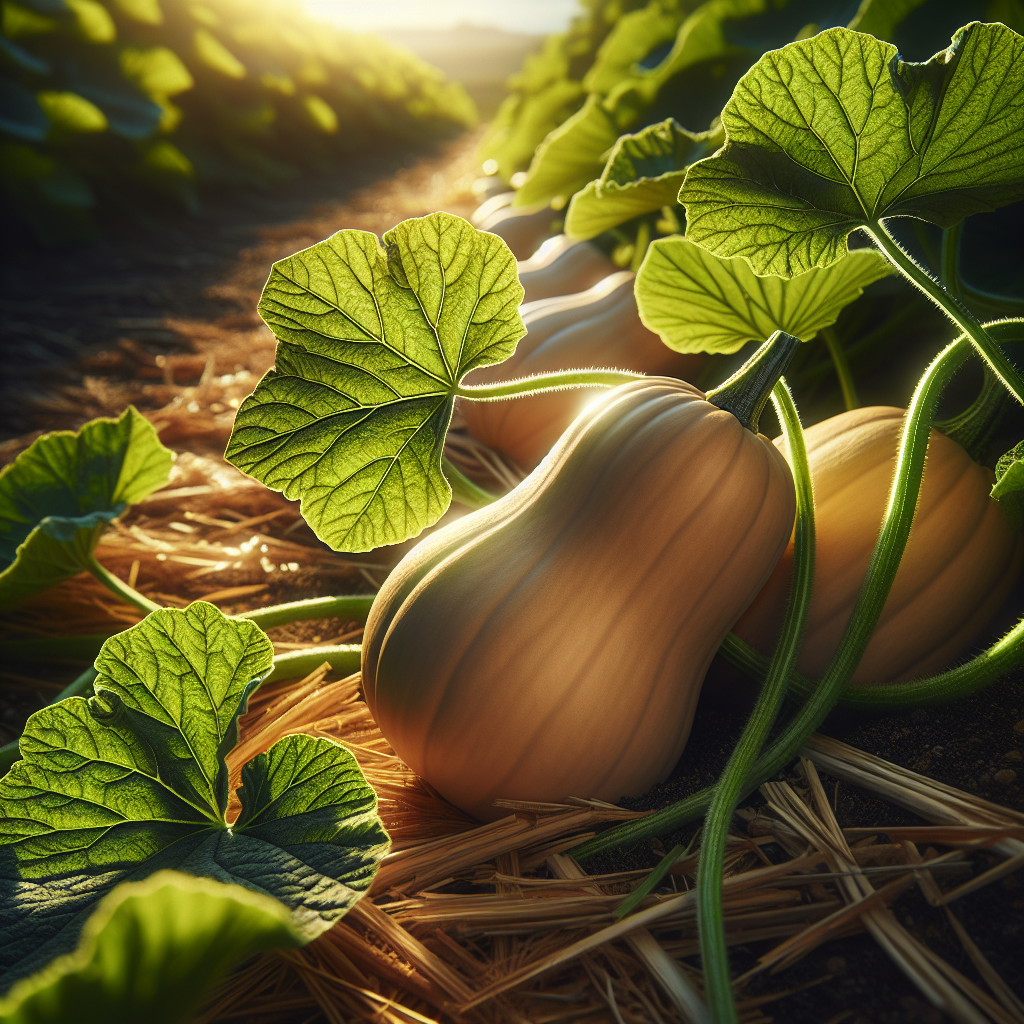
Introduction to Butternut Squash
A classic winter squash with a distinctive bell-shaped fruit, tan rind, and deep orange flesh, this crop is grown for both fresh market and storage use. Although commonly treated as a vegetable in the kitchen, it is botanically a mature fruit harvested after full physiological development. Its flavor deepens after curing and short storage, when starches continue converting to sugars.
The crop belongs to a domesticated lineage with roots in the Americas, where squash species were integral to Indigenous agriculture for thousands of years. Modern butternut types are especially valued because they combine manageable fruit size, good cavity-to-flesh ratio, and strong keeping quality. In commercial and small-scale systems alike, they are often chosen over less durable squash because they ship well, tolerate warm growing conditions, and remain marketable for months under proper storage.
Among winter squash, this type is notable for producing thick neck flesh with a relatively small seed cavity concentrated in the bulb end. That makes it efficient for processing, roasting, soups, purées, and cube packing. Many growers also appreciate that the vines are vigorous enough to compete with weeds once established, though early management remains critical.
Botanical Profile of Butternut Squash
This crop is a member of the family Cucurbitaceae, alongside cucumbers, melons, and pumpkins. Within the species Cucurbita moschata, butternut types are distinguished by elongated necks, buff to beige mature rind color, and orange flesh rich in carotenoids. Plants are typically monoecious, meaning they bear separate male and female flowers on the same vine. Male flowers usually appear first, followed later by female flowers identifiable by the miniature ovary behind the petals.
Leaves are broad, rough-textured, and moderately lobed, with a sprawling vining habit that can extend 10-15 feet or more depending on cultivar and fertility. Tendrils assist with anchorage, but this is not a true climbing crop in standard production. The root system is relatively shallow in the upper soil profile but can spread widely, which is why even moisture over a broad area is more useful than frequent light irrigation.
Pollination is primarily by bees, especially squash bees, bumblebees, and honeybees. Flowers open early in the morning and are highly time-sensitive; poor pollinator activity during bloom can sharply reduce fruit set even when vines look healthy. Heat stress above roughly 95°F during flowering may also reduce pollen viability and stigma receptivity.
Cultivar selection matters. Traditional open-pollinated strains such as Waltham Butternut are still widely grown because of dependable yields and strong storage quality. Hybrid butternut cultivars may offer more uniform fruit size, earlier maturity, or increased disease resistance. In very humid regions, choosing a cultivar with tolerance to powdery mildew and downy mildew can make the difference between a full crop and premature vine collapse.
Compared with some C. pepo squash, C. moschata types often show improved resilience against squash vine borer and high summer heat. That does not make them immune, but it does make them a preferred choice in long, hot seasons. For growers comparing related crops, the broader Squash guide can help frame species-level differences.
Soil, pH, and Climate Requirements for Butternut Squash
This crop performs best in fertile, well-drained loam or sandy loam with high organic matter and a pH of 6.0-6.8. It will tolerate slightly more acidic or slightly alkaline conditions, but nutrient uptake is most balanced in that midrange. At pH below about 5.8, calcium, magnesium, and phosphorus availability can become limiting, while above 7.2 certain micronutrients such as iron and manganese may be less available.
Drainage is non-negotiable. The crop grows aggressively, but root and crown tissues are sensitive to prolonged saturation. If water stands longer than 24 hours after heavy rain, expect increased risk of damping-off in seedlings, root stress, nutrient leaching, and eventual vine decline. Raised beds or broad hills are especially useful in heavy clay soils. A good target is a friable soil that can hold moisture while still allowing oxygen exchange around roots.
Nutrient demand is moderate to high. Before planting, incorporate well-finished compost and base fertility on a soil test. Excess nitrogen early can produce lush vines at the expense of flowering and fruiting, while insufficient potassium often results in weaker fruit quality and shorter storage life. A balanced pre-plant program with adequate phosphorus for early rooting and strong potassium for fruit fill is ideal. Avoid very fresh manure immediately before planting, as it can push excess vegetative growth and elevate pathogen risk.
Temperature drives performance. Seeds germinate best at 80-95°F soil temperature, though they can sprout more slowly down to around 70°F. Growth becomes sluggish below 60°F, and frost will kill the crop. Optimal daytime temperatures are generally 70-85°F with warm nights. The crop needs a long frost-free season, usually 90-120 days depending on cultivar and desired maturity.
Moisture should be consistent rather than erratic. Aim for soil that remains evenly damp in the root zone to a depth of 6-8 inches during establishment and fruit set, but never muddy or anaerobic. In practical field terms, soil should form a weak ball in the hand and crumble with light pressure. If leaves wilt by midday but recover by evening, that may be normal under heat; if vines remain flaccid at dawn, root-zone moisture is inadequate. Overwatering symptoms include yellowing lower leaves, slow growth despite wet soil, edema-like blistering, and increased blossom drop or fruit abortion.
Full sun is required for high yields and sugar development. A minimum of 8 hours of direct sun is workable, but 10 or more is better. Humid climates benefit from wide spacing and strong airflow to limit foliar disease. Wind protection is helpful at the seedling stage, but dense shelter that reduces pollinator movement or traps humidity can backfire.
For broader field fertility planning, see soil health strategies.
Step-by-Step Planting & Propagation
Direct seeding is the standard method because the crop develops quickly in warm soil and dislikes root disturbance. Transplanting is possible and useful in short-season climates, but seedlings must be handled carefully to avoid check in growth.
- Prepare the bed 2-3 weeks ahead of sowing. Remove perennial weeds, loosen soil deeply, and incorporate compost plus any pre-plant amendments based on soil test results.
- Form raised rows, broad mounds, or hills if drainage is questionable. Hills should be broad and low rather than steep cones, as broad mounds retain moisture more evenly.
- Wait until all danger of frost has passed and soil temperature is at least 70°F, preferably warmer.
- Sow seeds 1-1.5 inches deep. In hills, place 3-5 seeds per hill and thin to the strongest 2 plants. In rows, space plants 24-36 inches apart with 6-10 feet between rows, depending on vine vigor and cultivation method.
- Water thoroughly after sowing to settle the soil, then maintain even moisture until emergence, usually 5-10 days in warm conditions.
- Thin early, before roots tangle, to avoid disturbing remaining plants.
For transplants, sow in biodegradable pots or large cells 2-3 weeks before outdoor planting. Maintain warm media temperatures around 80°F for germination. Transplant only once plants have 1-2 true leaves, and do not allow them to become root-bound. Harden off gradually over 5-7 days, but never expose seedlings to chilling temperatures. Set transplants at the same depth they were growing in containers.
Mulch options vary by system. Black plastic mulch can increase soil temperature, speed establishment, and reduce weeds in cooler regions. In hot climates, organic mulches such as straw are best applied after the soil has warmed and vines have begun to run; applied too early, they can cool the soil and slow initial growth.
If hand pollination is needed in low-pollinator environments, collect a freshly opened male flower in the morning, remove petals, and brush pollen onto the stigma of a newly opened female flower. This can significantly improve early fruit set in protected or isolated gardens.
Care & Maintenance regimes for Butternut Squash
The first three to five weeks after emergence are the most management-intensive. Young plants are poor competitors, so weed control must be prompt. Shallow cultivation works well before vines spread, but once runners extend, switch to hand weeding to avoid root damage. Mulch suppresses later weed flushes and buffers soil moisture.
Irrigation should be deep and infrequent enough to encourage root exploration while preventing stress. As a rule of thumb, provide about 1-1.5 inches of water per week from rainfall plus irrigation, increasing toward the higher end during flowering and fruit enlargement. In sandy soils during hot weather, the crop may require water every 2-3 days; in loam, once or twice weekly is often sufficient. Drip irrigation is ideal because it keeps foliage dry and reduces disease. The root zone should remain moist but aerated, especially during fruit set, when drought can cause misshapen fruit, blossom drop, and reduced yields.
A practical moisture check: dig 4-6 inches down near the root zone. If the soil is dry at that depth, irrigation is overdue. If it is sticky, shiny, and lacking crumb structure, it is too wet. Repeated wet-dry cycling leads to uneven fruit development and can reduce storage potential.
Side-dress fertility when vines begin to run and again at early fruit set if growth is pale or soil fertility is modest. Use moderate nitrogen rates; too much late nitrogen delays maturity and produces soft, overly vegetative vines. Potassium is especially important for rind strength, sugar accumulation, and postharvest life. Calcium supports cell wall integrity, but foliar sprays cannot fully correct chronically poor soil balance.
Flowering biology matters for management. The first flush may produce mostly male flowers, which is normal. Avoid the mistake of assuming poor performance too early. Female flowers usually increase as plants mature and day-to-day energy balance improves. Stress from drought, excess nitrogen, heat spikes, or low pollinator activity can all skew flowering and fruit retention.
Pruning is rarely necessary in field production. However, in small gardens, guiding vines into designated lanes improves airflow and access. Do not repeatedly lift and reposition mature vines once they have rooted at nodes, as this can reduce vigor. In very small spaces, trellising is possible only with strong support and fruit slings, but the crop is usually more productive when allowed to sprawl naturally.
Fruit load management is usually unnecessary, though removing very late-set fruit near season's end can help earlier fruit size up and mature. As harvest approaches, slightly reducing irrigation once fruits have colored and rinds begin hardening can improve keeping quality, but do not impose severe drought while vines are still actively filling fruit.
Pests, Diseases & Organic Management
The major insect pests include squash bugs, cucumber beetles, aphids, and in some regions squash vine borers. While C. moschata is generally less attractive or less vulnerable to vine borer damage than some summer squash and pumpkins, pressure can still occur. Scout at least twice weekly from seedling stage onward.
Striped and spotted cucumber beetles chew cotyledons and flowers, scar young fruit, and can vector bacterial wilt. Use floating row cover immediately after planting to exclude beetles, but remove covers at first female bloom to allow pollination. Maintain clean field margins, rotate crops, and use trap crops cautiously if beetle pressure is extreme.
squash bugs congregate on leaf undersides and stems, causing stippling, yellowing, and vine collapse under heavy feeding. Crush bronze egg masses when found, vacuum adults in small plantings, and remove crop debris promptly after harvest. Neem and insecticidal soaps have limited value against adults but can suppress early nymph stages if coverage is thorough.
aphids may colonize the undersides of leaves and transmit viruses. Strong populations cause curling, sticky honeydew, and sooty mold. Avoid excess nitrogen, conserve beneficial insects, and use insecticidal soap where needed.
Diseases are often the bigger yield limiter than insects. powdery mildew appears as white talcum-like patches, typically later in the season, reducing photosynthesis and hastening vine death. downy mildew causes angular yellow lesions and gray-purple sporulation on leaf undersides, especially in humid weather. Good airflow, resistant cultivars, drip irrigation, and crop rotation are foundational controls. Organic fungicides such as sulfur, potassium bicarbonate, or copper products can help if applied preventively and according to label restrictions.
bacterial wilt, spread by cucumber beetles, causes sudden irreversible wilting, often beginning on a single runner. Cutting a wilted stem and pulling it apart may reveal sticky bacterial strands. Remove infected plants promptly; there is no curative treatment.
Viruses such as zucchini yellow mosaic virus, cucumber mosaic virus, and watermelon mosaic virus can cause mosaic patterns, distorted leaves, bumpy fruit, and severe yield loss. Control aphids and beetles early, rogue badly infected plants, and keep weeds down because many weeds act as reservoirs.
fruit rots often begin where fruit rests on wet soil. Use straw, woven ground cover, or elevated dry mulch under developing fruit in damp climates. Avoid overhead irrigation late in the day. Rotate away from cucurbits for at least 3 years where disease pressure has been significant.
Integrated organic management works best as a system: resistant genetics, wide spacing, crop rotation, mulching, drip irrigation, sanitation, row cover during establishment, and disciplined scouting. No single spray program substitutes for these fundamentals.
Harvesting, Curing & Optimal Storage
Harvest timing determines both flavor and shelf life. Fruits are ready when the rind is a uniform tan or buff color, the skin is hard enough that a fingernail cannot easily puncture it, and the vine begins natural senescence. Immature fruit may look large enough but still have soft rind, green undertones, watery flesh, and poor storage performance.
Use pruners or a sharp knife to cut fruit with 1-2 inches of stem attached. Never carry fruit by the stem alone, because broken stems create an easy entry point for rot organisms. Handle carefully; bruising may not be obvious at harvest but often shows up later in storage.
If frost threatens and fruits are fully colored, harvest promptly. Light frost can damage vines and fruit surfaces, shortening storage life. Slightly immature fruits may still be salvaged for short-term use, but they should not be expected to store for months.
Curing improves rind hardness and heals superficial abrasions. Cure fruit for 10-14 days at 80-85°F with good ventilation and relative humidity around 70-80% if conditions allow. In home-scale production, a warm covered porch, greenhouse bench, or airy shed can work, provided fruit are protected from rain and direct scorching sun.
After curing, store at 50-55°F with 50-70% relative humidity and steady airflow. Temperatures below 50°F can cause chilling injury, pitting, and internal breakdown; temperatures much above 60°F accelerate respiration and shorten storage duration. Under ideal conditions, good-quality fruit often store 2-4 months, and some cultivars last longer. Inspect every 1-2 weeks and remove any fruit with soft spots, stem mold, leaking, or off odors.
Flavor often peaks after several weeks of storage rather than immediately after harvest. This is especially true when fruits were harvested at full maturity and cured properly. However, once the rind begins wrinkling and weight loss becomes evident, market or consume fruit promptly.
Companion Planting for Butternut Squash
The most effective companions are those that support pollination, improve spatial efficiency, or reduce bare soil around young vines without creating excessive competition. Traditional intercropping with Corn and Peas draws from long-standing polyculture systems: corn can provide vertical structure and wind moderation, while peas contribute nitrogen cycling benefits when timed correctly. In modern gardens, Nasturtium is useful near bed edges as an insect-attracting flowering plant that can help draw pollinators and distract some pest pressure.
Companion planting works best when spacing remains generous. Do not crowd the root zone with heavy feeders or tall crops that cast dense shade over vines. Keep companions primarily at row edges or in adjacent strips so the squash canopy still receives full sun and airflow. Avoid pairing with other cucurbits nearby if disease pressure is high, since shared pests and pathogens can build rapidly.
Low-growing quick crops can be inserted early before vines spread, but they should be harvested before the canopy closes. The goal is not maximum plant density at all costs; it is complementary timing and function. For butternut squash, the best companions are those that protect soil, attract beneficial insects, and coexist with a sprawling, sun-loving vine rather than compete against it.