Introduction to legumes
Legumes, including crops like soybeans, chickpeas, peas, lentils, and peanuts, are vital to global agriculture, providing protein-rich food and improving soil nitrogen levels through symbiotic bacteria. However, these crops are highly susceptible to a suite of devastating pests that can reduce yields by up to 80% if unmanaged. Common culprits include pod borers (Pod borers), aphids (Aphids), and bruchid beetles (Bruchids), which target pods, foliage, and seeds. This comprehensive guide equips farmers with professional diagnostics, lifecycle knowledge, organic controls, and prevention strategies to safeguard legume production. Early identification and integrated pest management (IPM) are key to minimizing losses while maintaining organic certification and soil health. For small-scale growers, timely interventions can mean the difference between profit and crop failure. Learn more about Spring Pest Patrol: Organic AI Strategies to Shield Your Crops from Common Invaders for cutting-edge tips.
Identifying Symptoms & Damage
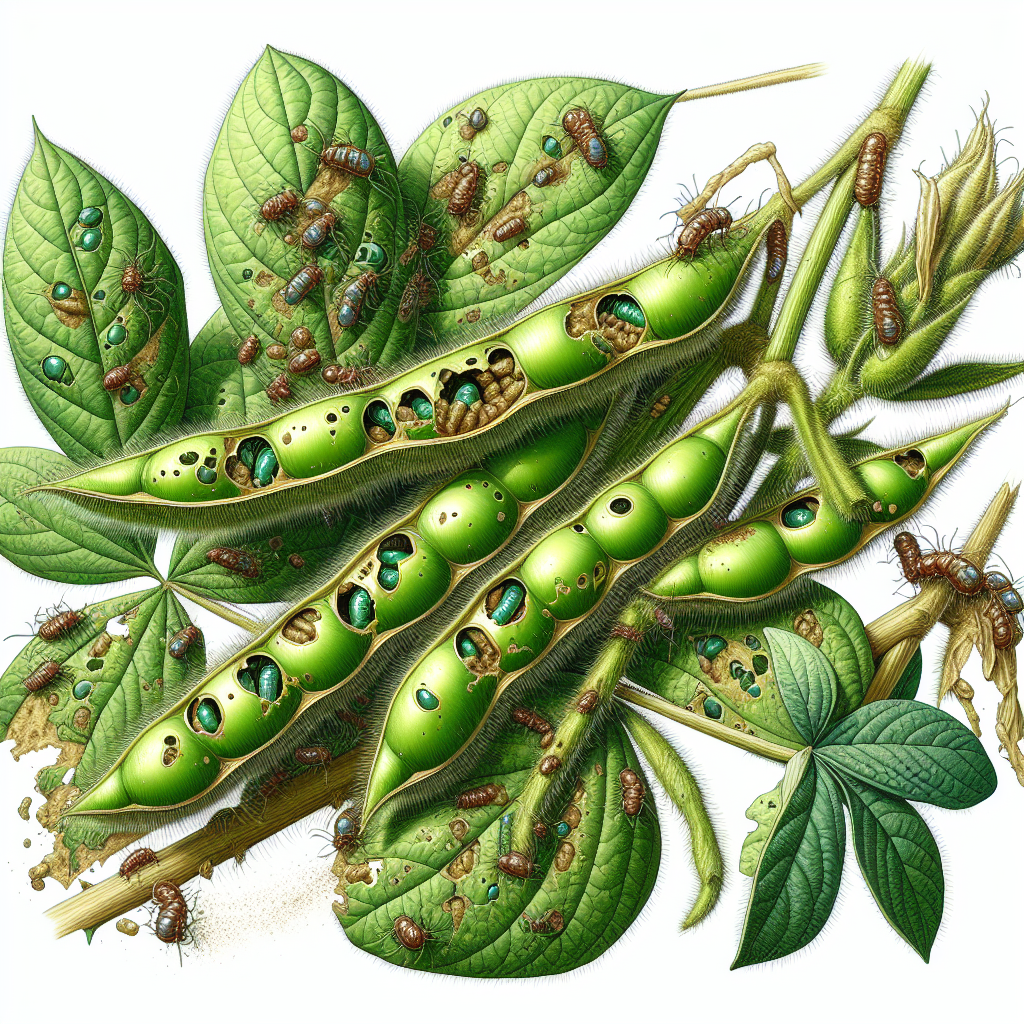
Accurate diagnosis starts with recognizing specific symptoms caused by legume pests. Pod borers, such as Helicoverpa species (Helicoverpa species), create neat entry holes in pods with frass (insect droppings) visible around them; inside, larvae feed on developing seeds, leading to hollowed pods and reduced seed quality. Look for yellowing leaves and stunted growth from soybean aphid infestations, where clusters of small, pear-shaped insects suck sap, causing leaf curl and honeydew that promotes sooty mold.
Pod-sucking bugs (Pod-sucking-bugs) and stink bugs (Stink bugs) leave shriveled, deformed pods with dark spots where piercing mouthparts inject toxins. Bruchids, or seed beetles, attack stored seeds, producing tiny emergence holes and powdery frass, rendering seeds unviable. Foliar damage from leaf-feeding caterpillars (leaf-feeding caterpillars) appears as skeletonized leaves with jagged edges. Root damage from root-knot nematodes manifests as galls on roots, wilting plants, and yellowing foliage despite adequate water. Differentiate from diseases like Fusarium wilt by checking for insect presence via sticky traps or close inspection. Use a 10x hand lens to spot eggs, larvae, or adults. Severe infestations lead to 30-50% yield loss, with economic thresholds varying by crop: scout weekly during flowering and podding stages.
Lifecycle and Progression of legumes
Understanding the lifecycle of legume pests is crucial for timing interventions. Pod borers complete 4-6 generations per season: eggs laid singly on flowers/pods hatch in 2-3 days into larvae that bore inside, feeding for 10-14 days before pupating in soil. Adults emerge in 7-10 days, with peak activity during warm, humid periods. Aphids reproduce parthenogenetically, with females giving live birth to nymphs every 2-3 days, exploding populations in 70-80°F (21-27°C) conditions.
Bruchids have a 4-stage cycle: adults lay eggs on pods/seeds, larvae develop inside for 3-6 weeks, pupate, and emerge, infesting storage. Stink bugs overwinter as adults in crop residues, laying egg clusters in spring; nymphs feed gregariously on pods. Nematodes persist in soil as eggs or juveniles, hatching upon root contact and multiplying rapidly in sandy soils. Progression follows crop phenology: seedlings face cutworms (cutworms) and damping-off; vegetative stage sees aphids and leafhoppers (leafhoppers); reproductive phase targets pod borers and bugs. Multiple overlapping generations demand continuous monitoring. Breaking the cycle via sanitation disrupts progression.
Environmental Triggers & Risk Factors
Legume pests thrive under specific conditions. High humidity (>70%) and temperatures 75-85°F (24-29°C) favor pod borers and fungal associates like Botrytis. Drought stress weakens plants, attracting aphids and spider mites (Spider mites). Poor soil drainage promotes root pests like nematodes and root rots. Monocropping legumes increases risk, as pests build up without host diversity. Volunteer plants and weed hosts harbor whiteflies and thrips (Thrips). Late planting extends exposure to migratory pests like armyworms (Armyworms). Nitrogen excess promotes lush growth favored by sap-feeders. Risk factors include infested seed, contaminated machinery, and nearby corn or cotton fields serving as alternate hosts. Climate change extends growing seasons, boosting pest generations. Assess farm history: fields with prior heavy infestations need 2-3 year rotations.
Organic Control & Treatment Plans
Organic management emphasizes IPM: prevention, monitoring, and minimal intervention. Start with cultural controls: rotate with wheat or cabbage for 2-3 years to starve soil pests. Use reflective mulches to deter aphids and whiteflies. Plant trap crops like sunflower (Sunflower) to lure borers away. Mechanical: hand-pick eggs/larvae from pods weekly; install yellow sticky traps (20/acre) for aphids/flying insects; deep plow post-harvest to expose pupae to predators.
Biological: release Trichogramma wasps (2-3 releases/season) against borers; encourage ladybugs and lacewings for aphids. Neem oil (2-5% emulsion, weekly sprays) disrupts borer feeding/oviposition; pyrethrum for stink bugs (avoid bees). Bt kurstaki targets caterpillars safely (apply evenings, 1-2g/L). For nematodes, solarize soil (clear plastic, 4-6 weeks summer). Seed treatment with biofungicides like Trichoderma curbs early pests. Threshold-based: treat pod borers at 10% infested pods. Integrate with companion plants like marigold for nematode suppression. Monitor efficacy with pre/post-scouting. For storage bruchids, diatomaceous earth (2% in grain) or chilling at 10°C.
Preventing legumes in the Future
Long-term prevention builds resilient systems. Select resistant varieties: e.g., pod borer-tolerant chickpea lines. Use certified, pest-free seeds treated with hot water (50°C, 10min). Maintain field sanitation: destroy residues immediately post-harvest; rogue volunteers. Crop rotation with non-hosts like onion or potato breaks cycles. Enhance biodiversity: interplant with thyme or nasturtium to repel pests. Soil health via cover crops like clover boosts beneficial nematodes. Scout rigorously: pheromone traps for borers (1/10 acres). Timing: early planting evades peak migrations. Quarantine new equipment/tools. Post-harvest, store seeds at <12% moisture in airtight bins. Educate workers on hygiene. Annual soil tests guide amendments to deter stress-attracting pests. These strategies can reduce infestations by 70-90%.
Crops Most Affected by legumes
Legumes pests primarily ravage Fabaceae family crops. Soybeans suffer massive losses from aphids, borers, and cyst nematodes (cyst nematodes). Chickpeas face pod borers, Helicoverpa, and Alternaria. Peas battle pea aphids and powdery mildew vectors. Peanuts grapple with leaf spotters and root-knot nematodes. Common beans (kidney bean) host Mexican bean beetles (Mexican bean beetle). Lentils vulnerable to aphids and rusts. Also impacts fava bean, mung beans (Mung Bean), and pigeon peas. Secondary spillover to tomato and eggplant from shared borers. Global impact: $10B+ annual losses.