Introduction to Pod borers
Pod borers represent one of the most notorious pest groups in legume cultivation, infamous for their devastating impact on pod integrity and seed quality. Primarily consisting of species like the legume pod borer (Maruca vitrata), pod borer (Helicoverpa armigera), and others such as Etiella zinckenella, these pests belong to the order Lepidoptera. Adult moths lay eggs on tender pods, and the emerging larvae tunnel inside, consuming developing seeds and rendering harvests unmarketable. In major legume-producing regions of Asia, Africa, and Australia, pod borers can cause yield reductions of 20-100%, depending on infestation levels and environmental conditions. This guide provides farmers, agronomists, and gardeners with a comprehensive diagnostic and management strategy, emphasizing organic methods to minimize chemical reliance while maximizing crop protection. Understanding pod borers is crucial for legumes, which are vital for food security and soil health through nitrogen fixation.
Identifying Symptoms & Damage
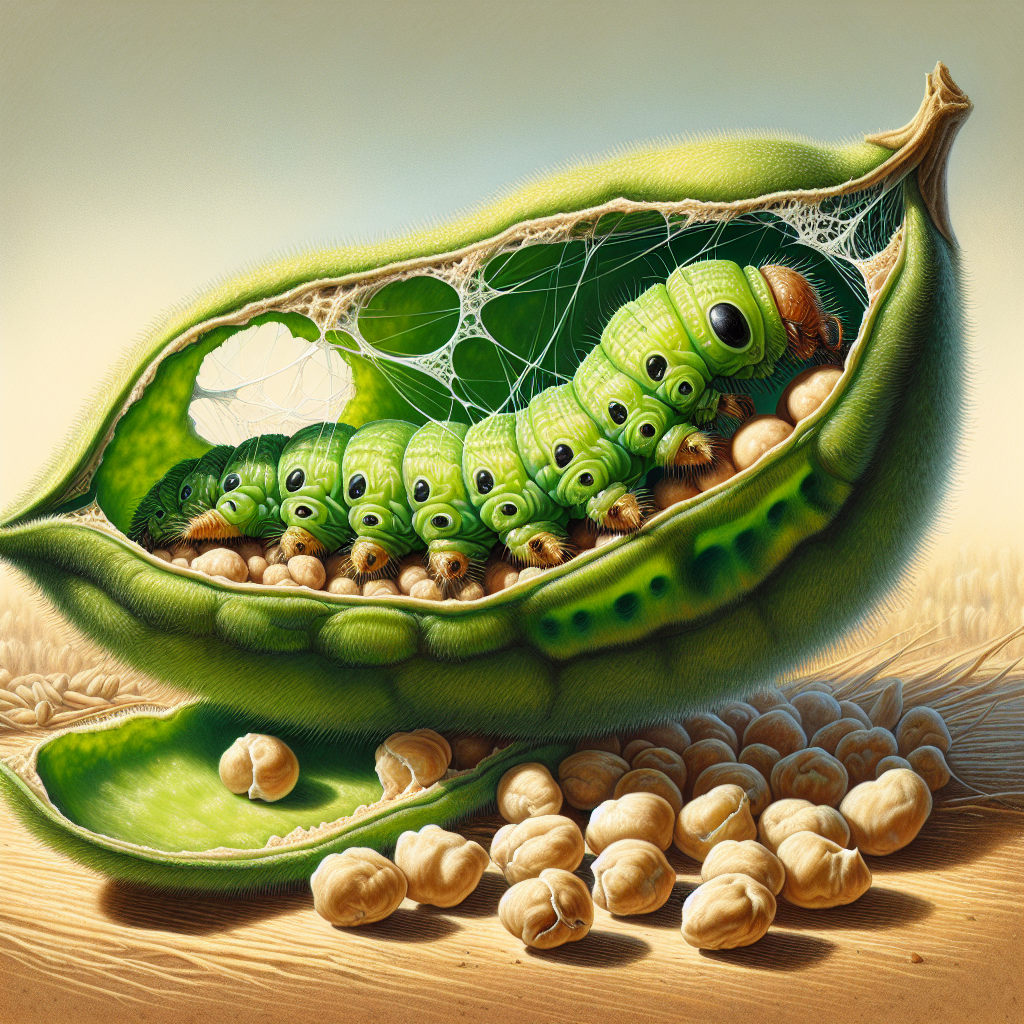
Early detection of pod borer activity is key to limiting damage. Initial signs include tiny entry holes on pod surfaces, often surrounded by silk webbing and green-black frass pellets. Larvae, creamy white to green with dark heads, are visible boring into pods, sometimes with reddish-brown stripes. Affected pods show swelling, discoloration, and premature drying, with internal seeds hollowed out or webbed together. Severe infestations lead to pod deformation, seed abortion, and secondary infections from fungal blights or bacteria entering through bore holes.
Damage manifests differently across growth stages: young pods exhibit 'windowing' where larvae scrape epidermal layers, creating transparent patches before boring deeper. Mature pods may drop prematurely, and harvested seeds often contain live larvae or exit holes, complicating storage due to storage beetles. Yield losses correlate directly with larval density; even 5-10 larvae per square meter can slash harvests by 30-50%. Differentiate from pod-sucking bugs by the presence of oozing sap and lack of internal tunneling. Regular scouting using sticky traps or visual inspections at dawn/dusk reveals moth activity, aiding timely intervention.
Lifecycle and Progression of Pod borers
Pod borers exhibit a complete metamorphosis lifecycle spanning 25-45 days, influenced by temperature and host availability. Adults are nocturnal moths with wingspans of 20-35 mm; females lay 100-300 eggs singly or in clusters on pod undersides, flowers, or tender shoots over 3-5 days. Eggs hatch in 2-4 days into tiny larvae that initially mine leaves or flowers before targeting pods.
Larval stage, the most destructive phase, lasts 10-20 days across 5-6 instars. Early instars skeletonize leaves, while later ones bore into pods, feeding for 7-14 days before pupating. Pupae form in soil or crop debris, lasting 7-10 days. Multiple overlapping generations (4-8 per season) occur in tropical climates, with peak activity during flowering and podding. Diapause in pupae allows overwintering in temperate zones. Lifecycle progression accelerates above 25°C, with optimal development at 27-30°C and high humidity (>70%). Disrupting this cycle through sanitation targets soil pupae effectively.
Environmental Triggers & Risk Factors
Pod borers flourish in warm, humid conditions, with temperatures of 25-32°C and relative humidity above 60% triggering rapid population booms. Monsoon seasons or irrigated fields see heightened infestations, as moist environments favor egg hatching and larval survival. Risk escalates in continuous legume monocultures, where overlapping generations build unchecked. Poor field sanitation, leaving infested debris, serves as pupal reservoirs, amplifying spring outbreaks.
Alternate hosts like cowpea or wild legumes nearby exacerbate spread via moth migration. Nitrogen-rich soils promote lush vegetative growth, attracting oviposition. Drought stress weakens plants, making pods more susceptible, while excessive rainfall washes off natural predators like parasitic wasps. High planting densities (>30 cm spacing) hinder natural enemy access, increasing risk. Climate change extends growing seasons, potentially adding generations. Monitoring weather data and avoiding susceptible varieties during peak moth flights mitigates these triggers.
Organic Control & Treatment Plans
Organic management of pod borers integrates cultural, biological, and mechanical tactics for sustainable suppression. Start with cultural practices: deep plow post-harvest to expose pupae to predators and sun. Crop rotation with non-hosts like cereals or onions disrupts lifecycles, reducing populations by 40-60%. Intercropping with trap crops like marigold or nasturtium diverts moths; early sowing escapes peak infestation windows.
Biological controls shine here. Release Trichogramma wasps (2-3 releases/season at 40,000/ha) to parasitize eggs, achieving 50-70% mortality. Neem-based biopesticides (azadirachtin 0.03%) applied at flower initiation and 10-day intervals deter feeding; spinosad or Bacillus thuringiensis (Bt) kurstaki targets larvae effectively (1-2 g/L water, evenings). Conserve predators like lacewings and birds by avoiding broad-spectrum sprays.
Mechanical options include pheromone traps (10-15/ha) for monitoring/mass trapping adults, and manual larval removal for small holdings. Yellow sticky traps capture moths efficiently. For outbreaks, envelop pods with fine mesh bags post-flowering. Integrated plans combining these yield 70-90% control; scout weekly, acting at 5% pod infestation threshold. See Spring Pest Patrol: Organic AI Strategies to Shield Your Crops from Common Invaders for tech-enhanced scouting tips.
Preventing Pod borers in the Future
Long-term prevention hinges on farm-wide IPM. Select resistant varieties like ICP 8863 chickpeas or CO 5 pigeon peas, which deter boring. Maintain 45-60 cm row spacing for ventilation and predator access. Timely sowing (pre-monsoon) and synchronized planting across farms dilutes moth pressure. Solarization of nursery beds kills soil pupae.
Border crops of mustard or sunflower act as barriers. Mulching with neem cake suppresses soil emergence. Regular monitoring with delta traps sets action thresholds. Post-harvest, destroy volunteer plants and burn debris. Enhance biodiversity with flowering hedges attracting parasitoids. Soil health via cover crops like clover bolsters plant vigor against pests. Annual rotation cycles prevent buildup. Learn more on zoning strategies in Why Zoning Your Small Farm Chaos into Profit Zones Feels Impossible - And How AI Changes Everything. These proactive steps sustain yields over seasons.
Crops Most Affected by Pod borers
Pod borers predominantly ravage legumes, with chickpeas, pigeon peas, mung beans, and black gram suffering 30-80% losses. Cowpeas, soybeans, and peas face similar threats, especially in tropics. Secondary hosts include okra, tomato, and sunflower. Global staples like these underscore the pest's economic toll, demanding vigilant management.