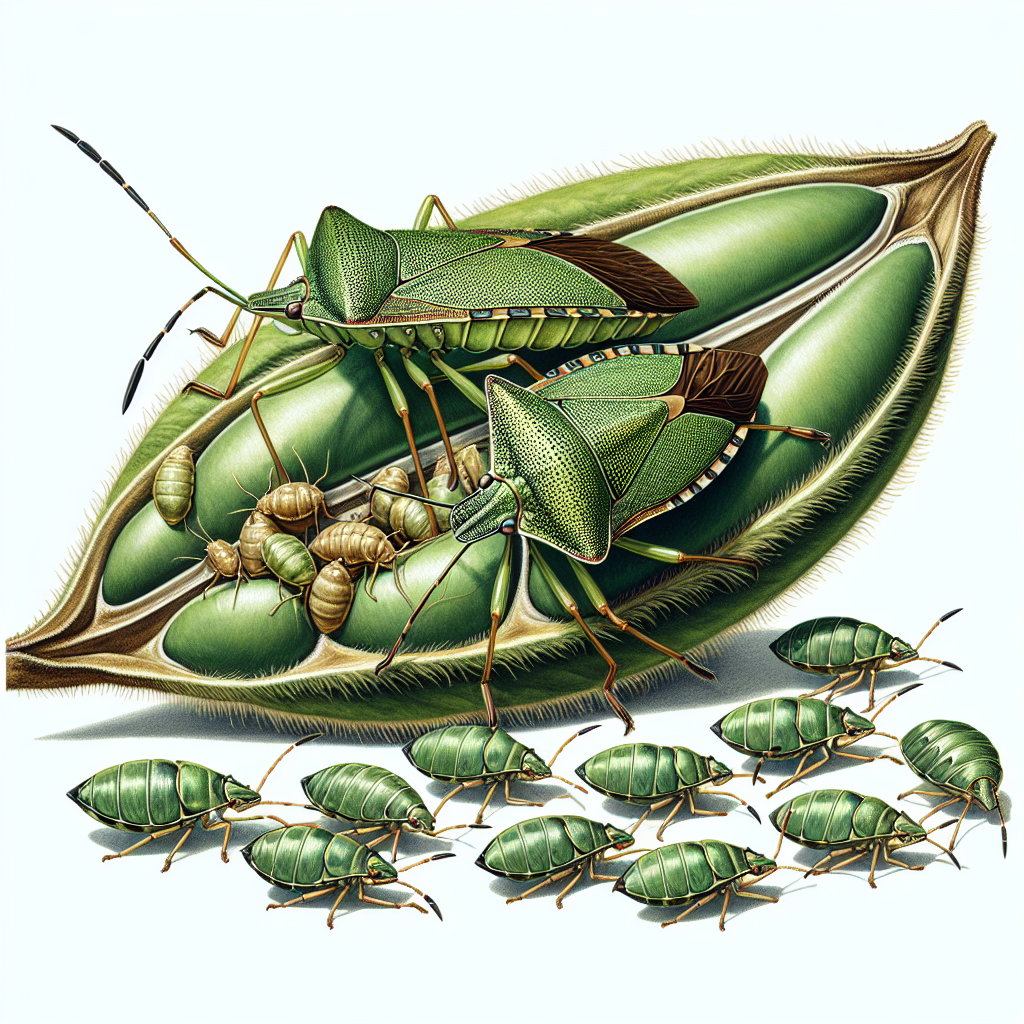
Introduction to Pod-sucking bugs
Pod-sucking bugs represent a critical threat to legume crops worldwide, particularly in tropical and subtropical regions. Belonging primarily to families like Coreidae (e.g., Riptortus linearis), Alydidae, and Pentatomidae (e.g., Nezara viridula), these hemipteran insects target the pods of leguminous plants, extracting nutrient-rich sap and injecting salivary toxins that cause extensive damage. Farmers often encounter them during the pod-filling stage, where infestations can lead to 30-70% yield reductions if unchecked.
These pests are notorious for their resilience and rapid reproduction, thriving in warm, humid conditions. Unlike chewing insects, pod-sucking bugs leave subtle puncture wounds that facilitate entry for pathogens like Alternaria or Fusarium, exacerbating losses through secondary infections. Understanding their biology is essential for integrated pest management (IPM), as chemical controls alone often fail due to the bugs' cryptic behavior and resistance development. This guide provides diagnostic tools, lifecycle insights, and organic strategies to safeguard your legume harvests. For small farms, early detection via regular scouting is key, potentially saving thousands in lost revenue. Check out this Spring Pest Patrol: Organic AI Strategies to Shield Your Crops from Common Invaders for broader pest defense tips.
Identifying Symptoms & Damage
Diagnosing pod-sucking bug infestations requires keen observation, as damage mimics other stresses like drought or nutrient deficiencies. Primary symptoms include small, necrotic spots on pods where the bugs insert their needle-like mouthparts (stylets). These punctures appear as tiny, water-soaked lesions that turn brown and sunken within 24-48 hours, often surrounded by chlorotic halos.
Affected pods exhibit shriveling, yellowing, and premature drying, with seeds inside failing to develop or becoming shriveled and discolored. Severe infestations cause pod abortion, where entire clusters drop prematurely. Look for the bugs themselves: adults are shield-shaped, 1-2 cm long, with long antennae and legs; nymphs are smaller, gregarious, and wingless. Excreta (frass) resembling black droplets and a foul odor from crushed bugs are telltale signs.
Differentiate from pod borers by the absence of entry holes or frass tunnels—sucking bugs leave only external punctures. Yield impacts are profound: even low densities (2-5 bugs per plant) can reduce seed weight by 20-40%. Use a hand lens to confirm stylet punctures and monitor weekly during pod set. In soybeans, damage concentrates on lower pods, while in chickpeas, upper pods suffer most.
Lifecycle and Progression of Pod-sucking bugs
Pod-sucking bugs undergo incomplete metamorphosis: egg, nymph (5 instars), and adult stages. Females lay 100-300 barrel-shaped eggs in clusters on pod undersides or stems, hatching in 5-7 days at 25-30°C. Nymphs, resembling wingless adults, pass through 5 molts over 30-45 days, feeding voraciously on tender pods.
Adults emerge highly mobile, dispersing via flight to new fields, with peak activity during flowering to pod maturity (60-90 days total cycle). Multiple generations (3-5 per season) occur in warm climates, overlapping to sustain pressure. Overwintering happens as diapausing adults in crop residues or weeds.
Progression aligns with crop phenology: early nymphs target flowers, later stages pods. Monitor thresholds: 1 egg mass/10 plants or 2 nymphs/plant warrants action. Lifecycle duration shortens with heat (20 days at 35°C), accelerating outbreaks. Destroying residues disrupts overwintering, reducing spring populations by 50%.
Environmental Triggers & Risk Factors
Warm temperatures (25-35°C) and high humidity (>70%) trigger rapid reproduction and migration. Monsoon seasons amplify infestations as adults seek podding crops. Risk factors include monoculture legumes, late planting (extending exposure), and nearby volunteer plants or alternate hosts like sunflower or cotton.
Weed hosts like pigweed harbor early populations, serving as reservoirs. Nitrogen-rich soils promote lush growth attractive to bugs. Drought stress weakens plants, increasing susceptibility. Proximity to stink bugs hotspots heightens risk via shared habitats. Scout after rains, as humidity boosts egg hatch rates by 30%.
Organic Control & Treatment Plans
Organic management emphasizes IPM: prevention, monitoring, and layered controls. Cultural: Rotate with non-hosts like corn or cereals (2-3 years); destroy residues post-harvest; plant early-maturing varieties. Trap crops like sesame border rows divert bugs.
Biological: Encourage predators like spiders, birds, and parasitic wasps (Trissolcus spp.). Release neem oil sprays (2-5 ml/L) weekly, targeting nymphs (95% mortality). Insecticidal soaps or spinosad (organic-approved) at 5-7 day intervals control populations below ETL.
Mechanical: Hand-pick adults/nymphs into soapy water; use yellow sticky traps (20/acre); shake plants over sheets. Treatment Plan: Week 1: Scout, remove egg masses. Week 2-4: Neem + traps during pod set. Monitor stink bugs as they co-occur. Combine with marigold intercropping for nematode suppression. Yields improve 25-40% with consistent IPM.
Preventing Pod-sucking bugs in the Future
Long-term prevention builds resilient systems. Select resistant varieties (e.g., ICP 8863 chickpeas). Intercrop with repellents like thai basil or garlic. Maintain field sanitation: deep plow residues; weed borders.
Use reflective mulches early season to deter adults. Monitor with pheromone traps for early warning. Enhance biodiversity via hedgerows with yarrow attracting parasitoids. For more on zoning fields against pests, see Why Zoning Your Small Farm Chaos into Profit Zones Feels Impossible - And How AI Changes Everything. Annual rotation reduces carryover by 60%.
Crops Most Affected by Pod-sucking bugs
Legumes dominate: soybeans (20-50% losses), chickpeas, peas, peanuts, cowpeas, black gram, pigeonpea. Also okra, tomato pods. In Asia/Africa, major on mung bean; Americas on green beans. Avoid monocrops; integrate with wheat or rice.