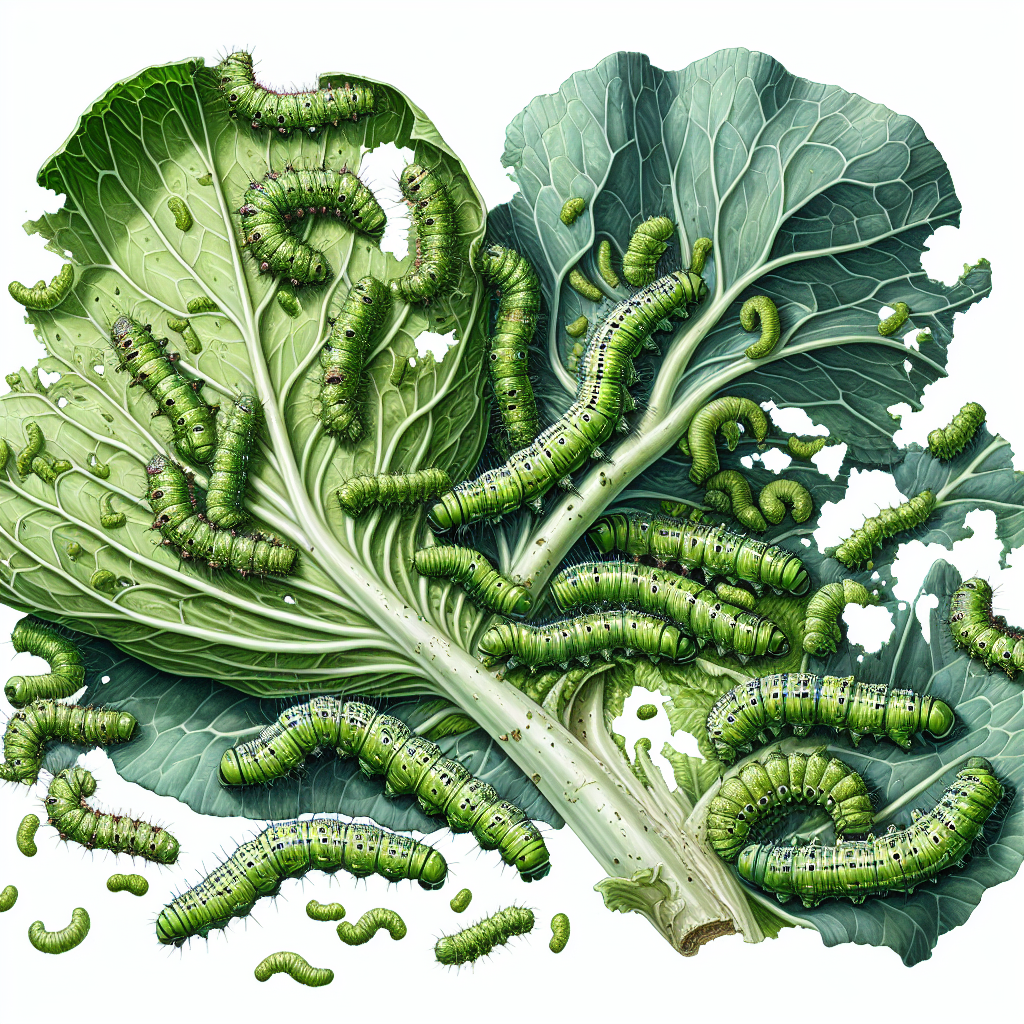
Introduction to leaf-feeding caterpillars
Leaf-feeding caterpillars represent one of the most widespread and damaging pest groups in agriculture, affecting a broad spectrum of crops from leafy greens to fruit trees. These are the larval stages of moths (primarily from families like Noctuidae, Pieridae, and Geometridae) and occasionally butterflies, known for their insatiable appetite for plant foliage. Unlike borers or miners, leaf-feeders directly skeletonize or completely devour leaves, often leaving behind frass (droppings) and silk webbing.
In commercial and small-scale farming, outbreaks can lead to 20-50% yield losses if unchecked, particularly during warm seasons when multiple generations occur. Common culprits include armyworm (Spodoptera frugiperda), cabbage looper (Trichoplusia ni), and tent caterpillars (Malacosoma spp.). Understanding their biology is crucial for timely intervention. For broader context on caterpillar pests, refer to detailed species profiles. This guide provides professional-grade diagnostics, organic management, and prevention strategies optimized for modern growers.
Identifying Symptoms & Damage
Early identification is key to minimizing damage from leaf-feeding caterpillars. Initial signs include small irregular holes in leaves, often starting on older, lower foliage. As larvae grow (typically 1-5 cm long), damage escalates to skeletonization—veins remain while leaf tissue is consumed—creating a lacy appearance.
Look for:
- Fresh green frass pellets on leaves or ground beneath plants, resembling BB shot.
- Silk webs or mats binding leaves together, especially in loopers or webworms.
- Chewed leaf edges progressing inward, distinct from slug slime trails or flea beetles pinpoint holes.
- Larvae presence: Smooth, hairy, or spotted bodies; some with prolegs enabling looping movement (e.g., cabbage loopers).
Severe infestations cause complete defoliation, stunted growth, and secondary issues like sunscald on fruits or vulnerability to powdery mildew. Differentiate from armyworms by gregarious feeding behavior or cutworms by nocturnal stem-cutting. Use a hand lens to check undersides; eggs are often clustered on leaf undersides.
On crops like cabbage, damage mimics cabbage worms, while in orchards, it resembles leafrollers. Scout weekly during peak activity, shaking plants over white paper to dislodge larvae.
Lifecycle and Progression of leaf-feeding caterpillars
Leaf-feeding caterpillars undergo complete metamorphosis: egg → larva (feeding stage) → pupa → adult moth/butterfly. Lifecycle duration varies from 2-6 weeks depending on species and temperature, allowing 3-8 generations per season in warm climates.
- Eggs: Laid in clusters (50-200) on leaf undersides; pearly white or yellow, hatching in 3-5 days.
- Larvae: 5-6 instars over 10-20 days; feeding peaks in 3rd-5th instar when largest.
- Pupa: Chrysalis in soil, leaf litter, or silk cocoons; 7-14 days.
- Adults: Moths with 1-3 cm wingspan, nocturnal; females lay 200-1000 eggs.
Progression accelerates above 20°C (68°F); diapause in cooler months. Monitor for neonate (newly hatched) larvae, as they cause exponential damage. In tomato fields, synchronize with flowering for peak impact.
Environmental Triggers & Risk Factors
Leaf-feeders thrive in warm, humid conditions (24-30°C, 70-90% RH), with outbreaks triggered by mild winters reducing natural predators. Over-fertilization with nitrogen promotes lush foliage, attracting moths. Monocultures like continuous corn or soybeans amplify risks via pheromone cues.
Key triggers:
- Weed hosts: Nearby clover or wild mustards serve as reservoirs.
- Irrigation: Overhead watering mimics rain-forest humidity.
- Adjacent crops: Proximity to cabbage spreads loopers to lettuce.
Climate change extends seasons, increasing generations. Poor soil health stresses plants, making them susceptible. Scout after rain or wind dispersing adults.
Organic Control & Treatment Plans
Organic management emphasizes IPM: monitoring, biologicals, and targeted applications. Avoid broad-spectrum sprays preserving predators like trichogramma wasps.
Immediate Actions:
- Handpicking: Remove larvae <2cm into soapy water; viable for <1 acre.
- BT (Bacillus thuringiensis): Kurstaki strain targets larvae <1cm; apply evenings, 2-3x at 5-7 day intervals. Efficacy >90% on young instars.
Biological Controls:
- Release Trichogramma parasitoids (eggs) or Bacillus thuringiensis var. aizawai.
- Encourage birds, lacewings via hedgerows.
Cultural/Physical:
- Row covers: Exclude adults during egg-lay.
- Pheromonetraps: Monitor/disorient males.
- Neem oil/Spinosad: Contact sprays; spinosad for larger larvae, OMRI-listed.
Treatment Plan (per acre):
- Scout: 10-20 plants/row.
- Threshold: 1-2 larvae/10 plants.
- Apply BT (1-2 lbs/acre) + spinosad (4-6 oz/acre) if exceeded.
- Rotate modes of action.
For Spring Pest Patrol, integrate timing. Success rates: 80-95% with vigilance.
Preventing leaf-feeding caterpillars in the Future
Prevention builds resilient systems:
- Crop rotation: 2-3 years away from hosts.
- Companion planting: Nasturtium traps, thyme repels.
- Resistant varieties: Bt-corn hybrids, looper-tolerant brassicas.
- Sanitation: Destroy crop residue, till lightly to expose pupae.
- Timing: Plant early to avoid peak flights; use degree-day models.
Enhance biodiversity with cover crops, reducing monoculture appeal. Mulch suppresses soil pupae. Long-term: predatory nematodes in soil. Annual planning via tools like Why Timing Kills Small Farm Profits prevents outbreaks.
Crops Most Affected by leaf-feeding caterpillars
Leaf-feeders impact >100 crops, prioritizing folivores:
- Brassicas: Cabbage, broccoli, kale—loopers, imported cabbageworm.
- Solanaceae: Tomato, potato, eggplant—tomato fruitworm, hornworms.
- Grains: Corn, wheat—armyworms, European corn borer.
- Legumes: Soybeans, peas—soybean looper, velvetbean caterpillar.
- Fruits: Apple, grapes—leafrollers, tent caterpillars.
Others: Lettuce, spinach, strawberry. Economic losses: billions annually. Tailor strategies per crop.