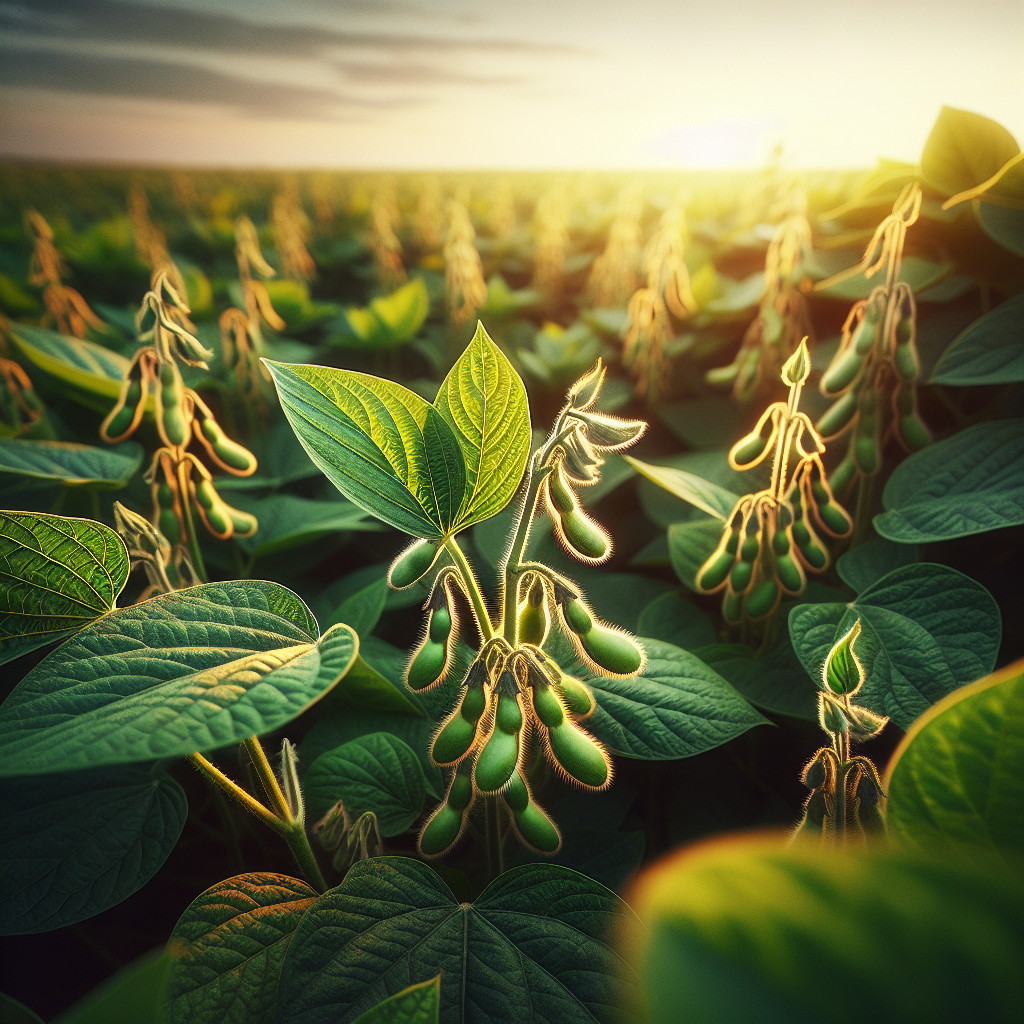
Introduction to Soybeans
Originally domesticated in East Asia, soybeans have become one of the most economically important crops on earth because they bridge food, feed, and soil fertility in a single plant. The crop is valued for its high protein seed, substantial oil content, and ability to partner with Bradyrhizobium bacteria to fix atmospheric nitrogen when properly inoculated and grown under suitable conditions. This gives soybeans a unique place in both large-scale agriculture and diversified small farms.
Growers cultivate soybeans for several distinct markets: dry grain soybeans for storage and processing, food-grade soybeans for tofu, soy milk, natto, tempeh, and miso, and vegetable soybeans harvested green as edamame. Although all belong to the same species, cultivar choice matters immensely. Seed size, pod set height, branching habit, maturity group, disease tolerance, hilum color, and protein or oil profile can differ significantly among varieties. For practical production, selecting a cultivar suited to local day length and frost-free season is just as important as fertility or weed control.
Soybeans are comparatively straightforward once their key physiological needs are understood. They demand warm soil for reliable emergence, full sun for heavy pod fill, good drainage to protect roots and nodules, and stable moisture during flowering and seed development. They generally need less nitrogen fertilizer than many field crops, but they are highly sensitive to early weed competition, compaction, prolonged waterlogging, and late-season harvest delays.
For growers designing rotations, soybeans are especially useful after cereals and before nutrient-demanding crops. They often fit well in systems that also include Corn, where residue balance, nitrogen cycling, and contrasting root architecture improve overall field management. For broader fertility principles that strengthen legume performance, see soil health strategies.
Botanical Profile of Soybeans
Soybeans belong to the family Fabaceae, the legume family, and are typically classified as an annual broadleaf crop. The species Glycine max was derived from wild relatives in Asia and has been improved over centuries for erect growth, synchronized maturity, seed retention, and larger seed size. Plants are generally bushy rather than vining, though some cultivars branch heavily while others remain more upright and compact.
The crop has a taproot with many lateral roots, and under favorable conditions these roots host nitrogen-fixing nodules. Healthy nodules, when split open, often show a pink to reddish interior due to leghemoglobin, an indicator of active nitrogen fixation. White or greenish inactive nodules may indicate poor inoculation, unsuitable soil conditions, or excessively high residual nitrogen.
Leaves are trifoliate after the seedling stage, and their canopy architecture influences weed suppression and airflow. Soybeans produce small self-pollinating flowers, typically white or purple depending on genotype. Because soybeans are largely self-pollinated, saved seed from open-pollinated non-hybrid types is more genetically stable than in many cross-pollinated crops, although seed health and varietal purity still matter.
Pods usually contain two to four seeds and form along the stem and branches, with lower pod height being a critical harvest trait in mechanized systems. Maturity is strongly influenced by photoperiod. Soybeans are short-day plants, meaning flowering and maturation are regulated by day length, which is why maturity groups are region-specific. A variety adapted to one latitude may flower too early or too late somewhere else, reducing yield.
Agronomists often describe soybean growth using vegetative stages (VE, VC, V1, V2, and so on) and reproductive stages (R1 through R8). This staging system is useful because management decisions depend on growth timing. For example, moisture stress at R1 to R2 can reduce flower retention, while drought at R5 to R6 can sharply reduce seed size and final yield.
Soil, pH, and Climate Requirements for Soybeans
Soybeans perform best in fertile, well-drained loam or silt loam soils with good structure and moderate water-holding capacity. They can be grown on sandy soils if irrigation and fertility are managed carefully, and on clay soils if drainage is excellent, but neither extreme is ideal. The crop is especially vulnerable to saturated conditions in the germination and nodulation phase. If soil remains waterlogged for more than 48 hours, oxygen deprivation can reduce emergence, damage roots, suppress nodules, and create ideal conditions for seedling diseases.
The ideal soil pH is generally 6.0 to 7.0, with 6.3 to 6.8 often considered optimal for nutrient availability and rhizobial activity. Below pH 5.8, nodulation efficiency declines and manganese or aluminum toxicity can become more likely, especially in strongly acidic soils. Above pH 7.5, iron chlorosis may appear, particularly on calcareous soils. Iron deficiency chlorosis shows up as yellowing between leaf veins on younger leaves, while veins remain greener. In severe cases, plant height, nodulation, and yield all suffer.
Soybeans need warmth, but not extreme heat during flowering and pod fill. Ideal air temperatures for steady growth are roughly 20 to 30°C. Germination is possible above about 10°C soil temperature, but dependable field emergence usually improves once the top 5 cm of soil reaches at least 13 to 16°C. Cold, wet soil slows imbibition and emergence, increasing the risk of seed rot and weak seedlings. Excessive heat above 35°C, especially when combined with dry winds and limited soil moisture, can reduce flower retention and shorten seed fill.
Rainfall or irrigation should total approximately 450 to 700 mm over the growing season, depending on climate, soil type, and cultivar duration. Water demand is modest during early vegetative growth but rises sharply from flowering through seed fill. The most critical moisture period is typically R3 to R6, when pods and seeds are developing. During this phase, maintain soil moisture near 60 to 80% of field capacity. In practical terms, the root zone should feel evenly moist but never sticky or sour-smelling. If a squeezed handful from the top rooting depth forms a weak ball that breaks easily, moisture is often near a good working range; if it oozes water or stays glossy and compacted, it is too wet.
Full sun is essential. Soybeans should receive at least 8 hours of direct light daily, with maximum yield potential under unobstructed exposure all day. Shading reduces branching, flower production, and pod number.
Step-by-Step Planting & Propagation
Soybeans are propagated almost exclusively by seed. Direct sowing is strongly preferred because transplanting disturbs the taproot and delays nodulation. Start with certified, clean seed chosen for the local maturity zone, disease tolerance, standability, and intended use, whether grain or edamame.
Prepare the site by removing perennial weeds and loosening the soil to eliminate shallow compaction. Avoid excessive tillage that pulverizes soil structure. A fine, firm seedbed is best: seeds should contact moist soil evenly, but the surface should not crust after rain.
Test the soil several weeks before planting. Correct pH with lime if needed, and apply phosphorus or potassium based on soil test recommendations. Soybeans often respond well to adequate phosphorus for root growth and nodulation, and potassium is especially important for water regulation, stem strength, and seed fill.
Inoculate seed with the correct Bradyrhizobium japonicum inoculant if soybeans have not been grown recently in the field, or if the field has a weak nodulation history. Coat seeds just before sowing and protect inoculated seed from direct sun and high heat. Inoculant organisms are living bacteria; mishandling can sharply reduce effectiveness.
Plant only after danger of frost has passed and soil temperatures are consistently warm. For most regions, this means late spring to early summer. In cool climates, delayed planting into warmer soil often outperforms very early planting into cold ground.
Sow seed 2.5 to 4 cm deep in medium-textured soils. In sandy soils or drying conditions, depth can increase to 5 cm if moisture is deeper. Planting too shallow risks uneven germination and bird damage; too deep reduces emergence energy and stand establishment.
Space rows according to management goals. For field production, 25 to 75 cm rows are common. Narrower rows close canopy faster and suppress weeds better, while wider rows allow easier cultivation. In gardens, 30 to 45 cm between rows and 5 to 10 cm between plants works well for dry beans, while edamame may be spaced slightly wider for easier harvest.
Aim for a final stand that matches variety and environment. In broad terms, 250,000 to 450,000 plants per hectare is a common field target, while dense garden sowings should still leave enough airflow to reduce leaf disease.
After planting, avoid over-irrigating. The seed needs moisture to germinate, but saturated soil promotes damping-off organisms. If irrigation is necessary, apply enough to moisten the seed zone without puddling.
Emergence usually occurs in 5 to 14 days depending on temperature. Inspect stands early. Missing gaps, hypocotyl injury, cotyledon feeding, and crusted soil surfaces can all reduce uniformity. Uniform emergence matters because late plants remain shaded and contribute less to yield.
Care & Maintenance regimes for Soybeans
The first priority after emergence is stand protection and weed control. Soybeans are poor competitors in the first few weeks, and yield losses from early weed pressure can be severe even if fields look clean later. Keep the crop weed-free through the early vegetative phase and especially until canopy closure. Organic growers often rely on stale seedbeds, rotary hoeing before emergence, shallow inter-row cultivation, mulch in small-scale systems, and timely hand weeding.
Nutrient management for soybeans differs from heavy-feeding cereals. When nodulation is effective, large nitrogen applications are usually unnecessary and can even be counterproductive, encouraging lush foliage at the expense of nodulation. If plants are pale despite good soil warmth and proper inoculation, inspect nodules before applying rescue nitrogen. A healthy plant with active nodules generally does not need significant supplemental N. However, phosphorus, potassium, sulfur, molybdenum, and occasionally boron or zinc can influence performance depending on soil type.
Water management should be calibrated by growth stage. During vegetative growth, moderate drying between irrigations is acceptable and may even encourage deeper rooting. Once plants approach flowering, avoid significant moisture swings. Signs of underwatering include midday wilting that persists into evening, dull gray-green leaves, reduced new growth, flower abortion, and short pods with poorly filled seeds. Signs of overwatering include persistent leaf yellowing, swollen lenticels near the stem base, sour or anaerobic soil smell, reduced nodule activity, and plants that wilt despite wet soil because roots are oxygen-starved.
As a guideline, irrigate when the upper 5 to 7 cm begin drying and the root zone below is no longer evenly moist, especially from bloom through seed fill. Deep, less frequent irrigation is better than frequent shallow watering because it supports deeper rooting and reduces surface disease pressure. Avoid overhead irrigation late in the day where foliar disease is common; morning irrigation allows faster drying.
Soybeans generally do not require pruning. In high-fertility situations with excessive vegetative growth, dense canopies can create humidity that favors disease, but pruning is rarely practical in field systems. Instead, adjust row spacing, fertility balance, and irrigation management.
Scouting should be systematic. Walk fields weekly at minimum, checking stand uniformity, nodulation, weed pressure, leaf color, insect feeding, and disease lesions. Dig, do not pull, suspect plants so you can evaluate roots and nodules accurately. Tissue testing can help diagnose hidden nutrient imbalances if visual symptoms are unclear.
Lodging prevention depends on balanced fertility, appropriate plant population, and cultivar selection. Excess nitrogen, overly high populations in fertile ground, and delayed harvest all increase lodging risk.
Pests, Diseases & Organic Management
Soybeans are vulnerable to a broad pest and disease complex, and successful organic management begins with prevention. The most effective foundation is a sound rotation, healthy soil structure, resistant varieties, clean seed, and good field hygiene.
Common early-season insect problems include seedcorn maggots, bean leaf beetles, cutworms, and various caterpillars. bean leaf beetles chew cotyledons and young leaves and may scar pods later in the season. Defoliation thresholds matter: soybeans can tolerate some leaf feeding, especially before flowering, but pod feeding later can reduce quality and invite infection. Hand removal works in very small plantings; larger systems rely on row covers during establishment, habitat support for beneficial insects, and biopesticides such as neem or spinosad used according to label and pollinator safety.
soybean aphids can build rapidly, especially in temperate regions. Look for curled leaves, sticky honeydew, and colonies on undersides of leaves and stems. Strong populations can reduce vigor and transmit viruses. Encourage lady beetles, lacewings, syrphid flies, and parasitoid wasps by maintaining flowering borders and minimizing broad-spectrum sprays.
Major diseases include damping-off from Pythium and Phytophthora, Rhizoctonia seedling blight, sudden death syndrome, frogeye leaf spot, Septoria brown spot, bacterial blight, white mold in dense cool canopies, and various root rots. Seedling diseases are most likely in cold, wet soils. The best prevention is warm planting conditions, fungicide-free organic seed treatments where permitted such as biological inoculants, shallow but adequate planting depth, and excellent drainage.
frogeye leaf spot appears as circular lesions with gray centers and darker margins. Brown spot often starts low in the canopy and moves upward under wet conditions. white mold is favored by dense canopies, moderate temperatures, and prolonged leaf wetness. Organic management focuses on wider row spacing where justified, balanced fertility, resistant cultivars, crop residue management, and avoiding irrigation practices that prolong evening leaf wetness.
soybean cyst nematode is among the most serious hidden threats in many production areas. Symptoms may look like general nutrient deficiency or drought stress even when fertility and water are adequate. Infested fields require resistant varieties, long rotations, and sanitation to prevent movement of infested soil on equipment.
Weed pressure is often the largest practical "pest" issue in soybean systems. Pigweed, lambsquarters, foxtails, ragweed, and volunteer grains compete heavily. Organic control hinges on stale seedbed preparation, rapid canopy closure, shallow cultivation before weeds become rooted, and never allowing weeds to set seed.
Harvesting, Curing & Optimal Storage
Harvest timing depends on intended use. For edamame, pods are picked when they are plump, bright green, and well filled but before yellowing. Harvest usually occurs at the R6 stage, when seeds fill the pod cavity but remain green and tender. Pods harvested too early are flat and bland; too late they become starchy and lose the characteristic sweet, nutty quality.
For dry soybeans, harvest begins when plants reach full maturity, usually around R8, after 95% of pods have reached mature color and leaves have mostly dropped. Pods should be tan, brown, or gray depending on variety, and seeds should rattle inside pods when moisture falls sufficiently. Ideal harvest seed moisture is often around 13 to 15% for safe combining with minimal damage, though slightly higher moisture may reduce shatter in some conditions if drying is available afterward.
Delaying harvest too long invites pod shattering, lodging losses, weather staining, and repeated wet-dry cycles that reduce seed quality. In hand harvest systems, cut plants in the morning when slight atmospheric moisture reduces pod shatter. Bundle or lay plants on breathable tarps in a dry, shaded, well-ventilated area until pods are fully crisp.
Thresh gently to avoid cracking the seed coat. Clean out chaff and immature seeds, then dry further if needed. For safe storage, grain soybeans should generally be reduced to about 12 to 13% moisture for medium-term storage, and closer to 10 to 11% for longer storage in warm climates. Seed intended for planting should not be overdried aggressively or overheated, as viability declines.
Store soybeans in cool, dry, dark conditions in rodent-proof containers or bins. Aeration is important for larger lots. Watch for condensation, musty odor, heating, or insect activity, all of which indicate unsafe moisture or poor airflow. Food-grade soybeans also require especially careful protection from foreign material, mold, and cracked seed.
Companion Planting for Soybeans
Soybeans can function as both a productive crop and a useful rotational or companion component when managed with realistic expectations. Because they fix nitrogen only after nodulation is established and much of that nitrogen remains in plant tissue until decomposition, neighboring crops do not receive an immediate fertilizer effect in the way many gardeners assume. However, soybeans can still contribute significantly to diversified systems through canopy cover, root activity, residue inputs, and attraction of beneficial insects when allowed to flower.
Good companions in small-scale plantings include corn, squash, cucumbers, and low-growing herbs planted nearby rather than densely intermingled. Corn can benefit structurally from spatial contrast, while soybeans occupy the lower canopy and help diversify insect habitat. Avoid overcrowding: soybeans need full sun and airflow, so companion systems should be arranged in strips or blocks, not tangled masses.
Alliums such as garlic and onions nearby may help disrupt some pest movement patterns, though evidence is variable and should not replace scouting. Strongly competitive sprawling crops should be positioned so they do not smother young soybean seedlings. Likewise, tall shading crops placed south of soybeans in the northern hemisphere can reduce flowering and yield.
In rotations, soybeans pair exceptionally well after grasses such as wheat or other cereals because these preceding crops reduce disease carryover and help balance residue decomposition. Following soybeans with nitrogen-hungry crops can capitalize on improved soil tilth and residual nutrient dynamics, especially when soybean residue is returned to the field. The best companion strategy is therefore not just plant-to-plant proximity, but whole-farm sequencing: use soybeans where their legume biology, canopy timing, and residue profile strengthen the broader cropping system.