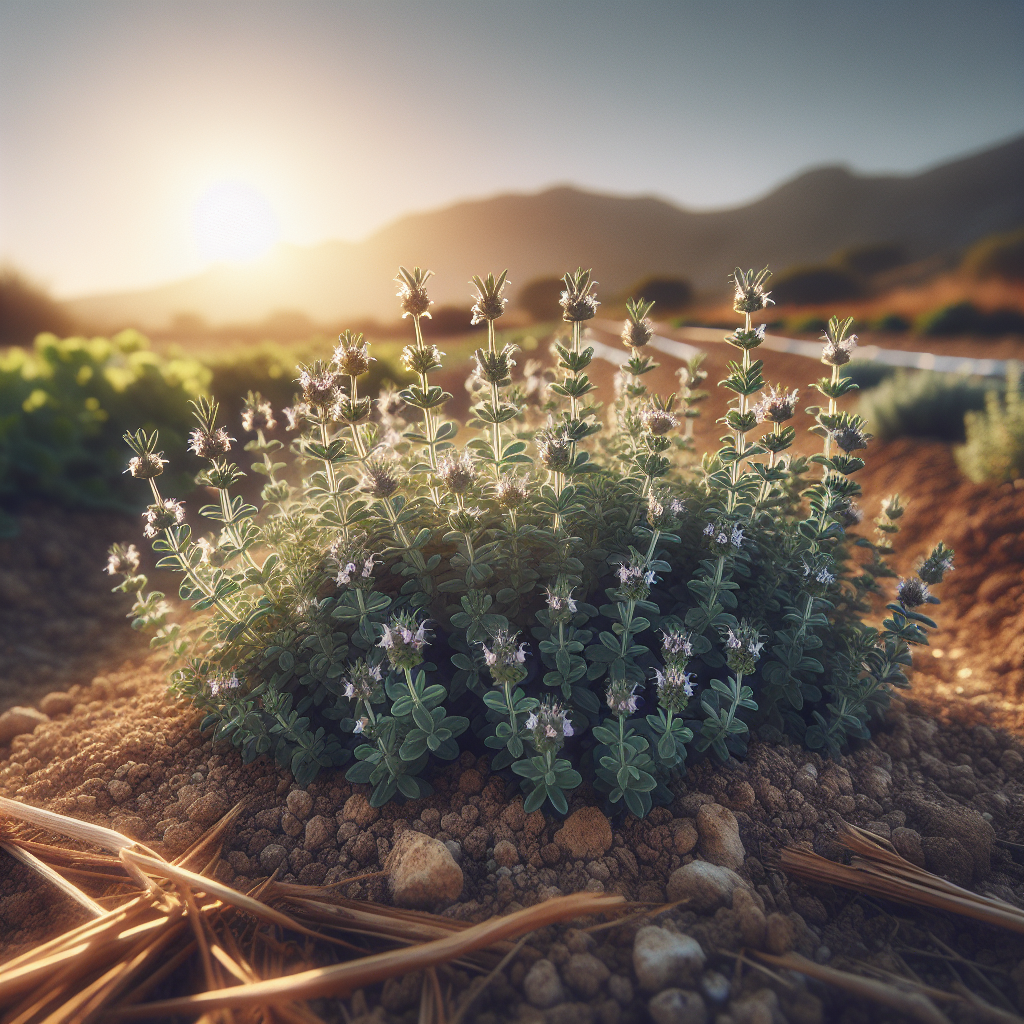
Introduction to Thyme
A classic herb of the Mediterranean basin, this small evergreen subshrub has been cultivated for centuries for seasoning, medicine, fragrance, and pollinator support. Ancient Greeks associated it with vigor and courage, Romans used it in kitchens and baths, and medieval growers valued it as both a strewing herb and a healing plant. Modern growers prize it because it combines drought tolerance, low input needs, and high market value in fresh, dried, and ornamental forms.
What makes this crop especially important is its chemistry. The leaves and flowering tops contain essential oils dominated by compounds such as thymol, carvacrol, linalool, or geraniol depending on cultivar and chemotype. Those compounds shape flavor, aroma, and disease-suppressive properties. In practical terms, that means growing conditions directly influence quality: plants raised in full sun, with moderate stress and excellent drainage, usually produce stronger aroma and tighter growth than plants pushed with heavy nitrogen and frequent irrigation.
For growers, the central rule is simple: treat it more like a hillside Mediterranean shrub than a thirsty vegetable. Most failures come from kindness in the form of rich soil, shade, and overwatering. When site selection is right, it becomes one of the easiest perennial herbs to maintain.
Botanical Profile of Thyme
This species belongs to the mint family, Lamiaceae, the same broad family as Thai Basil. Like many relatives, it has square stems, opposite leaves, and flowers attractive to bees and other beneficial insects. Unlike softer annual herbs, however, it gradually develops a woody crown and semi-woody branches.
Growth habit is typically low, mounding, and spreading, with mature plants reaching 15-30 cm tall and 30-45 cm wide, though some cultivars stay compact while creeping forms spread further. Leaves are small, narrow to oval, gray-green to deep green, and often slightly rolled at the margins. Fine hairs and oil glands on the leaf surface help reduce water loss and contribute to fragrance.
Flowers are usually pale pink, lavender, or white, appearing in late spring to summer. Flowering intensity depends on day length, cultivar, pruning, and plant age. If grown primarily for dried leaf production, heavy flowering can slightly reduce leaf tenderness but may improve pollinator value and essential oil complexity.
Several cultivated forms are important:
- Common or English thyme: the standard culinary type, upright and strongly aromatic.
- French thyme: often finer textured, sometimes considered superior for culinary markets.
- Lemon thyme: a different species or hybrid grouping in some classifications, valued for citrus-scented foliage.
- Creeping thyme: lower-growing, often ornamental, useful in borders and pathways.
Chemotypes matter in professional herb production. Thymol-rich lines tend to produce the strongest classic medicinal-herbal scent; linalool types may be sweeter and softer. For chefs and herbal processors, choosing a cultivar is not merely aesthetic. It influences drying quality, volatile oil yield, winter hardiness, and market identity.
Botanically, the plant is a short-lived perennial rather than a forever perennial. Even under ideal care, many plantings become woody, sparse, or split in the center after 3-5 years, especially in humid climates. Commercial and intensive kitchen garden systems often renew beds on a 3-year cycle to maintain high leaf quality and uniformity.
Soil, pH, and Climate Requirements for Thyme
This crop performs best in soils that are sharply drained, moderately low in fertility, and never waterlogged. Sandy loam, gravelly loam, or raised beds amended for drainage are ideal. Heavy clay is the most common cause of root decline because it traps water around the crown. If native soil is dense, improve structure with coarse sand, grit, small gravel, or composted bark rather than relying only on fine compost, which can hold too much moisture.
Optimal soil pH is generally 6.0-8.0, with best performance often seen around 6.5-7.5. It tolerates mildly alkaline ground well, and in calcareous soils it often develops very good aroma. Strongly acidic soils below pH 5.8 may limit vigor and should be corrected with agricultural lime if a soil test confirms need.
Fertility should be moderate to low. Excess nitrogen produces lush, floppy, weakly flavored growth that is more susceptible to rot and winter injury. A target organic matter content around 3-5% is usually sufficient. In poor mineral soils, modest preplant incorporation of mature compost is enough; avoid heavily manured beds.
Climate preference is temperate to warm-temperate with abundant sun and relatively low atmospheric humidity. Ideal daytime temperatures are 18-27°C, though established plants tolerate hotter conditions if drainage is good. Winter hardiness varies by cultivar, but common thyme generally survives in USDA zones 5-9 with proper drainage. In colder zones, winter survival improves dramatically when plants are kept out of wet soils and sheltered from repeated freeze-thaw cycles.
Humidity deserves special emphasis. This plant tolerates drought far better than stagnant, humid air. In coastal fog, rainy summers, or tightly packed greenhouse systems, foliar diseases and crown rot become more likely. Wide spacing, airflow, and morning sun are essential in these climates.
For container culture, use a gritty mix rather than generic moisture-retentive potting soil. A reliable blend is roughly 50-60% potting substrate and 40-50% drainage material such as perlite, pumice, or coarse sand. Pots must have excellent drainage holes, and terracotta containers often outperform plastic because they dry faster.
If you are improving a herb bed broadly, principles similar to those in soil health strategies apply, but with this crop the emphasis should remain on structure and drainage over richness.
Step-by-Step Planting & Propagation
Seed propagation is possible, but vegetative propagation is usually better for consistency. Seeds can be slow, uneven, and variable in aroma and growth habit. Use seed when producing large numbers inexpensively or when starting open-pollinated common thyme.
For seed starting:
- Sow indoors 6-10 weeks before the last frost.
- Use a sterile, fine-textured propagation mix.
- Press seed lightly onto the surface; do not bury deeply, because light aids germination.
- Maintain temperatures around 18-21°C.
- Keep the medium slightly moist but never saturated. The surface should feel barely damp, not glossy wet.
- Expect germination in 10-21 days, sometimes longer.
Once seedlings have several true leaves, transplant into plugs or small pots. Harden off gradually for 7-10 days before field planting.
For cuttings, which are preferred for elite plants:
- Take 5-8 cm non-flowering tip cuttings in late spring or early summer.
- Strip lower leaves from the bottom half.
- Insert into a sharply drained medium such as 1:1 perlite and propagation mix.
- Keep humidity moderate, but do not enclose so tightly that fungal growth develops.
- Rooting generally occurs in 2-4 weeks.
Division works for older clumps in early spring, though it is less precise than cuttings and can stress woody plants.
Transplanting outdoors should occur after severe frost risk has passed and soils have warmed. Space plants 25-40 cm apart depending on cultivar and production goal. Closer spacing creates quicker canopy closure for fresh herb harvest, but wider spacing reduces humidity and disease pressure.
Plant crowns slightly high rather than buried. If the crown sits below grade, water may collect around the stem base, causing rot. After planting, water thoroughly once to settle roots, then allow the upper few centimeters of soil to dry before watering again.
Mulching should be approached carefully. Organic mulches touching the crown can trap moisture and encourage fungal problems. In wet climates, gravel mulch or small stone chips are often superior because they reflect heat, improve airflow around stems, and keep foliage cleaner.
Care & Maintenance regimes for Thyme
The best maintenance program is disciplined rather than intensive. Irrigation should be infrequent but well judged. During establishment, keep the root zone lightly moist until roots spread, usually for the first 2-4 weeks after transplanting. After establishment, water only when the top 3-5 cm of soil is dry and the plant begins to lose a bit of springiness in the newest growth.
A practical soil moisture target is slightly on the dry side of field capacity. In plain language, soil should feel dry on top and lightly cool beneath, never muddy or sticky. In containers, water when the pot feels noticeably lighter and the mix is dry to the first knuckle. Overwatered plants often show yellowing lower leaves, blackened stem bases, limp growth despite wet soil, and a stale smell from the root zone. Underwatered plants usually become grayish, brittle, and slow-growing, but recover quickly once watered if roots are healthy.
Fertilization should be minimal. In-ground plantings often need no feeding if preplant soil was reasonably balanced. If growth is weak and pale, apply a very light dose of a balanced organic fertilizer in spring, or side-dress with a small amount of finished compost kept away from the crown. Avoid frequent liquid feeding. Overfed plants lose compactness and essential oil concentration.
Pruning is essential for longevity. Pinch or shear lightly through the growing season to encourage branching and prevent legginess. Never cut deeply into old, leafless wood unless you know the cultivar regenerates well. Many woody stems will not resprout from bare sections. The safest approach is to remove no more than one-third of current green growth at a time.
After flowering, shear plants lightly to restore shape. In colder regions, stop heavy pruning 4-6 weeks before the first hard frost so new growth can mature. Late, tender regrowth is more vulnerable to winter injury.
Weed control is important early on because seedlings and young transplants dislike competition. Once established, dense plants suppress some weeds themselves. Hand weeding is preferable around crowns to avoid root disturbance.
For overwintering, the main threats are wet crowns and heaving from freeze-thaw cycles. Raised beds, gravel mulch, and excellent drainage are the best preventives. In containers, protect roots from severe freezing by moving pots to an unheated but sheltered structure or placing them against a south-facing wall.
Bed renewal should be planned. When plants become woody in the center, sparse, or less aromatic, replace them with young stock rather than trying to rejuvenate very old crowns indefinitely.
Pests, Diseases & Organic Management
This herb is relatively resilient, especially when grown in dry, sunny conditions. Most serious issues are cultural rather than insect-driven.
Root rot and crown rot are the biggest threats. These are usually caused by poorly drained soils or chronic overwatering, with pathogens such as Phytophthora, Pythium, or Rhizoctonia involved. Symptoms include wilting in wet soil, browning at the crown, stem collapse, and sudden plant death. Management is mostly preventive: raised beds, coarse-textured soil, restrained irrigation, clean propagation material, and avoiding mulch against stems.
Botrytis and other foliar blights can develop in dense, humid canopies. Look for gray mold, dead leaf patches, or fuzzy growth on damaged tissue. Remove affected material promptly, improve airflow, and water at soil level rather than overhead.
Spider mites may appear in very hot, dry, sheltered conditions, especially in tunnels or containers. Leaves may look stippled or dusty. A strong water spray on surrounding vegetation, better air circulation, and releasing or conserving beneficial predators can help. Avoid broad-spectrum sprays that disrupt natural control.
Aphids can cluster on tender shoots and flower stems. They are usually manageable with pruning, a firm water spray, or insecticidal soap applied in the evening. Because leaves are harvested, always observe pre-harvest intervals and wash thoroughly.
Four-line plant bugs, Whiteflies, and Mealybugs occasionally affect specialty herb production, especially in protected environments. Yellow sticky monitoring cards, sanitation, and avoiding excessive nitrogen help reduce outbreaks.
Organic disease management starts with sanitation and site design. Use clean cuttings, disinfect trays, avoid overpotting, and space plants so foliage dries quickly after dew or rain. Harvest in dry weather when possible. In repeated disease settings, rotate production areas and do not replant into a bed where crown rot recently occurred.
Because the foliage is aromatic, some growers assume it is immune to pests. It is not. The aroma may deter some browsing and minor insect feeding, but stressed plants still become vulnerable. Plant health, not scent alone, is the real defense.
Harvesting, Curing & Optimal Storage
For the highest culinary quality, begin light harvests once plants are established and actively growing, usually when stems are 15 cm or more and branching well. The best harvest window is just before full bloom, when leaf aroma is concentrated and stems are still relatively tender. Morning harvest after dew has dried but before midday heat often preserves the best volatile oils.
Use sharp snips and take green, flexible stem tips rather than woody bases. On mature plants, cut stems 8-15 cm long, leaving enough foliage behind for recovery. Do not remove more than one-third of the plant at a time in routine harvests.
For fresh market bunching, strip any yellow or damaged leaves and cool promptly. Fresh stems store best at about 0-2°C with high relative humidity around 90-95%, though free moisture on leaves should be avoided. In retail or home conditions, stems can be wrapped loosely in a barely damp towel and refrigerated.
For drying, bundle small handfuls and hang them upside down in a dark, warm, well-ventilated space, or use drying screens. Ideal drying temperature is generally 30-38°C. Higher temperatures can drive off essential oils too rapidly and flatten flavor. Dry until leaves are crisp and stems snap rather than bend.
Once dried, strip leaves from stems and store whole leaves rather than powdered material for best flavor retention. Keep them in airtight containers away from light, heat, and humidity. Properly dried product can maintain useful quality for about 6-12 months, though peak aroma is strongest in the first half-year.
For medicinal or essential-oil uses, harvest timing is even more exact. Flowering stage, chemotype, and time of day can affect oil composition. Commercial distillers often test small lots to determine the optimal cut stage.
If freezing is preferred, chop fresh leaves and freeze in small portions, though drying remains the classic preservation method because it concentrates flavor and stores efficiently.
Companion Planting for Thyme
This herb fits well into mixed plantings because it stays relatively compact, attracts pollinators when flowering, and prefers irrigation schedules that suit many Mediterranean or moderately dry crops. Its flowers support bees and hoverflies, while its aroma may help create a more complex scent environment in polycultures.
It is especially useful near Cabbage, Tomato, Strawberry, and Rosemary in broader herb-and-vegetable systems, though the key is matching drainage and not burying it under taller, thirsty neighbors. Around brassicas, it can contribute to beneficial insect activity. Near tomatoes, it works best on bed edges or in separate dry margins where irrigation is less frequent than the main crop line.
A good design principle is to place it in the driest, sunniest strip of a bed, along paths, border edges, or raised shoulders where roots stay aerated. Avoid pairing it tightly with crops that demand constant moisture or dense mulch. That mismatch often harms the herb even if the companion benefits.
Because it flowers heavily when allowed, it also serves as a bridge plant in beneficial insect programs. Letting some plants bloom while others are kept vegetative for harvest can give you both culinary yield and ecological function.
For market gardens and home herbaries alike, the best companions are those that appreciate sun, good airflow, and restrained fertility. When grown in that context, this crop becomes not only a culinary herb but a structural and ecological asset in the planting plan.