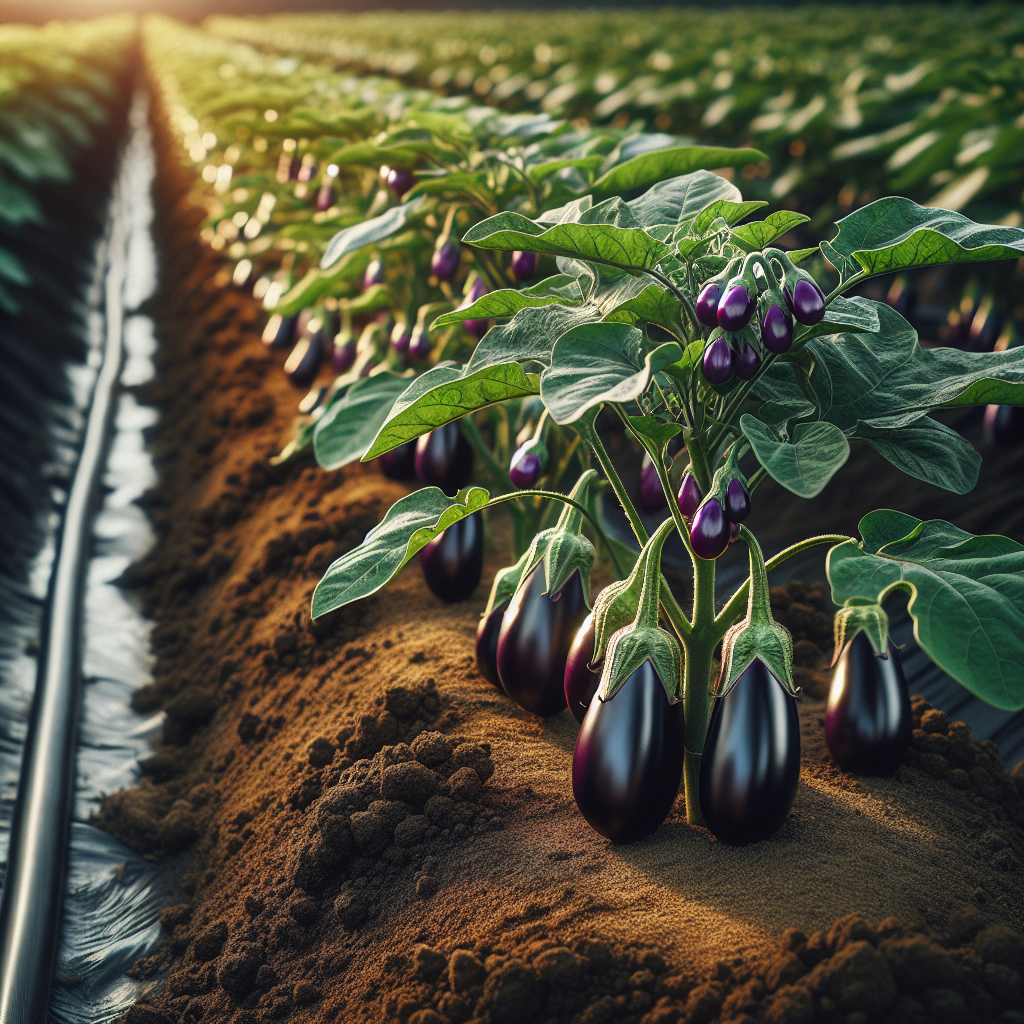
Introduction to Eggplant
A staple crop across South Asia, the Mediterranean, East Asia, and the Middle East, eggplant has been cultivated for centuries and selected into an extraordinary range of shapes, colors, and flavors. Depending on region, it may be called aubergine or brinjal, and cultivars range from large oval black-purple types to long slender Asian forms, striped Italian heirlooms, compact patio selections, and white-fruited specialty lines.
From a production standpoint, eggplant is often underestimated because it appears visually similar to pepper and Tomato guide systems, yet it is distinctly more heat-loving during establishment and more intolerant of chilling injury. Plants can be remarkably productive under stable warmth, but cool nights, water stress, nutrient imbalance, and unchecked flea beetle pressure can reduce vigor dramatically. For growers aiming at premium fruit quality, uniform irrigation, balanced fertility, and timely harvest are more important than sheer vegetative growth.
Eggplant fruit quality is strongly linked to harvest timing. Fruits harvested young and glossy are tender, mildly flavored, and marketable, while overmature fruits become seedy, bitter, dull-skinned, and less desirable. This guide focuses on professional-grade production methods that improve plant health, fruit set, and postharvest quality whether you are managing a few garden beds or a field-scale planting.
Botanical Profile of Eggplant
Eggplant belongs to the family Solanaceae, the same family as tomato, potato, and peppers. Botanically, the edible portion is a berry, even though it is used culinarily as a vegetable. The species is typically grown as an annual in temperate climates, but it is technically a short-lived perennial in frost-free tropical or subtropical regions.
Plants usually grow 45 to 120 cm tall depending on cultivar, fertility, and climate. Stems become semi-woody with age, especially in long-season systems. Leaves are broad, lobed to slightly sinuate, often covered with fine hairs, and can vary from light green to gray-green. Many cultivars have some degree of spininess on stems, calyxes, or leaf veins; modern breeding has reduced this trait in many market varieties but not all heirloom or Asian lines.
Flowers are generally solitary or borne in small clusters and are purple to lavender with bright yellow anthers. Eggplant flowers are largely self-pollinating, but vibration from wind or insects can improve pollination and fruit set. Under heat stress above roughly 35°C, under cool nights below about 16°C, or under excessive nitrogen, blossoms may abort rather than set fruit. This is one reason plants may look lush yet carry few marketable fruits.
Cultivar groups differ meaningfully in field behavior. Large globe types typically need a longer season, stronger staking, and a wider plant spacing. Italian and Sicilian forms often have excellent flavor and broad fruit shoulders but can be somewhat more prone to scuffing and uneven shape under stress. Asian long-fruited cultivars usually set earlier, tolerate somewhat higher humidity, and are often more tender-skinned, though they bruise more easily during harvest and packing. Small-fruited ornamental or specialty types can be highly productive but may not command broad market demand.
Historically, eggplant likely originated from wild relatives in Asia, with domestication occurring in the Indo-Burma region and spread westward through trade routes into the Middle East, Africa, and Europe. The crop’s rich diversity reflects centuries of local selection for skin color, flesh texture, bitterness, seediness, and adaptation to regional climates.
Soil, pH, and Climate Requirements for Eggplant
Eggplant performs best in fertile, well-drained loam or sandy loam soils with high organic matter and excellent aeration. Ideal soil pH is 5.8 to 6.8, with a practical target around 6.2 to 6.5 for maximum nutrient availability and healthy root growth. In soils below pH 5.5, phosphorus, calcium, and magnesium may become limiting while manganese or aluminum toxicity may increase. In alkaline soils above pH 7.2, iron, manganese, and zinc deficiencies become more likely, often showing up as chlorosis in new growth.
The crop prefers warm soils and sustained heat. Optimum germination usually occurs at 25 to 32°C. Vegetative growth is strongest when daytime temperatures stay around 24 to 30°C and nights remain above 18°C. Growth slows noticeably in cool weather, and prolonged exposure below 15°C can stunt plants, purple leaves, reduce root activity, and delay flowering. Temperatures near freezing can kill plants outright.
Soil structure matters greatly because eggplant develops a moderately deep root system but is surprisingly sensitive to both compaction and waterlogging. Heavy clay can be used successfully if raised beds are employed and drainage is excellent. Saturated soil for even a few days may cause root stress, flower drop, and predispose plants to Phytophthora and Bacterial wilt in susceptible areas.
For moisture, aim for consistently moist but not saturated soil in the main root zone, roughly the top 20 to 30 cm. A useful field guideline is to maintain about 70 to 80% of field capacity during flowering and fruiting. If the soil forms a weak ball in the hand and breaks apart with slight pressure, moisture is often near ideal. If it feels slick, sticky, and airless, it is too wet. If it is powdery or cannot hold shape at all, it is too dry. Moisture swings cause misshapen fruit, blossom drop, leathery growth, and tough skin.
Eggplant requires full sun, ideally at least 8 hours of direct light daily. Shaded plants become elongated and produce fewer flowers. Wind protection is valuable in exposed sites because strong wind can scar fruit, desiccate foliage, and interfere with pollinator activity and blossom retention.
Before planting, incorporate mature compost and, where needed, refer to broader soil-building practices such as this soil health article. The goal is a biologically active, crumbly soil that warms quickly yet holds moisture evenly.
Step-by-Step Planting & Propagation
Start seed indoors 8 to 10 weeks before the expected transplant date. Eggplant seedlings develop more slowly than tomato seedlings in cool indoor conditions, so bottom heat is especially useful. Sow seeds 0.5 to 1 cm deep in a sterile, fine-textured propagation mix. Maintain media temperature between 27 and 30°C for fastest germination; under these conditions, emergence often occurs in 7 to 14 days. Without bottom heat, germination may be delayed and uneven.
Once seedlings emerge, provide strong light for 14 to 16 hours daily and keep air temperatures around 21 to 24°C by day and 18 to 21°C by night. Avoid cold windowsills and overwatering. Seedling media should remain evenly damp, not saturated; let the surface just begin to dry slightly between waterings. Persistent wetness encourages Damping-off and weak roots.
Pot up seedlings when they have 2 to 3 true leaves, especially if roots are reaching the cell edges. Use a high-quality mix with moderate fertility. Excessive nitrogen at the seedling stage produces soft, overstretched plants that transplant poorly. Harden off gradually over 7 to 10 days, but never expose seedlings to chilling temperatures below about 13°C for long periods. Unlike brassicas, eggplant does not benefit from hardening by cold.
Transplant only after all danger of frost has passed and the soil has warmed to at least 18°C, with 20°C or higher being preferable for rapid establishment. In cool regions, black plastic mulch, low tunnels, or landscape fabric can significantly improve early growth by increasing root-zone temperature.
Spacing depends on cultivar and pruning strategy. For most field production, set plants 45 to 60 cm apart in rows 75 to 120 cm apart. Compact Asian cultivars can be placed more closely, while large-fruited globe types need more room for airflow and harvest access. Container production requires at least 20 to 30 liters of media per plant for acceptable yields, though larger containers are better.
At transplanting, place the root ball level with the soil surface; unlike tomato, eggplant does not need deep burial of the stem. Water in thoroughly to settle roots and eliminate air pockets. Organic starter solutions with diluted fish hydrolysate, seaweed extract, or compost tea can help reduce transplant shock, but avoid highly concentrated fertilizers in the planting hole, which may burn roots.
Direct seeding is possible in hot climates with a long season, but it is far less common because germination and early weed competition are difficult to manage. Most professional growers rely on transplants for uniform stands and earlier harvests.
Care & Maintenance regimes for Eggplant
Irrigation should be regular and consistent from transplanting onward, with the most critical period being from first flowering through repeated fruit harvest. As a baseline, plants generally need the equivalent of 25 to 40 mm of water per week, though sandy soils and hot windy weather may require more frequent applications. Drip irrigation is strongly preferred because it keeps foliage dry and delivers moisture directly to the root zone.
The best practice is deep, even watering rather than frequent shallow sprinkling. Allow the upper few centimeters of soil to dry slightly between irrigations, but do not let the deeper root zone become dry during fruit development. Signs of underwatering include midday wilting that persists into evening, dull leaves, flower drop, small hard fruits, and tough skin. Signs of overwatering include yellowing lower leaves, slowed growth despite wet soil, edema, root browning, and increased disease pressure.
Mulching with straw, composted leaves, or biodegradable mulch helps stabilize soil moisture, reduce splash-borne diseases, and moderate soil temperature. Organic mulches should be applied after the soil has warmed; applying them too early in cool climates can slow root establishment.
Eggplant is a moderate to heavy feeder, particularly for potassium during fruiting. A soil test is the best guide, but in general the crop benefits from a well-balanced fertility program rather than aggressive nitrogen feeding. Too much nitrogen produces large dark leaves and delayed fruiting, especially if nights are cool. In contrast, insufficient nitrogen leads to pale foliage, weak stems, and reduced canopy size. Phosphorus supports root development early on, while potassium improves fruit size, firmness, and plant resilience.
A practical organic program may include preplant compost plus a balanced organic fertilizer, followed by 1 to 3 side-dressings once flowering begins and again during heavy harvest. Calcium should be adequate in soil to reduce physiological stress; erratic watering combined with low calcium availability can contribute to blossom-end symptoms, though these are less common in eggplant than in tomato.
Staking is often worthwhile, especially for globe and Italian types with heavy fruit. Use one sturdy stake per plant or a Florida-weave-style trellis in rows. Support reduces fruit contact with soil, improves airflow, and lowers breakage in storms. In high-value production, some growers prune to 2 to 4 main stems after the first branching point. This can increase fruit size and simplify harvest, though unpruned plants often yield well in longer seasons.
Pollination is usually adequate outdoors, but protected culture may benefit from gentle plant shaking or airflow to release pollen. Very humid mornings can make pollen sticky, while extreme heat reduces viability. If plants flower but fail to set, review night temperatures, nitrogen rate, and irrigation consistency before assuming pest damage.
Weed control is essential during the first 4 to 6 weeks after transplanting because young eggplants are not highly competitive. Keep rows clean with shallow cultivation, hand weeding, or mulch. Avoid deep cultivation, which can damage feeder roots and reduce growth.
Pests, Diseases & Organic Management
Flea beetles are among the most damaging early-season pests. Adults chew numerous tiny holes in leaves, creating a shot-hole appearance that can severely weaken seedlings and young transplants. Protection strategies include floating row covers during establishment, prompt transplanting of vigorous seedlings, weed control around field edges, and use of trap crops in some systems. Kaolin clay and spinosad-based programs can help, but timing must be precise.
Aphids colonize leaf undersides and tender shoots, causing curling, sticky honeydew, and occasional virus transmission. Strong water sprays, insecticidal soap, neem-based products, and preservation of beneficial insects such as lady beetles and lacewings are effective organic tools. Whiteflies and Spider mites can also become serious in hot, dry, or protected environments. Mites are especially favored by dusty conditions and water stress.
Colorado potato beetle may feed on eggplant in regions where it is established, and Hornworms occasionally attack foliage and fruit. Hand removal, Bacillus thuringiensis var. tenebrionis for beetle larvae where applicable, and regular scouting are important. Fruit borers are a major issue in some tropical and subtropical regions; sanitation and pheromone-based monitoring can be critical there.
Among diseases, Verticillium wilt causes yellowing, one-sided collapse, vascular browning, and long-term decline, particularly in infested soils. Bacterial wilt can cause sudden drooping and plant death under warm conditions. Phomopsis blight and fruit rot produce leaf lesions, stem cankers, and sunken fruit spots. Alternaria leaf spot, Cercospora, Damping-off, and Anthracnose may also occur depending on region.
Organic disease management begins with rotation. Avoid planting eggplant or other solanaceous crops in the same bed or field for at least 3 years where soilborne disease pressure exists. Start with clean seed or treated seed from reputable suppliers, remove crop residues promptly, and avoid overhead irrigation late in the day. Maintain spacing for airflow and harvest fruit before they become overripe, since older fruit are more susceptible to rot.
Healthy soils with good drainage are one of the strongest defenses. Waterlogged conditions sharply increase root disease risk. Sanitize tools, rogue severely diseased plants quickly, and control solanaceous weeds that may host pathogens and insect vectors. For foliar diseases, copper-based organic fungicides and biologicals such as Bacillus subtilis products can be useful as preventive tools, but they work best when integrated with sanitation and canopy management rather than used alone.
Harvesting, Curing & Optimal Storage
Eggplant should be harvested when fruits are fully sized for the cultivar but still glossy, firm, and immature in seed development. Dull skin is one of the most reliable signs of overmaturity. Another field test is to press the fruit lightly with a thumb: if the indentation springs back slowly, the fruit is usually at market stage; if it stays deeply indented, it may be overripe, and if it is rock hard and undersized, it may be immature.
Use pruners or a sharp knife rather than pulling fruit by hand. The calyx is often tough and sometimes spiny, and rough removal can tear branches or strip bark from stems. Harvest every 3 to 7 days during peak production to keep plants setting new fruit. Leaving oversized fruit on the plant suppresses further flowering and reduces total seasonal yield.
Unlike onions, eggplant is not cured in the classic dry-down sense. Instead, postharvest handling focuses on gentle picking, shade, and rapid removal of field heat. Fruits bruise easily, especially the thin-skinned Asian types, so avoid deep picking containers and rough stacking. Keep harvested fruit out of direct sun.
For storage, the ideal range is about 10 to 12°C with relative humidity around 90 to 95%. Below about 7 to 8°C, eggplant can suffer chilling injury, which appears as surface pitting, browning of seeds and flesh, increased decay, and failure to color properly after storage. At warm room temperatures, fruits dehydrate quickly and lose gloss. Under proper conditions, storage life is typically 1 to 2 weeks, though quality is always best when sold or consumed promptly.
Do not store eggplant in sealed, non-ventilated bags while warm, as condensation promotes decay. Also avoid storing it immediately next to high ethylene producers for prolonged periods, since senescence may accelerate. Premium market quality depends on smooth skin, bright color, intact calyx, and absence of scars, sunscald, insect feeding, or seed browning.
Companion Planting for Eggplant
Good companion planting for eggplant is less about folklore and more about ecological function. Useful companions either improve habitat for beneficial insects, provide low competition at the soil surface, or fit into a rotation that limits pest buildup. Herbs such as basil can help attract pollinators and predatory insects when planted nearby, while low-growing lettuce or other quick crops can temporarily occupy the inter-row space early in the season before eggplant reaches full canopy.
Alliums such as onions or garlic are frequently used in mixed plantings because their upright habit creates little shading and they do not strongly compete for the same canopy space. Flowers such as marigold, alyssum, dill, and coriander in border strips can support hoverflies, parasitic wasps, and lacewings that help suppress Aphids and other soft-bodied pests. Legumes may contribute some system benefits in rotation or adjacent beds, but vigorous climbers should not be allowed to overrun eggplant.
Avoid following or closely grouping eggplant with other solanaceous crops such as peppers, potatoes, and tomatoes when disease and beetle pressure are high, since these crops share many pests and pathogens. If companion planting is being used as part of a larger diversified system, prioritize airflow, scouting access, and rotation history over visual density. Dense mixed plantings that look productive can still worsen humidity and foliar disease.
A successful companion plan for eggplant therefore combines pest ecology, root-zone compatibility, and harvest logistics. In practical terms, the best companions are those that keep the soil covered, attract beneficial insects, and do not compete heavily for light, water, or nutrients during the critical flowering and fruiting window.