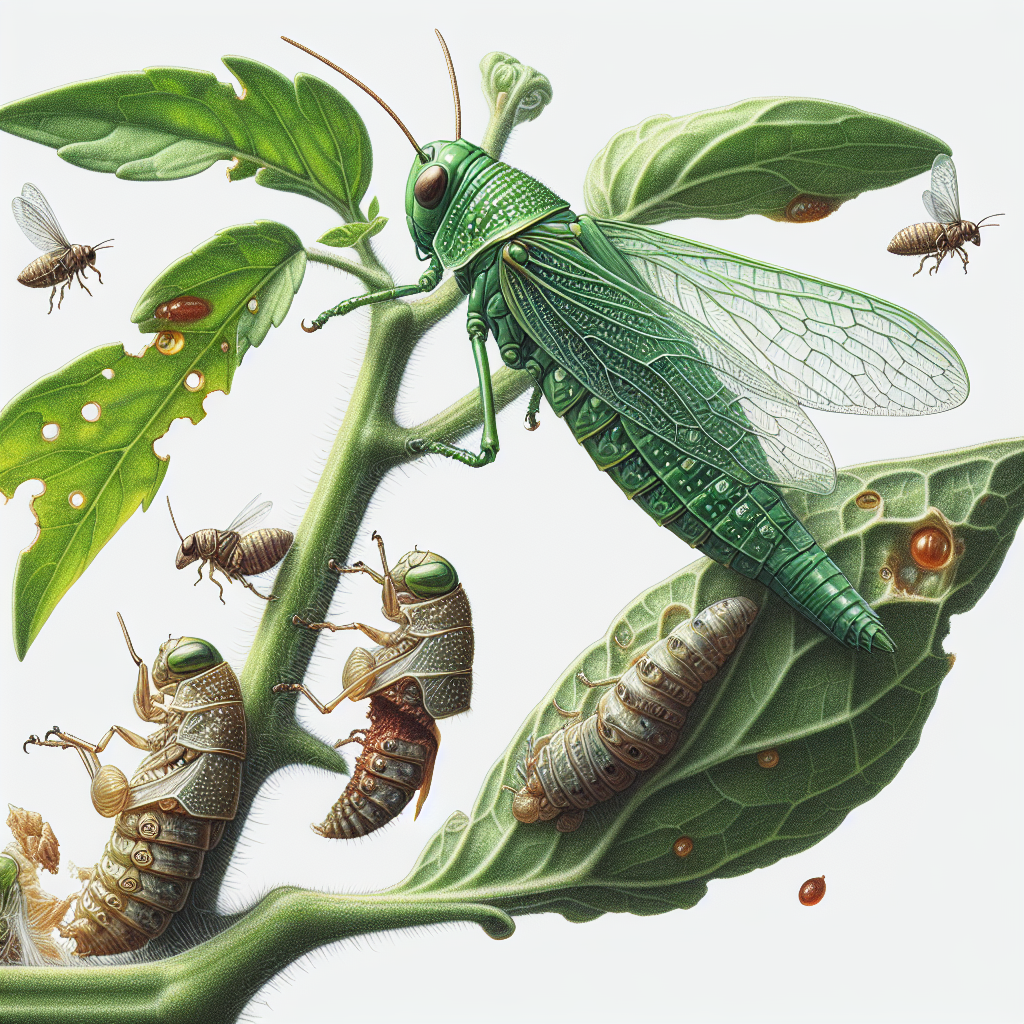
Introduction to leafhoppers
Leafhoppers are among the most widespread and damaging pests in agriculture, belonging to the Cicadellidae family with over 20,000 species worldwide. These tiny insects, typically 3-15 mm long, are wedge-shaped, with hind legs adapted for jumping—hence their name. They feed by piercing plant tissues and sucking sap, leading to direct damage like leaf stippling and discoloration, and indirect harm through the transmission of phytoplasma and viral diseases. In severe infestations, leafhoppers can reduce crop yields by 20-50% in susceptible varieties.
Farmers encounter leafhoppers in diverse settings, from small organic gardens to large-scale monocultures. Common species include the potato leafhopper (Empoasca fabae), grape leafhopper (Erythroneura spp.), and grape leafhoppers. Their rapid reproduction—females lay 2-3 eggs per day over weeks—allows populations to explode quickly. Early detection is crucial, as nymphs and adults both feed voraciously. This guide provides professional-grade diagnostics, lifecycle insights, and organic management strategies to protect your crops effectively. For more on integrated pest management, check this Spring Pest Patrol blog post.
Identifying Symptoms & Damage
Leafhoppers cause characteristic damage that's often mistaken for nutrient deficiencies or powdery mildew. Primary symptoms include:
- Stippling: Tiny white or yellow dots on leaves from sap extraction, especially on undersides.
- Yellowing and curling: Leaves turn pale, curl upward, or develop 'hopperburn'—a scorched, V-shaped browning at tips.
- Honeydew and sooty mold: Sticky excretions lead to black fungal growth, attracting ants.
- Cast skins: Translucent nymph exoskeletons on leaves indicate active infestation.
- Disease transmission: Symptoms like phyllody, witches' broom, or stunting from viruses/phytoplasmas.
Inspect plants weekly by tapping stems over white paper; tiny green/yellow insects jumping away confirm presence. Nymphs lack wings and move sideways; adults fly or leap. Differentiate from aphids (pear-shaped, no jumping) or whiteflies (powdery wings). Damage is worse on new growth. In tomato crops, look for bronzing; in grape, leafhopper speckling reduces photosynthesis by up to 30%.
Severity thresholds: 10-20 nymphs/leaf warrants action. Use a 10x hand lens for accurate ID. Photograph samples for expert confirmation if unsure.
Lifecycle and Progression of leafhoppers
Leafhoppers complete 4-10 generations yearly, depending on climate. Lifecycle spans 2-4 weeks:
- Eggs: Females insert 1-2 mm rice-like eggs into leaf veins or stems; hatch in 4-10 days.
- Nymphs (5 instars): Wingless, 1-3 mm, pale green; feed and molt, leaving skins. Develop in 10-20 days.
- Adults: Wedge-shaped, 3-6 mm, green/yellow/brown; live 30-60 days, migrate via wind.
Overwinter as eggs or adults in plant debris. Peak activity in warm weather (25-35°C). Monitor with yellow sticky traps (20-50/cm²/week). In rice, zigzag flights signal swarms. Understanding timing allows targeted interventions, like treating nymphs when vulnerable.
Environmental Triggers & Risk Factors
Leafhoppers thrive in hot, dry conditions (above 24°C, low humidity), migrating on winds. Key triggers:
- Weeds and volunteers: Alternate hosts like grasses harbor populations.
- Dense planting: Poor airflow aids buildup.
- Nitrogen excess: Tender growth attracts feeding.
- Drought stress: Weak plants suffer more hopperburn.
- Monocultures: [Alfalfa] or soybeans fields amplify outbreaks.
Risk highest in mid-summer; irrigated crops in arid regions face invasions. Companion crops like marigold reduce spread. Avoid overhead watering to deter landing.
Organic Control & Treatment Plans
Prioritize IPM: monitor, cultural, biological, then targeted organics.
Cultural: Remove weeds, rotate crops, prune for airflow. Reflective mulches repel adults.
Biological: Encourage predators like lacewings, ladybugs, spiders. Release Anagrus wasps for eggs.
Mechanical: High-pressure water blasts dislodge nymphs (daily). Vacuum or shake into soapy buckets.
Organic sprays:
- Insecticidal soap (1-2%): Weekly on undersides; safe for beneficials.
- Neem oil (0.5%): Disrupts molting; apply evenings.
- Pyrethrins/Kaolin clay: Barriers for heavy pressure.
- Garlic/pepper sprays: Repellents.
Treatment plan: Scout twice weekly. Act at 5-10 nymphs/leaf. Rotate sprays to prevent resistance. In potato, soaps reduce populations 70-90%. Avoid broad-spectrum; preserve spittlebugs predators.
Preventing leafhoppers in the Future
Long-term prevention builds resilient systems:
- Resistant varieties: Choose tolerant corn or wheat.
- Crop rotation: Break cycles with non-hosts like clover.
- Trap crops: Perimeter [alfalfa] diverts.
- Mulching/row covers: Exclude adults.
- Soil health: Balanced fertility via compost reduces susceptibility. See Soil Health Mastery blog.
- Sanitation: Destroy debris post-harvest.
Monitor with traps year-round. Early planting evades peaks.
Crops Most Affected by leafhoppers
Leafhoppers plague 200+ plants:
- Grains: Rice, wheat, corn—tungro virus vectors.
- Vegetables: Tomato, potato, cucumber—hopperburn.
- Legumes: Soybeans, peas—aster yellows.
- Fruits: Grapes, avocado—sooty mold.
- Others: [Alfalfa], cotton, strawberries.
Global losses exceed $1B annually. Tailor strategies per crop.