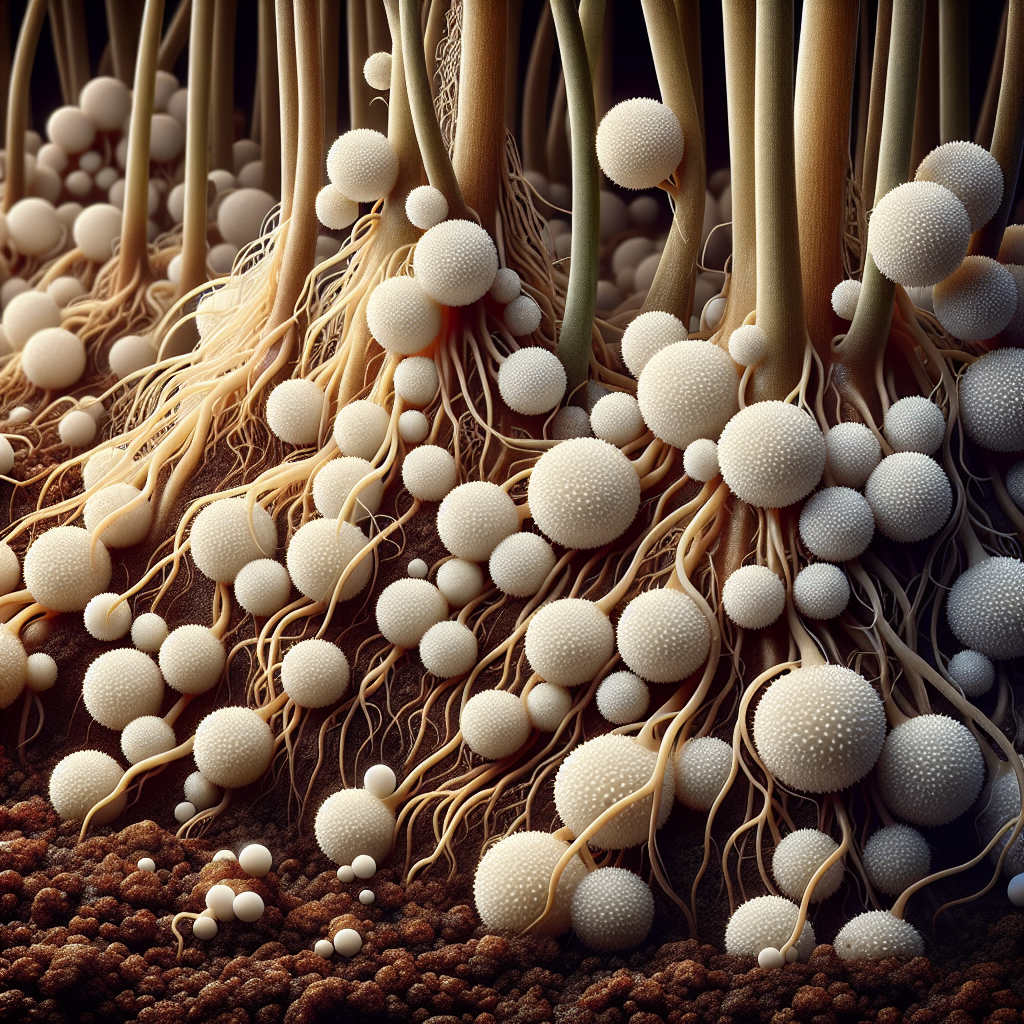
Introduction to Root-knot nematodes
Root-knot nematodes, scientifically known as Meloidogyne species, represent one of the most destructive groups of plant-parasitic nematodes worldwide. These microscopic, worm-like organisms (typically 0.5-1.5 mm long) live in the soil and target the roots of susceptible plants, feeding on root cells and inducing characteristic galls or knots. Over 2,000 plant species are affected, making them a universal threat to agriculture, horticulture, and home gardening.
There are several key species, including Meloidogyne incognita, M. javanica, M. arenaria, and M. hapla, each with preferences for soil temperature and host ranges. Females are sedentary, pear-shaped, and swollen when gravid, while males are vermiform and motile. Eggs hatch into second-stage juveniles (J2) that infect roots, initiating the lifecycle. In warm climates, populations can explode, causing up to 50-100% yield losses in crops like tomato, potato, and carrot. Economic impact exceeds billions annually, particularly in developing regions with sandy soils.
Understanding root-knot nematodes is crucial for diagnosis and integrated pest management (IPM). Unlike foliar pests such as aphids or whiteflies, these operate below ground, making early detection challenging. This guide provides professional-grade strategies for identification, lifecycle disruption, organic controls, and prevention, optimized for small farms and commercial operations.
Identifying Symptoms & Damage
Root-knot nematodes cause distinctive above- and below-ground symptoms. Above ground, plants exhibit stunting, yellowing (chlorosis), and wilting, especially during hot, dry periods—mimicking drought or nutrient deficiencies. Foliage may show interveinal yellowing, and growth is uneven, with affected plants lagging behind healthy ones. Severe infestations lead to defoliation, premature flowering, and poor fruit set.
The hallmark sign is root galls: bead-like swellings on roots, ranging from pinhead to pea-sized. In carrot or radish, roots become forked, cracked, or stubby; in tomato, galls cluster on feeder roots. Unlike root rot caused by fungi like Pythium or Phytophthora, nematode galls are firm and alive, without decay odor. Cut open a gall to reveal creamy-white females with egg masses.
To confirm, extract soil nematodes using a Baermann funnel or commercial kit—J2s are key indicators. Population thresholds vary: >1 J2/g soil for susceptible crops signals action. Damage worsens in sandy soils with low organic matter, compounding issues like Fusarium wilt. Yield losses correlate with gall index (0-5 scale): 1-2 = mild, 4-5 = severe.
Lifecycle and Progression of Root-knot nematodes
Root-knot nematodes complete 2-6 generations per season, depending on soil temperature (optimal 25-30°C for tropical species). Eggs in soil hatch into J2 juveniles within 8-20 days, motile and infection-ready. J2s penetrate roots near tips, migrate intercellularly, and select vascular tissue.
Settling J2s molt three times into sedentary females (swollen, sac-like) and slender males. Females feed on modified root cells (giant cells), enlarging into galls. Each female produces 500-1,000 eggs in a gelatinous matrix, visible as white/pink masses. Lifecycle: 18-30 days. Males fertilize females, then die; unfertilized females produce males only.
In cool climates (M. hapla), diapause occurs. Populations peak mid-summer, declining in winter. High moisture aids J2 movement; dry soils limit spread. Understanding this informs timing: treat pre-planting or at J2 peak.
Environmental Triggers & Risk Factors
Warm soils (>20°C), sandy textures, and neutral pH (6-7) favor proliferation. Poor drainage exacerbates damage, mimicking root rots. Continuous monocropping of hosts builds populations; weeds like nutsedges host nematodes.
Risk factors: infested transplants, contaminated tools/equipment, flooding, or flooding irrigation. Low organic matter reduces antagonists like predatory nematodes. Climate change extends active periods in temperate zones. Compaction stresses roots, increasing susceptibility. Monitor high-risk sites: old vegetable fields, greenhouses.
Organic Control & Treatment Plans
Organic management emphasizes IPM: cultural, biological, and physical methods. Start with soil testing (nematode assay labs). For Spring Pest Patrol: Organic AI Strategies to Shield Your Crops from Common Invaders, integrate these:
Cultural: Rotate with non-hosts like clover, grains (wheat, corn), or marigold (Tagetes spp. release alpha-terthienyl toxin). Solarize soil: clear plastic 4-6 weeks summer (kills 90% J2s). Biofumigation with mustard/rapeseed (rapeseed) green manures.
Biological: Apply beneficial nematodes (Heterorhabditis bacteriophora), Pasteuria penetrans (bacterium parasitizes females), or fungi (Paecilomyces lilacinus). Products like NemAttack or BioNem. Chicken/dairy manure amendments boost antagonists.
Physical/Chemical: Hot water dip transplants (50°C/30min). Organic nematicides: neem cake, Sclerocarya birrea extracts, or 1,3-dichloropropene (if certified). Deep till to expose nematodes to UV/desiccation.
Treatment Plan: 1. Test soil. 2. Remove debris. 3. Solarize/amend. 4. Plant resistant varieties (e.g., 'Nemagold' tomato). 5. Monitor post-plant. Expect 70-90% reduction.
Preventing Root-knot nematodes in the Future
Prevention beats cure. Use certified clean seed/transplants. Quarantine new soil/tools. Crop rotation: 3-5 years off hosts, incorporating Soil Health Mastery: 5 Proven Strategies for Small Farms to Build Fertile Ground Without Breaking the Bank. Cover crops (hairy vetch, sudangrass) suppress via allelopathy.
Weed control critical—purslane/nutsedge reservoirs. Raised beds improve drainage. Mulch with mustard seed meal. Scout annually; threshold-based action. Grafted plants (resistant rootstock) for eggplant, pepper. Long-term: build soil biology with compost teas.
Crops Most Affected by Root-knot nematodes
Root-knot nematodes devastate Solanaceae, Cucurbitaceae, and root crops. Top victims:
Vegetables: Tomato (all types, e.g., Roma Tomato), potato (Russet Burbank Potato), eggplant, bell pepper, cucumber, squash, okra, carrot, onion, lettuce.
Roots/Tubers: Sweet potato, cassava.
Fruits: Strawberry, watermelon, grapes.
Others: Cotton, sugarcane. Tropical crops like banana face M. incognita. Resistant: cereals, clover, onions somewhat tolerant.