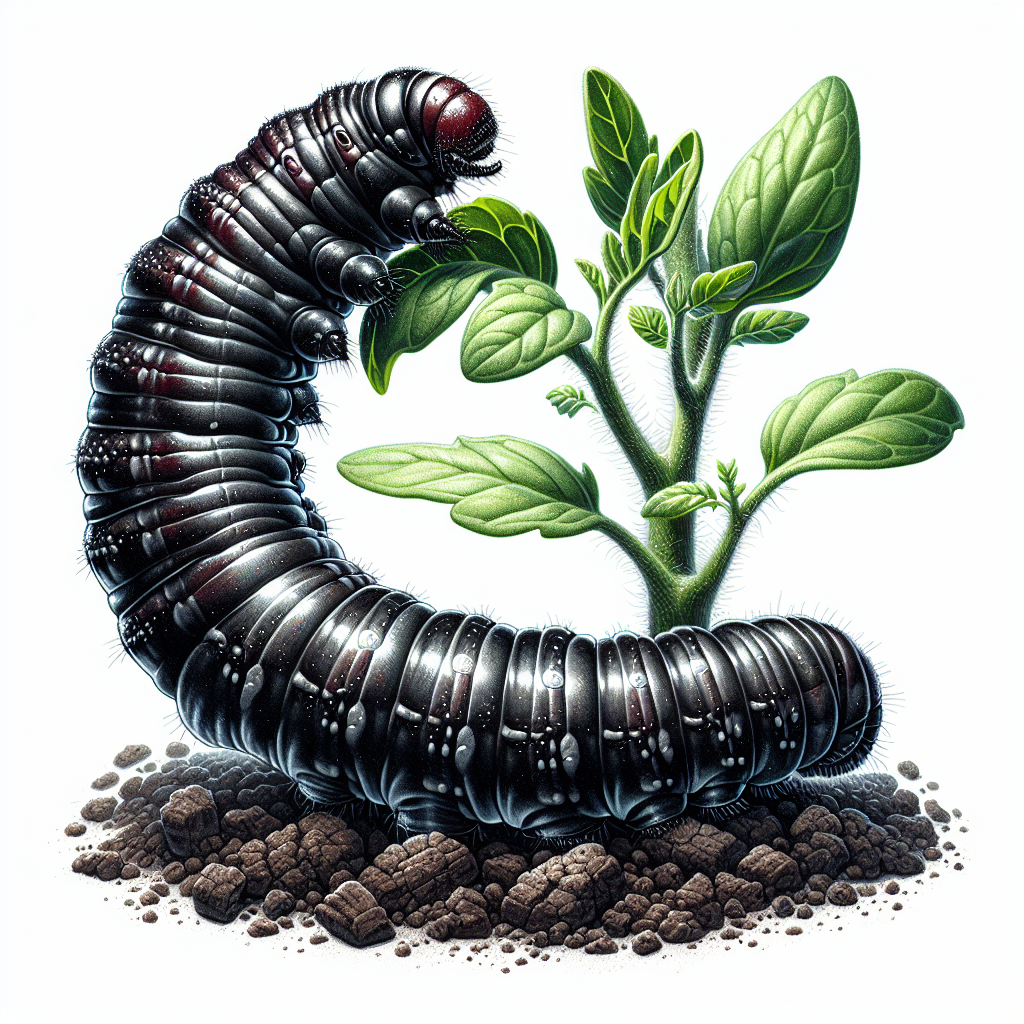
Introduction to Cutworms
Cutworms represent one of the most destructive early-season pests in agriculture, particularly affecting seedlings and young transplants across a wide range of crops. These plump, greasy larvae of various noctuid moths earn their name from their habit of 'cutting' through plant stems at or just below the soil surface, often leaving entire rows of seedlings toppled overnight. Belonging to the family Noctuidae, with key species like Agrotis ipsilon (black cutworm) and Peridroma saucia (variegated cutworm), they thrive in cool, moist conditions and can cause 100% stand loss if unchecked.
Farmers from small gardens to large-scale operations dread cutworm invasions, as the damage mimics rodent activity or poor germination but stems from these hidden soil dwellers. Early detection is crucial, as cutworms feed nocturnally and hide in soil during the day. This comprehensive guide equips you with diagnostic tools, lifecycle knowledge, organic controls, and prevention strategies to safeguard your yields. Understanding cutworm biology allows for targeted interventions that minimize chemical use while maximizing crop protection. For more on related pests like armyworms, check our wiki resources.
Identifying Symptoms & Damage
Cutworm damage is unmistakable once recognized, though it often confuses growers initially. The hallmark symptom is young plants severed cleanly at the soil line, with stems chewed through completely, resembling a scissor cut. Affected seedlings wilt rapidly, turning grayish before collapsing, sometimes with sawdust-like frass nearby. Unlike slugs or slugs and snails, cutworms leave no slime trails; instead, you'll find irregular holes in leaves if feeding occurs above ground.
Inspect during early morning or evening: dig gently around damaged plants to uncover smooth, hairless larvae up to 2 inches long, typically gray, brown, or black with a greasy texture. They curl into a C-shape when disturbed. Surface cutworms (climbing species) may girdle stems higher up, while subterranean types attack roots. Secondary signs include stunted growth in surviving plants due to root pruning. Differentiate from wireworms by cutworms' softer bodies and lack of hard, shiny exoskeletons. In potato fields, damage appears as pinholes in tubers; in cabbage, expect ragged lower leaves.
To confirm, place apple slices or bran-molasses bait near plants overnight—cutworms will congregate. Use a flashlight patrol at dusk to spot them climbing stems. Early diagnosis prevents escalation, especially in weedy fields where cutworms proliferate.
Lifecycle and Progression of Cutworms
Cutworms complete one to several generations per year, depending on climate, with the lifecycle spanning egg, larva, pupa, and adult moth stages. Females lay 500-2000 pinhead-sized eggs in clusters on grass, weeds, or crop debris in late summer or fall. Eggs hatch in 3-20 days into tiny larvae that initially feed on foliage before descending to soil for winter dormancy as partially grown larvae.
Spring warming (soil temps above 50°F) triggers renewed feeding as larvae mature through 6-20 instars over 4-6 weeks, reaching 1-2 inches. Peak damage occurs when plants are 1-4 inches tall. Larvae pupate in soil for 2-4 weeks, emerging as dull gray moths with wingspans of 1-2 inches. Adults are nocturnal, avoiding light, and females oviposit on suitable hosts. In warmer regions like the southern U.S., multiple broods (2-4) occur annually, prolonging the threat.
Species vary: black cutworms migrate northward on winds, while variegated cutworms overwinter locally. Pupae overwinter too in some cases. Timing interventions to larval stages maximizes efficacy—scout when soil is moist post-rain, as cutworms surface then.
Environmental Triggers & Risk Factors
Cutworms explode in populations following specific conditions. No-till fields with abundant weed residues like chickweed, lamb's quarters, or clover serve as reservoirs, as larvae feed on these before invading crops. Cool, wet springs (50-65°F nights) prolong larval development, synchronizing damage with seedling emergence. Heavy rains trigger surface feeding, as larvae seek air.
High-risk factors include delayed planting into weedy soil, excessive organic matter, and nearby grassy areas. Infested field edges from prior crops like soybeans or corn spread larvae inward 100-200 feet. Poor drainage retains moisture, favoring survival. Crop rotation breaks cycles, but continuous vegetables amplify risks. Monitor forecasts via tools like those in Why 80% of Small Farms Battle Weather Disasters - And How Hyper-Local AI Forecasts Can Save Your Harvest. Avoid over-fertilization with nitrogen, which boosts weed hosts.
Organic Control & Treatment Plans
Organic management integrates cultural, mechanical, and biological tactics for sustainable control. Cultural: Till soil pre-planting to expose larvae to predators and sun. Use transplants over direct-seeded crops, as cutworms prefer smaller plants. Rotate with non-hosts like garlic or onion.
Mechanical: Install 3-4 inch cardboard collars (toilet paper tubes) around stems at transplanting, buried 1 inch deep. Apply diatomaceous earth or wood ash barriers around plants—reapply after rain. Evening hand-picking with soapy water kills larvae efficiently on small plots; till soil post-harvest to destroy pupae.
Biological: Introduce beneficial nematodes (Steinernema carpocapsae) via soil drench at planting (rates: 1-2 million/acre). Bacillus thuringiensis (Bt) var. kurstaki targets young larvae—apply evenings to foliage and soil. Encourage ground beetles and birds with habitat strips.
Baits: Mix bran, molasses, wheat flour, and Bt or spinosad for evening broadcast baits (1-2 lbs bran/100 sq ft). For outbreaks, irrigate midday to drive larvae up for exposure. Monitor with pitfall traps. Combine methods: collars + nematodes reduce damage 80-95%. Avoid broad-spectrum insecticides to preserve predators. For spring strategies, see Spring Pest Patrol: Organic AI Strategies to Shield Your Crops from Common Invaders.
Treatment Timeline: Scout weekly from planting. Apply baits/nematodes at first damage. Reapply Bt every 5-7 days for 3 weeks.
Preventing Cutworms in the Future
Prevention trumps reaction for long-term cutworm management. Start with site preparation: deep till (6-8 inches) in fall to disrupt pupae. Cover crops like rye or mustard suppress weeds without residue buildup—flail mow and incorporate pre-planting.
Timing is key: plant after peak larval activity (mid-spring) or use row covers until plants exceed 4 inches. Mulch with straw or plastic post-emergence deters climbing species. Companion plant with repellent herbs like thyme or nasturtium—their scents mask hosts.
Soil health reduces risks: balanced fertility limits lush weeds. Encourage natural enemies via beetle banks and bird boxes. Crop rotation (3-4 years) with grains or brassicas starves larvae. Threshold-based scouting prevents unnecessary treatments. Long-term, integrate cover cropping and reduced tillage once populations decline. Annual monitoring ensures zero tolerance.
Crops Most Affected by cutworms
Cutworms attack over 100 plant species, targeting families like Solanaceae, Brassicaceae, and Poaceae. Vegetables suffer most: tomato, potato, cabbage, lettuce, pepper (e.g., California Wonder Bell Pepper). Field crops include corn, soybeans, sorghum, and sugarcane. Legumes like peas and chickpeas are vulnerable at seedling stage.
Ornamentals and turf also host them, but economic losses peak in high-value veggies—up to 50% yield hits in untreated sweet corn. Black cutworms favor grasses; variegated target broadleaves. Seedlings under 5 inches are prime targets, making direct-seeded crops riskiest.