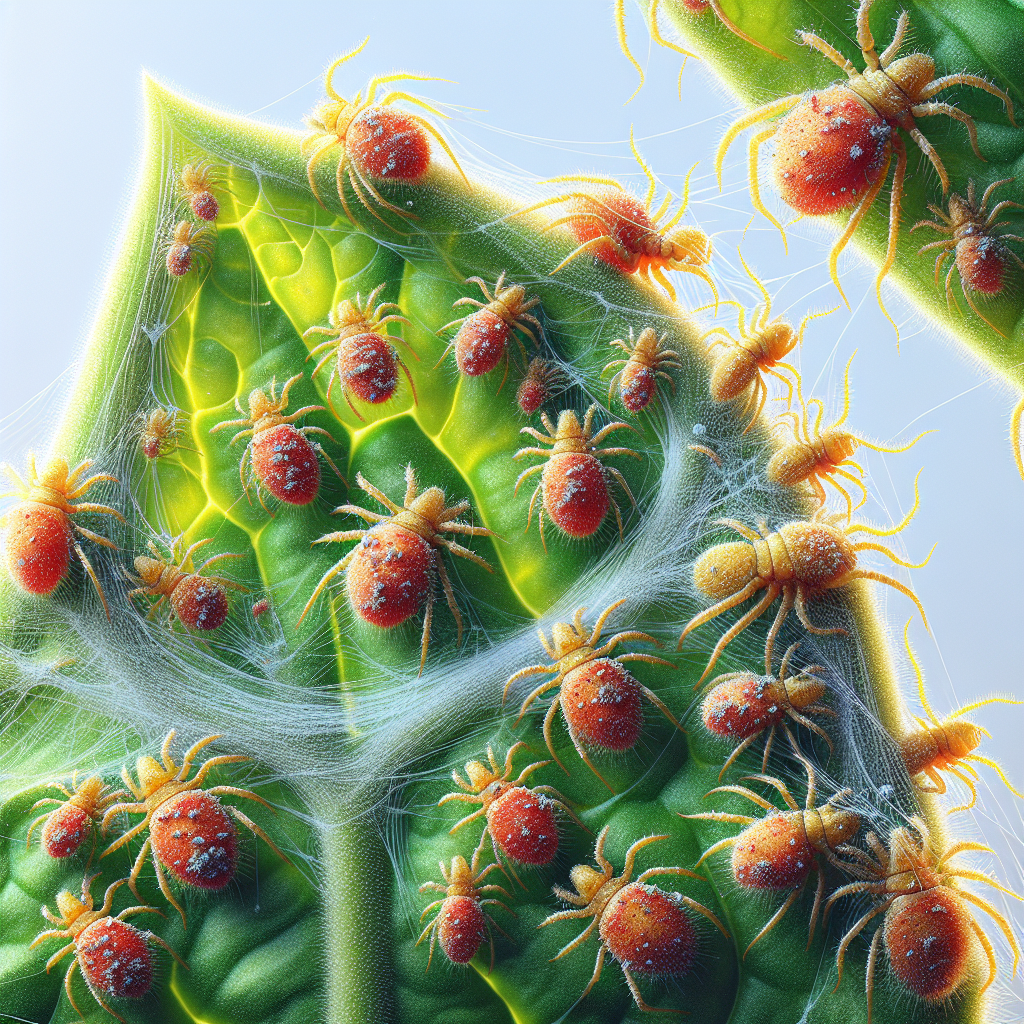
Introduction to Spider mites
Spider mites, particularly the two-spotted spider mite (Tetranychus urticae), are among the most notorious pests in agriculture, affecting a wide range of crops worldwide. These minuscule arachnids, often smaller than 0.5 mm, are not true insects but relatives of spiders and ticks. Despite their size, spider mites can cause extensive damage by piercing plant cells and extracting sap, leading to reduced photosynthesis, stunted growth, and significant yield losses. In severe infestations, entire plants can be defoliated, with characteristic fine silk webbing covering leaves.
Farmers and growers often overlook spider mites initially due to their microscopic nature, mistaking early symptoms for nutrient deficiencies or environmental stress. However, once populations explode—doubling every 3-5 days under optimal conditions—they become a full-blown crisis. Effective management requires early detection, cultural practices, and targeted organic interventions. This definitive guide equips agricultural professionals with diagnostic tools, lifecycle insights, and proven strategies to combat spider mites, ensuring healthier crops and higher yields. Understanding their biology is key to prevention, as these pests develop resistance to many synthetic pesticides, making integrated pest management (IPM) essential.
Identifying Symptoms & Damage
Early identification of spider mite damage is critical for timely intervention. Symptoms begin subtly on the undersides of leaves, where mites prefer to feed. Look for stippling: tiny white or yellow speckles on leaf surfaces caused by the mites' feeding punctures. As damage progresses, leaves develop a bronzed or silvery appearance, followed by yellowing (chlorosis) and premature leaf drop.
A hallmark sign is fine webbing, especially on the undersides of leaves or between leaflets, which protects mites from predators and sprays. In heavy infestations, entire plants appear dusty or scorched, with distorted growth and reduced fruit quality. For instance, on tomato crops, affected leaves curl upward, and fruit may show uneven ripening.
To confirm infestation, use a 10x-20x hand lens or magnifying app. Shake a suspect leaf over white paper; tiny specks moving like specks of pepper indicate mites. Differentiate from thrips (which cause silvery scars but no webbing) or aphids (which excrete honeydew). Damage thresholds vary: 5-10 mites per leaf warrant action in most crops. Regular scouting, especially lower canopy, prevents outbreaks. Read our blog post on Spring Pest Patrol: Organic AI Strategies to Shield Your Crops from Common Invaders for advanced scouting tips.
Lifecycle and Progression of Spider mites
Spider mites complete their lifecycle in 8-20 days, depending on temperature, accelerating in heat. Eggs are tiny (0.1 mm), spherical, and translucent, laid singly on leaf undersides (up to 100 per female). They hatch in 2-4 days into six-legged larvae, which feed and molt into protonymphs and deutonymphs (eight-legged), then adults.
Adults, 0.3-0.5 mm long, are oval with two dark spots (hence 'two-spotted'). Females are larger, greenish-yellow with dark legs; males are smaller. All active stages feed voraciously. Under 75-90°F (24-32°C) and low humidity (<50% RH), generations overlap, leading to populations of thousands per leaf.
Overwintering occurs as diapausing females in plant debris or soil, resuming activity in spring. Multiple generations (up to 20/year) drive explosive outbreaks. Learn more about related pests in our Mites (pest) wiki page. Progression: eggs → larvae (3-4 days) → nymphs (4-6 days) → adults (lasting 2-4 weeks). Target eggs and nymphs for control, as adults are mobile and harder to kill.
Environmental Triggers & Risk Factors
Spider mites flourish in hot, dry conditions: temperatures above 80°F (27°C) and humidity below 40% RH. Drought-stressed plants are prime targets, as reduced turgor eases feeding. Over-fertilization with nitrogen promotes lush growth, attracting mites. Dust accumulation on leaves from tilled fields or windy areas impairs predatory mites.
Poor air circulation in greenhouses or crowded plantings exacerbates issues. Pesticides killing beneficials like [Phytoseiulus persimilis](predatory mites) trigger rebounds—avoid broad-spectrum sprays. Weeds like clover or dandelions serve as reservoirs. Crop-specific risks: strawberry in summer heat, avocado under water stress. Monitor weather; sudden heat waves signal scouting. Risk factors include monocultures, residue from previous crops harboring mites, and importing infested transplants.
Organic Control & Treatment Plans
Organic management emphasizes IPM: prevention first, then biological and mechanical controls. Step 1: Scout and Thresholds. Monitor weekly with tapping method; act at 1-5 mites/leaf.
Biological Controls: Release predatory mites (Phytoseiulus persimilis, Neoseiulus californicus) at 10:1 ratio. Encourage native predators like ladybugs, lacewings. Neem oil (azadirachtin) disrupts feeding/egg-laying; apply evenings, 1-2% solution, 3-5 days interval. Insecticidal soaps (potassium salts) smother mites; 1-2% foliar sprays, good coverage essential.
Horticultural oils (e.g., dormant oil) suffocate all stages; use ultra-fine formulations for active growth. Sulfur burns mites but avoid >90°F. Pyrethrins for knockdown, rotate to prevent resistance. Mechanical: strong water blasts (hose undersides) dislodge mites weekly. Prune infested parts and destroy.
Treatment Plan: Day 1: Water blast + soap spray. Day 3: Neem + release predators. Monitor; reapply if >20% leaves infested. Integrate with whiteflies controls, as mixed infestations common. Success rates: 80-95% with consistent application.
Preventing Spider mites in the Future
Prevention beats cure. Maintain overhead irrigation to boost humidity >60% RH, deterring mites. Mulch conserves soil moisture, reducing stress. Scout transplants; quarantine new plants. Rotate crops, avoiding susceptible sequences like peach after cucumber.
Plant diverse borders with trap crops (e.g., cotton) or repellents like Thai basil. Avoid broad-spectrum pesticides; use selective ones. Clean fields post-harvest: destroy debris. Monitor with sticky traps for early migrants. Build soil health via cover crops to enhance plant vigor. Long-term: resistant varieties (e.g., some Hass avocado selections). Annual IPM audits prevent recurrence.
Crops Most Affected by Spider mites
Spider mites attack over 200 species, preferring tender foliage. Top victims: ornamentals, but key crops include tomato, strawberry, bean (e.g., snap beans), cotton, apple, peach, grapes, citrus, corn, and soybeans. In greenhouses, cucumber and eggplant suffer heavily.
Woody perennials like avocado and [citrus] show bronzing on new growth. Field crops like [cotton] see webbed bolls, yield drops 20-50%. Tropicals (mango, papaya) in dry seasons. Annual losses: billions globally. Tailor strategies per crop; e.g., sulfur ok for [grapes] but not [apple].