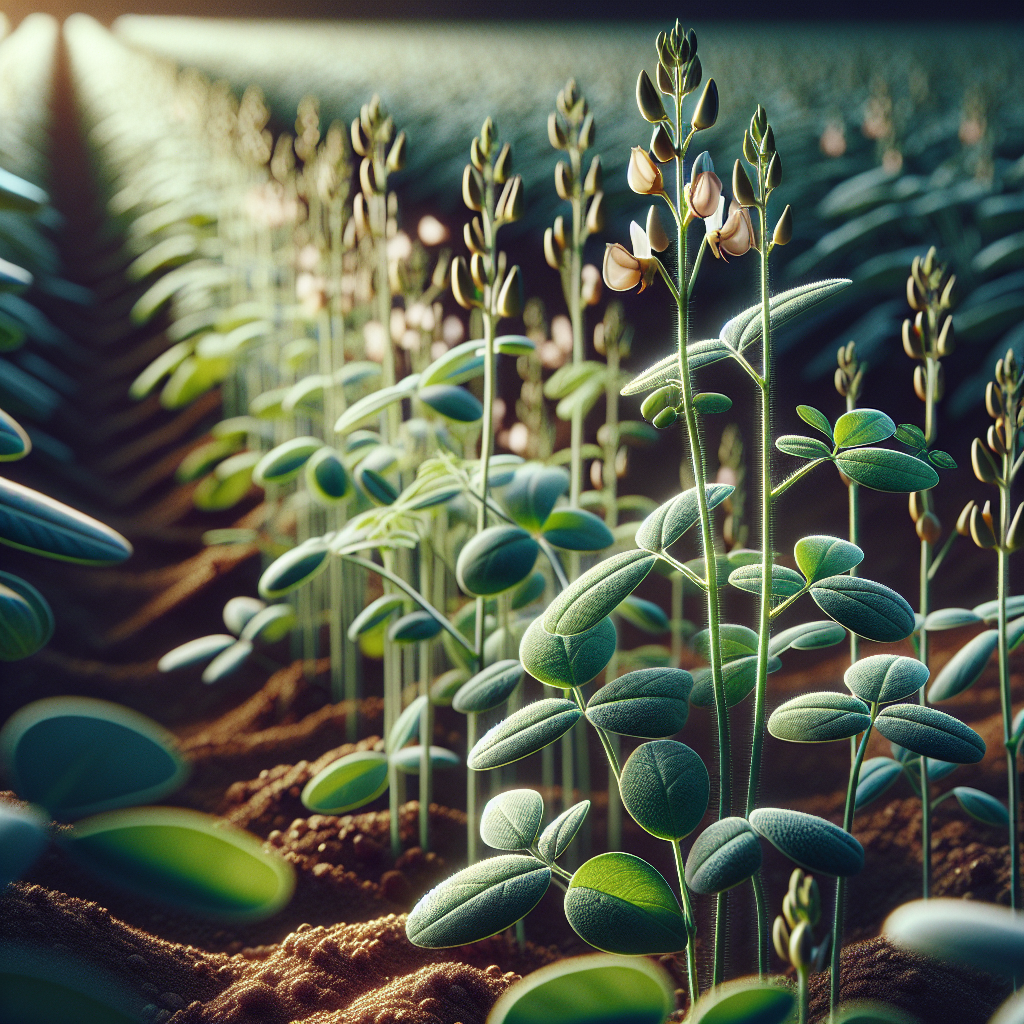
Introduction to Lentils
Among grain legumes, lentils stand out for their ancient lineage, compact growth habit, and exceptional value in low-input farming systems. Archaeological evidence places lentil domestication in the Fertile Crescent thousands of years ago, and the crop spread across the Mediterranean, South Asia, North Africa, and eventually temperate farming regions worldwide. Today, lentils are grown for dry seed, green manure value, and rotational benefits, especially in semi-arid regions where excessive rainfall is more harmful than brief drought.
From a production standpoint, lentils are not a "set and forget" crop even though they are often considered relatively simple. Their success depends on matching them to the right season, preventing waterlogging, keeping weed pressure low early in the crop cycle, and managing harvest timing carefully to reduce pod shatter and staining. Lentils are generally less tolerant of heavy, wet soils than many other pulses, and they often yield best where spring moisture supports vegetative growth followed by a dry period during pod fill and maturation.
Seed color, cotyledon color, and market class matter. Commercial types include brown, green, red, black, and French green lentils, with differences in seed size, maturity, seed coat integrity, standing ability, and end-use quality. Red lentils are commonly dehulled and split; green and French green types are often sold whole and command premiums for appearance and uniformity. This makes agronomic precision important: discoloration, uneven maturity, soil splash, and harvest damage can all reduce market value.
As a legume, lentils fix atmospheric nitrogen through symbiosis with Rhizobium bacteria, which makes them valuable in rotations with cereals. Growers using wheat-based systems often appreciate lentils for their relatively low residue burden and rotational disease break. If you manage diversified field crops, compare rotational planning with Wheat. For broader system design and fertility thinking, see soil health strategies.
Botanical Profile of Lentils
Lentils belong to the Fabaceae family and are classified botanically as Lens culinaris Medik. They are annual, self-pollinating, cool-season legumes with slender, semi-erect to weakly vining stems, depending on cultivar and growing conditions. Plant height commonly ranges from 20 to 50 cm, though lodging and branching habit vary significantly by genotype, seeding rate, and fertility. The root system consists of a central taproot with lateral branching, but compared with deep-rooted crops, lentils are relatively modest root explorers, which helps explain their sensitivity to compaction and prolonged saturated soil.
Leaves are alternate and pinnately compound, often ending in a tendril or small terminal point. Stipules are present at the leaf base. Flowers are small, typically white, pale blue, or lilac, and are borne singly or in small clusters from leaf axils. Because flowering can extend over a period of time, many fields show overlapping vegetative growth, flowering, pod set, and seed filling, especially under variable moisture conditions. This contributes to uneven maturity, one of the key practical challenges in lentil production.
Pods are short and flattened, usually containing one or two seeds. The seeds themselves are lens-shaped, which gives the crop its common name. Seed size ranges from microsperma types, which are generally smaller-seeded and often include red lentils, to macrosperma types, which are larger and often green or brown. Cotyledon color and seed coat adherence influence whether a variety is suited for splitting, canning, or premium whole-seed markets.
Lentils are generally self-fertile, so varietal purity is easier to maintain than in outcrossing species, but mechanical mixing at planting and harvest remains a quality risk. Days to maturity vary widely, often from 80 to 110 days depending on variety, latitude, temperature, and moisture. Early varieties are useful in short-season or terminal drought environments, while longer-duration lines may produce more biomass and potentially higher yield where season length allows.
Soil, pH, and Climate Requirements for Lentils
The ideal lentil field is well-drained, friable, low in salinity, and not prone to standing water after rain. Sandy loams, loams, and silt loams with good structure are generally preferred. Heavy clays can produce acceptable yields if drainage is excellent, but they increase the risk of crusting, poor emergence, root disease, and harvest complications from muddy conditions. Lentils perform poorly where oxygen is excluded from the root zone even for short periods. If water remains pooled for more than 24 to 48 hours after rainfall, plant losses and root damage are likely.
Optimal soil pH is usually between 6.0 and 8.0, with best overall performance often in the 6.5 to 7.5 range. They tolerate mildly alkaline conditions better than strongly acidic soils. Below roughly pH 5.8, nodulation can be impaired, nutrient availability becomes less balanced, and root growth may suffer. Acid soils may require liming well in advance of planting. Salinity is another concern: lentils are less tolerant of saline soils than some cereals, and high electrical conductivity can reduce emergence, nodulation, and final stand.
Climate should be cool to moderately warm during vegetative growth, with relatively dry conditions preferred during flowering, pod fill, and maturation. Ideal average growing temperatures are often 18 to 24°C, though lentils can germinate in cool soils around 4 to 5°C if conditions are otherwise favorable. Seedlings tolerate light frost better than reproductive-stage plants. Temperatures above 30°C during flowering and pod fill can reduce pollination success, increase flower abortion, and shorten seed filling, producing smaller seed and lower yield.
Rainfall requirements are modest compared with many staple crops, and lentils are often grown successfully with 250 to 400 mm of seasonal moisture when distribution is favorable. The crop is relatively drought tolerant once established, but it is not drought proof. The most moisture-sensitive windows are emergence, early branching, flowering, and early pod set. Moisture stress at flowering commonly reduces pod number, while excessive moisture at the same stage encourages foliar disease and vegetative growth at the expense of synchronous maturity.
For irrigation, the goal is not lush growth. Maintain soil moisture in the active root zone at a moderate level, generally around 50 to 70% of field capacity during establishment and early flowering, then avoid saturation. A practical field test is to squeeze soil from the top 10 to 15 cm: it should form a weak ball that breaks apart easily, not ooze or remain sticky. Overwatered lentils often show yellowing lower leaves, soft stems, slowed nodulation, increased lodging, and greater disease incidence. Underwatered crops become gray-green, stop branching, abort flowers, and produce short pods with fewer seeds.
Step-by-Step Planting & Propagation
Lentils are propagated almost exclusively by seed. Use certified, high-germination seed whenever possible, especially if growing for commercial sale where varietal purity and disease-free planting stock matter. Seed intended for sowing should be clean, uniform, and free of cracked seed coats, because damaged seed is more vulnerable to rot and weak emergence.
Start with field selection. Avoid land that recently grew lentils or other susceptible pulses if disease pressure has been high. A rotation gap of at least 3 to 4 years is prudent in many systems, and longer may be better where Ascochyta blight, Anthracnose, or Root rots are established. Fields should be level, free of persistent perennial weeds, and prepared to leave a firm but not compacted seedbed.
Before planting, test soil for pH, phosphorus, potassium, sulfur, and residual nitrate. Lentils respond best when nutrients are balanced rather than excessive. Inoculate seed with the correct Rhizobium leguminosarum biovar viciae strain unless the field has a strong recent history of successful lentil nodulation. Proper inoculation is especially important in first-time lentil ground or soils that have been hot, dry, flooded, or chemically disruptive to microbial survival.
Planting time depends on region. In temperate areas, sow as early in spring as soil conditions allow, often when the topsoil is workable and the risk of severe crusting is low. Early planting helps lentils exploit cool-season moisture and avoid late heat during flowering. In Mediterranean or post-rainy-season systems, plant when there is adequate stored moisture but before temperatures become too warm.
Seed depth should generally be 2.5 to 5 cm. Shallower placement works in fine, moist soils; deeper placement is helpful in dry surface conditions, but avoid placing seed so deep that emergence becomes weak or uneven. Row spacing can range from 15 to 25 cm for dense canopy closure and weed suppression, though wider rows may be used where mechanical weeding is planned. Target plant populations vary by seed size and production system, but many growers aim for roughly 120 to 180 established plants per square meter in higher-density field production.
After sowing, ensure good seed-to-soil contact with light packing if soils are loose. Avoid aggressive rolling on soils prone to crusting unless stones must be pressed down for low-cut harvest. Emergence typically occurs in 7 to 14 days depending on soil temperature and moisture.
Propagation by transplant is uncommon and generally uneconomical except in research or specialty seed increase. Lentils dislike root disturbance, and direct seeding is overwhelmingly superior for field establishment.
Care & Maintenance regimes for Lentils
Early-season management determines much of the final outcome. Lentils are weak competitors during the first several weeks after emergence, so weed control before canopy closure is critical. A stale seedbed, shallow pre-plant cultivation, clean seed, and strong early establishment all help. Once weeds overtop lentils, yield losses can be severe and harvest quality declines due to staining and difficult separation.
Nitrogen management is a frequent mistake. Because lentils are nitrogen-fixing legumes, high rates of applied nitrogen usually cause excessive vegetative growth, delayed maturity, poor nodulation, and increased lodging without proportional yield gain. In low-fertility soils, a very small starter nitrogen amount may occasionally be used, but many successful lentil crops receive none. Phosphorus is more consistently important because it supports early root development, nodulation, and flowering. Sulfur may also be limiting on sandy or low-organic-matter soils. Potassium is less often deficient but should not be ignored where soil tests are low.
Inspect nodulation 4 to 6 weeks after emergence. Carefully dig plants rather than pulling them. Effective nodules are usually visible on roots and should be pink to reddish inside when cut open, indicating active nitrogen fixation. Few nodules, or white-green inactive nodules, suggest inoculation failure, poor soil conditions, or excess soil nitrogen.
Irrigation, where used, should be conservative. Lentils generally benefit from one or two well-timed irrigations rather than frequent shallow watering. During vegetative growth, apply enough water to moisten the upper rooting zone without keeping it constantly wet. A common target is to re-irrigate when about half of the available water in the top 30 to 45 cm has been depleted. During flowering and early pod set, avoid severe stress but also avoid creating a humid canopy. Once most pods have filled and lower leaves begin to senesce, reduce or stop irrigation to promote even dry-down.
Signs of overwatering include yellowing leaves despite moist soil, lower stem darkening, lodging, sparse nodules, and a persistent damp smell in the root zone. Signs of water deficit include midday wilting that does not recover by evening, flower drop, shortened internodes, and pods that remain flat instead of plumping.
Because lentils are short and often hold lower pods close to the ground, field smoothness matters. Remove stones, clods, and ruts where possible to enable low harvest cuts. Lodging risk rises with excessive fertility, storm damage, and dense, rank growth.
Pests, Diseases & Organic Management
The most serious lentil problems are often diseases rather than insects. Ascochyta blight can infect leaves, stems, and pods, causing tan to gray lesions with darker margins and leading to defoliation, stem breakage, and seed staining. Anthracnose can girdle stems and create severe canopy collapse under conducive conditions. Root rots and Damping-off, caused by complexes including Fusarium, Pythium, Rhizoctonia, and Aphanomyces in some regions, are favored by compaction, poor drainage, and pulse-heavy rotations.
Organic disease management begins with prevention. Use certified disease-free seed, maintain long rotations, avoid planting into cold saturated soils, and select fields with good air movement and drainage. Resistant or tolerant varieties should be prioritized where a disease is known to be endemic. Since many lentil pathogens survive on residue or volunteer hosts, residue management and sanitation between crops are important.
Insect pests vary by geography. Aphids can colonize tender growth and transmit viruses; Cutworms may sever seedlings; Wireworms and Seedcorn maggots can reduce emergence; Thrips and Lygus bugs sometimes damage flowers and pods. In storage, Bruchid beetles are a concern in some regions. Organic control starts with monitoring. Economic damage often comes from timing and population spikes rather than constant pressure.
For Aphids, encourage beneficial insects such as lady beetles, hoverflies, and parasitic wasps by maintaining habitat diversity nearby. Strong, balanced plants are less prone to explosive infestations than overfertilized crops. If intervention is needed, insecticidal soaps or approved botanical products can suppress soft-bodied pests, but coverage in a dense canopy is often imperfect.
Weed competition is another major biological threat. Because lentils emerge with modest vigor, annual grasses and broadleaf weeds can dominate quickly. Organic systems rely heavily on crop rotation, stale seedbeds, timely shallow cultivation before or just after emergence where appropriate, and competitive seeding rates. Once lentils are too large for cultivation but too small to shade weeds, the crop is vulnerable. This is why field history and pre-plant weed depletion are so important.
Integrated organic management for lentils works best when every stage is aligned: clean seed, correct inoculation, rotation spacing, moderate fertility, field drainage, and careful scouting. A grower who waits for visible major disease spread before reacting is usually too late.
Harvesting, Curing & Optimal Storage
Determining harvest timing is one of the most technical parts of lentil production. Because flowering and pod set are often uneven, plants may carry green upper pods while lower pods are already dry. Harvest should usually begin when the majority of pods are tan to brown, seeds rattle in the pods, and seed moisture has fallen sufficiently for safe combining, often around 18 to 20% at cutting and then reduced further after harvest. Exact targets vary with harvest method and equipment.
In many field systems, lentils are swathed or cut and then allowed to dry before threshing, while in others they are direct combined when maturity is uniform and weather is favorable. The crop must be handled gently because seed coats crack easily and market grade can suffer from rough threshing. Reel speed, cylinder or rotor speed, and concave settings should be adjusted to minimize splitting and dehulling.
The low pod set characteristic of lentils means harvest losses can be high if cutter bars are too high or fields are uneven. Flex headers, pickup reels, stone management, and rolled fields are often used commercially to reduce loss. If harvesting by hand in small plots, cut plants when lower pods are dry and bundle them in small sheaves. Cure in a dry, shaded, well-ventilated place until seeds thresh cleanly.
After threshing, clean seed thoroughly to remove chaff, broken seeds, weed seeds, and soil particles. For safe storage, dry lentils to about 13% moisture or lower; for long-term storage in warm climates, 10 to 12% is safer. Seed that feels cool, hard, and non-tacky and breaks rather than dents under pressure is usually adequately dry, but a moisture meter is far better than guesswork.
Store in clean, insect-free bins or food-grade containers in a cool, dark, low-humidity environment. Ideal storage temperatures are below 15°C when feasible. Warm, humid storage promotes mold, seed coat darkening, caking, insect outbreaks, and reduced germination. If storing seed for planting, maintain especially low moisture and avoid repeated heating and cooling cycles.
For culinary quality, protect lentils from odors, moisture uptake, and mechanical damage. Whole market classes depend heavily on appearance, so avoid mixing different colors or sizes. Regularly inspect stored lots for condensation, hotspots, insect frass, or musty odor.
Companion Planting for Lentils
In garden and small-scale systems, lentils can be integrated with companion species that improve space use, pollinator activity nearby, or pest balance, but they should not be crowded by aggressive neighbors. Because lentils are compact, cool-season legumes with modest stature, the best companions are generally upright, non-shading plants or species grown adjacent rather than intermingled densely.
Good companion concepts include pairing lentils near alliums such as onions or garlic on separate rows or borders where their contrasting canopy forms improve bed organization and may modestly deter some pest activity. Low-competition flowering strips nearby can attract beneficial insects that help suppress Aphids. Small grains can also function as structural or rotational companions in broader field systems, though true intercropping requires careful seeding-rate adjustment to avoid cereal dominance.
Avoid planting lentils beside sprawling, fast-growing crops that shade them heavily or require frequent irrigation, such as cucurbits in full summer production. Likewise, avoid overmanured beds intended for leafy vegetables, because lentils prefer moderate fertility and can become excessively vegetative in rich nitrogen conditions.
Companion planting should support the crop’s central needs: full sun, open airflow, restrained fertility, and dry-down near maturity. In practical terms, lentils benefit more from thoughtful neighboring crop choice and rotation planning than from dense mixed planting. The best companion is often not a single species but a system that reduces weeds, preserves soil structure, encourages beneficial insects, and keeps disease carryover low from one season to the next.