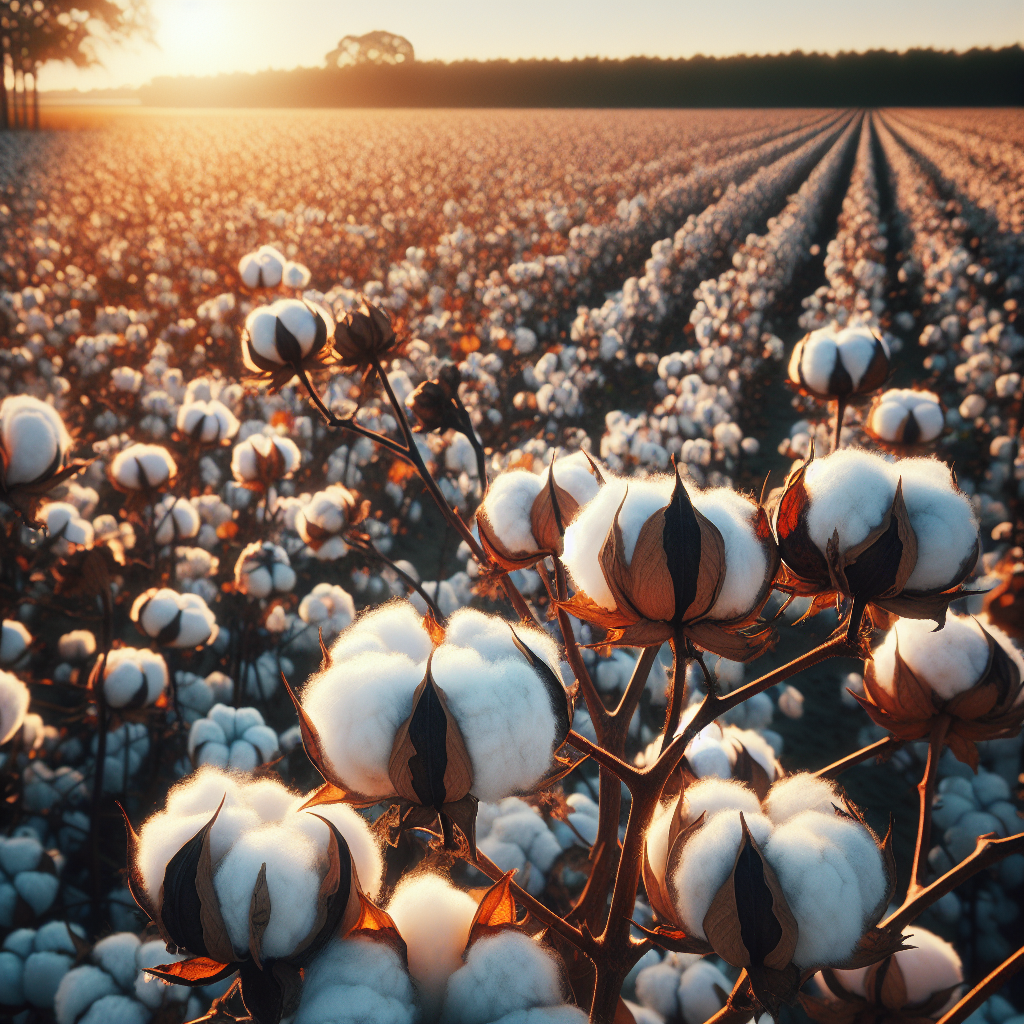
Introduction to Cotton
Among the world’s most economically important crops, cotton is cultivated primarily for the soft seed fibers used in textiles, but its value extends to cottonseed oil, meal, hulls, and industrial products. Most modern commercial acreage is planted to Gossypium hirsutum (upland cotton), prized for yield stability and broad adaptation, while Gossypium barbadense includes extra-long staple types such as Pima and Egyptian cotton, known for premium fiber quality but generally requiring a longer, more stable growing season.
Cotton has deep historical roots across South Asia, Africa, and the Americas, and it remains one of the defining field crops of warm, semi-arid to sub-humid agricultural regions. Though often described simply as a “hot climate crop,” professional cotton production is really about synchronizing the plant’s long season with warm soils, adequate moisture at key growth stages, and a dry finish near harvest. When those factors align, cotton can be highly productive; when they do not, stand establishment, fruit retention, lint quality, and harvest efficiency all decline quickly.
For growers managing mixed systems, cotton often fits well into broader field rotations with cereals and legumes. In rotation planning, growers sometimes compare its seasonal nutrient and weed-management needs with other staple row crops such as corn. Cotton is less forgiving than many short-season annuals because lost time early in the season is difficult to recover later, making establishment and first-fruit retention especially important.
Botanical Profile of Cotton
Cotton belongs to the family Malvaceae, the same family as okra and hibiscus. It is a perennial shrub by nature, but in commercial agriculture it is usually grown as an annual crop. The plant develops a central taproot capable of penetrating well over 1 meter in favorable soils, with most active feeder roots concentrated in the upper 30 to 60 cm where oxygen, nutrients, and irrigation water are most available.
Its growth habit includes a main stem, vegetative branches, and fruiting branches called sympodia. Leaves are palmately lobed, and the flowers are typically cream, yellow, or pale white when they open, often turning pink or reddish as they age. After pollination and fertilization, the ovary enlarges into a capsule called a boll, which contains seeds surrounded by lint and fuzz fibers. The commercially valuable lint consists of elongated epidermal cells from the seed coat.
The crop’s growth can be divided into several practical field stages:
- Germination and emergence
- Seedling establishment
- Squaring, when flower buds form
- Flowering and boll set
- Boll fill and maturation
- Boll opening and defoliation/harvest
Botanically and agronomically, cotton is highly sensitive to stress during reproductive development. Excess nitrogen, prolonged cloudiness, waterlogging, drought during flowering, or insect pressure can all cause square shed and young boll abortion. Unlike many leafy vegetables, cotton yield is not the result of maximizing foliage. The goal is a balanced plant: enough vegetative vigor to support photosynthesis, but not so much that the crop delays or sacrifices reproductive growth.
Commercial species differ meaningfully:
- Gossypium hirsutum: upland cotton; highest global acreage; reliable and broadly adapted.
- Gossypium barbadense: extra-long staple; finer, stronger fiber; more demanding and often later maturing.
- Gossypium arboreum and G. herbaceum: older cultivated species, often more stress tolerant in marginal environments but less common in modern large-scale lint markets.
Soil, pH, and Climate Requirements for Cotton
Cotton performs best in deep, well-drained, structurally stable soils that allow rooting depth, oxygen exchange, and efficient water movement. The ideal textures are sandy loam, loam, silt loam, or clay loam with good internal drainage. It can be grown in heavier soils, but those fields must be managed carefully to avoid crusting, waterlogging, and compaction. Very shallow soils restrict the taproot and make the crop more vulnerable to midseason drought stress and nutrient fluctuations.
An optimal soil pH is generally 5.8 to 7.5, with the best nutrient availability and root activity commonly occurring near 6.0 to 7.0. Cotton tolerates mild alkalinity better than many horticultural crops, but highly alkaline soils can reduce micronutrient availability, especially zinc and iron. Strongly acidic soils below pH 5.5 may restrict root development and reduce calcium, magnesium, and phosphorus efficiency. If liming is required, it should be done well before planting so pH adjustment has time to occur in the root zone.
Good cotton soils should have:
- At least 1.5 to 2% organic matter in mineral soils, though cotton is often grown successfully in lower-organic-matter environments if fertility and irrigation are precise.
- Bulk density low enough to allow root penetration below 30 cm.
- No persistent hardpan within the upper 20 to 40 cm.
- Moderate water-holding capacity without prolonged saturation.
Climate is critical. Cotton is a true warm-season crop requiring a long frost-free period, strong sunlight, and accumulated heat units. Ideal conditions include:
- Soil temperature at planting: at least 18 to 20°C at seed depth for rapid, uniform emergence.
- Air temperature during active growth: 21 to 32°C is favorable.
- Night temperatures consistently above 15°C for strong early growth.
- Frost-free season: typically 160 to 220 days, depending on cultivar and management system.
Temperatures below 15°C slow germination and root activity. Chilling injury during early growth can produce weak stands, purple leaves, delayed fruiting, and uneven maturity. Conversely, persistent daytime temperatures above 38°C, especially with hot nights and low humidity, can impair pollination, reduce pollen viability, increase fruit shed, and shorten fiber development.
Water needs vary by soil type, cultivar, and evaporative demand, but seasonal crop water use commonly ranges from 600 to 900 mm. Cotton is relatively drought tolerant compared with some field crops, yet that reputation is misleading. It tolerates stress better than it thrives under stress. Severe moisture deficits during squaring, flowering, and early boll fill can sharply reduce boll numbers and lint yield. On the other hand, saturated soils for even 48 to 72 hours can damage roots, promote disease, and trigger rank vegetative growth followed by poor fruit retention.
Rainfall distribution matters more than total rainfall. The ideal pattern is moderate moisture during establishment and reproductive growth, followed by dry weather during boll opening and harvest. Humid, rainy late seasons increase boll rot, staining, hard lock, and harvest delays. Broader soil-building practices discussed in soil health strategies can be especially valuable where compaction, crusting, or low infiltration limit stand establishment.
Step-by-Step Planting & Propagation
Cotton is propagated almost exclusively by seed. Transplanting is uncommon in commercial systems because the crop establishes a taproot early and responds best to direct seeding into a warm, prepared seedbed.
1. Select an appropriate cultivar. Choose based on season length, regional pest pressure, irrigation capacity, expected harvest method, and fiber market. Upland cultivars are usually the most practical for broad adaptation. Extra-long staple types need longer seasons and careful late-season weather management.
2. Prepare the seedbed. The ideal seedbed is firm below and fine enough above to ensure close seed-to-soil contact while avoiding crust-prone powdery surfaces. Raised beds are especially useful in heavier soils or areas prone to waterlogging. Deep tillage may be needed where a hardpan restricts rooting, but it should be used strategically rather than routinely.
3. Test soil before planting. Base phosphorus, potassium, sulfur, and pH corrections on laboratory results. Nitrogen plans should reflect yield target, residual nitrate, previous crop, and irrigation reliability.
4. Plant only into warm soil. A common mistake is planting after a single warm afternoon. Measure soil temperature at seed depth in the morning for several consecutive days. If it is below 18°C, emergence may be slow and vulnerable to damping-off, seedling disease, and Thrips damage.
5. Use high-quality treated seed where appropriate. Seed vigor strongly influences stand uniformity. Fuzzy or delinted seed may be used depending on local practice, but precision planters usually perform best with acid-delinted, graded seed. Organic producers should use approved biological or physical seed protection measures if synthetic treatments are not allowed.
6. Plant at correct depth. In most soils, sow at 2 to 4 cm deep. In cooler or heavier soils, stay shallower if moisture allows. In hot, drying sandy soils, slightly deeper planting may be needed to reach uniform moisture, but exceeding 5 cm often weakens emergence.
7. Set spacing according to system. Typical row spacing ranges from 75 to 100 cm, though ultra-narrow systems exist in some regions. In-row seed rate should be adjusted to establish a final stand of roughly 8 to 15 plants per meter of row in many conventional systems, though exact targets vary by cultivar and row width. The aim is a uniform stand, not maximum density.
8. Irrigate lightly if needed for establishment. The seed zone should remain moist but never saturated. After planting, ideal moisture is enough that a squeezed soil sample from seed depth forms a weak ball but does not ooze or smear heavily. Overly wet seedbeds deprive the embryo of oxygen and encourage seed rot.
9. Monitor emergence daily. Healthy seedlings emerge evenly, with intact cotyledons and a firm hypocotyl. Delayed, patchy, or corkscrewed emergence can indicate crusting, chilling, herbicide injury, seedling disease, or planting too deep.
10. Replant only after diagnosis. A poor stand is not automatically a replant situation. Evaluate surviving plant population, uniformity, calendar date, soil condition, and likely yield penalty of delayed reseeding.
Care & Maintenance regimes for Cotton
Successful cotton management is about maintaining steady growth without causing rank, excessive vegetative development.
Irrigation management Cotton needs the most careful water management from first square through boll fill. Before squaring, mild deficits can sometimes encourage root exploration, but severe drought at this stage slows node development and delays flowering. During flowering and early boll development, soil moisture should generally be maintained at about 60 to 80% of available water-holding capacity in the active root zone. On lighter soils, this often means more frequent, smaller irrigations; on heavier soils, less frequent but deeper events.
Practical signs of under-irrigation include:
- Leaves losing turgor before midday rather than only in the hottest afternoon hours
- Reduced square retention
- Flowers and small bolls shedding
- Shortened internodes with dull, gray-green foliage
- Premature cutout, where the crop stops producing new fruiting nodes too early
Signs of overwatering include:
- Persistently soft, lush, dark green growth with delayed boll set
- Standing water in furrows for long periods
- Yellowing lower leaves due to root stress
- Increased boll rot and root disease
- Soil smelling sour or anaerobic
Avoid large wet-dry swings. These can crack soil in heavy clays, damage feeder roots, and cause erratic nutrient uptake. Near boll opening, irrigation should be tapered so the crop matures cleanly. Excess late water can delay opening, stimulate unproductive regrowth, and reduce defoliation effectiveness.
Nutrient management Nitrogen is the nutrient most often mismanaged in cotton. Too little limits canopy development and fruiting sites; too much drives rank growth, delays maturity, worsens insect pressure, and reduces harvest efficiency. Total nitrogen requirement frequently ranges from 60 to 180 kg/ha, depending on yield target, residual soil N, previous crop, and environment. Split application is often best: a modest amount near planting and the remainder before or around first square, ensuring the crop is supplied before peak uptake.
Phosphorus is especially important early for root growth and vigor, particularly in cool soils. Potassium is crucial for water regulation, boll retention, and fiber quality; deficiencies are common in high-yielding irrigated fields or sandy soils. Cotton also benefits from sulfur, calcium, magnesium, boron, and zinc where deficiencies exist. Tissue testing during squaring and early bloom is useful for fine-tuning the program.
Growth regulation and canopy balance In fertile or irrigated systems, mepiquat chloride or similar plant growth regulators may be used to restrain excessive vegetative growth. The decision should be based on internode length, plant vigor, fruit load, and moisture outlook, not on calendar date alone. A balanced crop shows active fruit retention, moderate internode length, and enough sunlight penetration into the canopy to support lower and middle fruiting positions.
Weed management Cotton is very sensitive to early weed competition. The first 6 to 8 weeks after emergence are especially critical. Weeds reduce light, moisture, nutrients, and harvest efficiency. Use a layered approach: stale seedbed where suitable, pre-plant or pre-emergence control, timely cultivation, and post-emergence strategies matched to the production system. Prevent late-season weeds from setting seed, because harvest traffic can spread infestations across the field.
Stand and fruiting management Scout weekly for node development, square retention, fruiting branch formation, and terminal growth. Fruiting should begin on lower nodes and progress upward in a steady pattern. Excessive fruit shed often points to a combination of stress factors rather than a single issue.
Pests, Diseases & Organic Management
Cotton is vulnerable to a broad pest complex, and professional management depends on regular scouting, thresholds, beneficial insect conservation, and sanitation.
Major insect pests
- Thrips: serious on seedlings; cause silvering, crinkled leaves, and delayed growth.
- Aphids: suck sap and produce honeydew that contaminates lint.
- Whiteflies: weaken plants and create sticky cotton problems through honeydew deposition.
- Bollworms and Budworms: attack squares, blooms, and young bolls.
- Pink bollworm: bores into bolls and damages lint and seed in affected regions.
- Jassids/Leafhoppers: cause leaf edge burn and vigor loss.
- Spider mites: flare in hot, dusty, dry conditions, causing bronzing and defoliation.
- Stink bugs and Plant bugs: puncture bolls and squares, reducing quality and retention.
Organic and low-input management principles
- Start with field hygiene. Destroy volunteer cotton and crop residues that can harbor pests.
- Use clean borders. Weedy margins often serve as reservoirs for Whiteflies, Aphids, and boll-feeding insects.
- Encourage beneficials. Lady beetles, lacewings, minute pirate bugs, parasitoid wasps, and spiders help suppress soft-bodied pests and eggs.
- Use trap and companion species strategically. Flowering insectary strips can support predators, but they must be selected so they do not become alternate hosts for key cotton pests.
- Apply biopesticides carefully. Bacillus thuringiensis products can help on caterpillars when timed to early larval stages. Neem-based materials may suppress some sucking pests, though coverage and timing are critical.
- Avoid broad-spectrum disruption when possible. Indiscriminate spraying often worsens secondary pest outbreaks by killing beneficial insects.
Major diseases
- Damping-off and seedling blights caused by Pythium, Rhizoctonia, and related pathogens
- Fusarium wilt, often worsened by nematode interactions
- Verticillium wilt, especially in cooler production areas
- Bacterial blight
- Anthracnose and boll rots
- Root rot and charcoal rot under stress conditions
Disease prevention
- Plant into warm, well-drained soils.
- Avoid compaction and standing water.
- Rotate away from cotton and other susceptible hosts where practical.
- Select resistant or tolerant cultivars when available.
- Avoid excessive nitrogen and overly dense canopies.
- Manage insect damage, since wounds predispose bolls to rot organisms.
Nematodes such as Root-knot nematodes can be a hidden but major cause of uneven growth, nutrient deficiency symptoms, and reduced boll load. Suspect them in sandy areas with patchy stunting despite adequate fertility and water.
Harvesting, Curing & Optimal Storage
Cotton is harvested when bolls are fully mature and open, exposing dry, fluffy lint. Unlike grain crops, the harvest goal is not just yield but also fiber cleanliness, color, staple integrity, and low moisture contamination.
Indicators that the crop is ready include:
- A high percentage of bolls open, often 60% or more depending on harvest strategy
- Mature unopened bolls that are hard and well developed
- Leaves beginning to senesce naturally or following effective defoliation
- Seeds inside mature bolls fully developed with dark seed coats in many cultivars
Defoliation is commonly used in commercial systems to remove leaves, improve picker efficiency, reduce trash in lint, and promote more uniform harvest. Timing is crucial: defoliate too early and immature bolls contribute poor-quality fiber; too late and weathering losses increase.
Hand-harvested cotton should be picked only when the lint is dry. Wet picking raises the risk of discoloration, microbial growth, and storage heating. Mechanical harvesters require similarly dry conditions to minimize bark, leaf trash, and spindle or stripper inefficiencies.
There is no traditional “curing” process like in onion or garlic, but post-harvest drying and protection from moisture are essential. Seed cotton should ideally be stored at below about 12% moisture, and preferably lower when held before ginning. If harvested cotton feels cool, dense, or slightly damp when compressed, it should not be packed tightly for prolonged storage.
Storage best practices:
- Keep seed cotton under cover and protected from rain, dew, and ground moisture.
- Use breathable, clean storage materials rather than sealed damp conditions.
- Prevent contamination from fuel, grease, soil, polypropylene twine, feathers, or plant debris.
- Separate lots by field and picking date if quality varies.
- Gin promptly if humid weather persists.
For small growers saving seed, select from healthy, disease-free plants with desirable boll size, earliness, and fiber characteristics. Store seed in cool, dry, rodent-proof conditions. However, note that seed saved from hybrid or proprietary cultivars may not perform uniformly or may be restricted by licensing terms.
Companion Planting for Cotton
In small-scale, garden, and diversified farm settings, cotton can benefit from companion plants that support beneficial insects, improve border ecology, or reduce open soil. Companion planting is less central in broadacre mechanized cotton than in mixed farms, but it can still contribute to integrated pest management.
Useful companions include:
- Basil, dill, fennel borders used with caution, coriander, and flowering herbs to attract predatory wasps and hoverflies
- Marigold and certain aromatic annuals for insectary value and visual pest monitoring zones
- Cowpea or other low-competition legumes in nearby rotations to build nitrogen and improve soil cover between cotton crops
- Sorghum or millet windbreak strips in exposed areas to reduce hot desiccating winds, provided they do not harbor shared pests
Companion planting around cotton should follow several rules:
- Do not create dense, humid understories that increase whitefly or disease pressure.
- Keep companion species far enough from the row to avoid root competition during squaring and flowering.
- Choose flowering plants that support beneficials without becoming alternate hosts for Bollworms or sap-feeding pests.
- Maintain good airflow and access for scouting.
Excellent cotton companion systems often function more as ecological strip planning than traditional close interplanting. Border insectary rows, off-season cover crops, and smart rotation design usually outperform crowded mixed planting directly within the cotton row. In that sense, companion planting for cotton is best understood as habitat engineering: support natural enemies, reduce bare-soil stress, interrupt pest cycles, and keep the crop itself in a stable, low-stress environment.
When managed with warm soils, balanced fertility, disciplined irrigation, and vigilant scouting, cotton becomes a remarkably efficient converter of heat and sunlight into high-value natural fiber. Its reputation as a hardy crop is partly deserved, but its best yields and best lint quality come from precision, timing, and a strong understanding of plant balance throughout the season.