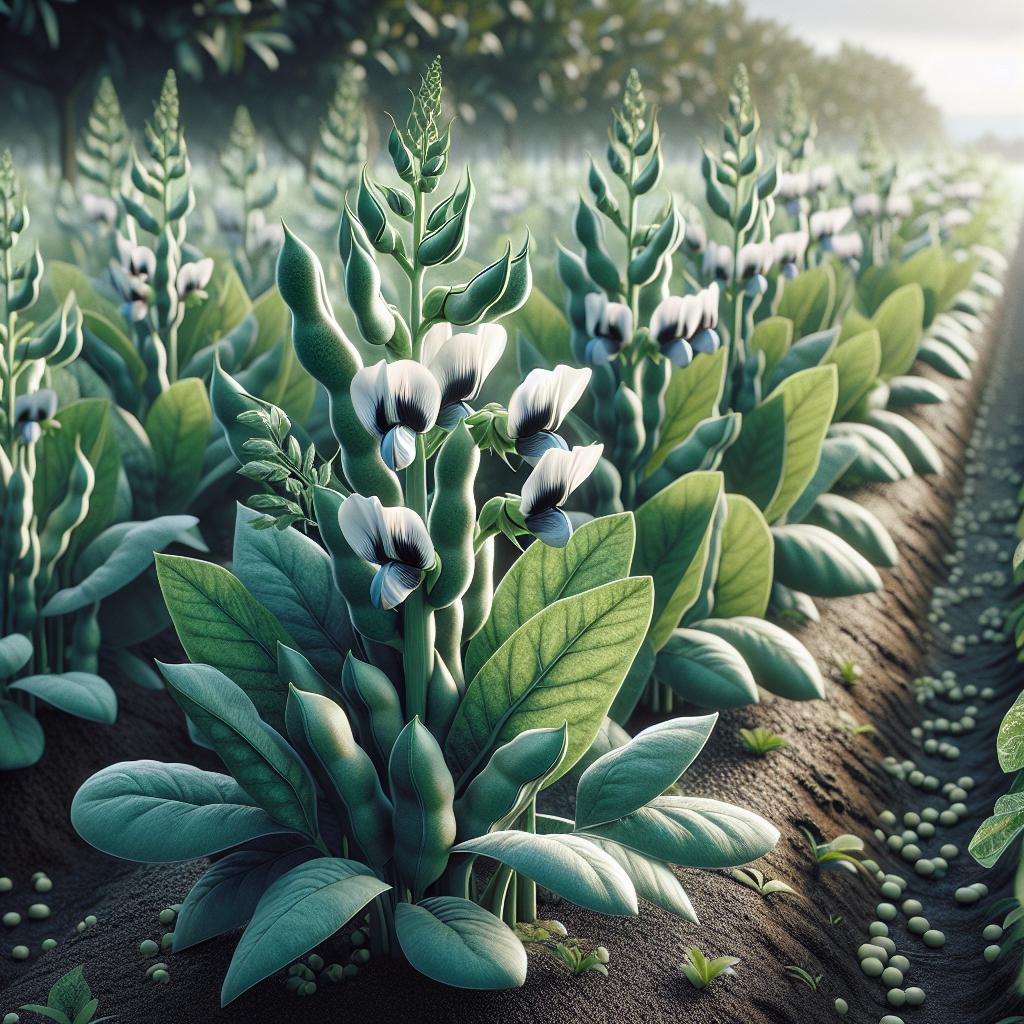
Introduction to Fava Bean (Broad Bean)
One of the oldest cultivated food legumes in the world, this crop has been grown from the Mediterranean basin through North Africa, West Asia, and temperate Europe for thousands of years. Archaeobotanical evidence suggests it was domesticated in the Near East and became foundational in traditional farming systems because it provides both food and fertility: the seeds are highly nutritious, the plants produce abundant biomass, and the root nodules host rhizobia that help fix atmospheric nitrogen.
Unlike common beans (Phaseolus vulgaris), fava bean belongs to a different genus and is notably more tolerant of cool conditions. That distinction matters in practice. It can be sown very early, often when soils are still too cold for snap beans, and in mild climates it is frequently planted in autumn for winter growth and spring harvest. The crop is especially useful for market gardeners and diversified farms because it can fill seasonal gaps, suppress weeds when spaced well, and serve as both a vegetable and a cover crop.
Growers cultivate fava bean for several different end uses: immature pods for whole-pod cooking, shelled green seeds for fresh eating, fully mature dry beans for storage, and flowering tops in some culinary traditions. Seed size, pod length, and plant height vary substantially by cultivar. Traditional long-pod types often produce large seeds and tall plants, while compact windsor or exhibition types may emphasize large premium beans for fresh shelling. There are also small-seeded field types used more often for animal feed, green manure, or grain.
One critical nuance is human health. Some people with glucose-6-phosphate dehydrogenase deficiency are susceptible to favism, a severe reaction triggered by consuming fava beans or, in some cases, inhaling pollen. Professional growers selling directly to consumers should be aware of this and label produce appropriately.
For growers interested in broader legume rotation planning, see our Peas guide. For larger system-level soil fertility thinking, the principles in soil health strategies are highly relevant to successful fava production.
Botanical Profile of Fava Bean (Broad Bean)
This species is an annual legume in the Fabaceae family. It has a stout, upright, hollow to pithy stem, a relatively coarse architecture compared with peas, and compound leaves typically composed of broad oval leaflets with a blue-green, glaucous appearance. Many cultivars lack tendrils, which is why they do not climb like peas and instead stand as free-form vertical plants that may require support in windy sites.
Flowers are highly distinctive: white petals marked with black or dark purple blotches, making them attractive to bees and other pollinators. The crop is partially self-pollinating but insect activity can improve set in some conditions. Pods are thick, leathery when mature, and lined inside with soft tissue that cushions the seeds. Depending on variety, pods may contain 3 to 8 beans, occasionally more in smaller-seeded types.
Roots are moderately deep in friable soils, but the crop performs best where the top 20 to 30 cm of soil remains evenly moist and aerated. As with other legumes, nodules form when compatible Rhizobium leguminosarum bv. viciae bacteria are present. Effective nodulation typically becomes visible several weeks after emergence; active nodules, when cut open, show a pink to reddish interior from leghemoglobin. Pale or white nodules usually indicate weak nitrogen fixation.
Typical plant height ranges from 60 cm in dwarf types to 150 cm or more in vigorous long-season cultivars. Taller varieties are more prone to lodging, especially under high nitrogen fertility, dense spacing, or exposure to spring winds. Days to maturity vary widely: fresh pod harvest may begin 75 to 100 days from sowing, while dry seed maturity often requires 110 to 140 days, depending on temperature and moisture.
Fava bean differs physiologically from warm-season legumes by favoring cool vegetative growth. Flowering and pod set are strongest in mild conditions. Once daytime temperatures persist much above about 27 to 29°C, pollen viability and flower retention often decline. In hot springs, plants may bloom heavily but abort flowers or form poorly filled pods.
Soil, pH, and Climate Requirements for Fava Bean (Broad Bean)
This crop is most productive in deep, fertile loam or clay loam with strong moisture-holding capacity and excellent drainage. Compared with many vegetables, it tolerates heavier soils reasonably well, provided they are not waterlogged. Because sowing often happens in cool weather, the seed zone must be structured enough to avoid cRusting, anaerobic conditions, and seed rot.
An ideal soil pH is 6.5 to 7.5. It will usually perform acceptably down to around pH 6.0, but growth, nutrient uptake, and rhizobial activity tend to decline in more acidic ground. Below pH 5.8, liming is often beneficial before the season begins. In alkaline soils above pH 7.8, iron, manganese, or zinc availability may become limiting, especially in cold wet periods, leading to interveinal chlorosis on newer foliage.
The best climate is cool temperate or Mediterranean. Optimal growth generally occurs with air temperatures of 10 to 21°C. Seed germination begins in soil temperatures around 4 to 6°C, though emergence is faster and more uniform at 10 to 15°C. Established plants tolerate light to moderate frosts, and many winter-hardy cultivars can survive subfreezing temperatures if gradually acclimated. However, severe freeze-thaw cycles, exposed winds, and saturated soils together cause more damage than low temperature alone.
Moisture management is central to success. The crop needs consistent soil moisture during germination, early root establishment, flowering, and pod fill. A useful target is to keep the root zone near roughly 60 to 80% of field capacity rather than cycling between drought and saturation. In practical terms, soil squeezed from 10 to 15 cm depth should feel cool and slightly cohesive, not powdery, and not release free water. Drought stress during flowering leads to blossom drop, short pods, and poor seed fill. Excess water causes yellowing lower leaves, stunting, root browning, and increased risk of Chocolate spot and root disease.
Avoid fields with standing water after rain, compacted traffic pans, or poor winter drainage. Raised beds or broad beds are especially helpful in high-rainfall regions. Wind exposure also matters: tall plants in open sites can snap, lean, or shed flowers. Shelterbelts or low support systems improve standability.
Nutritionally, fava bean responds best to moderate phosphorus and potassium, good calcium availability, and restrained nitrogen inputs. Excess soluble nitrogen encourages lush, weak vegetative growth at the expense of pod set and increases lodging and aphid pressure. If soils are very low in fertility, a modest pre-plant input is useful, but avoid treating it like a heavy-feeding brassica or sweet corn crop.
Step-by-Step Planting & Propagation
Propagation is by seed, and direct sowing is strongly preferred because the seedlings develop a sturdy taproot and resent root disturbance. Use large, fully mature seed from a reputable source and sort out cracked or shriveled seed before planting.
Prepare the bed thoroughly. Loosen soil to at least 20 to 25 cm, remove perennial weeds, and incorporate mature compost at a moderate rate if organic matter is low. Do not overload with fresh manure, which can stimulate soft top growth and disease.
Inoculate if needed. If fava bean, pea, vetch, or related legumes have not been grown recently in the field, apply the correct rhizobial inoculant for vetch/pea-type legumes. This is especially valuable in new beds or sterile potting-grown field transplants, though direct sowing remains preferable.
Time sowing to cool conditions. In cold-winter climates, sow 4 to 6 weeks before the last expected spring frost, as soon as the soil is workable. In mild-winter climates, sow in autumn for overwintering. In hot regions, treat it as a winter crop and avoid late planting.
Seed depth should generally be 5 to 8 cm. Deeper sowing helps anchor the plants and protect seed from birds in light soils; use the shallower end in heavy, cold ground.
Space seeds 15 to 25 cm apart in rows 45 to 75 cm apart, depending on cultivar height, fertility, and harvest method. Dense spacing favors weed suppression and biomass production; wider spacing improves airflow and reduces foliar disease pressure. For hand-harvested fresh shelling, 20 cm in-row by 60 cm between rows is a reliable professional standard.
Water after sowing to settle soil, then maintain even moisture until emergence. Germination usually occurs in 7 to 20 days depending on temperature. In cold soils, patience is required; avoid repeatedly overwatering seedbeds during slow emergence.
Thin only if necessary. Where emergence is excellent, thin crowded doubles or clusters early. Healthy spacing matters because tangled canopies trap humidity and invite fungal disease.
Some growers pre-sprout seed indoors or in protected trays for very early production, but this is only worthwhile where bird pressure or saturated outdoor ground is extreme. If using modules, sow one seed per deep cell and transplant when roots have barely filled the plug, before circling begins.
Care & Maintenance regimes for Fava Bean (Broad Bean)
Once established, the crop is relatively straightforward, but high-quality yields depend on disciplined moisture, canopy, and nutrition management.
Watering should be infrequent but thorough. The objective is a consistently moist root zone, not a wet surface. In cool spring weather, many fields need only 20 to 30 mm of water weekly including rainfall; sandy soils may need more frequent irrigation, while clay loams may need less. During flowering and pod fill, moisture demand rises. If the top 5 cm becomes dry but the soil at 10 to 15 cm remains moist, irrigation can often wait. If leaves lose turgor by midday and recover poorly by evening, flowering is likely already under stress. Chronic overwatering shows up as dull yellow foliage, slowed growth, edema-like leaf blistering in humid conditions, and a sour smell in the soil.
Mulching is highly beneficial after seedlings are 10 to 15 cm tall. A light straw or leaf mulch moderates soil temperature, reduces evaporation, and suppresses splashing that spreads disease. Keep mulch from touching stems in persistently wet climates.
Support is often overlooked. Tall cultivars benefit from staking or string support on both sides of the row, especially once flower clusters form. A simple post-and-twine corral prevents lodging and keeps pods off wet soil.
Weed control is most important in the first 4 to 6 weeks. Shallow cultivation works well before roots spread near the surface. After canopy closure, the crop becomes more competitive. Avoid aggressive hoeing once plants are large, as roots and nodules are easily damaged.
Fertilization should be modest and evidence-based. If nodulation is good, additional nitrogen is usually unnecessary. Excess nitrogen delays flowering and creates soft, aphid-prone growth. Where leaves are pale and nodulation is poor, a light side-dress may rescue the crop, but this should be corrective rather than routine. Phosphorus deficiency often appears as stunted plants with dull, dark foliage in cold soils; potassium shortage may reduce stem strength and pod fill. Foliar feeds can provide short-term correction, but long-term success depends on pre-plant soil balance.
Pinching out the growing tips when the lowest pods begin to set is a classic practice in many regions. This helps redirect energy into pod fill and can reduce Black bean aphid colonization because the pests strongly prefer succulent top growth. The tender tips are also edible.
Crop rotation is essential. Avoid returning fava bean or related legumes to the same ground for at least 3 years where Root rots, Rust, or Chocolate spot have been present. Rotating with cereals such as oats or barley is particularly effective for breaking disease cycles and using residual nitrogen.
Pests, Diseases & Organic Management
Black bean aphid is often the signature pest. Colonies cluster on shoot tips, flower stems, and pod stalks, sucking sap and distorting growth. Early warning signs include curling top leaves, sticky honeydew, and ant activity. Organic management works best when layered: encourage beneficial insects, avoid excess nitrogen, pinch infested tips, and use strong water sprays or insecticidal soap before colonies become entrenched. Once pods are forming, preserve pollinators and avoid broad-spectrum products.
Pea and bean weevil may notch leaves, and larvae can affect seeds in some regions. Floating row cover can protect young stands, but it must be removed during flowering if pollinator access is needed. Birds sometimes pull emerging seedlings; deeper sowing and temporary netting help.
The most important foliar disease in humid climates is Chocolate spot, caused by Botrytis fabae and related fungi. It begins as small reddish-brown lesions on leaves and stems, later coalescing into dark blotches with gray mold under wet conditions. Severe infections lead to defoliation, flower loss, blackened stems, and crop collapse. Prevention is far more effective than cure: use wide spacing, morning irrigation only, strong airflow, clean rotation, residue management, and resistant or regionally adapted cultivars where available.
Rust produces orange-brown pustules on leaves and stems, usually later in the season. Downy mildew may appear in cool wet weather as pale patches with grayish growth on leaf undersides. Root rots and Damping-off are associated with poorly drained, cold soils and are often caused by Pythium, Fusarium, or Rhizoctonia complexes.
Organic disease management centers on sanitation and environment. Remove heavily infected debris, do not work in wet foliage, and avoid overhead irrigation late in the day. Copper or biological fungicides may provide partial suppression in high-value plantings, but their performance is inconsistent if canopy humidity remains high.
Nutrient imbalances can mimic disease. Waterlogging often causes generalized yellowing and stunting; iron deficiency in alkaline soils causes interveinal chlorosis on new growth; boron deficiency can impair flowering and pod set in severely deficient soils, though overapplication of boron is risky. Tissue testing is worthwhile in commercial settings where symptoms are unclear.
Harvesting, Curing & Optimal Storage
Harvest timing depends entirely on the intended market stage.
For whole fresh pods, pick when pods are still smooth, green, and relatively slender, before the seed bulges become pronounced. At this stage, pods are tender enough for certain culinary uses, though many cultivars are still better suited to shelling than pod eating.
For fresh shell beans, harvest when pods are plump and bright green and the seeds inside are full-sized but still soft. This is the premium stage for most kitchen use. Beans should be glossy, moist, and easily shelled. Overmature green beans become mealy and develop tougher seed coats.
For dry beans, wait until most pods turn black or dark brown and rattle slightly when shaken. In wet climates, pull plants and finish drying them under cover if late rains threaten staining, mold, or pod shatter. Dry-down should continue until seed moisture falls to roughly 12 to 14% for safe storage. A simple low-tech test is to bite a seed: a properly dried bean is extremely hard and not dented by the teeth.
Fresh pods and shelled beans are highly perishable. Store fresh pods near 0 to 4°C with high relative humidity, ideally 90 to 95%, and use within about 5 to 10 days depending on maturity. Shelled green beans lose sweetness and texture quickly; refrigerate immediately and use within several days for best quality.
Dry beans should be cleaned, sorted, and held in airtight containers in a cool, dark, dry space. Ideal long-term storage conditions are below 15°C and below 60% relative humidity. Freeze dry beans for several days before long storage if bruchid beetles are a risk in your region. Label lots by cultivar and harvest date because cooking time varies significantly with age and seed size.
For seed saving, select healthy, true-to-type plants that performed well under your local conditions. Because crossing can occur via insects, isolate varieties if maintaining purity matters. Save seed only from disease-free stands and dry it thoroughly before storage.
Companion Planting for Fava Bean (Broad Bean)
This crop fits exceptionally well into mixed plantings because it grows upright, improves soil nitrogen status over time, and occupies cool-season windows before many summer crops expand. The best companions are those that either benefit from its growth habit or help buffer pest pressure without competing excessively.
Carrot is a strong partner because its fine roots occupy a different soil zone and it makes efficient use of space between rows in early growth stages. Lettuce also pairs well in cool weather, shading soil lightly and allowing intensive bed use before the bean canopy closes. Spinach is another compatible understory crop in fertile spring beds, especially where harvest will occur before bean stems become dense. Nasturtium can serve as a beneficial insect plant and distraction crop for aphids near, but not choking, the main planting.
Avoid pairing with crops that require repeated heavy cultivation close to the stem base, as nodulated roots are easily damaged. Also be cautious with alliums placed too densely inside the row; while they are sometimes used in polycultures, overly tight combinations can reduce airflow and complicate harvest.
In rotations rather than simultaneous interplants, fava bean is an outstanding predecessor to leafy crops and cereals because of residual nitrogen and improved soil structure. Many growers also use it as a winter biomass crop to protect bare ground, then terminate it before full seed set for mulch or incorporation.