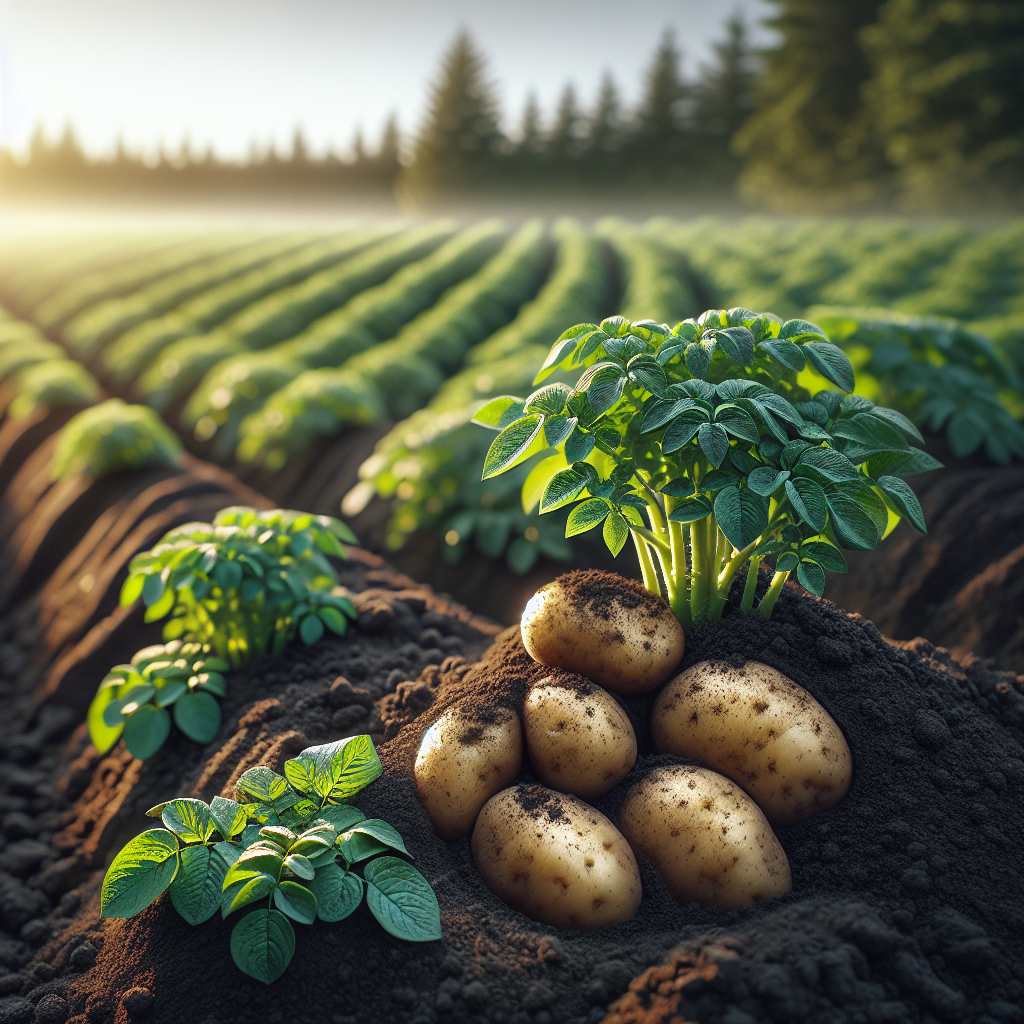
Introduction to Potato
A staple food across temperate and subtropical agriculture, potato is one of the world’s most important calorie crops and a cornerstone of both commercial farming and home-scale production. Native to the Andean region of South America, it was domesticated thousands of years ago and later spread globally, where it adapted into an enormous range of market classes: early salad potatoes, floury maincrop potatoes, waxy table potatoes, processing varieties for chips and fries, and colored heirlooms prized for nutrition and flavor.
Its value lies in its efficiency. Few crops can convert sunlight, water, and modest space into as much edible biomass in so little time. Yet potato is also agronomically demanding in specific ways. It is highly responsive to soil compaction, vulnerable to Late Blight, sensitive to uneven irrigation, and susceptible to a long list of seed-borne problems if planting stock is poorly managed. For growers seeking premium yields and quality, success depends on understanding the crop as an underground stem-tuber system rather than just a leafy vegetable.
Unlike true roots, potato tubers are swollen underground stems formed on stolons. This matters because tuber initiation is influenced by temperature, moisture, day length, and canopy health. Any stress during stolon formation and bulking can reduce tuber number, trigger misshapen growth, or increase defects such as hollow heart, growth cracks, or Common Scab. Growers who manage these stages precisely can produce uniform, high-quality harvests with excellent storage life.
Botanical Profile of Potato
Potato belongs to the Solanaceae, the nightshade family, alongside tomato, eggplant, and peppers. For broader family context, see our Tomato guide. Botanically, the species is usually grown as an annual, though it is technically a herbaceous perennial in frost-free conditions. The crop forms a fibrous root system, underground stolons, green aerial stems, compound leaves, and often white, pink, purple, or blue flowers depending on cultivar.
The edible tuber develops when the tip of a stolon begins to swell and store starch. Each tuber bears “eyes,” which are nodes containing buds capable of sprouting. This is why potatoes are propagated vegetatively using seed tubers rather than true botanical seed in most farm systems. Vegetative propagation preserves varietal traits but also allows viruses and bacterial diseases to accumulate over generations, making certified seed a major factor in crop performance.
Cultivars are broadly grouped by maturity:
- First early: roughly 70–90 days, typically smaller, tender-skinned tubers.
- Second early: about 90–110 days.
- Maincrop: 110–140+ days, often highest yielding and best for storage.
Tuber skin may be white, tan, red, purple, or russeted. Flesh may be white, cream, yellow, blue, or purple. Texture ranges from waxy to floury depending on dry matter content. High dry matter cultivars suit baking, frying, and mashing; low to moderate dry matter cultivars hold shape better for boiling and salads.
Physiologically, potato performs best when vegetative growth develops under mild temperatures and tubers bulk under cooler conditions. Tuber initiation is suppressed by hot soils, and temperatures above about 29°C in the root zone can sharply reduce set and quality. Frost, however, can destroy foliage rapidly. This narrow climatic window explains why potatoes excel in cool springs, mild summers, highlands, and winter production in subtropical regions.
Soil, pH, and Climate Requirements for Potato
Potatoes demand loose, friable, well-drained soil more than almost any other common vegetable crop. The ideal soil is a sandy loam or silt loam with excellent tilth, moderate organic matter, and enough depth for unrestricted tuber expansion. Heavy clay can produce malformed tubers, poor drainage, delayed emergence, and severe disease pressure, especially from bacterial Soft Rots and Rhizoctonia. Very stony ground causes scarring, misshapen tubers, and harvest damage.
A target soil pH of 5.0 to 6.5 is ideal, with 5.2 to 6.0 especially useful where Common Scab is a concern. Potatoes tolerate slightly acidic soils better than many crops, and excessive liming often increases scab incidence. If pH is below about 4.8, nutrient uptake and root health suffer; if above 6.5, scab risk and some micronutrient imbalances increase. Avoid applying fresh lime immediately before planting. If liming is necessary, do it well ahead of the crop, preferably in a prior rotation.
Soil structure matters as much as chemistry. The crop performs best where oxygen remains available in the root zone after irrigation or rainfall. Compacted layers can restrict stolon spread and cause shallow tuber set, making greening more likely. Deep cultivation before planting is beneficial if it relieves compaction without pulverizing the soil. Raised beds or ridged rows are especially valuable in wetter climates.
Nutrient demand is moderate to high, but balance is critical. Excess nitrogen produces lush vines at the expense of tubers, delays maturity, and worsens Late Blight susceptibility. Phosphorus supports early rooting and establishment, while potassium is especially important for tuber size, dry matter, skin quality, and storage performance. Calcium helps reduce internal disorders and supports skin finish, but should be supplied without over-liming if scab is an issue. Chloride-sensitive cultivars may respond better to sulfate forms of potassium in quality-oriented production.
Climate-wise, potatoes prefer cool to mild conditions:
- Ideal air temperature for vegetative growth: about 15–22°C.
- Ideal soil temperature at planting: at least 7–10°C for reliable sprouting.
- Best tuber initiation and bulking: roughly 15–18°C soil temperature.
- Sustained heat above 30°C often reduces tuber set and can induce heat stress, malformed growth, or secondary growth.
They need full sun for high yields, generally at least 6–8 hours daily, though intense heat in hot climates may make afternoon stress management important. Potatoes are not drought-tolerant if high yields are the goal; inconsistent moisture is one of the leading causes of defects. For foundational fertility strategies, see Soil health tips.
Step-by-Step Planting & Propagation
Begin with certified disease-free seed potatoes, not grocery store tubers. Certified seed reduces the risk of viruses, bacterial wilt, ring rot, and other latent problems that can devastate a crop. Choose cultivars suited to your season length, market goal, and disease pressures. In blight-prone areas, prioritize resistant or tolerant varieties. In hot regions, use earlier maturing cultivars to finish before peak heat.
One to two weeks before planting, pre-sprout or “chit” seed tubers in a bright, frost-free place at around 10–15°C. Place them with the rose end upward so short, sturdy green-purple sprouts develop. Chitting speeds emergence and can improve stand uniformity, especially in cool spring soils.
If seed tubers are large, they may be cut into pieces, each with at least one to two strong eyes and ideally weighing 40–60 grams. Use a sanitized blade and allow cut pieces to suberize for 1–3 days in a well-ventilated area before planting. This healing period helps reduce rot. In cold, wet soils, whole seed often performs better than cut seed because it is less vulnerable to infection.
Prepare rows or beds thoroughly. Incorporate well-finished compost, not raw manure, which can increase scab and excessive vegetative growth. Form trenches or shallow furrows. Typical spacing:
- In-row spacing: 20–30 cm for smaller table potatoes, 30–38 cm for larger maincrop tubers.
- Row spacing: 70–90 cm in field culture.
- Planting depth: 8–15 cm, depending on soil type and climate.
In lighter soils, plant slightly deeper; in heavier soils, shallower placement is safer. Set seed pieces with sprouts facing up. Cover with soil and water lightly if the soil is dry, but avoid saturating cold ground.
As plants reach 15–20 cm tall, begin hilling by drawing soil around the stems. Repeat once or twice more as growth continues, eventually creating ridges 20–30 cm high. Hilling serves several essential functions: it protects developing tubers from light exposure, increases the volume of loose soil for tuber formation, suppresses weeds, and improves drainage. Greening occurs when tubers are exposed to light and produce chlorophyll along with glycoalkaloids such as solanine, rendering them bitter and potentially unsafe in quantity.
Potatoes can also be grown in deep containers, bags, or heavily mulched systems, but field or raised-bed culture generally gives more consistent results. In containers, use a loose, fertile medium and be especially vigilant with water because drought and heat build quickly around the root zone.
Care & Maintenance regimes for Potato
Water management is the single most important routine task after establishment. Potatoes need even moisture, especially from stolon formation through tuber bulking. A practical target is soil moisture at roughly 60–80% of field capacity in the active root zone. In plain terms, the soil should feel cool and slightly moist 10–15 cm below the surface, never powder-dry and never sticky-saturated for extended periods. During active bulking, most crops need about 25–40 mm of water per week from rain or irrigation, though sandy soils, windy conditions, and hot spells can push needs higher.
Critical periods for irrigation:
- Emergence to early vegetative growth: keep lightly but consistently moist.
- Tuber initiation: avoid any water stress, as dry spells can reduce tuber number.
- Bulking: maintain steady moisture to support size and prevent growth checks.
- Final maturation: reduce irrigation once vines naturally senesce and skins begin to set.
Signs of underwatering include dull gray-green foliage, midday wilting that persists into evening, reduced flowering, small tubers, and knobby or misshapen growth. Sudden heavy irrigation after drought can cause growth cracks, hollow heart, or secondary growth where tubers form elongated or chained shapes. Signs of overwatering include yellowing lower leaves, soft stem bases, sour-smelling soil, edema-like lesions, and increased tuber rot. Waterlogged soils also raise the risk of Blackleg and lenticel enlargement on tubers.
Mulching with clean straw after emergence can help buffer soil moisture and reduce weed pressure, but in cool, wet climates mulch should be used carefully because it may slow soil warming and harbor slugs. Mechanical or shallow hand weeding is best done early, before the canopy closes. Once tubers begin swelling, avoid deep cultivation that may damage roots or stolons.
Nutrient management should be based on soil testing, but general guidance includes moderate nitrogen early, with adequate phosphorus and strong potassium support. Too much nitrogen late in the season causes rank vines, delayed tuber maturity, and poor skin set. Split applications can be effective: a base dressing before planting and a lighter side-dress shortly before the final hilling if foliage is pale or growth is weak. Foliar feeding is supplementary only and cannot correct fundamentally poor soil fertility.
Monitor canopy growth. A healthy crop should develop a dense but not excessively lush stand. If vines become extremely tall, dark green, and succulent, reduce nitrogen inputs and avoid over-irrigation. If growth is stunted with pale leaves, investigate nitrogen deficiency, compaction, seed quality, or early disease pressure.
In frost-prone regions, protect emerging foliage because early frost burn can set the crop back substantially. If only tops are damaged and stems remain alive, recovery is possible, but tuber yield may decline depending on growth stage.
Pests, Diseases & Organic Management
Potatoes are vulnerable to a complex pest and disease spectrum, so prevention and rotation are more effective than reactive rescue treatments. The first principle is to never plant potatoes repeatedly in the same ground. A rotation interval of at least 3 years, and preferably 4 years or more away from other solanaceous crops, greatly reduces soil-borne problems.
Major diseases include Late Blight, Early Blight, Common Scab, Rhizoctonia Canker and Black Scurf, Blackleg, Soft Rots, Silver Scurf, Fusarium Dry Rot, and a range of viruses such as PVY and Leafroll Virus.
Late Blight is the most feared disease. It thrives in cool, humid conditions and can destroy foliage rapidly. Symptoms include water-soaked leaf lesions, brown-black blotches, pale halos, and white sporulation on leaf undersides in humid weather. Tubers may develop reddish-brown granular rot beneath the skin. Organic management relies on certified seed, wide spacing for airflow, strict cull pile destruction, rotation, prompt removal of infected foliage, and protectant copper products where allowed and appropriate.
Early Blight typically appears as concentric ring lesions on older leaves, especially under nutrient stress or aging foliage. Balanced fertility, residue management, and crop rotation help reduce severity.
Common Scab causes corky lesions on tuber skin and is favored by alkaline or dry soils during tuber initiation. Maintain lower pH, avoid fresh manure, and keep soil moisture even during early tuber set.
Rhizoctonia can cause poor emergence, stem cankers, and black sclerotia on tubers. Plant into warmed soil, avoid excessive depth, and use clean seed.
Key insect pests vary by region but often include Colorado Potato Beetle, Aphids, Flea Beetles, Wireworms, Leafhoppers, and Tuber Moth in warmer zones.
Colorado Potato Beetle can defoliate plants quickly. Hand removal works in small plots; on larger areas, use row covers early, rotate fields, encourage beneficial insects, and apply approved biologicals such as spinosad only as needed and with resistance management in mind.
Aphids may not cause severe feeding damage directly but can transmit destructive viruses. Control weeds, use reflective mulches in some systems, conserve beneficial predators, and rogue out suspicious virus-infected plants showing mosaic, leaf rolling, crinkling, or stunting.
Wireworms attack underground tubers, leaving holes and tunnels. They are more common after sod or grassy ground. Avoid planting potatoes immediately after pasture, use bait traps before planting, and cultivate in advance to reduce populations.
Organic integrated management priorities:
- Start with certified seed.
- Rotate away from potatoes, tomatoes, peppers, and eggplants.
- Destroy volunteer potatoes and cull piles.
- Maintain even moisture and balanced fertility.
- Hill well to protect tubers.
- Scout at least weekly, and twice weekly in blight-favorable weather.
- Remove heavily diseased plants promptly.
Harvesting, Curing & Optimal Storage
Harvest timing depends on intended use. “New potatoes” are lifted young, usually shortly after flowering or once tubers reach usable size. Their skins are tender and not fully set, so they should be handled gently and eaten quickly. For storage potatoes, wait until vines yellow and die back naturally, or cut vines 10–20 days before harvest to allow skin set if disease or weather forces early termination.
A mature storage tuber should resist skin rubbing when thumb pressure is applied. If skins slip easily, delay harvest if conditions allow. Avoid harvesting in very wet soil because mud increases bruising, rot risk, and postharvest cleaning damage. Extremely dry, hard soil can also increase cuts and impact bruising.
Lift tubers carefully with a fork, broadfork, or mechanical harvester, keeping enough distance from the ridge to avoid spearing them. Never leave harvested tubers in direct sunlight for long. Light exposure causes greening and glycoalkaloid accumulation, while hot sun can cause sunburn and internal quality decline.
Curing is optional for very thin-skinned new potatoes but strongly recommended for storage crops. Cure at about 10–15°C with high relative humidity, ideally 85–95%, for 10–14 days in darkness with good airflow. This allows minor wounds to heal and skins to toughen. Do not wash potatoes intended for long storage unless absolutely necessary; instead, brush off loose soil once dry.
Long-term storage conditions depend on end use:
- Table potatoes: 4–7°C, dark, well ventilated, high humidity.
- Seed potatoes: often slightly cooler, depending on management goals.
- Processing potatoes: somewhat warmer than table stock may be preferred to reduce sugar buildup.
Humidity should remain high enough to prevent shriveling but not so stagnant that condensation forms. Good airflow is essential. Store only sound tubers; remove damaged, diseased, cut, or green potatoes first. Check stores regularly and cull any soft or rotting tubers immediately.
Refrigerator-cold conditions can cause excessive sugar accumulation in some cultivars, leading to dark frying color and altered flavor. Home cellars, insulated sheds, or controlled cool rooms are better if they maintain darkness, cool temperatures, and stable humidity.
Companion Planting for Potato
Good companions for potatoes are those that either occupy different root zones, help repel or distract pests, or fit agronomically without competing heavily for nutrients and water. Alliums are classic partners; onions, chives, and garlic may help confuse some insect pests through their strong aroma. Low-growing herbs such as thyme or some basils can also support beneficial insect activity when planted nearby rather than directly crowding the row.
Legumes can be useful in rotation or adjacent plantings because they support soil biology, but avoid aggressive competition in the same ridge. Bush beans are sometimes planted nearby, though spacing must be generous so potato canopies still receive full airflow. Brassicas can work in wider mixed gardens, but intensive interplanting in commercial-style beds is less practical because potatoes require repeated hilling.
Avoid companion choices from the same family, especially tomatoes, peppers, and eggplants, because they share many diseases and insect pests. Planting them close together increases the risk of blight spread and complicates rotation planning. Fennel is generally a poor companion due to allelopathic tendencies and awkward growth habits in mixed beds.
In practical production, the best “companion planting” for potatoes is often rotational companionship rather than tight intercropping. Follow potatoes with crops that benefit from loosened soil and reduced weed pressure, and precede them with cover crops that suppress weeds and improve tilth. Buckwheat, oats, or legume-based cover crop sequences can be particularly helpful before a potato planting if terminated in time.
For small gardens, effective companions near potato rows include:
- Onion and garlic on bed edges.
- Marigolds nearby for biodiversity and visual scouting support.
- Bush beans in adjacent rows with adequate spacing.
- Horseradish at plot margins in some traditional systems, though it should be managed carefully because it spreads.
The main rule is simple: prioritize airflow, sunlight, and ease of hilling over decorative diversity. Potatoes reward clean spacing, excellent soil management, and disciplined rotation more than crowded polyculture.