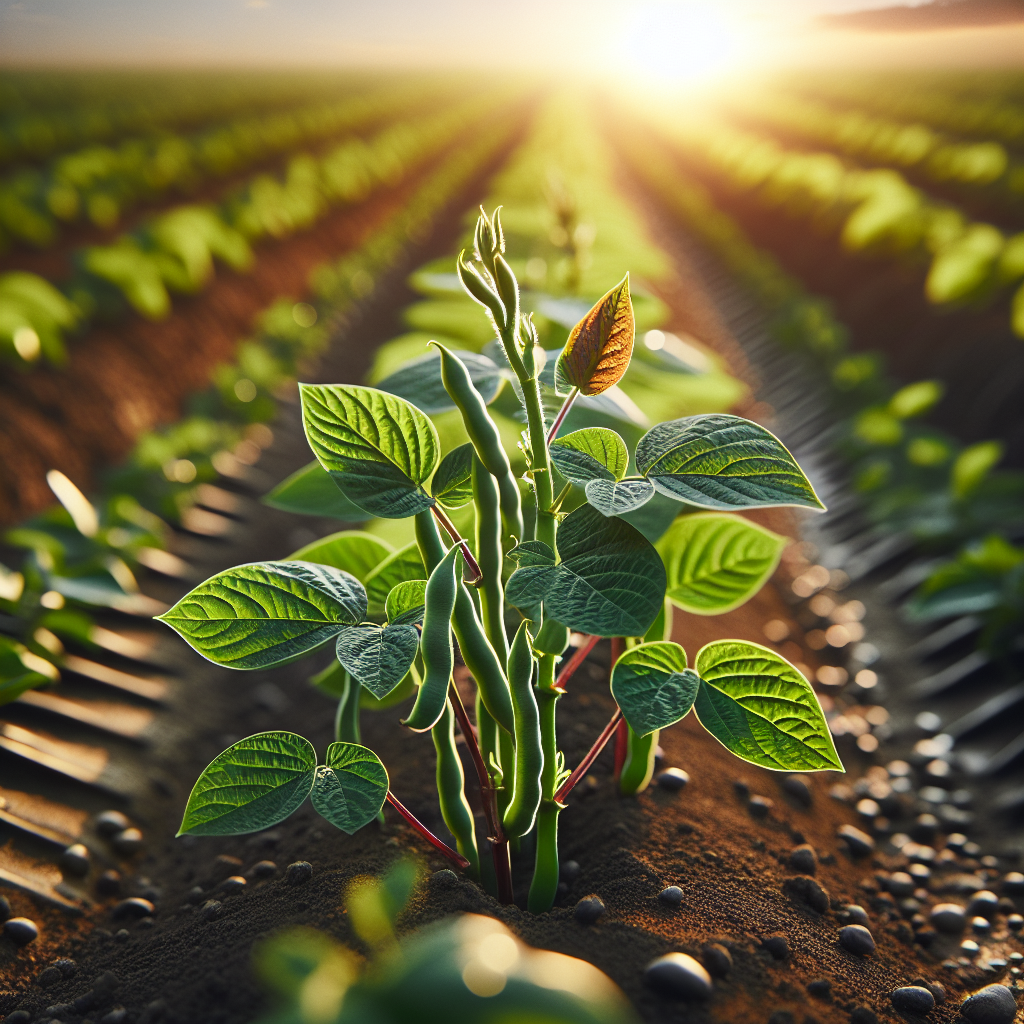
Introduction to Kidney Bean
A classic dry bean with deep agricultural and culinary importance, this crop belongs to the common bean species and is grown primarily for mature dried seeds rather than green pods. Its name comes from the characteristic seed shape and rich red coloration of the most widely recognized market class, although light red, dark red, and speckled forms also exist in regional production systems.
Domesticated in the Americas and later spread worldwide, kidney bean became a staple because it stores well, fixes atmospheric nitrogen through symbiosis with rhizobia, and provides a dense nutritional package of protein, complex carbohydrates, iron, folate, and fiber. In field and garden settings, it is usually managed as a bush-type dry bean, though growth habit varies among cultivars. Compared with snap beans, dry kidney beans remain in the field longer, demand more careful end-of-season handling, and are more sensitive to poorly timed rainfall near harvest.
For growers, the main professional challenge is balancing vigorous vegetative growth with clean pod set and proper seed dry-down. Excess nitrogen, cold soils, compaction, prolonged leaf wetness, and irrigation at the wrong stage can all reduce yield or increase disease pressure. When matched to warm conditions and well-drained soil, however, kidney bean is an efficient and rewarding crop for both small farms and larger rotational systems.
Botanical Profile of Kidney Bean
This crop is an annual dicot in the Fabaceae family. The species, Phaseolus vulgaris, includes snap beans, shell beans, and dry beans, with kidney bean representing a dry bean market class selected for seed size, shape, and color. Plants typically show a determinate or semi-determinate bush habit in modern production cultivars, reaching about 30-60 cm tall, though some heirloom or less improved forms may show more vining tendencies.
Germination is epigeal, meaning the cotyledons are lifted above the soil surface as the hypocotyl elongates. This matters in practice: crusted soils, deep sowing, and rough emergence conditions can physically damage seedlings and reduce stand uniformity. The trifoliate leaves are broad and moderately tender, making early growth sensitive to wind abrasion, hail, herbicide drift, and sandblasting.
Flowers are papilionaceous, usually white to pale lavender depending on cultivar, and are largely self-pollinating. Pod set occurs over a relatively short reproductive window in bush kidney beans, which is useful for coordinated harvest. Pods are typically medium length and contain several large seeds. The seeds themselves are larger than many other dry bean types, so they require more complete filling and a longer period of stable weather late in the season.
Root systems are relatively shallow compared with many deep-rooted field crops, with the majority of active feeder roots concentrated in the upper 20-30 cm of soil. This explains why kidney bean is especially vulnerable to alternating drought and waterlogging. Although a legume, it should not be assumed to thrive in infertile ground without support; nodulation is only effective when compatible rhizobia are present, pH is suitable, and soil conditions are neither cold nor saturated.
From a cropping-systems perspective, kidney bean differs from Soybeans in that it generally has a shorter canopy, less competitiveness against weeds early on, and greater sensitivity to many fungal and bacterial diseases under humid conditions.
Soil, pH, and Climate Requirements for Kidney Bean
High-performing kidney bean crops need warm, friable, well-aerated soil with excellent drainage. The ideal texture is a sandy loam to silt loam with enough fine material to hold moisture but enough structure to avoid standing water after rain. Heavy clay can produce acceptable yields only if drainage is excellent and compaction is actively managed. In dense soils, emergence is often poor, root oxygen declines after irrigation, and root rots become common.
The preferred pH range is 6.0-7.0, with 6.2-6.8 especially favorable for nutrient availability and rhizobial activity. Below pH 5.8, phosphorus becomes less available, nodulation can weaken, and manganese or aluminum toxicity may impair roots. Above pH 7.5, iron and zinc deficiencies become more likely, particularly in calcareous soils. If liming is needed, it should be done well ahead of planting so the root zone is chemically stable by sowing time.
Kidney beans are strongly frost-sensitive and should be treated as a strictly warm-season crop. Soil temperature at seeding depth should be at least 15°C for reliable emergence, while 18-24°C is much better for rapid, even stands. Air temperatures of 20-30°C support strong growth. Growth slows noticeably below 16°C, and flowers may abort during prolonged heat above 32-35°C, especially when accompanied by dry winds or moisture stress.
Rainfall needs are moderate, but distribution matters more than total amount. The crop performs best with steady access to soil moisture from emergence through pod fill, followed by drier weather during maturation. A practical target is to maintain about 60-80% of field capacity through vegetative growth and early bloom, avoiding full saturation. During flowering and pod filling, dips below roughly 50% of field capacity can reduce seed number and seed size. Conversely, soils staying near saturation for more than 24-48 hours can trigger root injury, yellowing, and disease.
Key signs the soil is too dry include midday wilting that does not recover by evening, dull gray-green foliage, flower drop, and pods that remain short or poorly filled. Signs of overwatering include persistent leaf yellowing from the lower canopy upward, stunted plants despite wet soil, algae or moss on the surface, a sour smell in the root zone, and increased outbreaks of damping-off or root rot.
Full sun is essential. Aim for at least 8 hours of direct light daily. Dense shade reduces flowering, prolongs drying, and intensifies foliar disease because the canopy stays wet longer.
Step-by-Step Planting & Propagation
Propagation is by seed, and direct sowing is standard. Transplanting is rarely recommended because common beans dislike root disturbance, and setbacks at transplant stage can permanently reduce yield.
Prepare the bed or field carefully. Create a fine, level seedbed free of large clods. Good seed-soil contact is important for uniform imbibition, but avoid over-pulverizing the soil into a crust-prone surface.
Use clean, high-vigor seed. Select seed with high germination percentage, varietal purity, and freedom from cracked seed coats. Large kidney bean seeds are especially vulnerable to mechanical damage. Handle gently during loading and sowing.
Inoculate if needed. In soils without recent bean cropping history, use an appropriate Rhizobium inoculant for common beans. Inoculation is most useful in fields where nodulation has been unreliable or where beans are being introduced after long absence.
Wait for warm soil. Sow only after danger of frost has passed and the topsoil has warmed. Planting into cold, wet ground commonly causes uneven emergence and seed rot.
Seed at the right depth. Place seed 2.5-4 cm deep in heavier soils and 4-5 cm deep in lighter soils, aiming for consistent depth across the field. Deeper sowing may be needed in dry surface conditions, but overly deep placement can weaken emergence.
Space for airflow and harvest style. In gardens, bush kidney beans do well at 8-10 cm between plants in rows 45-60 cm apart. For field production, row width and in-row density depend on equipment and cultivar, but avoiding excessive canopy density is important because tight stands trap humidity and increase white mold and bacterial disease.
Water lightly after sowing if needed. The goal is to moisten the seed zone thoroughly without forming a crust. If irrigation is required, apply enough to wet the top 5-8 cm evenly, then allow the surface to breathe.
Thin or gap-fill early. Once seedlings have their first true leaves, remove weak doubles and fill major skips only if done very early. Uneven stands reduce yield and complicate harvest timing.
Weed control starts immediately. The crop is a weak competitor during the first few weeks. Use shallow cultivation, stale seedbed techniques, or organic mulches between rows after emergence. Avoid deep hoeing that prunes the shallow root system.
Crop rotation is critical. Do not follow beans after beans or other susceptible legumes in short cycles. A 3-4 year rotation away from common bean is ideal in disease-prone regions.
For broader fertility planning, principles in soil health strategies are particularly relevant because kidney bean responds strongly to stable soil structure and balanced organic matter rather than heavy feeding alone.
Care & Maintenance regimes for Kidney Bean
Water management should change with growth stage. During emergence, keep the seed zone evenly moist but never waterlogged. From early vegetative growth to pre-bloom, provide about 25-30 mm of water per week where rainfall is lacking, adjusted for soil type. Sandy soils may need smaller, more frequent irrigation; loams can be irrigated more deeply and less often. During flowering and pod fill, demand often rises to 30-40 mm per week. The root zone should remain uniformly moist to about 15-20 cm depth.
The safest irrigation method is drip or furrow irrigation that keeps foliage dry. Overhead irrigation is workable but significantly raises disease risk if used late in the day. If sprinklers must be used, irrigate early morning so leaves dry quickly.
Nutrient management should be restrained and targeted. Kidney bean does not respond well to excessive nitrogen. Too much soluble N pushes lush leaf growth, delays maturity, and may reduce nodulation and pod set. If the crop is well nodulated, only modest starter nitrogen is needed, if any. Phosphorus is important for root growth and reproductive performance, and potassium supports water regulation, disease tolerance, and seed fill. Sulfur, zinc, and molybdenum may matter in deficient soils.
A practical fertility approach is to incorporate mature compost sparingly before planting, then rely on soil test results. If leaves are pale but plants are otherwise healthy, do not automatically add nitrogen; first inspect roots for nodules. Effective nodules are usually pink to reddish inside when cut open. White or absent nodules suggest poor fixation.
Mulching can help in small-scale systems, but keep mulch a few centimeters away from stems to reduce collar rot and slug habitat. In mechanized settings, cultivation is usually preferred early, followed by canopy closure.
Avoid field operations when foliage is wet. Kidney beans are highly vulnerable to spreading bacterial diseases through hands, clothing, tools, and equipment. This simple sanitation practice often makes the difference between a clean crop and a heavily spotted one.
Rogue out severely diseased plants early if outbreaks are localized. Also remove volunteer beans from previous crops, as they can harbor pathogens and create uneven maturity in the field.
If plants become excessively vegetative with dark, tender leaves and delayed flowering, likely causes include too much nitrogen, overirrigation, or overly rich manures. If plants flower but fail to fill pods, suspect heat stress, drought during bloom, low potassium, or severe insect feeding.
Pests, Diseases & Organic Management
The most common insect pests vary by region but often include bean leaf beetles, aphids, leafhoppers, cutworms, spider mites, and occasionally pod-feeding caterpillars. bean leaf beetles chew round holes in leaves and may scar pods. aphids cluster on tender shoots and can transmit viruses. leafhoppers cause stippling and hopperburn. spider mites become serious during hot, dusty, dry weather and produce fine webbing beneath leaves.
Organic management begins with prevention: crop rotation, border weed control, balanced fertility, and regular scouting at least once or twice weekly. Examine the underside of leaves, not just the canopy top. Encourage natural enemies by maintaining flowering insectary strips nearby, but avoid excessive adjacent humidity.
For aphids, strong water sprays can help in small plantings if done early in the day. Insecticidal soap works best on direct contact and requires repeat coverage. Neem-based products may suppress soft-bodied pests, but they should be used carefully during high heat or bloom. Row cover can protect seedlings from early beetle or hopper pressure, though it must be removed by flowering if pollinator access for neighboring crops is needed.
Disease management is the central agronomic challenge in kidney bean. Major problems include damping-off, root rots, bacterial blights, anthracnose, rust, halo blight, white mold, and various mosaic viruses. Many of these are seedborne, residue-borne, or splash-dispersed.
damping-off and root rot are favored by cold, wet soils and poor drainage. Prevention depends on warm planting conditions, seed quality, rotation, and avoiding overwatering.
common bacterial blight and halo blight cause water-soaked lesions that turn brown, often with yellow halos. They spread rapidly in wet weather and through handling. Use certified disease-free seed, avoid working in wet fields, and maintain generous spacing and rotation.
anthracnose can produce dark sunken lesions on stems, pods, and seed. It often enters through infected seed. Start with clean seed and remove infected residue.
rust appears as powdery reddish pustules on leaves, especially in humid conditions with moderate temperatures. Good airflow and resistant cultivars are important.
white mold is especially destructive in dense, lush canopies with frequent moisture. Look for cottony white growth and stem collapse. Prevent it with wider spacing, restrained nitrogen, careful irrigation timing, and rotation.
Viruses such as bean common mosaic virus cause mottling, distortion, and stunting. There is no cure; control aphids, eliminate infected plants, and plant resistant varieties where available.
Organic disease suppression depends on integration rather than rescue sprays. The most effective stack is: certified seed, long rotation, rapid residue breakdown, dry foliage, moderate canopy density, sanitation, and resistant cultivars. Copper products may provide partial bacterial suppression in some systems, but they are preventive rather than curative and should be used judiciously to avoid phytotoxicity and copper accumulation in soil.
Harvesting, Curing & Optimal Storage
Dry kidney beans are ready when plants yellow, pods turn tan to brown, and seeds have reached full size and begun hardening. Ideally, most pods should be dry before harvest, but not so brittle that they shatter extensively. Mature seeds should be hard enough that a fingernail cannot dent them easily.
For small-scale harvest, pull or cut plants when roughly 80-90% of pods are dry and finish drying them under cover on tarps, racks, or in a well-ventilated shed. This is often safer than leaving them exposed to repeated rain, which can stain seed coats, trigger mold, and cause pods to rehydrate and split. In larger plantings, swathing or direct combining may be used depending on climate and equipment.
Curing is crucial. After harvest, continue drying until seed moisture falls to about 13-15% for short-term storage, and closer to 12-13% for longer storage in stable conditions. If seeds are too moist, they heat, mold, lose viability, and may develop off odors. If you bite a test bean and it still seems leathery rather than glass-hard, it is usually not dry enough for safe long storage.
Thresh gently to avoid splitting the large seeds. Mechanical injury lowers market grade and can reduce seed viability if the lot is intended for planting. Winnow thoroughly to remove chaff, broken seeds, and dust, all of which attract storage pests and trap moisture.
Store in cool, dark, dry conditions. Airtight containers are suitable only when beans are fully dry. A storage temperature below 15°C is preferable, with relative humidity ideally below 60%. For seed-saving, even cooler and drier conditions preserve viability better. Protect from bean weevils and pantry pests by freezing fully dry beans for several days before long storage if infestations are a concern.
Never consume raw or undercooked kidney beans. They contain phytohemagglutinin, a lectin that is significantly reduced by proper boiling. This is a food-use issue rather than a field problem, but it is important for grower education when marketing dried beans directly.
Companion Planting for Kidney Bean
This crop performs best beside species that either improve spatial efficiency, attract beneficial insects, or occupy a different root and canopy niche without overwhelming the beans. The most practical companions are Corn, Radish, and Nasturtium.
Corn works well because it grows upright and can provide light structural shelter from wind without creating dense low humidity around the bean canopy if spacing is sensible. In traditional mixed systems, beans and corn have long been grown together, though dry kidney beans are usually bush types and should not be crowded directly against corn rows.
Radish is useful as a quick, shallow-rooted intercrop or border crop. It helps mark rows, breaks surface crusting in some beds, and is harvested early before the beans need full space. This makes it especially helpful in intensive gardens and hand-tended market plots.
Nasturtium is valued less for nutrient interaction and more for insect management support. Its flowers attract beneficial insects, and the plant may draw aphids away from beans in some settings. It also helps diversify field-edge ecology in small-scale organic systems.
Good neighbors also include modestly sized leafy crops planted at a respectful distance, but avoid pairing kidney beans too closely with aggressive alliums or heavily shading crops. Onion and garlic relatives are often considered poor companions because they may compete strongly in the root zone and are traditionally observed to suppress bean performance in tight plantings.
As a rule, prioritize airflow and access. Companion planting should never make the bean canopy denser, wetter, or harder to scout. In professional systems, the best companion arrangement is one that preserves disease hygiene while improving total land use and biodiversity.