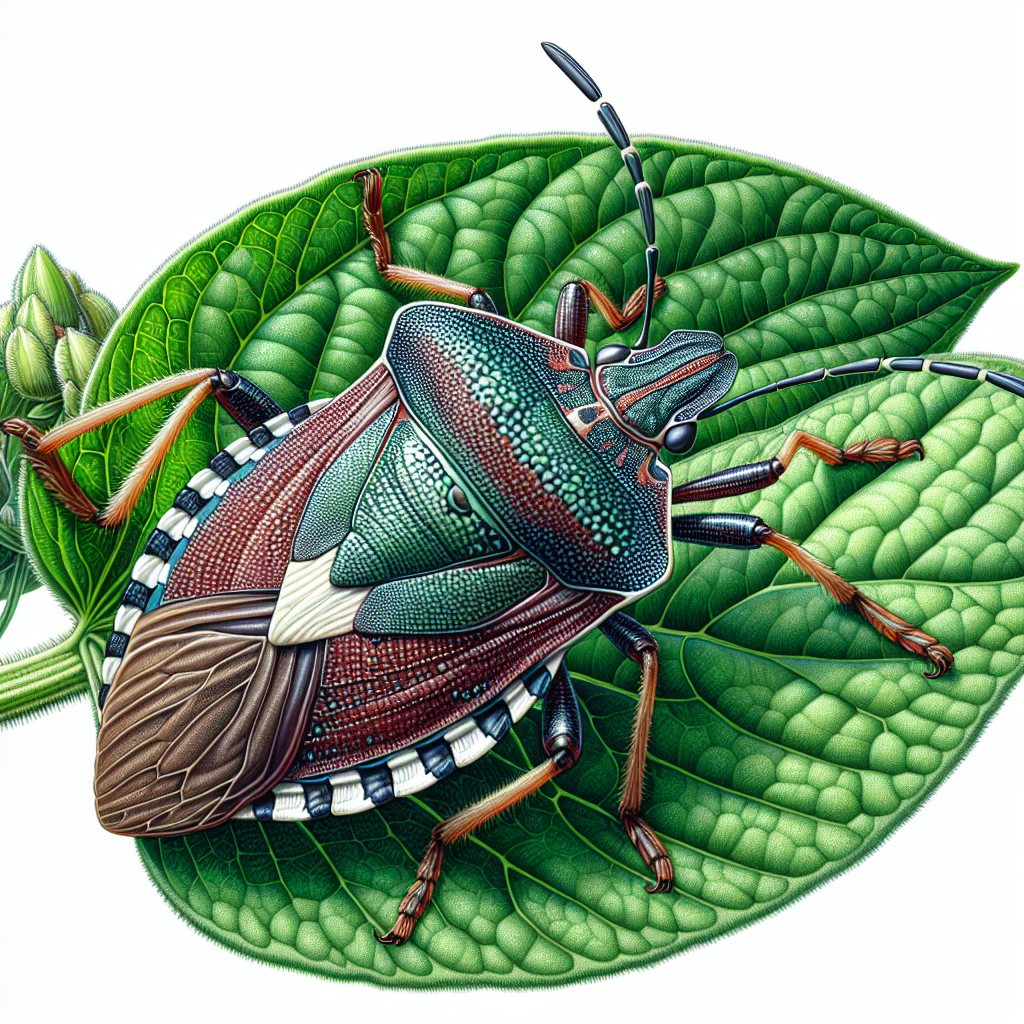
Introduction to Stink bugs
Stink bugs, belonging to the Pentatomidae family, are among the most notorious agricultural pests worldwide, infamous for their distinctive shield-shaped bodies and the pungent odor they release from specialized glands when threatened—a defense mechanism that gives them their name. Native to regions like Asia, Africa, and the Americas, species such as the brown marmorated stink bug (Halyomorpha halys) and southern green stink bug (Nezara viridula) have become invasive threats, particularly in North America and Europe. These true bugs pierce plant tissues with needle-like mouthparts, injecting digestive enzymes that liquefy cell contents before sucking them up, leading to discolored, deformed fruits, seeds, and pods.
Farmers face billions in annual losses due to stink bug damage, with outbreaks surging in warm, humid climates. Early detection is crucial, as populations explode rapidly under favorable conditions. This definitive guide equips you with professional-grade diagnostics, lifecycle knowledge, organic controls, and prevention strategies to safeguard your crops. Whether managing soybeans, corn, or fruit orchards, understanding stink bug biology empowers effective integrated pest management (IPM). For more on early-season threats, check this Spring Pest Patrol blog.
Identifying Symptoms & Damage
Stink bug damage manifests subtly at first but escalates quickly, often mimicking other issues like nutrient deficiencies or aphids. Key symptoms include:
- Corky spots and discoloration: Fruits develop pale, spongy areas with a 'cat-facing' appearance—irregular, dimpled scars from salivary toxins. On tomato fruits, expect yellowing or white spots expanding into necrotic patches.
- Seed damage: In legumes like peas or peanuts, seeds shrivel, turn black, or fail to germinate due to feeding punctures.
- Pod deformation: Legume pods become warped, curled, or aborted; beans inside may be hollow or moldy.
- Fruit drop and malformation: Apples, peaches, and citrus show pitting, bronzing, or premature drop. On corn ears, kernels near tips become chalky and flavorless.
- Visual cues: Clusters of adults or nymphs on undersides of leaves, stems, or fruit clusters. Nymphs lack wings, appearing as rounded, gregarious clusters. Disturbed bugs emit a strong, cilantro-like stench.
Diagnostic tips: Shake plants over white paper—stink bugs drop and are easily spotted. Use a hand lens to check for stylet punctures (tiny holes). Differentiate from leaf-footed bugs by the stink bug's straight antennae and triangular scutellum. Damage severity peaks mid-season; scout weekly during pod/fruit fill stages. Thresholds: 1 stink bug per 6 sweeps in row crops signals action.
Lifecycle and Progression of Stink bugs
Stink bugs undergo incomplete metamorphosis: egg, nymph (5 instars), and adult. One to two generations per year in temperate zones, up to 4-5 in tropics.
- Eggs: Pale green, barrel-shaped clusters of 20-30 laid on leaf undersides. Hatch in 4-5 days at 80°F (27°C).
- Nymphs: Progress from tiny black crawlers (1st instar) to larger green/brown forms (5th instar), feeding gregariously. Duration: 4-6 weeks total.
- Adults: Long-lived (6-8 months overwintering), 0.5-1 inch long, shield-shaped. Peak activity June-September; migrate to crops from overwintering sites (woodlands, buildings).
Overwinter as adults in leaf litter or structures, emerging in spring to feed on weeds before crops. Populations peak late summer. Monitor with pheromone traps: yellow pyramid traps baited with methyl-decatriene capture males/females effectively. Lifecycle completes in 6-8 weeks under optimal warmth (75-85°F).
Environmental Triggers & Risk Factors
Stink bugs thrive in warm, humid conditions (70-90°F, 60%+ RH), with outbreaks triggered by:
- Weedy fields: Overwintering near wild hosts like mustard, amaranth, or tree-of-heaven (Ailanthus altissima for brown marmorated).
- Mild winters: Reduced mortality leads to spring booms.
- Crop phenology: Preference for reproductive stages (flowering to pod fill). Bridge crops like sorghum or late corn sustain populations into fall.
- Monocultures: Large fields of susceptible crops like soybeans amplify damage.
- Irrigation: Excess moisture boosts nymph survival.
Risk hotspots: Southern U.S., Mid-Atlantic states. Invasive spread via trade; scout field edges first.
Organic Control & Treatment Plans
Prioritize IPM: cultural, biological, then targeted organics. Avoid broad-spectrum sprays to preserve predators like wheel bugs, birds, and parasitic wasps (Trissolcus spp.).
Cultural Controls:
- Destroy weeds/volunteers.
- Rotate crops; plant trap crops like sunflower borders.
- Till post-harvest to expose pupae.
Biological Controls:
- Release samurai wasps (Trissolcus japonicus) where approved.
- Encourage tachinid flies, spiders.
Organic Treatments (scout-based, 3-day re-entry):
- Insecticidal soaps/neem oil: 2% solution weekly; smother nymphs. Mix: 1 oz castile soap/gallon water + 1 tsp neem.
- Pyrethrins + PBO: Evening applications target adults. Rate: 0.02-0.05% pyrethrins.
- Spinosad: Effective on nymphs; OMRI-listed. 0.5 oz/gallon, 7-day PHI.
- Kaolin clay (Surround WP): 25-50 lb/acre; repels feeding.
Treatment Plan:
- Low (1/6 sweeps): Monitor.
- Moderate (1-2/6): Kaolin + soaps.
- High (>2/6): Pyrethrins/spinosad rotate. Apply evenings; cover undersides. Thresholds per crop; e.g., 20% pod damage in soybeans.
Preventing Stink bugs in the Future
Prevention beats cure:
- Perimeter traps: 4-6/acre pyramid traps with lures.
- Resistant varieties: Plant stink bug-tolerant soybeans like Asgrow AG4633.
- Cover crops: Buckwheat, clover suppress weeds.
- Row covers: Fine mesh on small plantings.
- Sanitation: Remove crop debris; seal home overwintering sites.
- Timing: Early planting evades peak.
- Companion planting: Nasturtium or marigolds repel. Learn more in this companion planting guide.
Annual IPM scouting prevents 80% losses.
Crops Most Affected by Stink bugs
Stink bugs attack 300+ species, prioritizing fruits/legumes:
| Crop Category | Examples | Damage Type |
|---|---|---|
| Legumes | Soybeans, peas, peanuts, chickpeas | Seed shrivel, pod deform |
| Fruits | Peach, apple, tomato, corn | Cat-facing, corking |
| Vegetables | Pepper, eggplant, cucumber | Pitting, drop |
| Grains | Corn, rice, wheat | Kernel damage |
Top economic hits: Soy (>$100M US losses/year), cotton, fruit orchards. Nymphs worse on pods; adults on fruits.