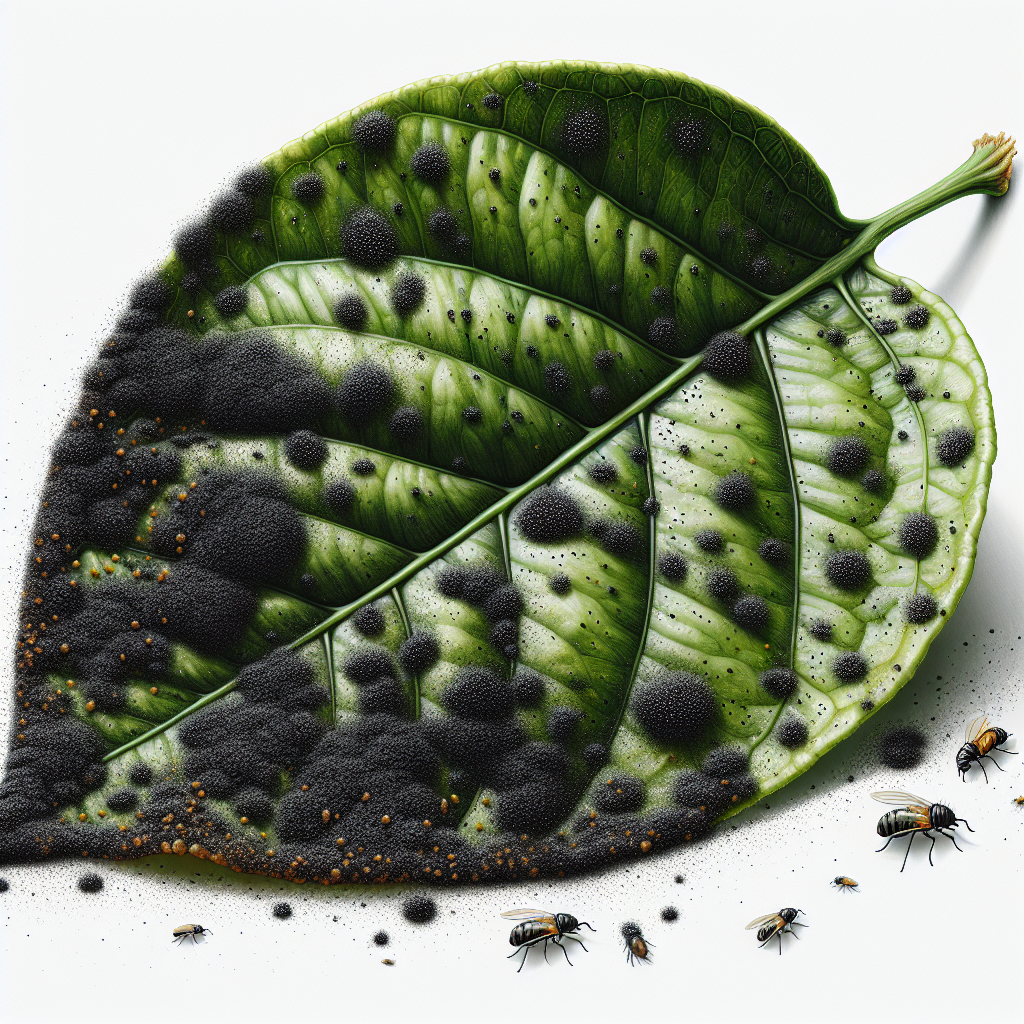
Introduction to sooty mold
Sooty mold represents one of the most visually striking yet indirectly damaging fungal issues in agriculture, particularly in warm, humid climates where sucking insects thrive. This condition arises when opportunistic fungi, primarily from genera like Capnodium, Scorias, and Fumago, colonize the honeydew—a sugary exudate produced by pests such as aphids, scale insects, mealybugs, and whiteflies. The resulting black, soot-like coating on plant surfaces not only detracts from aesthetic appeal but also poses significant economic threats by reducing photosynthetic efficiency, promoting secondary infections, and lowering marketable yield.
Unlike true plant pathogens, sooty mold fungi are saprophytic, meaning they feed on the non-living honeydew rather than penetrating plant tissues. This superficial growth can spread rapidly across orchards, gardens, and field crops, especially during periods of high insect activity and humidity. Farmers often first notice it on understory leaves or fruits hanging beneath heavily infested branches, where honeydew drips and accumulates. In severe cases, entire canopies appear charred, leading to stunted growth, premature leaf drop, and unmarketable produce. Understanding sooty mold's dependence on insect vectors is key to its management—addressing the pests eliminates the mold's food source, allowing natural weathering and rain to remove existing growth over time.
Globally, sooty mold impacts billions in lost revenue annually, particularly in tropical and subtropical regions. For small-scale and commercial growers alike, early detection and integrated pest management (IPM) are essential. This guide provides professional-grade diagnostic tools, lifecycle insights, organic treatments, and prevention strategies tailored for sustainable agriculture. For more on AI-driven pest identification that can prevent outbreaks like this, check out Why Misidentifying Plants Costs Small Farms Thousands - And How AI Camera Diagnosis Fixes It Fast.
Identifying Symptoms & Damage
Diagnosing sooty mold is straightforward due to its distinctive appearance: a velvety, black to dark gray powdery layer coating leaves, stems, twigs, and fruits. This mold often feels slightly sticky to the touch and can be easily rubbed off, revealing the underlying honeydew sheen. Inspect the upper and lower leaf surfaces, petioles, and fruit clusters—growth is thickest where honeydew accumulates, such as in axils or on horizontal branches. In heavy infestations, branches may appear as if dusted with chimney soot, and fruits can become completely blackened, rendering them unmarketable.
Key symptoms include:
- Black powdery coating: Thin films progress to thick mats, reducing light penetration by up to 50-80%.
- Honeydew presence: Clear, sticky droplets on leaves or ground beneath; ants often farm the insects producing it.
- Yellowing and chlorosis: Leaves below moldy areas turn yellow due to shaded photosynthesis inhibition.
- Stunted growth: Reduced vigor in shoots and fruits, with potential leaf drop in severe cases.
- Secondary issues: Mold creates microhabitats for mites or fungal pathogens like powdery mildew.
Damage quantification is critical for economic assessment. Studies show sooty mold can reduce photosynthesis by 30-70%, leading to 20-50% yield losses in fruits like citrus and avocados. Fruits coated in mold fetch 40-60% lower prices due to cosmetic defects. Differentiate from similar issues: sooty blotch lacks honeydew and is more blotchy; black sooty cankers indicate vascular pathogens. Use a hand lens to confirm fungal hyphae and search for live insects—absence of pests suggests weathering mold.
To confirm, wipe a section clean; if green tissue re-emerges and photosynthesis resumes, it's superficial sooty mold. Monitor with sticky traps for insect vectors and scout weekly during warm weather.
Lifecycle and Progression of sooty mold
Sooty mold fungi are ubiquitous airborne spores that require honeydew to germinate and grow. The lifecycle hinges on insect activity: sucking pests pierce phloem, excreting excess sugars as honeydew. Spores land on this substrate, germinate in 24-48 hours under humid conditions (RH >70%), and form mycelial mats within 3-7 days. Colonies expand radially, producing conidia (asexual spores) that disperse via wind or rain splash.
Progression stages:
- Insect infestation (Week 1): Aphids or scale insects colonize new growth.
- Honeydew deposition (Days 3-5): Sticky droplets appear.
- Spore germination (Days 5-10): Thin black film forms.
- Maturation (Weeks 2-4): Thick, crusty layer; conidia release.
- Senescence (Months later): Mold hardens and flakes off without honeydew.
Multiple generations occur per season in tropics, with peaks in summer. Fungi overwinter as dormant spores on bark or debris. Without insects, growth halts. Temperature optima: 20-30°C (68-86°F); high humidity accelerates spread. In Hass Avocado orchards, progression from first honeydew to full canopy coverage can take just 2-3 weeks during wet seasons.
Environmental Triggers & Risk Factors
Sooty mold thrives in warm (25-32°C), humid environments with poor air circulation—common in dense canopies, valleys, or irrigated fields. Key triggers:
- High insect populations: Over-fertilization with nitrogen boosts succulent growth, attracting aphids and scales.
- Humidity >75%: Nighttime dew sustains spore germination.
- Poor pruning: Shaded, compact canopies trap honeydew.
- Ant presence: Ants protect honeydew producers from predators.
- Drought stress: Weak plants are more susceptible to pests.
Risk factors include monocultures, nearby weed hosts harboring pests, and excessive irrigation creating humid microclimates. In citrus groves, overhead sprinkling exacerbates issues. Climate change intensifies outbreaks with prolonged warm spells. Soil deficiencies (e.g., potassium) weaken resistance, indirectly favoring vectors.
Organic Control & Treatment Plans
Management prioritizes eliminating honeydew sources via organic IPM. Avoid fungicides—they're ineffective against saprophytes.
Step 1: Scout and Identify Pests Weekly inspections; use yellow sticky traps.
Step 2: Cultural Controls
- Prune for airflow; remove infested tips.
- Blast honeydew with strong water jets (early morning).
- Introduce beneficials: ladybugs, lacewings for aphids; parasitic wasps for scales.
Step 3: Organic Insecticides
- Neem oil (0.5-2%): Smothers insects; apply evenings, 7-10 day intervals.
- Insecticidal soap (1-2%): Targets soft-bodied pests; rinse after 1 hour.
- Pyrethrins or spinosad: For heavy infestations; rotate to prevent resistance.
- Horticultural oil: Dormant sprays for scales.
Step 4: Biological Controls Release Cryptolaemus montrouzieri (mealybug destroyer) or Chilocorus beetles for scales.
Step 5: Mold Removal Rain washes it; otherwise, power wash fruits pre-harvest. Potassium bicarbonate sprays aid removal.
Integrated Plan for Citrus/Avocado:
| Week | Action |
|---|---|
| 1 | Scout, water blast |
| 2-4 | Neem/soap sprays, release predators |
| 5+ | Monitor, prune |
Expect 80-95% control in 4-6 weeks. Spring Pest Patrol: Organic AI Strategies to Shield Your Crops from Common Invaders offers tech-enhanced scouting tips.
Preventing sooty mold in the Future
Prevention centers on pest exclusion and resilience:
- Resistant varieties: Choose less susceptible cultivars.
- Sanitation: Remove debris, rogue infested plants.
- Fertigation balance: Avoid excess N; boost K/Ca.
- Barrier methods: Reflective mulches, row covers.
- Ant controls: Bait stations (boric acid).
- Monitoring tech: Trap counts trigger action.
- Crop rotation/diversity: Interplant with pest repellents like marigold.
Annual dormant oils break overwintering pests. Calendar sprays unnecessary—IPM scouts guide applications. In high-risk areas, windbreaks improve circulation.
Crops Most Affected by sooty mold
Sooty mold plagues honeydew-prone crops:
- Citrus (orange, lemon, lime): Fruits blacken, reducing export quality.
- Avocado (Hass Avocado, Fuerte Avocado): Canopy coverage halves yields.
- Mango (kulfi mango): Export bans from cosmetic damage.
- Grapes (grapes): Clusters unmarketable.
- Tree fruits: Apple, peach, cherry.
- Vegetables: Tomato, cucumber.
- Others: Coffee, cacao, ornamentals.
Tropicals suffer most; temperate crops less so.