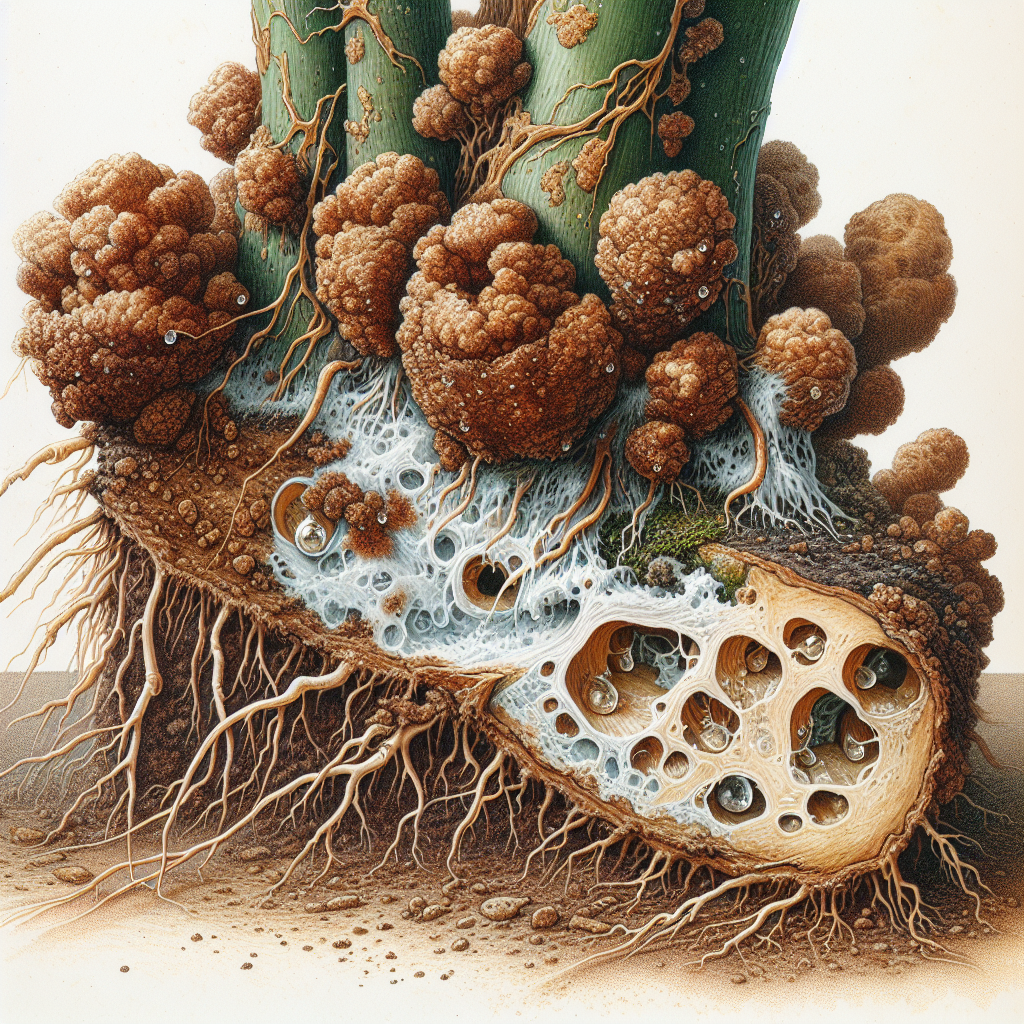
Introduction to Phytophthora species
Phytophthora species represent one of the most devastating groups of plant pathogens worldwide, responsible for billions in agricultural losses annually. These oomycetes, often mistaken for fungi due to their filamentous growth, are water-loving organisms that infect roots, crowns, stems, and fruits, causing root rot, crown rot, and various blights. Unlike true fungi, Phytophthora spp. produce motile zoospores that swim in saturated soils, enabling rapid spread during prolonged wet periods.
Over 100 species exist, with key agricultural threats including Phytophthora infestans (late blight of potato and tomato), P. ramorum (sudden oak death), P. sojae (Phytophthora root and stem rot in soybeans), and P. palmivora affecting numerous tropical crops. In agriculture, they pose existential risks to high-value perennials like avocado, citrus, and strawberry fields. Early diagnosis is critical, as infections progress rapidly from subtle wilting to total crop failure. This guide equips growers with professional diagnostic tools, organic treatments, and prevention protocols to combat Phytophthora effectively. For more on related threats, see our Phytophthora (disease) wiki page.
Identifying Symptoms & Damage
Phytophthora symptoms vary by host, infection site, and species but share hallmarks of water-related stress. Foliar symptoms include wilting, yellowing (chlorosis), and leaf drop, often mimicking drought despite adequate moisture. Stems show dark, water-soaked lesions at the soil line, progressing to girdling cankers with gum or sap exudate in trees like Hass Avocado.
Root systems exhibit classic rot: roots turn dark brown to black, mushy, and sparse, with few fine feeder roots. Excavate suspect plants to inspect; healthy roots are firm and white. Crown and collar regions display sunken, necrotic lesions. Fruit rots produce firm, brown lesions that expand rapidly in wet conditions, as seen in Phytophthora crown or fruit rot on cucurbits.
Advanced stages reveal sparse, stunted foliage, premature defoliation, and plant death. Secondary invaders like Pythium or Rhizoctonia may complicate diagnosis. Lab confirmation via culturing on selective media (e.g., PARPH-V8 agar) or PCR is recommended for species ID. Field diagnostics: slice rotted tissue—healthy is white inside, infected is reddish-brown with fungal-like mycelium. Differentiate from Fusarium wilt by wet soil preference and zoospore presence in water extracts.
Lifecycle and Progression of Phytophthora species
Phytophthora's lifecycle exploits wet environments, alternating sexual and asexual phases. Primary inoculum survives as thick-walled oospores in soil or plant debris for years. Under saturated conditions (>60% water-filled pore space), oospores germinate, producing sporangia that release zoospores—motile swimmers infecting roots via wounds or natural openings.
Zoospores encyst, germinate hyphae, and colonize vascular tissue, blocking water/nutrient flow. Infected plants produce secondary sporangia on stems/fruits during rain. Asexual cycle repeats rapidly (days) in cool, wet weather (15-25°C optimal). Sexual reproduction (antheridia + oogonia) occurs between compatible mating types, yielding durable oospores for long-term survival.
Progression: latent infection (weeks) → foliar wilt → root/crown necrosis → death. Epidemics surge post-rainfall; Phytophthora blight on peppers spreads via splash. Soil populations build over seasons, amplified by poor drainage. Understanding this informs timing of controls, targeting zoospore release phases.
Environmental Triggers & Risk Factors
Phytophthora thrives in poorly drained, compacted soils with high moisture. Key triggers: prolonged leaf wetness (>48 hours), soil saturation from over-irrigation or heavy rains, and temperatures 10-30°C. Neutral to acidic soils (pH 5.5-7.0) favor most species; cool nights with warm days accelerate sporulation.
Risk factors include susceptible varieties (e.g., Russet Burbank Potato), monoculture, and overhead watering. Flooded fields, construction-induced compaction, and root-knot nematodes wounding roots exacerbate spread. In perennials like Fuerte Avocado, shallow planting exposes crowns. Climate change intensifies risks with erratic rains. Monitor soil moisture; probes showing >20% volumetric water for >72 hours signal danger. For small farms battling weather, check Why 80% of Small Farms Battle Weather Disasters - And How Hyper-Local AI Forecasts Can Save Your Harvest.
Organic Control & Treatment Plans
Organic management integrates cultural, biological, and physical tactics—no curative fungicides exist post-infection. Immediate Actions: Remove and destroy infected plants (solarize debris). Improve drainage via raised beds or tiling.
Biological Controls: Apply Trichoderma spp. or Bacillus subtilis drenches (e.g., RootShield, Serenade) to outcompete pathogens. Mycorrhizal fungi enhance root resilience. Compost teas with actinomycetes suppress zoospores.
Organic Amendments: Incorporate mustard seed meal or brassica biofumigants for natural isothiocyanates toxic to oomycetes. Gypsum amends sodic soils, improving percolation. Phosphonate drenches (phosphorus acid, OMRI-listed) boost plant defenses via SAR induction—apply preventively at 2-4 quarts/acre.
Treatment Protocol: 1) Excavate crowns, remove soil to expose lesions. 2) Cut back to healthy tissue, apply copper hydroxide paste. 3) Drench with phosphite + biofungicide weekly for 4-6 weeks. Rotate with non-hosts (clover). Solarization (clear plastic, 6 weeks summer) kills soil inoculum. Monitor with bait tests (rhizosphere water floated with lettuce bait).
Integrated Plan for Potato: Hill soil high, use certified seed, apply Trichoderma at planting. Success rates: 70-90% with combined approaches.
Preventing Phytophthora species in the Future
Prevention outperforms cure. Select resistant varieties: e.g., Yukon Gold Potato over susceptible ones. Use certified, disease-free transplants. Site selection: well-drained slopes, avoid low spots.
Cultural Practices: Drip irrigate, schedule for midday to minimize wetness. Mulch to moderate soil moisture. Sanitize tools (10% bleach). Crop rotation: 4-6 years with grasses/non-hosts like corn. Soil solarization or biofumigation pre-planting.
Monitoring & Early Detection: Scout weekly, use soil tests for population levels. Threshold: >10 propagules/g soil = high risk. Boost immunity with balanced nutrition (adequate K, Ca). Windbreaks reduce splash dispersal. Long-term: build soil structure with cover crops (hairy vetch). Annual phosphite applications in high-risk areas prevent outbreaks.
Crops Most Affected by Phytophthora species
Phytophthora devastates diverse crops. Woody perennials: avocado (Hass Avocado, Fuerte Avocado), citrus (navel orange), mango, banana. Solanaceae: potato, tomato, eggplant. Berries: strawberry, blueberry, raspberry. Vegetables: peppers, cucumber, squash. Legumes: soybeans (Phytophthora root and stem rot). Tropicals: pineapple, papaya, cacao. Ornamentals and nuts: chestnut (ink disease), walnut. Global impacts: Irish potato famine (P. infestans), California avocado decline. Tailor strategies per crop for optimal protection.