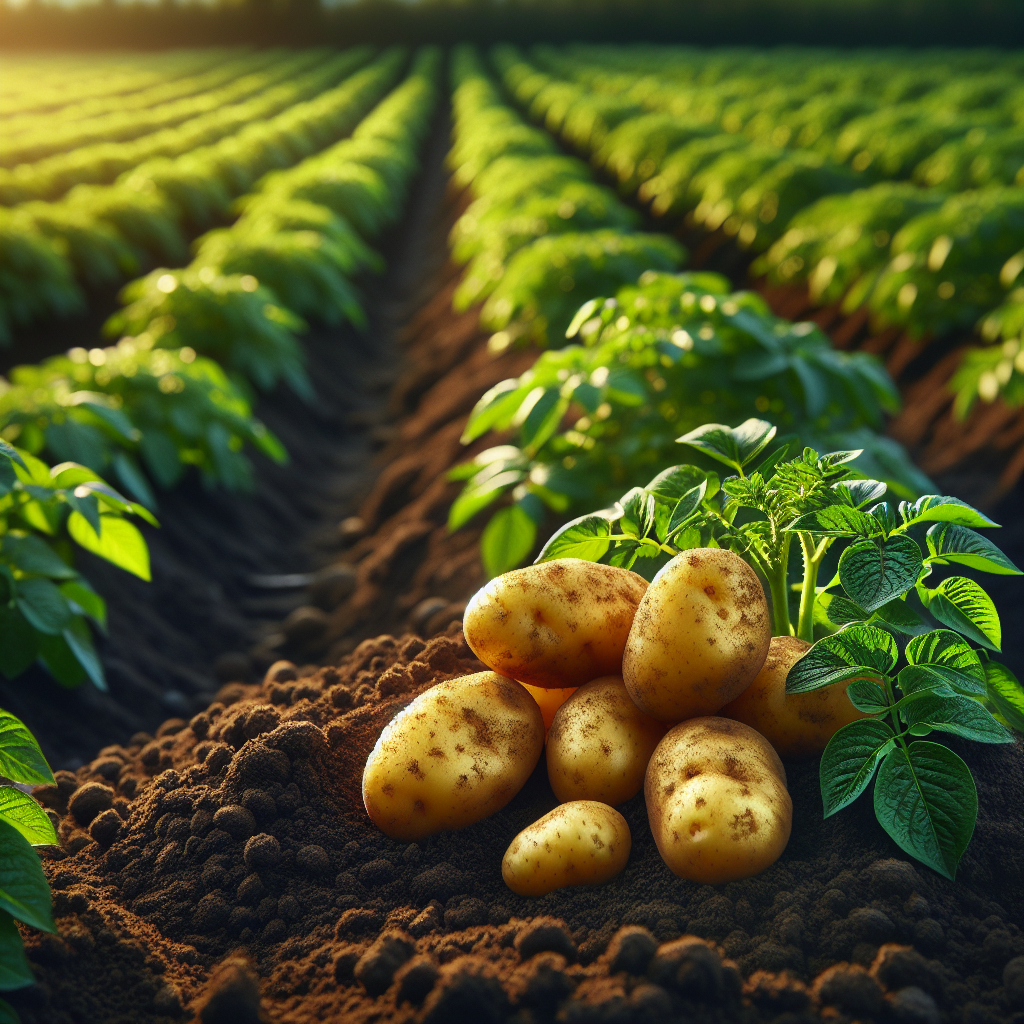
Introduction to Yukon Gold Potato
Bred in Canada and released in the 1980s, this cultivar became one of the most influential modern table potatoes because it combined the rich yellow flesh associated with old European gourmet potatoes with the productivity and adaptability needed by commercial and home growers. Its parentage includes a wild South American yellow-fleshed type and cultivated breeding material, which helps explain both its distinctive color and its broad culinary appeal.
The tubers are typically round to oval with smooth to lightly netted buff skin, shallow eyes, and warm golden flesh that holds enough structure for roasting and frying while still mashing into a creamy texture. Compared with standard white potatoes, it often has a naturally richer flavor and slightly denser mouthfeel. In the field, it is usually considered an early to mid-season fresh-market potato rather than a long-storage processing type.
For growers, the main strengths are uniformity, market recognition, and versatility. The main cautions are that it prefers cool-season growth, responds strongly to uneven watering, and can be vulnerable to common potato diseases if rotation and sanitation are ignored. If you already grow general Potato types, Yukon Gold often feels familiar, but it deserves slightly more careful attention to moisture consistency and harvest timing to preserve skin quality and eating quality.
Botanical Profile of Yukon Gold Potato
This cultivar belongs to the nightshade family, Solanaceae, the same family as tomatoes, peppers, and eggplants. It is a herbaceous annual in cultivation, though biologically the species is a perennial producing underground stem tubers. What most people call a potato “seed” piece is actually vegetative propagation material: a tuber section containing at least one viable eye, which is a dormant bud capable of producing shoots.
Plants typically emerge as sturdy, upright to semi-spreading bushes with compound leaves composed of a terminal leaflet and several lateral leaflets. Foliage is medium green, and growth is generally compact compared with some sprawling late-season cultivars. Flower color can vary but is often white to pale lavender. Berry formation is possible after flowering, but those fruits are not used for propagation in normal production systems and are not edible.
The tubers themselves are modified stems rather than roots. They develop at the tips of stolons, which are underground stems extending from the base of the plant. This matters agronomically because tuber formation is heavily influenced by temperature, soil aeration, and hilling depth. When soils are too hot, too wet, or compacted, stolon health and tuber initiation suffer.
Yukon Gold is known for relatively shallow eyes, a trait appreciated by cooks and packers because it reduces peeling waste and improves visual uniformity. It is generally categorized as an early to mid-season variety, often reaching harvest maturity in about 80 to 100 days depending on climate, soil temperature, and whether it is harvested as “new potatoes” or allowed to size up more fully.
In culinary classification, it sits between waxy and floury types. Its moderate dry matter gives it flexibility: it can roast beautifully, mash smoothly, and perform well in soups without disintegrating as quickly as some high-starch russets. That same moderate dry matter also affects storage and irrigation decisions, because excess late-season water can dilute flavor and increase defects such as enlarged lenticels, growth cracks, and secondary growth.
Soil, pH, and Climate Requirements for Yukon Gold Potato
This variety performs best in loose, deep, well-drained loam or sandy loam with excellent tilth. The ideal rooting and tuber zone is friable enough that developing tubers can expand without mechanical resistance. Heavy clay can still produce acceptable yields if improved with organic matter and formed into raised rows, but poorly drained dense soils sharply increase the risk of misshapen tubers, scab management challenges, and rots.
Target a soil pH of about 5.2 to 6.2, with 5.5 to 6.0 being especially comfortable for potato culture. Slightly acidic soil helps reduce Common scab pressure, especially where that disease is persistent. Avoid liming directly before a potato crop unless pH is extremely low and limiting nutrient availability. If lime is necessary, apply it well ahead of the season or in rotation years rather than immediately before planting.
Organic matter in the 3% to 6% range is often ideal for balanced water-holding and drainage. Very high organic matter soils can produce lush tops and delayed maturity if nitrogen is overapplied, while very low organic matter soils dry too quickly and promote irregular tuber sizing. Incorporate mature compost, leaf mold, or well-finished manure in the prior season or at least several months before planting. Fresh manure is a poor choice because it increases scab risk and can create excessive vegetative growth.
Climatically, Yukon Gold thrives in cool to mild temperate conditions. The best canopy growth generally occurs when daytime temperatures sit around 60-75°F (16-24°C), and tuber initiation is strongest when soil temperatures are roughly 60-70°F (16-21°C). Once soil temperatures regularly exceed about 80°F (27°C), tuber set and bulking decline. Hot nights are especially damaging because potatoes rely on cool nighttime conditions for efficient tuberization.
Full sun is important, with at least 6 to 8 hours daily. In warmer regions, the crop should be timed so bulking happens before summer heat. In cool northern climates, it is a classic spring-planted crop. In frost-free mild-winter areas, it may be grown in late fall through winter. Frost can kill emerged tops, though underground seed pieces may resprout if damage is not severe.
Moisture management is one of the defining factors for quality. Yukon Gold prefers evenly moist soil, roughly equivalent to 65% to 80% of field capacity in the active root zone. In practical terms, the soil should feel cool and slightly damp 3 to 4 inches below the surface, forming a weak ball in the hand without smearing into mud. If the soil stays saturated long enough to exclude oxygen, stolons and young tubers become vulnerable to rot, Blackleg, and physiological stress. If the soil cycles from drought to flood, expect knobby tubers, hollow heart, growth cracks, and uneven sizing. For broader fertility and structure planning, see soil health basics.
Step-by-Step Planting & Propagation
Start with certified disease-free seed potatoes, not grocery-store tubers. Certified seed reduces the risk of introducing viruses, ring rot, Blackleg, and Late blight into your ground. Choose seed pieces about the size of a medium egg, or cut larger tubers into pieces weighing roughly 1.5 to 2 ounces each, making sure every piece has at least one strong eye and ideally two.
After cutting, allow pieces to cure for 1 to 3 days in a well-ventilated, shaded place around 60-70°F (16-21°C). This suberization step forms a protective corky layer over cut surfaces, reducing rot after planting. Do not cure in direct sun, and do not hold cut seed too long in humid stagnant air.
Before planting, many growers chit or pre-sprout the seed. Place seed tubers in bright indirect light at 50-60°F (10-16°C) for 2 to 4 weeks. Short, thick, greenish sprouts are ideal; long white brittle sprouts are a sign of poor pre-sprouting conditions. Chitting can speed emergence and improve earliness, which is especially useful for a variety often harvested young.
Plant when soil has warmed to at least 45-50°F (7-10°C) and is dry enough to crumble rather than compact underfoot. In cold wet soil, seed pieces sit vulnerable to decay. Open furrows 4 to 6 inches deep, spacing seed pieces 10 to 12 inches apart in rows 30 to 36 inches apart. Closer spacing yields more medium tubers; slightly wider spacing favors larger tubers.
Cover initially with 3 to 4 inches of soil, not the full trench depth. As shoots grow, gradually hill soil around stems until the furrow is filled and a ridge 6 to 8 inches high is formed. This practice protects developing tubers from sunlight, which causes greening and glycoalkaloid accumulation, and also expands the tuber set zone.
In small-scale systems, potatoes can also be grown in raised beds, grow bags, or containers at least 16 to 18 inches deep. The same principle applies: start with partial fill, then add medium as plants grow. Use a loose mix, because compacted container media sharply limits yield.
Avoid planting potatoes where other solanaceous crops grew recently, especially Tomato, peppers, or eggplant, because they share disease complexes. A 3- to 4-year rotation is a strong baseline, and 4 years is preferable where soilborne diseases have appeared.
Care & Maintenance regimes for Yukon Gold Potato
Once emerged, maintain steady moisture rather than deep feast-or-famine irrigation. A useful target is about 1 to 1.5 inches of water per week from rainfall plus irrigation, but the actual need depends on soil type and growth stage. During stolon formation and tuber initiation, drought stress is particularly harmful. Sandy soils may need lighter, more frequent irrigation, while loams can be watered more deeply at longer intervals.
The most critical period runs from early tuber initiation through bulking. During this window, avoid allowing the top 4 to 6 inches of soil to become powder dry. Signs of underwatering include midday wilting that persists into evening, dull gray-green foliage, stalled growth, and small misshapen tubers. Signs of overwatering include persistently yellowing lower leaves, lush brittle stems, sour-smelling soil, algae or moss on the ridge, swollen lenticels on tubers, and increased Soft rot risk.
Mulching with clean straw after the soil has warmed can moderate moisture swings, reduce soil splash, and suppress weeds. Keep mulch airy; a dense, wet mat can harbor slugs or keep the crown too damp in humid climates.
Fertility should emphasize balanced nutrition, not excessive nitrogen. A realistic general program for many soils is approximately 80-120 lb/acre nitrogen equivalent, 100-150 lb/acre phosphate, and 120-180 lb/acre potash, adjusted by soil test. On a garden scale, that means using a moderate, balanced organic fertilizer or a lower-nitrogen potato blend. Too much nitrogen produces tall leafy plants with delayed tuberization, lower dry matter, and increased disease susceptibility. Potassium is especially important for tuber quality, skin finish, and stress tolerance.
Calcium and magnesium should be adequate but not forced with heavy liming immediately before planting. Sulfur can help in low-sulfur soils, and boron is needed only in trace amounts; overapplication is dangerous. Tissue testing is worthwhile in professional production.
Weed control is most important early, before canopy closure. Potatoes are poor competitors at establishment. Use shallow cultivation to avoid cutting stolons. The final hilling often doubles as the last major weed-control pass.
Hilling should begin when plants are 6 to 8 inches tall and be repeated 1 to 2 times as needed. Build ridges gradually rather than burying the whole plant at once. The goal is to protect the tuber zone, improve drainage, and encourage more protected stolon development.
In regions with high wind or intense storms, sturdy top growth matters. Avoid overfertilization and waterlogging, both of which produce lush weak stems more prone to lodging and disease spread.
Pests, Diseases & Organic Management
Colorado potato beetle is often the signature insect pest. Adults and larvae can defoliate plants rapidly, especially in warm weather. Scout twice weekly, check the undersides of leaves for orange egg masses, and crush or remove them early. Row cover can protect young crops before flowering, provided edges are sealed and covers are removed when overheating becomes a risk. Spinosad and Bacillus thuringiensis var. tenebrionis can be effective organic tools when used at the correct larval stage.
Aphids are important not just for sap feeding but for virus transmission. Keep field edges free of unmanaged solanaceous weeds, avoid planting infected seed, and encourage beneficial insects. Reflective mulches can help in some market garden systems.
Wireworms, Flea beetles, Leafhoppers, and Tuber moths may be regionally significant. Wireworms are worst when potatoes follow sod or grassy cover. Bait traps before planting can reveal risk. Tuber moth problems increase where tubers are exposed by poor hilling or cracked dry soil.
Late blight is the most feared foliar disease because it can collapse a planting quickly under cool, wet, humid conditions. Water-soaked lesions, pale green to brown blighted patches, and white sporulation on leaf undersides during humid mornings are classic signs. Space plants for airflow, irrigate early in the day or use drip, destroy volunteer potatoes, and never compost infected foliage unless your compost system reliably reaches sanitizing temperatures. Organic copper products may provide protective suppression when used preventively, but they are not a cure.
Early blight causes concentric ring lesions on older leaves, often when plants are nutritionally stressed. Good rotation, adequate fertility, and sanitation reduce damage. Common scab causes corky lesions on tubers and is often worsened by alkaline soil and dry conditions during tuber initiation. Keep pH mildly acidic and maintain even moisture when tubers are first forming.
Blackleg and Soft rot are strongly associated with infected seed and overly wet conditions. If stems blacken at the base and plants wilt despite moist soil, suspect bacterial issues. Rogue affected plants promptly.
Viruses such as PVY and PLRV can reduce vigor, distort leaves, and silently cut yields. The best organic defense is clean seed, aphid management, and removal of suspicious plants. Nematodes, especially root-knot or Potato cyst nematodes where present, require long rotations and strict sanitation.
The single best integrated strategy is this: start with certified seed, rotate out of solanaceous crops for several years, hill well, irrigate evenly, avoid overhead watering late in the day, and scout relentlessly.
Harvesting, Curing & Optimal Storage
For tender new potatoes, harvest about 2 to 3 weeks after flowering begins, once tubers are large enough to use. Their skins will be delicate and should not be expected to store long. For mature storage harvest, wait until vines naturally yellow and begin to die back, or cut the vines and leave tubers in the ground 10 to 14 days to set skins if disease pressure is low.
Do not harvest in waterlogged soil. Ideally, soil should be slightly dry so it falls away from tubers without scraping the skin. Lift carefully with a digging fork or mechanical harvester placed outside the hill to avoid spear damage. Yukon Gold’s smooth skin is attractive but can scuff if handled roughly.
After lifting, allow tubers to dry briefly in shade with good airflow, never in direct sun for extended periods. Sun exposure greens potatoes and increases toxic glycoalkaloids. Sort out cut, cracked, diseased, or greened tubers immediately.
For best keeping quality, cure sound mature tubers for 10 to 14 days at about 50-60°F (10-16°C) and 85-95% relative humidity with good ventilation. This healing period helps minor wounds suberize. After curing, move them to long-term storage around 38-40°F (3-4°C) with high humidity and darkness. Slightly warmer storage, around 42-45°F (6-7°C), may preserve fresh eating flavor better but shortens storage life.
Do not refrigerate at typical kitchen refrigerator temperatures for long periods if culinary quality matters, because very cold storage encourages sugar accumulation, which can cause unwanted browning during frying. Also avoid warm room-temperature storage, which promotes sprouting and dehydration.
Yukon Gold is generally a decent but not exceptional long-storage potato compared with some russets. Under good conditions it stores for several months, but plan to market or use it earlier than dedicated storage cultivars. Inspect regularly and remove any soft or sprouting tubers.
Companion Planting for Yukon Gold Potato
Good companions are those that either repel pests, attract beneficial insects, or occupy a different root and canopy niche without competing heavily. Nasturtium is useful near potato plantings because it can attract Aphids away from the crop and support beneficial insect activity. Thyme and Yarrow can help draw pollinators and predatory insects into the area while occupying border space efficiently. Clover can function as a managed living mulch in paths or adjacent strips, improving soil structure and supporting beneficials, though it must be controlled so it does not compete too aggressively for moisture.
Use companion plants thoughtfully, not as a substitute for agronomy. Keep immediate potato rows free enough to allow hilling, airflow, and disease monitoring. Dense interplanting right against stems can trap humidity and make scouting harder. Border or alley placement is usually more effective than crowding the hill itself.
Avoid pairing potatoes closely with other Solanaceae, especially tomatoes and eggplants, because they share many of the same insect pests and diseases. Fennel is also a poor nearby companion in many mixed plantings due to allelopathic tendencies and general incompatibility with vegetables.
The most successful companion strategy with Yukon Gold is simple: maintain clean potato rows, place insect-supportive herbs and flowers on bed edges, and use rotational companions such as legumes or cover crops in the seasons before and after potatoes rather than trying to create a tangled polyculture directly inside the hill zone.