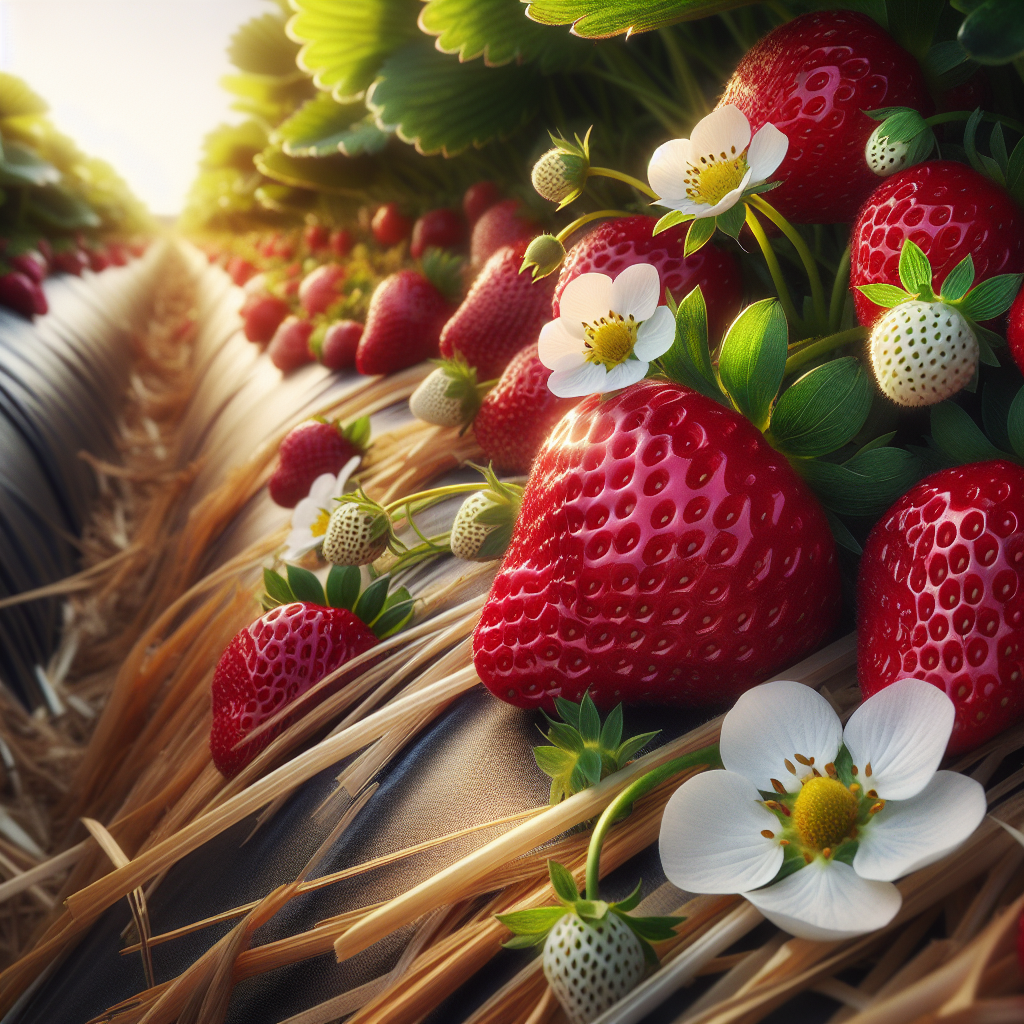
Introduction to Strawberry
Strawberry is one of the most intensively managed small fruit crops in the world, valued for its flavor, early market window, and adaptability to home gardens, commercial fields, tunnels, and container systems. Modern cultivated strawberries are primarily hybrids derived from wild American species, especially Fragaria virginiana and Fragaria chiloensis, which were crossed in Europe in the 18th century to create the large-fruited garden strawberry grown today. Although botanically perennial, strawberries are often managed as short-lived perennials or even annuals in commercial systems to maximize berry size, disease control, and uniformity.
Growers should understand at the outset that strawberries reward precision. They are not difficult in the sense of requiring exotic inputs, but they are unforgiving of poor drainage, deep planting, neglected mulch, irregular moisture, or overcrowding. Their root system is relatively shallow, with most feeder roots concentrated in the upper 15–20 cm of soil, so they respond quickly to both drought and waterlogging. Fruit quality is strongly influenced by sunlight, calcium movement, temperature during ripening, and cultivar choice. In many regions, production systems differ dramatically: matted-row systems dominate some temperate gardens, annual plasticulture is favored in commercial operations, and everbearing or day-neutral types are popular for continuous harvest in small-scale settings.
The crop is commonly grouped into three production types: June-bearing, everbearing, and day-neutral. June-bearing plants produce one concentrated flush, typically over 2–4 weeks, and are excellent where a heavy seasonal crop is desired for fresh eating, freezing, or preserves. Everbearing types tend to crop in spring and again later in the season, though performance varies by climate. Day-neutral cultivars initiate flowers across a broader range of day lengths and can produce repeatedly through the growing season when temperatures are favorable, often between about 10–27°C. Understanding which type you are growing determines spacing, runner management, fertilization timing, and harvest expectations.
Botanical Profile of Strawberry
Strawberry belongs to the Rosaceae family, making it a relative of apple, pear, cherry, raspberry, and rose. For cross-reference with other fruit crops in this family, see our Raspberry guide. The cultivated strawberry, Fragaria × ananassa, is an octoploid species, meaning it has eight sets of chromosomes. This complex genetic background contributes to its remarkable variation in flavor, firmness, disease resistance, day-length response, and environmental adaptation.
What most people call the “berry” is technically an enlarged receptacle, not a true botanical berry. The actual fruits are the tiny dry achenes visible on the surface, each containing a seed. This matters in cultivation because misshapen fruit can result when pollination is incomplete or when environmental stress causes uneven receptacle development. Cool, wet, windy weather during bloom may reduce bee activity and produce irregular berries with poor marketability.
The plant grows as a low rosette emerging from a compressed stem called a crown. Leaves are trifoliate, usually serrated, and arise on long petioles. New crowns can form from branch crowns near the original crown, and these crowns are key to yield because each healthy crown can produce one or more inflorescences. Plants also produce stolons, commonly called runners, which generate daughter plants at nodes. Runner production is a survival and propagation strategy, but excessive runnering can divert resources away from fruit production in systems where berry yield is the goal.
Roots are fibrous and shallow, often concentrated in the topsoil. Because of that, strawberries require excellent tilth, consistent moisture, and careful weed control; deep cultivation can easily damage roots. Flower clusters are produced on stalks that may sit within the canopy or extend beyond it depending on cultivar. Flowers are usually white with yellow centers and may be perfect or functionally variable in some species, though most cultivated forms are self-fertile. Even so, insect pollination improves fruit symmetry and size.
Cultivar choice is critical. June-bearing cultivars are often further classified as early, midseason, or late. Early cultivars capture premium prices but may be more exposed to spring frost. Midseason selections often balance yield and quality, while late cultivars extend the season. Day-neutral cultivars are favored for repeated harvests, especially in raised beds and tunnels. Some cultivars are bred for firm shipping quality; others excel in aroma and sugar-acid balance but bruise easily. In humid regions, disease resistance to Anthracnose, Leaf spot, leaf scorch, or red stele may be more important than absolute fruit size.
Soil, pH, and Climate Requirements for Strawberry
Strawberries perform best in fertile, well-drained, friable soil with high organic matter and a slightly acidic pH, ideally around 5.5 to 6.5. They will tolerate a somewhat wider range, roughly 5.0 to 7.0, but nutrient uptake and root health are best in the preferred band. At pH above about 7.0, micronutrient availability, especially iron and manganese, often declines, leading to interveinal chlorosis on young leaves. At very low pH, aluminum and manganese toxicity may suppress root growth and vigor.
Drainage is non-negotiable. Strawberry crowns and roots are highly vulnerable to rot in saturated soils. A site that remains waterlogged for even 24–48 hours after heavy rain is a poor candidate unless raised beds or substantial drainage correction are used. The ideal soil is a sandy loam or loam rich in organic matter but not excessively heavy or compacted. Clay soils can be used if formed into raised beds and amended to improve structure, but dense subsoil layers that perch water are a major risk factor for Phytophthora and other crown and root diseases.
Before planting, a professional approach includes soil testing for pH, phosphorus, potassium, calcium, magnesium, salinity, and organic matter. Strawberries are salt-sensitive; high electrical conductivity can reduce establishment and burn roots. Fresh manure immediately before planting is generally a mistake because it can elevate salts, stimulate overly lush growth, and increase weed and pathogen problems. Well-finished compost incorporated months ahead of planting is safer.
Climate needs vary by production type, but in general strawberries prefer cool to mild conditions for vegetative growth and flowering, with moderate temperatures during fruit development. Optimal daytime temperatures often fall between 15 and 26°C. Fruit quality typically declines when temperatures are consistently very hot, especially above 30°C, because berries may become smaller, softer, paler, and less aromatic. High night temperatures can also reduce flower initiation in some types and impair overall performance.
Most June-bearing cultivars need winter chilling to break dormancy and ensure strong spring flowering. Day-neutral cultivars are less dependent on classic chilling patterns and are often better for extended production. Frost is a central management issue: open blossoms can be injured around -1 to -2°C depending on duration, while tight buds are somewhat more tolerant. Site selection should favor good air drainage, avoiding frost pockets where cold air settles.
Sunlight is another decisive factor. Full sun, ideally 8 or more hours daily, supports sugar accumulation, disease suppression through faster drying, and stronger yields. Partial shade may keep plants alive, but fruiting usually drops and berries become less sweet. In very hot climates, light afternoon shade can reduce sunscald, but this should not come at the expense of chronic low light.
Raised beds covered with plastic mulch are widely used because they improve drainage, warm the root zone, suppress weeds, and keep fruit cleaner. Organic mulches such as straw are valuable in garden and matted-row systems, especially for winter protection and fruit cleanliness. For broader ground preparation principles, see Soil health strategies.
Step-by-Step Planting & Propagation
Start with disease-free, certified planting stock whenever possible. This is one of the most important decisions in strawberry production because viruses, crown rots, nematodes, and systemic weaknesses often arrive with poor-quality plants. Planting material is usually sold as bare-root crowns, plug plants, or potted daughter plants. Bare-root plants are economical and widely available; plugs often establish faster and more uniformly.
Choose the system before ordering plants. In a matted-row system, June-bearing strawberries are spaced to allow runners to fill a band, often 30–45 cm between plants and 90–120 cm between rows. In annual hill or plasticulture systems, plants are spaced more closely, commonly 25–35 cm apart in double rows on raised beds, with runners removed to concentrate energy into crowns and fruit.
Prepare the site several weeks in advance. Remove perennial weeds completely, because strawberries compete poorly once established. Incorporate compost if needed, correct pH based on soil test results, and form raised beds where drainage is less than ideal. Avoid fields recently planted to strawberries, potatoes, tomatoes, peppers, eggplant, or other crops that can leave behind Verticillium or soilborne disease issues; rotation is essential.
Keep planting stock moist and cool before planting. Bare-root crowns should never be allowed to dry out. If immediate planting is delayed for a day or two, store them cool and humid, not in direct sun or wind.
Plant at the correct depth. This is the classic make-or-break step. Spread roots downward rather than bunching them upward. The midpoint of the crown should sit at soil level: roots buried, crown exposed but not elevated. If planted too deep, the crown may rot; if planted too shallow, roots desiccate and establishment stalls. Firm soil around the roots to eliminate air pockets.
Water in thoroughly after planting. The goal is to settle soil around roots and restore turgor without drowning the planting zone. The root area should be evenly moist to about 10–15 cm deep after watering. In practical terms, the soil should feel cool and slightly damp when squeezed, but not release free water.
Remove flowers initially when establishment is the priority. In spring-planted June-bearing systems, blossoms are often removed through the first season so plants can devote energy to rooting and crown development. Day-neutral plants may also benefit from early blossom removal for several weeks after planting, depending on vigor and intended schedule.
Propagation is usually done through runners, not seed, because seed-grown plants are genetically variable and unsuitable when uniformity is desired. To propagate vegetatively, select healthy, productive mother plants free of Leaf spots, virus-like symptoms, and crown decline. Peg runner plantlets into pots or prepared soil once they have visible root initials. Allow them to root, then sever from the mother plant. The first or second daughter on a runner is often the strongest. Avoid using weak, late-season daughters from exhausted plants.
Care & Maintenance regimes for Strawberry
Irrigation management should be precise and consistent. Because strawberries root shallowly, they should not be allowed to swing between drought stress and saturation. As a general rule, the crop often needs about 25–40 mm of water per week from rain plus irrigation under mild conditions, increasing during hot, windy periods and during fruit enlargement. Drip irrigation is superior to overhead watering because it keeps foliage drier and reduces foliar disease and fruit rot.
The key is maintaining evenly moist soil in the top 15–20 cm, where most active roots are found. Soil that is too dry causes small berries, aborted flowers, poor runner rooting, dull foliage, and midday wilting that persists into evening. Soil that is too wet leads to yellowing lower leaves, weak growth, sour-smelling anaerobic soil, blackened roots, crown collapse, and increased Botrytis or Phytophthora risk. A practical field test: if soil at root depth forms a weak ball that holds together briefly and then crumbles, moisture is usually near acceptable. If it feels powdery, irrigation is overdue; if it smears or glistens, it is too wet.
Fertilization should follow soil and tissue testing rather than guesswork. Strawberries need moderate fertility, not excessive nitrogen. Too much nitrogen produces lush, soft, disease-prone foliage and reduces fruit firmness and flavor. Nitrogen demand is highest during establishment, post-harvest canopy renewal in perennial systems, and repeated cropping in day-neutral systems. Phosphorus is important for early rooting but is often overapplied unnecessarily. Potassium supports fruit quality, water regulation, and disease tolerance. Calcium is critical for cell wall strength, though movement into fruit depends heavily on transpiration patterns and cannot be corrected simply by indiscriminate spraying.
Mulching serves several functions: weed suppression, moisture conservation, fruit cleanliness, winter insulation, and reduced soil splash. Clean straw mulch is traditional and still highly effective. Apply after the ground begins to freeze in cold-winter areas for winter protection, then pull it back in spring from crowns while leaving enough between rows to keep fruit off the soil. In plasticulture, black plastic warms soil and suppresses weeds, though summer heat in warm climates may make white-on-black or reflective mulch preferable.
Weed control is especially important in the first 6–10 weeks after planting, when competition can permanently reduce stand vigor. Because roots are shallow, hand weeding and shallow cultivation are safer than aggressive hoeing. Never cultivate deeply near crowns.
Runner management depends on system. In matted rows, allow selected runners to root until the row reaches the target width, then remove excess. In hill or annual systems, remove runners promptly to direct energy into fruiting. Also thin old leaves only as needed for sanitation and airflow; excessive defoliation can reduce carbohydrate reserves.
In perennial systems, renovate June-bearing plantings after harvest if local recommendations support it. Renovation may include mowing foliage above crowns, narrowing rows, fertilizing modestly, irrigating, and controlling weeds to stimulate healthy new growth. This practice is less relevant in annual plasticulture where beds are replaced after one cropping cycle.
Bird protection often becomes necessary as fruit colors. Netting is more reliable than scare tactics. In tunnels or humid climates, spacing and airflow are crucial to keep flowers and fruit dry.
Pests, Diseases & Organic Management
Strawberries attract a wide pest complex, and prevention is usually more effective than rescue treatments. Common insect pests include aphids, spider mites, thrips, tarnished plant bugs, slugs, root weevils, and sap beetles. Birds are often economically significant and should not be underestimated.
aphids distort young leaves and can transmit viruses. Control begins with clean planting material, removal of weed hosts, and conserving beneficial insects such as lady beetles and lacewings. spider mites thrive in hot, dusty conditions and cause stippling, bronzing, and reduced vigor. They often flare up after broad-spectrum sprays disrupt predators. Overhead syringing is sometimes used in non-fruiting periods to reduce dust and mite pressure, but in fruiting stages this can worsen disease, so biological control and targeted organic miticides are preferable.
Tarnished plant bug feeding causes cat-faced, misshapen berries because the insects injure developing seeds and receptacle tissue. Monitoring during bloom and early fruit set is important. Keep nearby broadleaf weeds controlled, as they can host these insects. thrips can scar fruit and flowers, especially in protected culture.
Among diseases, Botrytis fruit rot (gray mold) is one of the most destructive, especially in cool, humid weather with dense canopies. It infects flowers and ripening fruit, producing soft rot and gray fuzzy sporulation. Management depends on spacing, drip irrigation, mulching, removal of diseased fruit, balanced nitrogen, and keeping berries off wet soil. Anthracnose can infect crowns, runners, petioles, and fruit, often appearing in warm, wet conditions. Leather rot and red stele become severe in poorly drained soils. Powdery mildew may occur where humidity is high but leaf surfaces remain relatively dry, especially in tunnels.
Leaf spot, leaf scorch, and leaf blight can weaken plants over time, while Verticillium wilt can cause chronic collapse where susceptible crops were previously grown. This is why rotation matters: avoid planting strawberries after Potato guide, tomato, pepper, eggplant, or raspberries on land with disease history.
Organic management starts with an integrated strategy:
- Use certified disease-free plants.
- Rotate out of susceptible host crops for at least 3–4 years where possible.
- Plant in well-drained soil or raised beds.
- Maintain mulch to reduce soil splash.
- Use drip irrigation instead of frequent overhead watering.
- Remove overripe, diseased, and mummified fruit promptly.
- Avoid excessive nitrogen that creates lush, humid canopies.
- Encourage pollinators and beneficial predators while minimizing disruptive sprays.
- Choose resistant cultivars suited to the local disease complex.
For slugs, reduce excess mulch touching crowns in very damp weather, trap where practical, and irrigate early in the day so the surface dries before nightfall. For birds, exclusion netting remains the most dependable tactic. For fungal diseases in organic systems, protectant materials such as sulfur, copper formulations, biologicals, or other approved inputs may be useful, but they must be matched to the disease, weather, and label restrictions. Sanitation and environment remain the foundation.
Harvesting, Curing & Optimal Storage
Harvest should be done when berries are fully colored and at peak maturity for the intended market. Unlike some fruits, strawberries do not continue to sweeten after picking. A berry harvested too early may redden slightly but will not develop the same sugar content or aroma as one ripened on the plant. For local markets, pick when fully red with no white shoulder. For longer transport, harvest when fully colored but still firm.
Pick in the coolest part of the day, ideally early morning after dew has dried but before field heat accumulates. Wet berries are more vulnerable to bruising and Botrytis. Harvest by pinching or snapping the stem so the calyx remains attached; pulling the fruit directly often tears soft tissue and shortens shelf life. Handle gently and avoid overfilling containers, because strawberries bruise easily and even slight compression reduces market quality.
Frequent harvest is essential, often every 1–3 days during peak season. Overripe fruit left in the field attracts sap beetles, slugs, and gray mold. Train pickers to separate damaged, diseased, and misshapen fruit from marketable fruit in the field, rather than mixing them.
Strawberries are not “cured” in the same sense as onions, garlic, or sweet potatoes. Instead, the critical postharvest step is rapid cooling. Remove field heat as quickly as possible, ideally within one hour of harvest for premium quality. Forced-air cooling is excellent where available. The target storage temperature is close to 0°C, typically 0–2°C, with high relative humidity around 90–95% to reduce shriveling. At warmer temperatures, respiration and decay accelerate dramatically; even a few hours at ambient summer conditions can noticeably reduce shelf life.
Do not wash berries before storage unless they are being processed immediately. Surface moisture promotes mold. Store in shallow, ventilated containers and avoid repeated temperature fluctuations, which cause condensation and rapid deterioration. Under ideal cold storage, good-quality strawberries may hold for 5–7 days, though flavor is best when consumed sooner. Day-neutral berries grown in hot weather usually have shorter shelf life than firm spring fruit.
For freezing, harvest fully ripe, sort carefully, and freeze promptly. For jam or puree, slightly softer but sound berries can still be used, provided they show no mold or sour fermentation.
Companion Planting for Strawberry
Companion planting around strawberries is most useful when it improves pollination, suppresses weeds, moderates soil splash, or confuses pests without competing heavily for water and nutrients. The best companions are typically shallow-rooted or carefully managed species that do not cast heavy shade and do not share major disease problems.
Alliums such as chives, bunching onions, and garlic are widely favored because their odor may help deter some pests and their upright growth habit does not smother the crop when planted at bed edges. Lettuce and spinach can work well as early intercrops in wider beds because they mature quickly before strawberries fully occupy the space. Low-growing herbs such as thyme can be useful on borders in dry, well-managed systems, though herbs should not be allowed to create stagnant airflow in humid climates.
Flowering insectary plants are valuable nearby rather than directly crowding the row. Sweet alyssum, dill, coriander, yarrow, and calendula can attract hoverflies, parasitic wasps, and other beneficial insects that help regulate aphids and small pests. However, keep a buffer so companion plants do not reduce air movement or make picking difficult.
Legumes can contribute diversity in rotations or adjacent strips, but avoid dense companion plantings that compete aggressively with strawberries for moisture. In matted-row systems especially, the strawberry canopy itself needs room to dry quickly after rain. The most common mistake in companion planting is overplanting.
Avoid companion crops that are tall, sprawling, or disease-linked. Solanaceous crops such as tomato, pepper, and eggplant are poor neighbors and poor predecessors because they can share Verticillium issues. Potatoes are especially risky for rotation overlap. Large brassicas may shade the crop and reduce airflow if placed too close. Mint is generally a bad idea despite its pest-repelling reputation because it spreads aggressively.
A practical companion strategy is this: keep the strawberry bed itself simple, clean, mulched, and well ventilated; place beneficial flowers and alliums on the perimeter; and reserve more complex polycultures for adjacent beds rather than the core fruiting row. That approach preserves fruit quality while still capturing some ecological benefits.