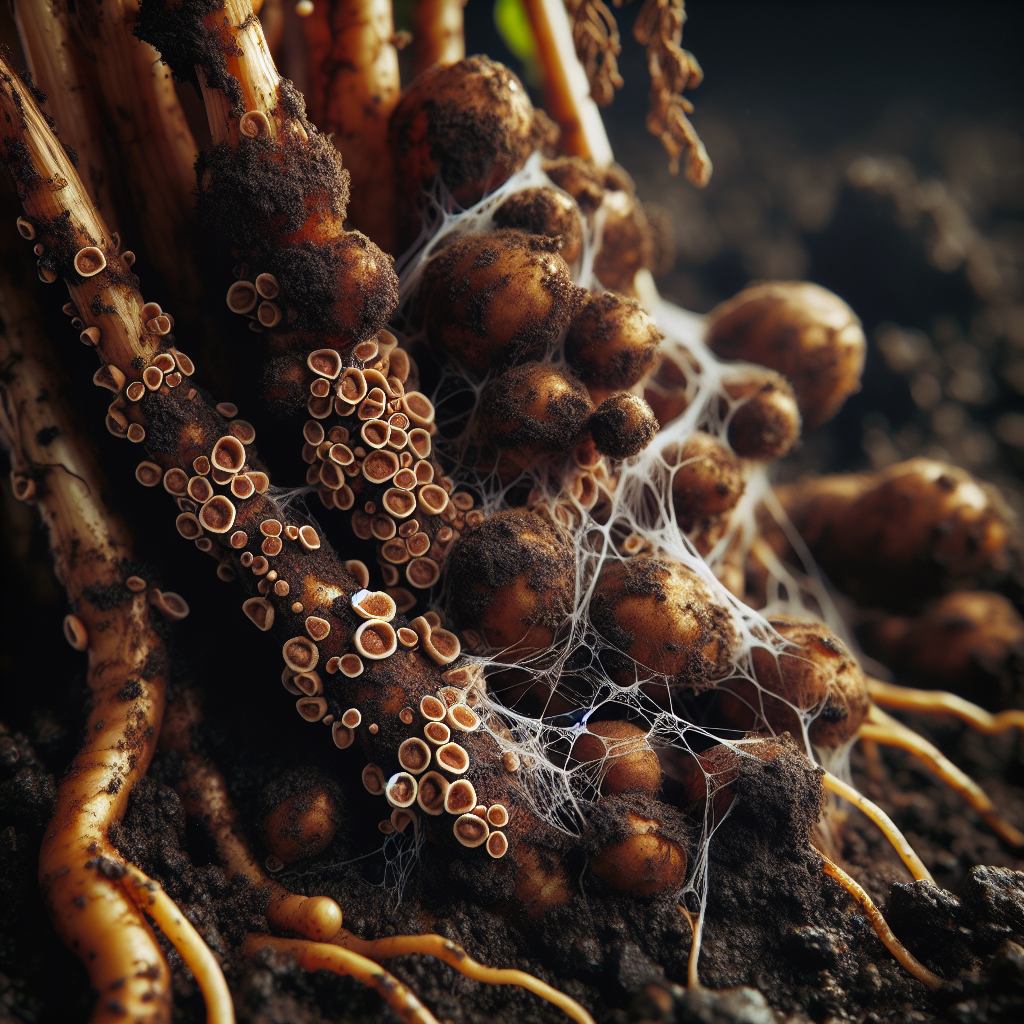
Introduction to Rhizoctonia
Rhizoctonia solani is one of the most ubiquitous and destructive soilborne fungal pathogens affecting agriculture globally. This versatile fungus causes a range of diseases including root rot, damping-off, crown rot, and aerial web blight, impacting seedlings, roots, stems, and foliage across diverse crops. Unlike many foliar diseases, Rhizoctonia primarily attacks below-ground plant parts, making early detection challenging but crucial for minimizing losses.
Farmers encounter Rhizoctonia in warm, humid environments where excessive soil moisture and poor drainage create ideal conditions for infection. The pathogen persists in soil for years as sclerotia—hard, dormant resting structures—resistant to many environmental stresses. Annual economic losses from Rhizoctonia diseases exceed billions, particularly in high-value crops like potatoes, soybeans, and tomatoes. Understanding its biology enables proactive management, reducing reliance on chemical fungicides and promoting sustainable farming practices. This definitive guide equips growers with diagnostic tools, organic control methods, and prevention strategies to safeguard yields effectively.
Identifying Symptoms & Damage
Accurate diagnosis begins with recognizing Rhizoctonia's distinctive symptoms, which vary by crop stage and type. In seedlings, damping-off manifests as water-soaked lesions at the soil line, causing stems to collapse and plants to topple—often described as 'wirestem' due to thin, brittle stems. Older plants show reddish-brown to black lesions on roots and lower stems, with sharp margins and brick-red mycelium visible under moist conditions.
Root systems exhibit dark, sunken rots with shredded, decayed tissues; affected roots fail to penetrate soil properly, stunting growth and yellowing foliage. In web blight scenarios, aerial hyphae form a white, web-like mat on lower leaves and stems during humid weather, leading to rapid tissue necrosis. Sclerotia—small, brown, irregular granules—appear on infected tissues or soil surfaces, confirming Rhizoctonia presence.
Damage severity depends on infection timing: pre-emergence damping-off can wipe out 50-100% of seedlings, while root infections reduce yields by 20-60%. Differentiate from Pythium (mushy roots, no sclerotia) or Fusarium (pinkish discoloration) via lab confirmation using selective media. Early scouting in high-risk areas prevents widespread outbreaks, preserving crop health and profitability.
Lifecycle and Progression of Rhizoctonia
Rhizoctonia solani's lifecycle is soil-centric, with sclerotia serving as primary inoculum surviving 5-10 years in soil. These structures germinate under favorable conditions—warm soils (20-35°C), high moisture—producing mycelium that contacts host roots via hyphal growth up to 1-2 cm/day. Infection occurs through wounds or natural openings, with enzymes degrading cell walls for colonization.
Post-infection, the fungus ramifies within roots, forming runner hyphae and new sclerotia. In warm, humid climates, basidiospores from teleomorph (Thanatephorus cucumeris) contribute aerially, though anastomosis groups (AGs) like AG-2, AG-3, and AG-4 dictate host specificity—AG-3 favors potatoes, AG-4 beans. Disease progresses rapidly in compacted, poorly aerated soils, with secondary spread via contaminated tools, water splash, or machinery.
Sclerotia production peaks in senescing tissues, perpetuating the cycle. Unlike obligate parasites, Rhizoctonia is necrotrophic, killing hosts outright. Understanding this polycyclic nature—multiple infection cycles per season—guides timing of cultural controls, breaking the lifecycle at vulnerable points like sclerotial germination.
Environmental Triggers & Risk Factors
Rhizoctonia flourishes in soils above 20°C with moisture levels preventing drying—think over-irrigated fields or heavy rains on clay soils. Compaction reduces oxygen, favoring anaerobic-tolerant hyphae, while neutral to alkaline pH (6.5-7.5) enhances sclerotial viability. High residue from previous crops like potato or soybeans builds inoculum.
Risk spikes with continuous monocropping, deep planting, or excessive nitrogen promoting lush growth susceptible to infection. Cool, wet springs trigger damping-off, while summer heatwaves exacerbate root rots in stressed plants. Poor drainage, organic matter >5%, and temperatures 25-30°C create perfect storms. Crop rotation gaps <3 years with susceptible hosts amplify threats. Monitor soil moisture (avoid >60% field capacity) and temperature to preempt outbreaks.
Organic Control & Treatment Plans
Organic management integrates cultural, biological, and physical tactics targeting sclerotia and mycelium. Cultural Practices: Improve drainage with raised beds or tiling; avoid overwatering. Solarization—covering moist soil with plastic for 4-6 weeks in summer—kills 70-90% sclerotia via heat (>40°C). Mustard biofumigation releases isothiocyanates suppressing pathogens.
Biological Controls: Trichoderma spp. (e.g., T. harzianum) outcompetes Rhizoctonia; apply as seed treatments or soil drenches at 10^9 CFU/g. Bacillus subtilis and Pseudomonas fluorescens produce antibiotics; inoculate compost teas. Mycorrhizal fungi enhance root vigor, reducing infection sites.
Organic Fungicides: Hydrogen peroxide (3%) or potassium bicarbonate sprays manage web blight; copper octanoate for soil drenches (OMRI-listed). Neem oil disrupts mycelial growth. Integrated Plans: 1) Scout weekly; 2) Remove infected debris; 3) Apply biofungicides pre-planting; 4) Use row covers to block splash. For active infections, rogue plants and apply compost extracts. Read our blog on Spring Pest Patrol for complementary tactics. Success rates reach 60-80% with consistent implementation.
Preventing Rhizoctonia in the Future
Prevention hinges on long-term soil health and rotation. Rotate with non-hosts like corn or brassicas for 3-4 years, reducing sclerotia by 90%. Use disease-free seeds/transplants; hot water treat at 50°C for 20 min. Promote beneficial microbes via cover crops (clover) and compost, fostering suppression.
Optimize planting: shallow depths (2-3 cm), well-drained sites, certified pathogen-free media for seedlings. Mulch with straw to moderate soil moisture/temperature. Soil amendments like chitin (crab meal) stimulate mycoparasites. Monitor with baiting assays or PCR for early detection. Clean equipment between fields; solarize high-risk zones annually. Resistant varieties—e.g., certain potato cultivars—offer partial protection. Combine with soil health strategies for resilient systems, minimizing future outbreaks.
Crops Most Affected by Rhizoctonia
Rhizoctonia strikes broadly, with AG-3 devastating potato via black scurf and stem canker, causing 20-50% tuber losses. Soybeans suffer hypocotyl rot, killing seedlings; tomato shows web blight in tropics. Turfgrasses endure brown patch; radishes develop bottom rot. Floriculture hits poinsettias, while rice faces sheath blight. Beans, beets, carrots, and turf are highly susceptible. Tropicals like eggplant and peppers face root rots. Tailor strategies per crop—e.g., seed treatments for beans. Learn more on Russet Burbank Potato management.