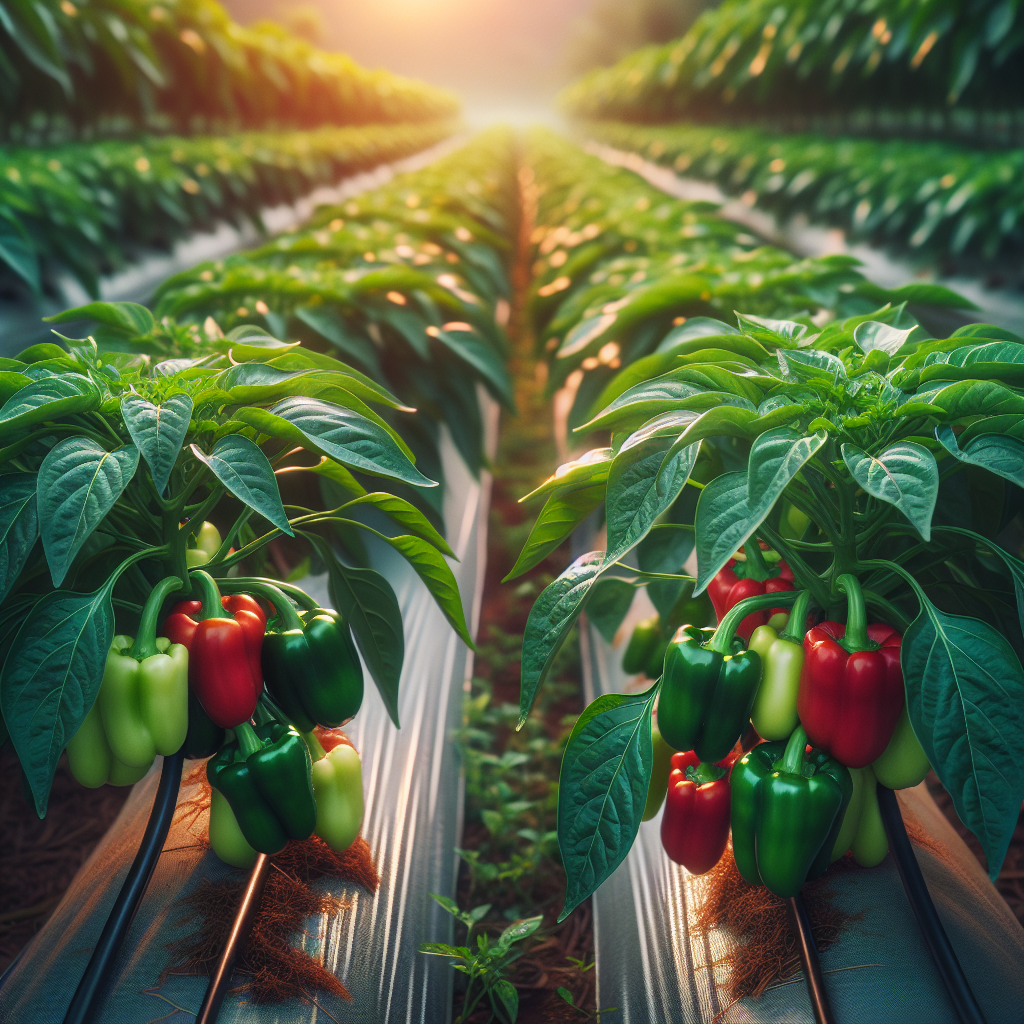
Introduction to Bell Pepper
Bell pepper is one of the most widely cultivated forms of Capsicum annuum, prized for its crisp texture, thick flesh, sweet flavor, and market versatility. Unlike hot peppers, bell peppers lack significant capsaicin because the genetic pathways controlling pungency are largely inactive in this group. The crop originated from domesticated peppers in the Americas and was refined over centuries into the familiar blocky, sweet-fruited types now grown across temperate, subtropical, and protected-culture production systems.
For growers, bell pepper is both rewarding and exacting. It is more sensitive to cold than tomato, slower to establish than many cucurbits, and less forgiving of nutrient or moisture stress during flowering and fruit sizing. Yet when its needs are met, it can produce a long, profitable harvest window with premium-quality fruits. Green bell peppers are simply immature fruits of many cultivars, while fully ripe fruits develop red, yellow, orange, or other mature colors with higher sugar, carotenoid, and vitamin C levels. Market goals matter: harvesting green increases turnover and total fruit count, while harvesting fully colored fruit often commands higher prices but requires more time, heat, and plant resources. For comparative management within the same botanical family, see our Tomato guide.
Botanical Profile of Bell Pepper
Bell pepper belongs to the family Solanaceae, along with tomato, eggplant, potato, and tobacco. Botanically, the edible portion is a berry, not a vegetable in the strict taxonomic sense. Plants are generally short-lived perennials in frost-free climates but are cultivated as annuals in most production systems. Growth habit ranges from compact and bushy to moderately upright, usually 45-90 cm tall in open-field culture, though greenhouse plants can exceed this under long seasons and trained systems.
Leaves are simple, smooth to slightly wrinkled, and medium to dark green. Flowers are typically solitary, white, and self-pollinating, though insects and wind vibration can improve pollen transfer. Bell peppers are especially sensitive to poor pollen viability when daytime temperatures exceed about 32-35°C or nighttime temperatures remain above 24°C. Low temperatures below about 15°C also reduce flower initiation and fruit set. This narrow reproductive comfort zone explains why plants may look healthy yet set poorly during heat waves or cool spells.
The root system is moderately deep but relatively delicate. Most feeder roots occupy the top 20-30 cm of soil, which is why bell pepper responds strongly to mulch, irrigation uniformity, and shallow cultivation. Fruits are typically 3-4 lobed, blocky, thick-walled, and hollow with a central placenta bearing flat cream-colored seeds. Cultivars differ in earliness, wall thickness, color progression, disease resistance packages, fruit size, and suitability for field versus protected production.
Commercial cultivar categories include green-to-red standards, green-to-yellow or orange specialty types, mini bells, and greenhouse bell peppers bred for taller plants, consistent blocky shape, and resistance to issues such as Tobacco mosaic virus, Bacterial leaf spot, and certain races of phytophthora. Thick-walled cultivars often need stronger calcium and moisture management to prevent quality defects during rapid expansion.
Soil, pH, and Climate Requirements for Bell Pepper
Bell pepper performs best in fertile, well-drained loam or sandy loam rich in organic matter. The ideal soil pH is 6.0-6.8. Below pH 5.8, phosphorus availability declines and calcium or magnesium deficiency risks increase; above pH 7.2, micronutrients such as iron, manganese, and zinc become less available, leading to chlorosis and weak growth. A soil test before planting is strongly recommended. Aim for soils with good aggregate stability, moderate water-holding capacity, and no persistent compaction layer. If roots hit dense subsoil, plants become more drought-sensitive and fruit size suffers.
Drainage is critical. Bell pepper roots need oxygen as much as moisture. In poorly drained soil, roots brown and stagnate, leaves become pale or droopy even when the soil is wet, and diseases such as phytophthora root rot escalate rapidly. Raised beds 15-30 cm high are valuable in heavy soils or regions with intense summer rainfall. Incorporating well-finished compost improves tilth, but excessive raw organic matter can temporarily tie up nitrogen or harbor moisture around the crown.
Temperature drives nearly every phase of pepper performance. The ideal range for vegetative growth is roughly 21-29°C by day and 18-21°C by night. Soil temperature at transplanting should be at least 18°C, with 20-24°C preferred for rapid root establishment. Below 13°C, growth slows markedly; frost will kill or severely damage plants. Extended exposure to temperatures above 35°C can cause flower abortion, misshapen fruit, poor color development, and sunscald if the canopy is sparse.
Bell pepper requires full sun, generally 8 or more hours of direct light daily. However, in extremely hot climates, light afternoon shade or kaolin-based reflective protection can reduce heat stress and sunburn. Relative humidity that is too high can favor foliar diseases and poor pollen shed, while very dry hot winds increase blossom drop and irregular fruit expansion.
Soil moisture should remain consistently moderate, ideally around 65-80% of field capacity during active growth and fruiting. In practical terms, the root zone should feel cool and slightly moist, not sticky or waterlogged, when checked 5-10 cm below the surface. If soil forms a weak ball that breaks apart with light pressure, moisture is often near acceptable levels; if it smears or stays glossy, it is too wet; if it is powdery and cannot hold shape, it is too dry. Irregular swings from dry to saturated commonly trigger blossom-end rot, cracked shoulders, and reduced marketable yield. For broader soil-building ideas, see soil health strategies.
Step-by-Step Planting & Propagation
Bell pepper is almost always propagated from seed, with transplant production preferred over direct seeding in most regions because the crop has a long season and seedlings establish more uniformly under protected conditions.
Seed selection and timing: Start seed 6-10 weeks before the intended outdoor transplant date. Use fresh, high-vigor seed from cultivars suited to your climate, disease pressures, and market target. In cool regions, choose early-maturing cultivars; in hot humid regions, prioritize disease resistance and heat-set reliability.
Germination conditions: Sow seed 0.5-1 cm deep in a sterile, fine-textured propagation mix. Bell pepper germinates best at 26-30°C. At this range, emergence typically occurs in 7-14 days. At 20°C, germination becomes slower and less uniform. Bottom heat dramatically improves success.
Seedling care: Provide bright light immediately after emergence to prevent stretching. Maintain daytime temperatures around 22-25°C and nights around 18-20°C. Water lightly but consistently; seedlings dislike both drought and constant saturation. If plugs remain too wet, stems become weak and roots stay shallow.
Nutrition in trays: Begin dilute feeding after the first true leaves appear, using a balanced nutrient solution. Excess nitrogen at this stage produces lush, brittle seedlings that transplant poorly. Good seedlings are short, stocky, dark green, and have 5-8 true leaves at transplanting.
Hardening off: Over 7-10 days before planting, gradually expose seedlings to outdoor light, breezes, and slightly cooler temperatures, but never chilling conditions. Avoid hardening bell peppers as aggressively as brassicas; cold shock can delay flowering for weeks.
Field preparation: Form raised beds if needed, incorporate pre-plant compost and test-based fertilizers, and install drip irrigation before transplanting. Plastic mulch can warm soil, suppress weeds, and conserve moisture; black mulch is useful in cool climates, while reflective or white mulch helps reduce overheating in hot areas.
Spacing: Typical spacing is 30-45 cm between plants and 60-90 cm between rows, depending on cultivar vigor and whether staking is used. Dense spacing increases early yield but can reduce airflow and raise disease pressure. Wider spacing improves fruit size and canopy ventilation.
Transplanting: Plant after all frost danger has passed and nights are reliably above 13-15°C. Set transplants at the same depth they grew in the tray; unlike tomatoes, peppers do not benefit much from deep stem burial. Water in immediately to eliminate air pockets.
Direct seeding, where feasible: In long warm seasons with fine seedbeds and irrigation, direct seeding is possible but slower and riskier. Thin to final spacing once plants are established.
Staking and support: Although many field peppers are grown unsupported, high-yielding bell peppers benefit from stake-and-weave or net support. Heavy fruit loads can split branches, especially after rain or under high nitrogen fertility.
Care & Maintenance regimes for Bell Pepper
Bell pepper management should prioritize steady growth without stress spikes. The crop reacts poorly to extremes, and quality losses often trace back to interruptions in water, calcium transport, or reproductive stability.
Irrigation: Mature plants generally need about 25-40 mm of water per week in mild weather, rising to 40-50 mm during peak fruit set and hot conditions, depending on soil type and evapotranspiration. Sandy soils need more frequent, smaller irrigations; heavier loams need deeper, less frequent watering. Drip irrigation is ideal because it keeps foliage dry and maintains uniform moisture. As a rule, keep the top 15-20 cm of root zone evenly moist. Drought stress shows first as midday wilting that persists into evening, dull bluish-green leaves, slowed new growth, and small misshapen fruit. Overwatering shows as chronically limp plants despite wet soil, yellowing lower leaves, edema-like blistering, shallow roots, and rising root disease incidence.
Mulching: Organic mulch or plastic mulch stabilizes moisture and soil temperature. Keep organic mulch a few centimeters away from the stem base to prevent crown rot and slug sheltering.
Fertilization: Bell pepper is a moderate-to-heavy feeder but is easily pushed into excessive vegetative growth by too much nitrogen. A soil-test-based program is best. In general, emphasize phosphorus and calcium availability at establishment, then provide moderate nitrogen and strong potassium during flowering and fruit fill. Split applications are superior to one heavy pre-plant dose. Too much early nitrogen creates large dark leaves, delayed flowering, brittle branches, and softer fruit. Potassium deficiency may show as leaf edge scorch and weak fruit color. Calcium-related problems often appear not because soil calcium is absent, but because water stress interrupts its transport to expanding fruits.
Blossom-end rot prevention: This common disorder appears as a sunken, leathery brown or black patch at the blossom end of the fruit. It is driven by localized calcium deficiency in rapidly enlarging tissue, usually triggered by irregular watering, root damage, salinity, or excessive ammonium nitrogen. Maintain even moisture, avoid root disturbance, and do not overfertilize with nitrogen.
Weed control: Bell pepper competes poorly early in life. Keep fields weed-free during the first 6-8 weeks after transplanting. Shallow cultivation is safer than deep hoeing because feeder roots are near the surface. Mulch and stale seedbed techniques are highly effective.
Pruning and canopy management: In open-field systems, pruning is minimal. Remove damaged, diseased, or soil-contacting leaves as needed. In greenhouse production, peppers may be trained to 2-4 stems with regular sucker management to balance fruit load and airflow. Excessive pruning in field peppers can increase sunscald by exposing fruit directly to intense light.
Pollination and fruit set: Although self-fertile, bell pepper benefits from air movement and pollinator activity. In protected structures, gentle plant shaking or bumblebee activity can improve fruit set. If flowers drop heavily, check night temperature, daytime heat, moisture swings, and nitrogen excess before assuming pest damage.
Pests, Diseases & Organic Management
Bell pepper shares many pest and disease risks with other solanaceous crops, but the severity depends heavily on weather, sanitation, and rotation discipline.
Aphids cluster on shoot tips and undersides of leaves, causing curling, sticky honeydew, and virus transmission. Control early with strong water sprays, insecticidal soap, or neem-based products where permitted. Encourage lacewings, hoverflies, and lady beetles.
Thrips scar leaves and fruits and can vector Tomato spotted wilt virus. Blue or yellow sticky traps help monitor populations. Reflective mulch can reduce colonization. Spinosad, where allowed in organic systems and used carefully to protect pollinators, can be effective.
Spider mites flare in hot, dry conditions, producing stippling and fine webbing. Maintaining adequate humidity in protected culture, avoiding plant stress, and releasing predatory mites are useful strategies.
Pepper weevil, where present regionally, is a major economic pest. Adults puncture buds and fruits, and larvae develop inside fruit. Sanitation, trap monitoring, rapid removal of infested fruit, and coordinated regional management are essential.
Cutworms may sever young transplants at soil level. Use collars, evening scouting, and clean weed management before planting.
Bacterial leaf spot causes dark water-soaked lesions on leaves and fruit, often worsening in warm wet weather. Use resistant cultivars, pathogen-free seed, crop rotation, drip irrigation, and avoid working plants when wet. Copper sprays may suppress spread but are more preventative than curative.
Phytophthora capsici is among the most destructive pepper diseases, causing root rot, crown rot, stem lesions, and fruit rot, especially in saturated soils. Prevention is the main defense: excellent drainage, raised beds, long rotation away from susceptible hosts, and strict water management. Once established, it can persist in soil and water.
Anthracnose causes sunken fruit lesions, often becoming obvious as fruit ripens. Remove infected fruit promptly and avoid overhead irrigation.
Powdery mildew can appear in dry foliage conditions with humid air, causing white fungal growth and leaf decline. Sulfur or bicarbonate-based products may help if applied early, but always verify crop safety under high heat.
Viral diseases including Cucumber mosaic virus, Tobacco mosaic virus, and Tomato spotted wilt virus can cause mosaic patterns, stunting, ring spots, deformed growth, and poor yield. There is no cure. Start with clean seed, resistant cultivars where available, vector control, weed host management, and tool hygiene. Tobacco users should wash hands before handling plants because Tobacco mosaic viruses can be mechanically transmitted.
Organic management works best as a layered system: resistant cultivars, 3-4 year rotation, mulches, sanitation, drip irrigation, border weed control, beneficial insect conservation, and weekly scouting with immediate action thresholds. Waiting until pests are obvious across the whole field is usually too late for premium bell pepper production.
Harvesting, Curing & Optimal Storage
Bell peppers can be harvested green at full size or left to ripen to their mature color. Fruit is typically ready when it is glossy, firm, fully expanded, and has reached cultivar-specific blocky dimensions. Green harvest usually begins 60-90 days after transplanting depending on season and cultivar; colored harvest takes an additional 2-4 weeks or more.
Use pruners or a sharp knife rather than pulling fruit, since branches are brittle and can split. Leave a short stem attached to improve presentation and reduce tearing at the shoulder. Harvest regularly, usually every 5-7 days in warm weather, to maintain plant productivity and prevent oversized fruit from slowing subsequent set.
Quality indicators include thick walls, uniform shape, smooth skin, and freedom from sunscald, cracking, insect punctures, and blossom-end rot. Fruits exposed suddenly after defoliation may develop sunscald, seen as pale, papery, later sunken patches on the shoulder.
Bell peppers are not cured in the same sense as onions or winter squash. Instead, postharvest handling focuses on rapid field heat removal, gentle washing if used, drying, grading, and cool storage. Ideal storage is around 7-10°C with 90-95% relative humidity. Below about 7°C, peppers are prone to chilling injury, which appears as pitting, water-soaked areas, poor color, and accelerated decay after removal from storage. At room temperature, fruit loses moisture rapidly and softens.
Green peppers generally store 2-3 weeks under proper conditions, while fully colored peppers are more perishable and often store 1-2 weeks depending on maturity and handling. Do not store with ethylene-sensitive assumptions reversed: peppers produce relatively low ethylene but can still age faster when handled roughly or held too warm. Avoid free water on stored fruit because it encourages bacterial soft rot and fungal decay.
Companion Planting for Bell Pepper
Companion planting for bell pepper is most useful when it improves pest balance, space efficiency, or microclimate without increasing disease risk. Good companions include basil, onions, bunching onions, lettuce, spinach, carrots, and low-growing herbs that do not aggressively compete for light or root space. Aromatic alliums may help confuse some pests, while shallow greens can function as living ground cover in small-scale systems if fertility and irrigation are sufficient.
Marigold is often used nearby for general beneficial insect support and aesthetic pest management value, though it should not be treated as a standalone control measure. Sweet alyssum and dill can be especially helpful around pepper plantings because they attract hoverflies and parasitic wasps. In high-heat regions, a carefully designed intercrop with lower, non-competitive living mulch can reduce soil temperature and moisture loss, but watch for hidden slug or rodent habitat.
Avoid planting bell pepper repeatedly in beds recently used for other solanaceous crops such as eggplant, potato, or hot peppers, because this concentrates shared diseases and pests. Fennel is generally a poor neighbor due to allelopathic effects and competition. Large vigorous crops that cast heavy shade can reduce flowering and fruit coloration.
The best companion strategy is ecological rather than folkloric: combine peppers with plants that attract natural enemies, maintain airflow, and do not host the same major pathogens. Rotate diligently, keep weeds controlled, and design bed layouts so peppers receive morning sun, unobstructed drip access, and enough spacing to dry quickly after dew or rain. Done well, companion planting becomes one part of an integrated production system rather than a substitute for sound agronomy.