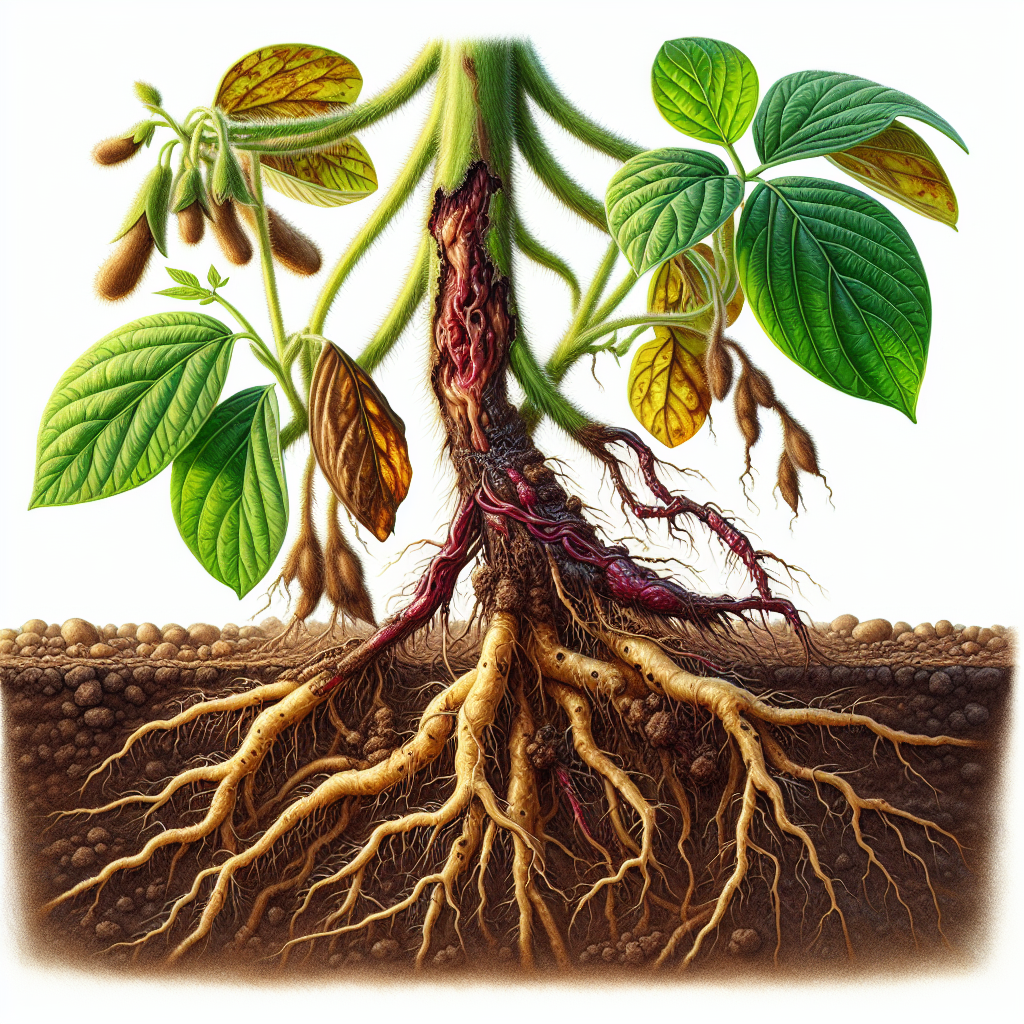
Introduction to Phytophthora root and stem rot
Phytophthora root and stem rot represents one of the most destructive soilborne diseases in agriculture, caused by various species of the oomycete genus Phytophthora. These pathogens, often mistaken for fungi due to their filamentous growth, are actually water molds that require moist conditions to infect plants. First identified in the early 20th century, the disease has since become a global threat, costing farmers billions annually in lost yields and control measures.
The primary culprits include Phytophthora sojae in soybeans, P. drechsleri and P. cryptogea in tomatoes and peppers, and P. nicotianae in ornamentals and fruit crops. Infection begins in the roots, progressing to the stem base, where it causes dark lesions, wilting, and plant collapse. Unlike true fungi, Phytophthora produces zoospores that swim in saturated soil, enabling rapid spread during heavy rains or poor drainage. This guide provides professional-grade diagnostic criteria, lifecycle insights, organic management strategies, and prevention tactics tailored for small to medium-scale farms. For more on related pathogens, see the Phytophthora wiki page.
Understanding this disease is crucial for crops grown in humid, temperate, or tropical regions. It not only reduces plant vigor but also predisposes crops to secondary infections like root-knot nematodes. Early intervention can save entire fields, emphasizing the need for vigilant scouting and soil health practices.
Identifying Symptoms & Damage
Accurate diagnosis starts with recognizing the distinctive symptoms of Phytophthora root and stem rot, which vary slightly by crop but follow a consistent pattern. Initial signs appear in the roots: healthy white roots turn dark brown to black, becoming soft and watery. Excavate plants carefully to inspect; infected roots often emit a foul odor due to secondary bacterial decay.
Above ground, plants exhibit stunting, yellowing of lower leaves, and premature wilting, even under adequate moisture. Stem lesions at the soil line are hallmark indicators—dark, reddish-brown to black streaks that girdle the stem, often with a brick-red hue in early stages when cut fresh. In advanced cases, stems crack longitudinally, oozing watery sap. Foliar symptoms mimic nutrient deficiencies or drought: chlorosis starting at leaf margins, progressing inward.
In tomatoes and peppers, stem rot leads to sudden collapse, with fruits remaining small and green. Soybeans show 'stem canker' with puckered, bronze lesions. Differentiate from Fusarium wilt by the uniform root decay and lack of vascular discoloration; Phytophthora lesions are external and water-soaked. Yield losses can exceed 50% in epidemics, with stand reductions up to 100% in seedlings. Use a hand lens to spot white mycelium on rotted tissues under humid conditions. For rapid field ID, consider AI tools as discussed in Why Misidentifying Plants Costs Small Farms Thousands. Confirm via lab tests for sporangia or oospores in root tissue.
Lifecycle and Progression of Phytophthora root and stem rot
Phytophthora's lifecycle is perfectly adapted to wet environments, making it a persistent threat. The pathogen survives as thick-walled oospores in soil or infected plant debris for years, up to 10 in some cases. Under saturated conditions, oospores germinate, producing sporangia that release motile zoospores.
Zoospores swim through water films to root hairs, encyst, and penetrate within hours. Hyphae then colonize the cortex, producing toxins that kill host tissue. In warm soils (>20°C), direct hyphal growth occurs without zoospores. Lesions expand upward, girdling stems and blocking vascular flow. Sexual reproduction between mating types (+ and -) forms durable oospores, amplifying soil infestations.
Progression is temperature-dependent: rapid at 25-30°C, slower below 15°C. Disease cycles multiple times per season via rain splash or irrigation. Infected plants shed sporangia into runoff, contaminating new fields. Unlike Pythium, Phytophthora forms lemon-shaped sporangia visible under microscopy (10-50μm). Crop rotation fails if debris persists, underscoring sanitation needs.
Environmental Triggers & Risk Factors
Phytophthora thrives in poorly drained, compacted soils with pH 5.5-6.5. Saturation for 48+ hours triggers zoospore release, especially after heavy rains or over-irrigation. High temperatures (25-30°C) accelerate infection, while cool, wet springs favor seedlings. Acidic soils exacerbate issues, as do high clay contents that retain water.
Risk factors include susceptible varieties like certain soybeans, continuous monocropping, and contaminated equipment. Flooded fields or low-lying areas are hotspots. Overhead watering splashes inoculum, worsening spread. Nutrient imbalances, particularly excess nitrogen, promote lush growth vulnerable to rot. Compaction from machinery reduces aeration, mimicking waterlogging. Climate change intensifies risks with erratic rains. Monitor soil moisture; levels >30% volumetric water content for days spell trouble.
Organic Control & Treatment Plans
Organic management focuses on cultural, biological, and resistant varieties, as no cure exists post-infection. Remove and destroy infected plants immediately to limit inoculum. Improve drainage with raised beds, tiling, or contouring—aim for 30-50cm elevation in high-risk zones.
Apply organic amendments like composted manure or biochar to enhance soil structure and suppress pathogens via microbiome shifts. Trichoderma harzianum and Bacillus subtilis biopesticides colonize roots, outcompeting Phytophthora (apply as drench at 10^9 CFU/ml). Phosphonate treatments (potassium phosphite) boost plant defenses—foliar spray 2-4L/ha every 14 days preventively.
For avocado and tomato, use metalaxyl-alternatives like mustard seed meal (biofumigant) at 2-4 tons/ha pre-plant. Solarization with clear plastic for 4-6 weeks in summer kills soil propagules. Integrate cover crops like mustard or sudangrass for natural fumigation. Scout weekly; rogue plants at first wilt. In greenhouses, sterilize pots with 10% bleach. Combine with mulching to reduce splash. Success rates: 60-80% with integrated plans.
Preventing Phytophthora root and stem rot in the Future
Prevention is the cornerstone: select resistant varieties like 'Sloan' soybeans or 'Mountain Merit' tomatoes. Test soil for Phytophthora before planting—avoid infested sites for 3-5 years. Practice 2-3 year rotations with non-hosts like corn or wheat. Ensure free-draining soils; amend with gypsum if sodic.
Sanitize tools, boots, and machinery with 10% bleach or quaternary ammonium. Avoid overhead irrigation; use drip systems. Time planting to avoid wet seasons—delay in springs. Maintain soil pH 6.5-7.0 with lime. Plant at wider spacings (10-15% more) for aeration. Use certified, disease-free seed/seedlings. Monitor with bait tests (floating lupin seeds in soil extracts). Build soil organic matter >3% for resilience. Long-term, breed for partial resistance and deploy beneficial microbes annually.
Crops Most Affected by Phytophthora root and stem rot
This disease plagues over 200 species, but economic impacts hit key crops hardest. Soybeans suffer massive losses from P. sojae, with US yields dropping 10-20% yearly. Tomatoes, peppers, and eggplants face P. capsici or P. drechsleri, causing 30-100% stand loss in wet fields. Potato tubers rot in storage; avocado trees decline chronically.
Other victims: cucurbits (cucumber, squash), legumes (peas), and ornamentals. Tropicals like papaya, pineapple, and banana are vulnerable in humid zones. Grains like alfalfa and clover succumb quickly. Regional hotspots: Midwest US for soy, California for nuts/veggies, tropics for perennials. Susceptibility rankings: high (soy, tomato), moderate (sweet potato), low (grasses). Always check variety resistance ratings.