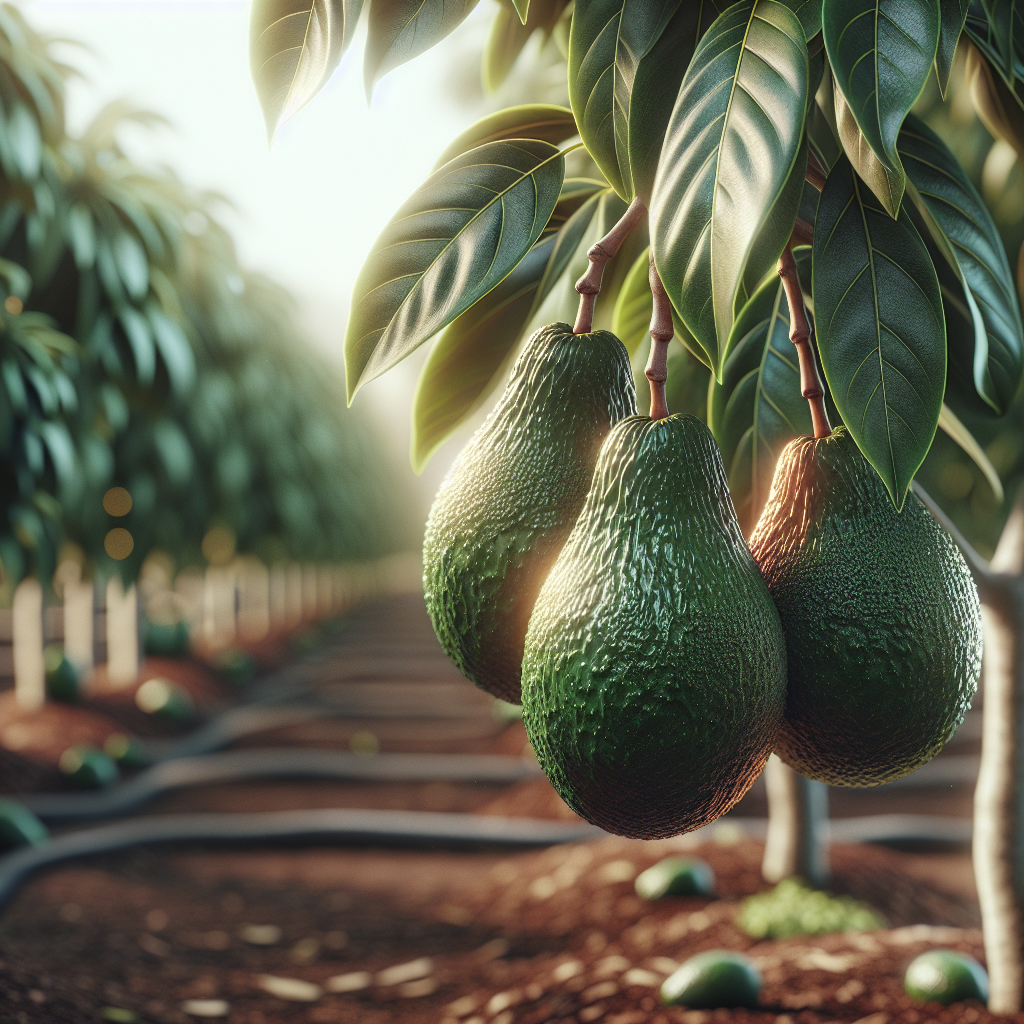
Introduction to Avocado
Native to Mesoamerica, avocado has been cultivated for thousands of years and was domesticated long before European contact. It belongs to the Lauraceae family, the same family as cinnamon and bay laurel, and has become one of the most economically important subtropical fruit crops in the world. Commercial expansion accelerated in the 20th century as superior grafted cultivars spread internationally, especially the now-dominant Hass type. For growers, avocado is both rewarding and unforgiving: trees can be productive for decades, but small mistakes in drainage, irrigation timing, or site selection can lead to chronic decline.
Avocado fruit is botanically a berry with a single large seed, though horticulturally it is managed as a tree fruit. The flesh is unusual among fruits for its high monounsaturated oil content, creamy texture, and low sugar level. Those same qualities influence harvesting and postharvest handling, because fruit generally matures on the tree but softens only after picking. In practical terms, good avocado production starts with understanding that this crop evolved in environments with porous soils, mild temperatures, and little tolerance for root suffocation.
For growers deciding between cultivars, race and flowering type matter. Avocados are commonly grouped into Mexican, Guatemalan, and West Indian races, though many commercial cultivars are hybrids. Mexican-race material tends to show better cold tolerance and anise-scented leaves; West Indian types are more suited to tropical lowlands and are less cold-hardy; Guatemalan types often produce thick-skinned fruit and perform well in subtropical highland climates. If you want to compare a major commercial cultivar in more detail, see Hass avocado.
Botanical Profile of Avocado
Persea americana is an evergreen tree that can reach 30 to 60 feet tall in unmanaged conditions, though commercial orchards are usually maintained much smaller through pruning and spacing. The canopy is dense, with brittle wood that can split under heavy crop loads or strong winds. Leaves are glossy to matte green depending on cultivar, generally elliptic to lanceolate, and persist for multiple flush cycles before dropping. Root systems are shallow and concentrated in the upper 6 to 12 inches of soil where oxygen is highest, which explains the crop's extreme sensitivity to poor aeration and standing water.
Flowers are small, greenish-yellow, and borne in large panicles. Avocado flowering biology is one of the crop's defining features. The flowers are protogynous and exhibit synchronous dichogamy: each flower opens first as functionally female, closes, and reopens later as functionally male. Cultivars are classified as Type A or Type B based on the timing of these openings. In Type A cultivars, flowers are female in the morning of the first day and male in the afternoon of the second day; in Type B cultivars, flowers are female in the afternoon of the first day and male the following morning. Temperature can disrupt this pattern, but interplanting complementary flowering types often improves fruit set.
Fruit shape, skin texture, oil content, and maturation period vary dramatically by cultivar. Some are pear-shaped with smooth green skin, while others are oval with pebbled darkening skin. Dry matter and oil accumulation are key indicators of maturity; fruit that is picked too early may fail to soften properly or develop poor flavor. Trees often show alternate bearing, producing a heavy crop one year and a lighter crop the next, especially if nutrition, pruning, and crop load management are neglected.
Soil, pH, and Climate Requirements for Avocado
The single most important site requirement is drainage. Avocado roots need oxygen-rich soil and are highly vulnerable to root rot when the root zone remains saturated. Ideal soil is a deep, well-aerated sandy loam or decomposed granite-derived soil with rapid internal drainage and at least 3 to 5 feet of penetrable depth. Heavy clay is risky unless planted on broad mounds or raised berms with engineered drainage. If water remains pooled for more than 24 hours after rain or irrigation, the site is generally unsuitable without major modification.
Preferred soil pH is about 5.5 to 7.0, with 6.0 to 6.5 being especially favorable for nutrient availability. Trees can survive slightly outside that range, but micronutrient issues become more common. In alkaline soils above pH 7.5, iron chlorosis is frequent, showing as yellow young leaves with green veins. In strongly acidic soils below pH 5.0, root growth may be restricted and calcium or magnesium imbalances can appear. Before planting, conduct a full soil test including pH, electrical conductivity, calcium, magnesium, sodium, chloride, and boron if irrigation water quality is questionable.
Avocado is best adapted to tropical and subtropical climates with mild winters and warm, not scorching, summers. Optimum temperatures for growth are generally 68 to 85°F (20 to 29°C). Young flush and flowers are easily damaged by frost. Depending on race and cultivar, damage may occur around 30 to 32°F (-1 to 0°C) for sensitive tissue, while severe cold below the mid-20s°F can kill branches or entire trees. Heat above 95°F (35°C), especially with low humidity and hot wind, can cause leaf scorch, fruit sunburn, and poor fruit set.
Wind protection is often overlooked. Avocado wood is brittle, leaves transpire heavily, and young fruit rubs and drops under windy conditions. A sheltered site or well-designed windbreak can dramatically improve establishment and yield. Salinity is another serious limitation. Avocados are among the more salt-sensitive fruit trees; chloride burn often appears first as tip and marginal necrosis on older leaves. Irrigation water with high salts can reduce root vigor long before visible symptoms become severe. For broader soil-building principles relevant to perennial orchards, see soil health strategies.
Step-by-Step Planting & Propagation
Commercial and serious home orchard production should use grafted trees, not seedlings. Seedling avocados are genetically variable, slow to fruit, and often inferior in fruit quality. Grafted trees combine a known fruiting cultivar with a selected rootstock that may improve vigor, salinity tolerance, or disease adaptation. Buy healthy nursery stock with a straight trunk, visible graft union above the soil line, no circling roots, and leaves free of tip burn, cankers, or mite bronzing.
Choose a planting date during a mild season, most commonly early spring after frost danger has passed, or at the start of a rainy season in frost-free tropical regions. Avoid planting during extreme heat, waterlogged weather, or periods of strong desiccating wind. Space trees according to vigor and management style. Traditional orchards may use 20 to 30 feet between trees and rows, while high-density systems start closer and rely on more intensive pruning. Home growers should remember that an unpruned tree can become large quickly.
Prepare the site with minimal root-zone disturbance if soil structure is already good. Do not dig a deep, amended pit in otherwise poor-draining ground, because that can create a basin that traps water. Instead, loosen a broad area and build a mound or berm 12 to 24 inches high in marginal soils. Plant so the top of the root ball sits slightly above finished soil grade. Keep the graft union well above soil level to prevent scion rooting and crown disease. Backfill with native soil rather than rich compost blends that create texture discontinuities.
Water immediately after planting to settle soil, then apply a coarse organic mulch such as wood chips 3 to 6 inches deep over a wide circle, keeping mulch 6 inches away from the trunk. This mulch moderates soil temperature, conserves moisture, and supports the fine feeder-root environment avocado prefers. If the site is windy, stake loosely but do not create trunk rub points.
Propagation by seed is mainly for rootstock production or experimentation. To germinate seed, use fresh pits from mature fruit, clean them, and place with the broad end down in a free-draining medium or suspend partially over water until roots emerge. Seedlings are then grown to grafting size and top-worked with the desired scion. Veneer grafting, cleft grafting, and budding are common methods, but success requires active cambial growth, sanitation, and stable temperatures.
Care & Maintenance regimes for Avocado
Irrigation management is the core skill in avocado culture. The goal is an evenly moist but highly aerated root zone. Young trees need frequent, light-to-moderate irrigation because their root systems are small and shallow. Mature trees need deeper wetting, but still cannot tolerate prolonged saturation. As a practical benchmark, irrigate when the upper few inches of soil begin drying but before the root zone becomes powder-dry. In sandy soils this may mean watering several times per week during hot weather; in loams, once or twice weekly may suffice; in cool seasons it may be much less.
Use soil probes, tensiometers, or careful hand inspection rather than a fixed calendar. If soil at 6 inches is sticky, cool, and poorly aerated for days at a time, irrigation is too frequent. Overwatering symptoms include pale leaves, small limp flushes, leaf drop without drought crisping, blackened feeder roots, and eventual branch dieback. Underwatering more often causes leaf folding, dry tip burn, fruit drop, reduced flush growth, and hard, compacted surface soil pulling away from the root ball. Avocado trees often show salt accumulation under insufficient leaching, so in saline areas occasional deeper irrigations may be needed if drainage allows.
Nutrition should be steady rather than excessive. Young trees benefit from small, split nitrogen applications during the growing season to encourage regular canopy development without forcing weak, overly lush growth. Mature bearing trees need nitrogen, potassium, calcium, magnesium, zinc, and boron in balanced proportions, adjusted by leaf and soil analysis. Excess nitrogen can worsen vegetative vigor at the expense of fruiting and may aggravate some pest problems. Zinc deficiency often shows as small leaves and short internodes; boron shortage can reduce pollination and fruit set, but boron should be applied cautiously because the margin between deficiency and toxicity is narrow.
Mulching is highly beneficial, especially with coarse woody material that encourages the biologically active upper root zone. Renew mulch as it breaks down, but always keep it off the trunk to avoid collar rot and rodent shelter. Weed control should be gentle; do not cultivate deeply under the canopy because feeder roots are shallow and easily damaged. Maintain a weed-free but mulched basin around young trees.
Pruning strategy depends on scale. Avocados do not require heavy annual pruning for productivity, but selective shaping is essential. During establishment, remove dead, broken, or crossing wood and encourage a balanced scaffold. In windy or sun-intense areas, avoid overthinning because exposed limbs sunburn easily. For mature trees, reduce excessive height, open congested areas just enough for light penetration, and manage crop load balance. Whitewashing newly exposed upper limbs and trunks with diluted interior white latex paint can prevent sunburn after structural pruning.
Pollination management can improve yields. While some cultivars set commercially without a complementary flowering type nearby, many orchards benefit from mixing Type A and Type B cultivars. Honey bees help, though avocado flowers are less attractive than many nectar-rich blossoms. Avoid insecticide use during bloom. Fruit set is naturally low relative to the vast number of flowers produced, so massive flower drop is normal and not necessarily a problem.
Pests, Diseases & Organic Management
The most destructive avocado disease worldwide is Phytophthora root rot, caused primarily by Phytophthora cinnamomi. It thrives in poorly drained, overirrigated soils and causes progressive canopy thinning, small pale leaves, reduced fruit size, branch dieback, and sparse white feeder roots replaced by dark decayed roots. Prevention is far more effective than cure: plant only in well-drained sites, use tolerant rootstocks where available, avoid moving contaminated soil or nursery stock, and manage irrigation precisely. Organic suppression relies on drainage improvement, heavy coarse mulching, sanitation, and maintaining soil biological activity, though severe infections can still be difficult to reverse.
Anthracnose and Stem-end rots affect fruit, especially in humid climates or where canopies stay dense and wet. Symptoms may remain latent until after harvest, then appear as black sunken lesions. Good airflow, sanitation, careful handling, and harvesting at proper maturity reduce losses. Scab can scar fruit and young tissue in susceptible cultivars under moist conditions. Cercospora spot may blemish fruit and leaves in warm, humid production zones.
Insects and mites vary by region. Common concerns include Avocado thrips, Persea mite, Scale insects, Mealybugs, Lace bugs, and various Borers. Thrips damage often appears as corky scarring on young fruit, while mites can cause bronzing, stippling, and premature leaf drop. Scale and Mealybugs produce honeydew that supports sooty mold and may be tended by ants. Organic management begins with regular scouting of young leaves, fruit clusters, and the undersides of leaves. Encourage beneficial insects, reduce dust, control ants that protect sap-feeding pests, and avoid broad-spectrum sprays that collapse natural predator populations.
Rodents can girdle young trunks or feed on fruit, especially under thick unmanaged ground cover. Birds may peck ripening fruit in some regions. Trunk guards, orchard sanitation, and habitat balance are practical preventive measures. Sanitation overall is crucial: remove dropped diseased fruit, prune out dead wood, disinfect pruning tools when disease is present, and never mound soil or mulch against the trunk.
Harvesting, Curing & Optimal Storage
Avocados do not ripen properly in the same way as many fruits while hanging indefinitely on the tree; instead, they reach physiological maturity on the tree and then soften after harvest. This means harvest timing is based on maturity standards rather than softness. Depending on cultivar and climate, maturity may be judged by calendar date from bloom, fruit size, dry matter percentage, or oil content. Picking too early produces rubbery, watery, poor-flavored fruit that may shrivel rather than soften. Commercial maturity standards often rely on dry matter testing because it correlates well with eating quality.
Harvest by clipping rather than pulling, leaving a short stem piece to reduce skin tearing and stem-end rot risk. Handle fruit gently, as bruising may not show immediately but becomes obvious during ripening. Use padded picking bags and avoid dropping fruit into bins. Harvest during the cooler part of the day when possible, and keep fruit shaded after picking.
Avocados are often described as needing a postharvest conditioning period rather than true curing. Freshly harvested fruit should be sorted, cleaned dry if needed, and stored according to intended market timing. For short-term holding of mature but unripe fruit, temperatures around 40 to 55°F (4 to 13°C) are commonly used depending on cultivar, market chain, and storage duration. Temperatures that are too low can cause chilling injury in some varieties, especially tropical types, leading to internal browning, poor ripening, or skin discoloration. Relative humidity around 85 to 95% helps limit shrivel.
For table ripening, fruit is usually held at room temperature until it yields slightly to gentle pressure near the stem end and across the body. Once soft-ripe, refrigeration slows further breakdown for a few days. Cut fruit should be protected from oxidation with acidulation and cool storage, though best quality is always from freshly cut ripe fruit. In local-market systems, staggered harvesting is one of avocado's great advantages: many cultivars can be held on the tree for a useful window once mature, allowing flexible picking, but overholding too long can increase drop, reduce quality, or encourage alternate bearing stress.
Companion Planting for Avocado
Companion planting around avocado should be designed for root protection, pollinator support, and soil moderation rather than aggressive polyculture directly at the trunk. Because avocado feeder roots occupy the surface layer, the best companions are shallow-rooted, non-competitive, easily managed species planted outside the immediate trunk zone. Low-growing flowering herbs such as alyssum, dill, coriander, and some basils can attract hoverflies, parasitic wasps, and bees without severely competing if water is adequate. For a culinary companion that also draws beneficial insects, consider Thai basil.
Nitrogen-fixing support species can be useful in wider orchard alleys, especially in regenerative systems, but they should be pruned and managed so they do not shade young trees excessively or compete heavily for summer moisture. Clover in cool seasons, carefully managed vetches, or low vigorous perennial legumes can improve ground cover and reduce erosion. In dry regions, however, groundcovers should be evaluated carefully because excessive competition in the topsoil can stress avocado roots.
Avoid planting thirsty, invasive, or deep-cultivation crops close to the trunk. Turfgrass right up to the base of young avocado trees often suppresses growth because it competes strongly for water and nitrogen. Likewise, tall dense companion plants can reduce airflow and increase humidity around the lower canopy, raising disease pressure. Keep a clean, mulched root zone nearest the tree, then place companion species beyond that ring in a way that supports pollinators and beneficial insects while preserving irrigation efficiency.
In mixed orchards, avocado can coexist with other subtropical fruit trees if spacing, light interception, and irrigation zoning are carefully planned. The best companion system is one that respects avocado's defining needs: oxygenated soil, moderated surface temperatures, minimal root disturbance, and reliable but not excessive moisture.