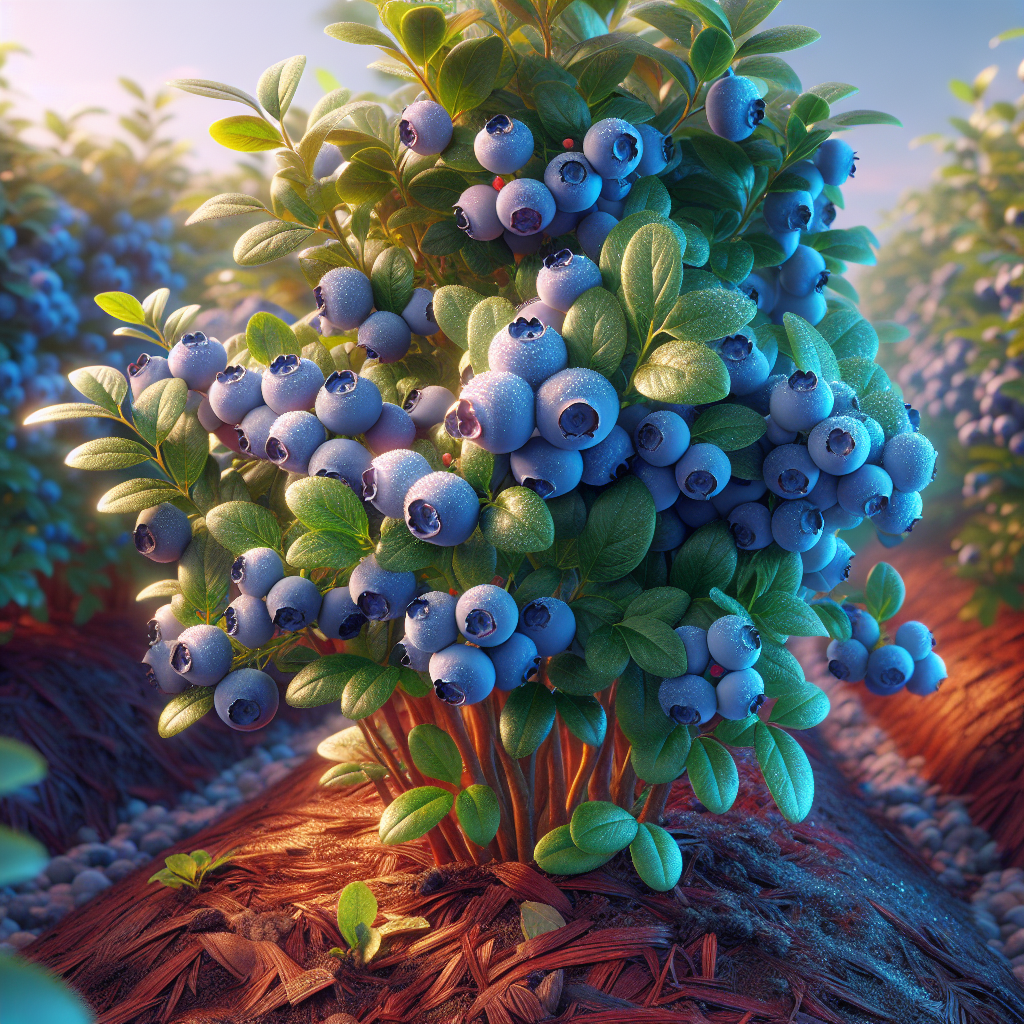
Introduction to Blueberry
Blueberries are among the most rewarding small fruit crops for home gardeners and commercial growers, but they are also among the least forgiving when basic site conditions are wrong. Unlike many fruiting plants that can adapt to a broad range of soils, blueberries demand strongly acidic, well-aerated, organic-rich ground and perform poorly when planted into neutral or alkaline soils. Their fine, fibrous root systems lack conventional root hairs, which makes them especially dependent on appropriate soil chemistry, mycorrhizal associations, and consistent moisture.
The cultivated blueberry industry is relatively young compared with apples or grapes. Modern production began in earnest in the early 20th century after plant breeders, especially in the United States, selected and domesticated wild Vaccinium species. Today, growers typically work with three major groups: northern highbush, southern highbush, and rabbiteye, with lowbush types also important in colder regions and managed wild systems. Each group differs in chill requirement, plant architecture, berry size, flavor profile, adaptation, and management needs.
For growers seeking premium fruit quality, blueberries reward precision. A well-established planting can remain productive for 20 years or more, often increasing in yield for several seasons before stabilizing. The key is understanding that blueberry management is front-loaded: site preparation before planting often determines whether a field thrives or struggles for a decade.
Botanical Profile of Blueberry
Blueberries belong to the genus Vaccinium in the family Ericaceae, the same family as cranberry, lingonberry, azalea, and rhododendron. Most commercial blueberries are deciduous woody shrubs, though evergreen tendencies can occur in mild winter regions with certain southern-adapted cultivars. The plants produce multiple canes from the crown, and productivity depends on maintaining a balance of vigorous young wood and fruitful mature canes.
Commercially important groups include:
- Northern highbush (primarily Vaccinium corymbosum): best suited to temperate regions with substantial winter chill; typically large berries, upright habit, excellent fresh-market quality.
- Southern highbush (complex hybrids involving V. corymbosum and southern species such as V. darrowii): adapted to milder winters; often used in low-chill regions and early production systems.
- Rabbiteye (Vaccinium virgatum, formerly V. ashei): more tolerant of heat, drought, and some soil variability than highbush; generally later ripening and highly productive, but often needs cross-pollination for best fruit set.
- Lowbush (Vaccinium angustifolium and related species): shorter, spreading plants often managed in wild or semi-managed barrens for processing fruit.
Blueberry leaves are simple, alternate, and usually elliptic to lanceolate. Flowers are urn- or bell-shaped, white to pink, borne in clusters on one-year-old wood. The floral structure is highly adapted to bee pollination, especially by bumble bees capable of buzz pollination, although honey bees are also widely used in production systems. Fruit is technically a berry with a waxy bloom that protects against moisture loss and adds market appeal.
Roots are shallow, with most feeder roots concentrated in the top 20 to 30 cm of soil, though some may extend deeper in ideal porous media. Because these roots are extremely sensitive to waterlogging and salinity, blueberries respond dramatically to poor drainage, excess fertilizer salts, and compaction. This shallow rooting habit also explains why mulching is so central to successful culture.
Canes are categorized by age. One-year shoots develop vegetative and flower buds for the following season; two- to five-year-old canes often carry the best balance of vigor and cropping; older canes gradually lose productivity, produce smaller berries, and are removed during renewal pruning. In mixed berry plantings, growers often compare their management to other cane fruits; for contrast in structure and pruning philosophy, see Raspberry.
Soil, pH, and Climate Requirements for Blueberry
The single most important technical requirement for blueberries is soil acidity. Optimal pH is typically 4.5 to 5.2, with some growers targeting 4.8 to 5.0 for highbush cultivars. Growth declines markedly above pH 5.5, and iron chlorosis, weak shoot growth, and poor yields become common as pH approaches 6.0 or higher. In alkaline or calcareous soils, blueberries often fail outright unless grown in highly modified beds or containers.
Before planting, conduct a professional soil test that includes pH, buffer pH, organic matter, cation exchange capacity, and key nutrients. If pH exceeds the ideal range, elemental sulfur is the standard acidifying amendment. It must be incorporated well ahead of planting, often 3 to 12 months prior depending on particle size, soil texture, temperature, and microbial activity. Sandy soils generally require less sulfur than clay soils for the same pH reduction. As a rough concept, reducing soil pH by one full point may require several hundred to over 1,000 kg elemental sulfur per hectare, so precise local recommendations matter.
Blueberries prefer soils high in organic matter, ideally 4% to 7% or more, though they can be grown successfully in mineral soils if amended and mulched correctly. Pine bark, aged sawdust, wood chips, leaf mold, and peat-based mixes are commonly used to improve rooting conditions. The ideal root zone is loose, porous, acidic, and evenly moist. Heavy clay soils are risky unless planted in raised beds at least 20 to 30 cm high, because oxygen deprivation in saturated soil can damage roots within days.
Drainage must be excellent, but that does not mean dryness. Blueberries require consistent moisture, especially from bloom through harvest and during late summer flower bud formation. A useful target is soil moisture that remains uniformly damp in the upper root zone without standing water. In practical terms, the soil beneath mulch should feel cool and slightly moist when squeezed, not muddy or foul-smelling. Overwatered blueberries often show yellowing leaves, stunted growth, root dieback, and in severe cases reddish or bronze discoloration due to root stress. Underwatered plants may produce small berries, leaf scorch at margins, weak shoot growth, and increased fruit drop.
In terms of climate, adaptation depends strongly on cultivar group:
- Northern highbush generally requires 800 to 1,200 chill hours and performs best in cool temperate climates.
- Southern highbush may require as little as 150 to 600 chill hours depending on cultivar.
- Rabbiteye often thrives in warm temperate to subtropical zones with moderate chill, usually around 300 to 700 hours.
Blueberries generally prefer full sun for maximum yield, berry sweetness, and disease reduction. A minimum of 6 hours of direct light can sustain plants, but 8 or more hours is ideal. In very hot climates, especially where summer temperatures regularly exceed 35°C, light afternoon shade can reduce heat stress and fruit shrivel, particularly on southern highbush types.
Wind protection is valuable because spring blooms are delicate and strong wind can reduce bee activity, break young shoots, and desiccate shallow root zones. Frost risk is a major concern in early-blooming cultivars. Dormant wood is relatively hardy, but open flowers and small green fruit can be damaged by temperatures just below freezing. Site selection should therefore favor cold-air drainage and avoid low frost pockets.
Step-by-Step Planting & Propagation
Start by selecting cultivars adapted to your chill zone, soil conditions, harvest window, and market objective. Plant at least two compatible cultivars with overlapping bloom periods whenever possible, because cross-pollination usually improves berry size, fruit set, and earliness, especially in rabbiteye types. For commercial plantings, matching cultivar vigor and ripening schedule simplifies management and harvest logistics.
Site preparation should begin months before planting. Remove perennial weeds completely, because blueberries compete poorly during establishment. Test soil pH and incorporate elemental sulfur if needed. Form raised beds if drainage is imperfect. Blend acidic organic matter into the planting row rather than just the planting hole, since roots expand laterally. Narrow amendments isolated in a hole can create a bathtub effect or discourage outward rooting.
Plant dormant bare-root or container-grown plants in late winter to early spring in cold regions, or during the coolest practical season in mild climates. Two- or three-year-old nursery stock is usually ideal. Set plants slightly deeper than they were in the nursery pot, spreading roots gently if pot-bound. Space northern highbush around 0.9 to 1.5 m within rows and 2.4 to 3.0 m between rows, depending on vigor and machinery. Rabbiteye often requires wider spacing, commonly 1.8 to 2.4 m within rows and 3.0 to 3.6 m between rows.
After planting, water thoroughly to settle soil around roots. Apply 5 to 10 cm of acidic mulch such as pine bark, pine needles, or aged sawdust, keeping the mulch a few centimeters away from the crown to reduce rot. Mulch moderates soil temperature, conserves moisture, suppresses weeds, and slowly contributes organic matter. Replenish annually.
In the first year, remove most or all flower buds so the plant directs energy into root and canopy establishment rather than fruit production. This step is often skipped by impatient growers, but it significantly improves long-term bush structure and productivity.
Propagation is most often done by softwood or hardwood cuttings in professional systems. Softwood cuttings are taken from new growth in late spring to early summer, rooted under mist with bottom heat and high humidity. Hardwood cuttings are taken during dormancy and rooted in acidic propagation media. Tissue culture is also common in modern nursery production because it allows rapid multiplication of clean plant material. Seed propagation is possible but not used for maintaining cultivars because seedlings vary genetically.
Container culture can work where native soil is unsuitable. Use large containers, ideally 40 to 75 liters or more for long-term performance, filled with acidic bark-based media. Irrigation frequency must be more precise in pots because shallow roots dry rapidly yet are also highly susceptible to saturation.
Care & Maintenance regimes for Blueberry
Irrigation should be managed as a shallow, frequent system rather than deep, infrequent watering. Drip irrigation is preferred because it maintains steady moisture without prolonged leaf wetness. During establishment, plants may need water two to four times per week depending on soil texture, mulch depth, temperature, and rainfall. Mature plantings often require the equivalent of 25 to 50 mm of water per week during active growth, sometimes more during hot fruiting periods on sandy soils. The goal is to keep the top root zone consistently moist but well aerated.
Water quality matters. Irrigation water high in bicarbonates gradually raises soil pH, undermining all other management efforts. If water alkalinity is significant, acid injection or alternative water sources may be needed in commercial settings.
Fertilization should be conservative and based on plant age, vigor, and leaf analysis. Blueberries are sensitive to excess salts, so ammonium-based nitrogen sources suitable for acid-loving plants, such as ammonium sulfate, are generally favored over nitrate-heavy fertilizers. Nitrogen is usually split into multiple applications from budbreak through early summer. Excess nitrogen causes overly lush vegetative growth, delayed hardening, increased disease pressure, and softer fruit.
Typical nutritional patterns include:
- Nitrogen: drives shoot growth and yield but should be applied carefully.
- Phosphorus: often adequate in properly prepared soils; overapplication is unnecessary.
- Potassium: important for fruit sizing and plant balance, but chloride-sensitive systems should avoid muriate of potash.
- Iron and manganese: availability drops sharply as pH rises, so deficiencies often indicate pH problems rather than lack of total soil content.
A mature highbush planting may be fertigated or top-dressed in two to four small doses annually. Young plants receive much less. Leaf tissue testing in midsummer is one of the best tools for adjusting a program intelligently.
Pruning is essential. In years one and two, focus on structure: remove weak, twiggy, low, and damaged growth. From year three onward, annual dormant pruning should remove dead wood, thin crowded interior shoots, and gradually renew the bush by cutting out the oldest, least productive canes at the base. A well-pruned plant has an open center, good light penetration, and a mix of cane ages. Heavy flower bud loads on thin wood should be reduced to maintain berry size.
Weed control is critical because blueberry roots occupy the same surface zone where weeds compete most aggressively for water and nutrients. Avoid deep cultivation, which damages roots. Organic mulches and shallow manual removal are safer. Living covers may be maintained in row middles but should not encroach into the root zone.
Pollination management directly affects yield and fruit size. Blueberries benefit from abundant bee activity during bloom under mild, dry weather. Commercial growers often place honey bee hives, but native bees and bumble bees can substantially improve pollination efficiency. Avoid insecticide applications during bloom.
For broader orchard-floor and ecological planning, ideas in this soil health article can complement blueberry bed preparation, especially where organic matter and mulch systems are being developed.
Pests, Diseases & Organic Management
Blueberries face a range of pests that vary by region, but integrated management always begins with sanitation, airflow, cultivar selection, weed control, and careful irrigation.
Birds are often the most economically serious “pest,” especially in small and mid-scale plantings. Netting is the most reliable control. Reflective tape, distress calls, and visual deterrents can help temporarily, but Birds quickly habituate. Install netting before fruit fully colors.
Common insect pests include Aphids, Thrips, Blueberry maggot, Spotted wing drosophila, Scale insects, Cranberry fruitworm, and various Caterpillars. Spotted wing drosophila is especially damaging because females lay eggs in ripening fruit. Organic management relies on frequent harvest, sanitation, exclusion netting, trap monitoring, and well-timed approved products where legally registered. Overripe fruit left on plants or ground dramatically increases pressure.
Diseases include Mummy berry, Botrytis blossom blight, Anthracnose fruit rot, Phytophthora root rot, Stem cankers, and Leaf spots. Mummy berry infects shoots and fruit in cool, wet springs; management includes pruning, mummified fruit removal, mulch renewal, and cultivar choice. Botrytis is promoted by dense canopies and extended bloom wetness. Anthracnose can remain latent until fruit ripening, then cause soft rot, especially during warm, humid weather.
Phytophthora root rot is one of the most destructive problems in poorly drained soils. Symptoms include weak growth, small leaves, chlorosis, red fall color out of season, dieback, and eventual plant death. Prevention is far more effective than treatment: use raised beds, avoid overirrigation, and never plant into sites with standing winter water.
Organic disease management principles include:
- Plant disease-free nursery stock.
- Maintain ideal spacing and pruning for airflow.
- Keep mulch clean and renewed but not piled against crowns.
- Remove dropped or mummified fruit.
- Avoid overhead irrigation during bloom and ripening.
- Use resistant or tolerant cultivars where available.
- Apply approved biologicals or copper/sulfur products only as part of a targeted regional program, since timing is critical and phytotoxicity is possible.
Nutrient disorders are frequently misdiagnosed as disease. Interveinal chlorosis on young leaves often signals iron unavailability from elevated pH. General yellowing and poor vigor may reflect nitrogen deficiency, root damage, or waterlogging. Always inspect roots and review pH before assuming a pathogen problem.
Harvesting, Curing & Optimal Storage
Blueberries do not continue to sweeten significantly after picking, so harvest maturity matters. Fully ripe berries are uniformly blue with developed flavor and should detach easily with a gentle roll. Berries harvested too early may look acceptable after the red stage disappears, but they often lack sugars, aroma, and full size.
Harvest is typically done in multiple passes every 5 to 7 days because berries on a cluster ripen unevenly. For fresh market quality, pick carefully into shallow containers during the cool part of day. Avoid harvesting when berries are wet from rain or dew, as this increases postharvest decay and bloom loss.
Unlike curing crops such as onion or garlic, blueberries are not cured in a warm drying sense. Instead, the postharvest priority is rapid precooling. Remove field heat as quickly as possible, ideally within a few hours of harvest. Forced-air cooling is standard commercially. The optimal storage temperature is 0 to 1°C with 90% to 95% relative humidity. Under excellent handling conditions, many cultivars store for 2 to 3 weeks, though flavor is best when sold or consumed sooner.
Handle fruit minimally. The natural waxy bloom is a critical quality indicator and a protective barrier; rough picking, washing, and overpacking remove it. Do not wash berries until just before use. Remove soft, split, shriveled, or moldy fruit immediately, because decay spreads quickly in packed containers.
For longer preservation, blueberries freeze exceptionally well. Spread dry berries in a single layer to freeze individually before bagging. This preserves shape and allows easy portioning. They can also be dried, juiced, or processed into jam, but fresh-market buyers generally prefer firm berries with intact bloom, high soluble solids, and good size.
Companion Planting for Blueberry
Companion planting around blueberries should be based first on shared soil chemistry rather than generic pest-repellent folklore. Because blueberries require a strongly acidic root zone, the best neighbors are plants that tolerate or prefer similar conditions and do not aggressively outcompete shallow roots.
Good companions include other acid-loving, non-invasive plants such as lingonberry, cranberry in appropriately moist zones, and certain ornamental heaths and heathers on the perimeter. Low-growing mulching companions that do not disturb the root zone can help moderate weeds if managed carefully, but heavy feeders and dense groundcovers are usually a poor choice directly beneath bushes.
Insectary plantings are better placed adjacent to, not inside, the blueberry row. Flowering borders with sequential bloom can support native pollinators and beneficial insects while reducing competition near blueberry roots. Choose species that do not require liming or high fertility in the same bed. Avoid vigorous mint-family spreaders, aggressive grasses, and deep-cultivated annual vegetables within the bush row.
Pines can be useful in the wider landscape because needle litter and bark products integrate well with blueberry mulch systems, though root competition from mature trees must be considered. Legumes can be useful in alleyways for soil cover, but they should not be allowed to compete tightly with the blueberry crown area.
What blueberries generally do not want nearby are plants that prefer neutral to alkaline soils, heavy manure applications, or repeated hoeing. Brassicas, many kitchen herbs, and most annual vegetables are better grown in separate beds. If integrating berries into a diversified farm, maintain distinct management zones rather than forcing incompatible crops into the same root environment.
The most successful blueberry companion strategy is ecological rather than crowded: acidic mulch, pollinator habitat nearby, weed-free root zones, good airflow, and compatible cross-pollinating cultivars within the planting itself.