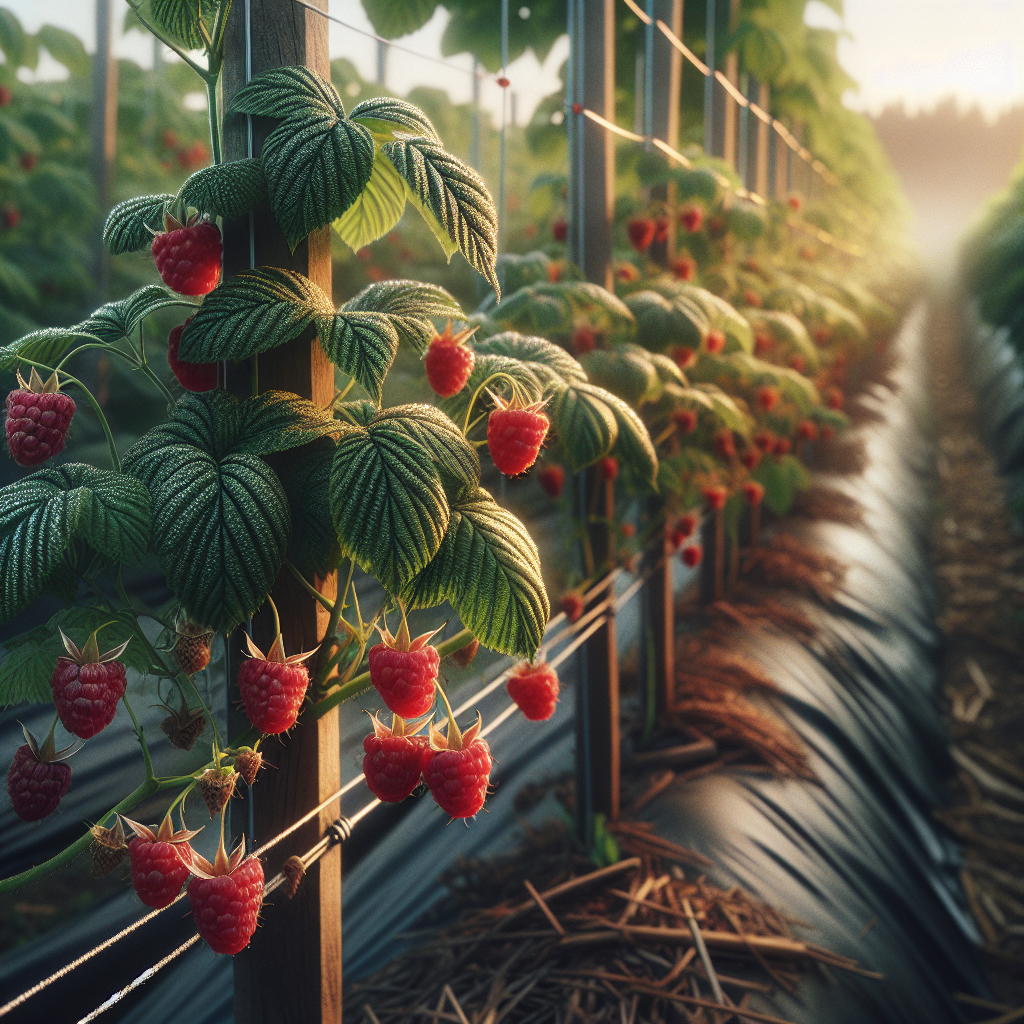
Introduction to Raspberry
A member of the bramble group, raspberry is one of the most rewarding perennial fruit crops for temperate gardens and commercial plantings alike. It combines relatively fast establishment with high market appeal, but it is not a “plant and forget” crop. Productive raspberry culture requires understanding cane biology, fruiting habit, root suckering behavior, and the plant’s sensitivity to waterlogging, poor air circulation, and certain soilborne diseases.
Red raspberry is the most widely grown type, though black, purple, and yellow-fruited forms also exist. Most cultivated raspberries derive from Rubus idaeus, especially the European red raspberry, with some North American breeding influence in modern cultivars. Historically, raspberries have been gathered from the wild for centuries across Europe and parts of Asia, and their domestication accelerated as growers selected for larger fruit, firmer texture, thornlessness, disease resistance, and adaptation to warmer or colder regions.
For growers, the key distinction is fruiting type. Summer-bearing cultivars produce one main crop on second-year canes, while primocane-fruiting cultivars can produce on first-year canes in late summer to autumn, and in some systems can also yield again the following year if managed for double cropping. This biological difference shapes nearly every management decision, from pruning to harvest scheduling.
Raspberries are shallow-rooted, quick to respond to good fertility, and equally quick to decline if planted in poorly drained ground. When properly managed, a planting can remain productive for 8 to 12 years or longer, though commercial growers often replant earlier to reduce disease pressure and maintain yield quality.
Botanical Profile of Raspberry
Raspberry belongs to the family Rosaceae, the same family as apple, strawberry, cherry, and many other fruit crops. Botanically, the raspberry fruit is not a true berry but an aggregate fruit composed of many small drupelets attached around a central receptacle. A ripe raspberry separates cleanly from the receptacle when picked, leaving the hollow core characteristic of the fruit.
The plant consists of a perennial crown and root system with biennial canes in most red raspberry production systems. Individual canes typically live for two growing seasons. In year one, they grow vegetatively as primocanes. In year two, they become floricanes, flower, fruit, and then die. Primocane-fruiting types differ in that the upper portion of the first-year cane can flower and fruit in late summer or autumn.
Key morphological features include:
- Root system: Fibrous and relatively shallow, with most feeder roots concentrated in the top 15 to 30 cm of soil. This explains the crop’s sensitivity to drought stress and cultivation injury.
- Canes: Erect to arching, often glaucous or lightly waxed, varying in thorniness by cultivar. Cane diameter and internode length are useful indicators of vigor.
- Leaves: Compound, usually with three to five leaflets, serrated margins, and a pale underside in many cultivars.
- Flowers: White, insect-pollinated, self-fertile in most cultivars, though pollinator activity still improves fruit set and drupelet fill.
- Fruiting habit: Summer-bearing, primocane-bearing, or occasionally dual-purpose under modified pruning.
Common commercial cultivar classes include:
- Summer-bearing red raspberries: Often valued for concentrated harvest, good flavor, and processing suitability.
- Primocane-bearing red raspberries: Useful for extending harvest season and simplifying pruning.
- Black raspberries (Rubus occidentalis): More heat-sensitive in some areas, usually less sucker-forming, often propagated by tip layering.
- Purple raspberries: Hybrids between red and black raspberries, typically vigorous with distinctive flavor.
- Yellow or golden raspberries: Usually red raspberry derivatives lacking red pigmentation.
Because raspberry roots readily produce suckers, row management is essential. Left unmanaged, rows become dense, humidity rises, light penetration falls, and disease incidence increases. Understanding that the crown is perennial but the fruiting cane is temporary is the foundation of correct pruning.
Soil, pH, and Climate Requirements for Raspberry
Raspberry performs best in deep, fertile, well-drained loam or sandy loam with high organic matter and a pH of 5.5 to 6.5. It tolerates slightly more acidic conditions better than alkaline ones. Once soil pH rises above about 6.8 to 7.0, nutrient imbalances become more likely, especially iron and manganese availability issues in calcareous soils.
Drainage is the non-negotiable factor. Raspberry roots need oxygen. If soil remains saturated for more than 24 to 48 hours during active growth, roots begin to suffer, and the planting becomes vulnerable to Phytophthora root rot. Heavy clay soil can be used only if it is improved substantially with organic matter, shaped into raised beds, and never allowed to pond after rainfall.
Ideal soil characteristics include:
- Organic matter above 3%, preferably 4 to 6%
- Good crumb structure with moderate water-holding capacity
- No hardpan in the top 45 cm
- Electrical conductivity low enough to avoid salt stress; raspberries are moderately salt-sensitive
- Consistent moisture without standing water
A practical target is to keep the root zone evenly moist at roughly 60 to 80% of field capacity during active growth and fruit fill. In plain terms, the soil should feel cool and slightly damp when squeezed, not muddy, shiny, or anaerobic-smelling. If leaves look dull and slightly folded by midday, fruit size declines, and new cane growth stalls, the crop is likely too dry. If lower leaves yellow prematurely, canes lose vigor, and the soil smells sour, overwatering or poor drainage is probable.
Climate preference is broadly temperate to cool-temperate. Raspberries need winter chilling for reliable dormancy and bud break in traditional production regions, though chill needs vary by cultivar. Optimal growing temperatures are typically 18 to 24°C during vegetative growth and fruit development. Extended heat above 30°C reduces fruit firmness, increases sunscald risk, and can suppress pollination and drupelet formation. Warm nights can also lower flavor quality.
The crop usually performs best where:
- Winters are cold enough for dormancy but not brutally desiccating
- Springs are frost-aware but not excessively late
- Summers are moderate rather than extreme
- Air circulation is good, reducing cane and fruit diseases
Full sun is ideal, especially in cooler climates. In hotter inland regions, some afternoon shade can reduce heat stress, but too much shade reduces sugar accumulation and cane strength. Wind exposure should be moderate. Strong, dry winds can damage floricanes, increase evapotranspiration, and interfere with pollinator activity.
Avoid sites where solanaceous or other disease-prone crops recently grew if soilborne pathogens are present; rotation matters for perennial berry health. For broader fruit-soil planning, compare needs with crops like Blueberry, which also prefer acidic soils but demand even lower pH and different organic management.
Step-by-Step Planting & Propagation
Start with certified disease-free planting stock. This is especially important for raspberries because viruses, crown gall, and latent cane diseases can enter a planting at the very beginning and persist for years.
Site preparation
Prepare the site at least several months before planting, ideally the previous autumn for spring planting.
- Test the soil for pH, organic matter, phosphorus, potassium, calcium, magnesium, and salinity.
- Correct pH before planting. Apply elemental sulfur if pH is too high, or lime if too low, based on soil test recommendations.
- Incorporate compost or well-finished organic matter, but avoid excessively rich manures that can stimulate lush, disease-prone growth.
- Eliminate perennial weeds such as bindweed, couch grass, and thistle before planting. Weed control becomes much harder once the raspberry row is established.
- Form raised beds 20 to 30 cm high in sites with imperfect drainage.
Planting season
The best planting time is early spring while plants are dormant, as soon as soil can be worked without smearing. In mild winter climates, late autumn to winter planting is also effective if waterlogging is not a risk.
Spacing
Spacing depends on vigor, cultivar, and trellis style, but reliable ranges are:
- Home garden row: 45 to 60 cm between plants, 2.0 to 2.5 m between rows
- Commercial hedgerow: 30 to 45 cm between plants or planted as root pieces/canes, 2.5 to 3.0 m between rows
- Maintain finished row width at 30 to 45 cm after sucker management
Planting procedure
- Soak bare-root plants briefly before planting if roots are dry, but do not leave them submerged for many hours.
- Dig a hole wide enough to spread roots naturally.
- Set the plant with the crown at or just slightly below the previous soil line.
- Backfill firmly to eliminate air pockets.
- Water thoroughly to settle soil around the roots.
- Apply mulch 5 to 8 cm deep, keeping it a few centimeters away from the cane base.
- Cut canes back after planting if required by supplier recommendations, especially for bare-root stock.
Trellising
A trellis improves light distribution, air movement, and harvest efficiency. Common systems include a simple two-wire trellis or T-trellis. For many red raspberries, set wires at about 75 to 90 cm and 140 to 160 cm above ground. Tie or guide canes loosely to avoid abrasion.
Propagation methods
- Suckers: Common for red raspberries. Dig healthy young suckers with roots attached during dormancy.
- Root cuttings: Used for some red and purple types.
- Tip layering: Common in black raspberries and some blackberries.
- Tissue-cultured plants: Preferred for uniform disease-free commercial establishment.
Do not propagate from weak, mottled, stunted, or unusually thorny plants, as these may carry virus or be off-type.
For integrated bed planning and understory support species, growers often benefit from principles similar to those outlined in this soil health article.
Care & Maintenance regimes for Raspberry
Successful raspberry care is a rhythm of irrigation, nutrition, pruning, training, weed suppression, and canopy sanitation.
Irrigation
Raspberries need steady moisture, especially from bloom through harvest and during new cane development. A typical mature planting requires 25 to 40 mm of water per week, more in sandy soil or hot windy weather. Drip irrigation is strongly preferred because it keeps foliage dry and delivers water directly to the root zone.
Guidelines by growth stage:
- Establishment year: Light, frequent irrigation until roots expand, then transition to deeper watering.
- Pre-bloom: Maintain even moisture to support flower initiation and cane growth.
- Fruiting: Never allow severe drying; water stress at this stage reduces berry size, causes crumbly fruit, and weakens next season’s cane development.
- Post-harvest: Continue moderate irrigation so primocanes mature properly for next year.
Signs of underwatering include small berries, brittle laterals, marginal leaf scorch, and reduced primocane height. Signs of overwatering include soft growth, yellowing lower leaves, root browning, persistent wet mulch, fungus gnat activity, and reduced cane vigor despite adequate fertility.
Mulching and weed control
Because roots are shallow, avoid deep hoeing. Use straw, leaf mold, wood chips, or composted bark as mulch. Organic mulch moderates root temperature, conserves moisture, and reduces weed competition. Keep mulch depth moderate; excessive mulch on heavy soil can trap moisture and encourage crown disease.
Weeds compete aggressively for nitrogen and water. Maintain a clean strip in the row, especially during establishment. Sod or cover crop can be maintained in row middles if mowed regularly.
Fertility management
Raspberry responds to balanced nutrition, but excessive nitrogen can produce lush canes vulnerable to winter injury, aphids, and cane disease.
General nutrient priorities:
- Nitrogen: Supports primocane growth and leaf area. Apply in split doses in spring and early summer where needed.
- Potassium: Important for fruit size, firmness, and overall stress tolerance.
- Phosphorus: Best corrected before planting because it is less mobile in soil.
- Calcium and magnesium: Important for cell strength and leaf function, especially in acidic sandy soils.
Leaf tissue analysis in midsummer is useful in commercial settings. In the absence of testing, moderate feeding is safer than heavy feeding. Compost alone may not meet nitrogen demand in high-yield systems.
Pruning by fruiting type
This is where many growers fail.
Summer-bearing raspberries
- After harvest, remove all spent floricanes to ground level.
- Thin primocanes, leaving the strongest canes spaced for good airflow.
- In winter, remove weak, diseased, broken, or overcrowded canes.
Primocane-fruiting raspberries, single late crop system
- During dormancy, mow or cut all canes to ground level.
- This simplifies management, reduces overwintering disease inoculum, and produces one main late-season crop on new canes.
Primocane-fruiting raspberries, double-crop system
- Retain the lower cane section after autumn crop harvest.
- That lower section fruits the following early summer as a floricane.
- Then remove the spent cane after harvest while managing new primocanes for the autumn crop.
Most home growers and many commercial producers prefer the single-crop primocane system because it is cleaner and easier.
Cane density targets
A practical target is about 8 to 12 strong canes per linear foot of row in vigorous hedgerow systems, adjusted by cultivar and trellis. Too many canes mean smaller berries, slower picking, and more disease.
Pests, Diseases & Organic Management
Raspberry is susceptible to a range of insect, mite, fungal, bacterial, and viral problems. Prevention through site choice and canopy management is more effective than trying to rescue a neglected planting.
Common pests
- Aphids: Sap feeders that also vector viruses. They cluster on shoot tips and undersides of leaves.
- Spider mites: Favored by hot, dusty conditions; they cause stippling and bronzing.
- Raspberry cane borer and crown borer: Can weaken or kill canes and crowns.
- Spotted wing drosophila: A major fruit pest in many regions; lays eggs in ripening fruit.
- Japanese beetles and other chewing insects: Feed on foliage and fruit.
Organic management includes:
- Encouraging beneficial insects through floral diversity near, but not overcrowding, the planting
- Avoiding excess nitrogen that attracts aphids
- Using exclusion netting where practical against fruit flies
- Removing overripe and dropped fruit promptly
- Applying insecticidal soap or horticultural oils carefully, outside hot sun and with awareness of pollinator activity
Major diseases
- Phytophthora root rot: Most severe in wet soils; symptoms include wilting, poor vigor, and cane collapse.
- Cane blight and spur blight: Cause lesions on canes and reduced bud viability.
- Anthracnose: Produces gray-centered spots with purple margins on canes.
- Botrytis fruit rot: Common in humid weather and dense canopies.
- Powdery mildew: White fungal growth on leaves and fruit, often under warm dry days and humid nights.
- Rust diseases: Orange or yellow pustules on foliage depending on pathogen.
- Viral complexes: Cause crumbly fruit, mosaic patterns, stunting, and reduced yield.
Core prevention strategy
- Plant only certified disease-free stock.
- Use raised beds on marginal soils.
- Keep rows narrow and canes thinned.
- Trellis to improve light and airflow.
- Remove and destroy spent or diseased canes.
- Avoid overhead irrigation.
- Sanitize tools when moving between suspect plants.
- Control aphids and other vectors early.
- Harvest frequently to reduce fruit rot and pest buildup.
If a plant shows chronic decline, weak crumbly berries, mottled leaves, and poor cane growth, rogue it out rather than hoping for recovery. Viral plants rarely improve and can infect the entire row over time.
Birds can be a major yield thief just as fruit colors. Lightweight netting installed before peak ripening is often the most effective nonchemical method.
Harvesting, Curing & Optimal Storage
Raspberry fruit is highly perishable and should be handled as gently and quickly as possible. Harvest when the berry has fully developed color, separates easily from the receptacle, and has characteristic aroma. Berries picked too early may color further but will not fully develop flavor.
Harvest frequency is usually every 1 to 3 days during peak season. In hot weather, daily picking may be necessary. Pick in the cool morning after dew has dried but before field heat builds. Wet-picked fruit has shorter shelf life and greater mold risk.
Use shallow containers to prevent crushing. Never overfill punnets or buckets. Remove soft, moldy, insect-damaged, or sunburned berries during picking rather than in storage.
Unlike crops that require true curing, raspberries benefit from rapid precooling, not curing. The goal is to remove field heat fast.
Postharvest best practice
- Cool fruit to 0 to 2°C as soon as possible after harvest
- Maintain 90 to 95% relative humidity to reduce shrivel
- Avoid free moisture on fruit surfaces
- Minimize stacking pressure
- Do not wash until just before use unless processing immediately
Under ideal storage, fresh raspberries usually keep only 2 to 5 days. Shelf life shortens drastically if fruit is overripe or warm when packed. Modified-atmosphere packaging can extend storage somewhat in commercial systems, but flavor and texture still decline quickly.
For longer preservation:
- Freeze: Spread berries in a single layer first, then pack once frozen.
- Drying: Possible but less common; quality depends on cultivar and dehydration control.
- Jam, puree, juice, or fermentation: Excellent value-added options for fruit with slight cosmetic defects but good flavor.
Pick firmness varies by cultivar. Some are bred for fresh shipping, while others are best for local sale or immediate processing. Delicate heritage cultivars may have outstanding flavor but very limited shelf life.
Companion Planting for Raspberry
Companion planting around raspberry should be understood as ecological support rather than crowding the root zone with many neighbors. The best companions improve pollinator activity, attract beneficial insects, suppress weeds, or protect soil without increasing humidity around the canes.
Useful companions include:
- Chives, garlic, and onions: Their scent may help confuse some pests, and they occupy relatively little space if kept outside the immediate crown zone.
- Yarrow, alyssum, dill, and fennel in nearby borders: These attract parasitoid wasps, hoverflies, and predatory insects.
- White clover in row middles: Can stabilize soil and support beneficial insects if carefully mowed and kept from competing heavily with the row.
- Marigolds: Helpful as a general companion in diversified gardens, though they are not a cure-all.
Avoid planting companions that:
- Create dense shade or humidity around the canes
- Compete aggressively for shallow soil moisture
- Harbor similar diseases or pests
- Interfere with harvest access and pruning
Good neighbors in a diversified edible landscape often include strawberries, currants, and herbs, but spacing and airflow must remain the priority. Keep aggressive spreaders away from the raspberry hedgerow. Likewise, avoid placing raspberries immediately where potatoes, tomatoes, peppers, or eggplants with known verticillium or soil disease history have recently grown; see our Potato guide for rotation awareness in mixed gardens.
A practical companion strategy is to maintain the raspberry row itself as a clean, mulched production strip, while placing insectary flowers and low-growing support species in adjacent borders or alleyways. This preserves harvest efficiency while delivering ecological benefits.
In the end, the healthiest raspberry planting is one with open air, narrow rows, consistent moisture, disciplined pruning, and prevention-first sanitation. Growers who understand the cane cycle and protect the root zone will be rewarded with years of fragrant, high-quality fruit.