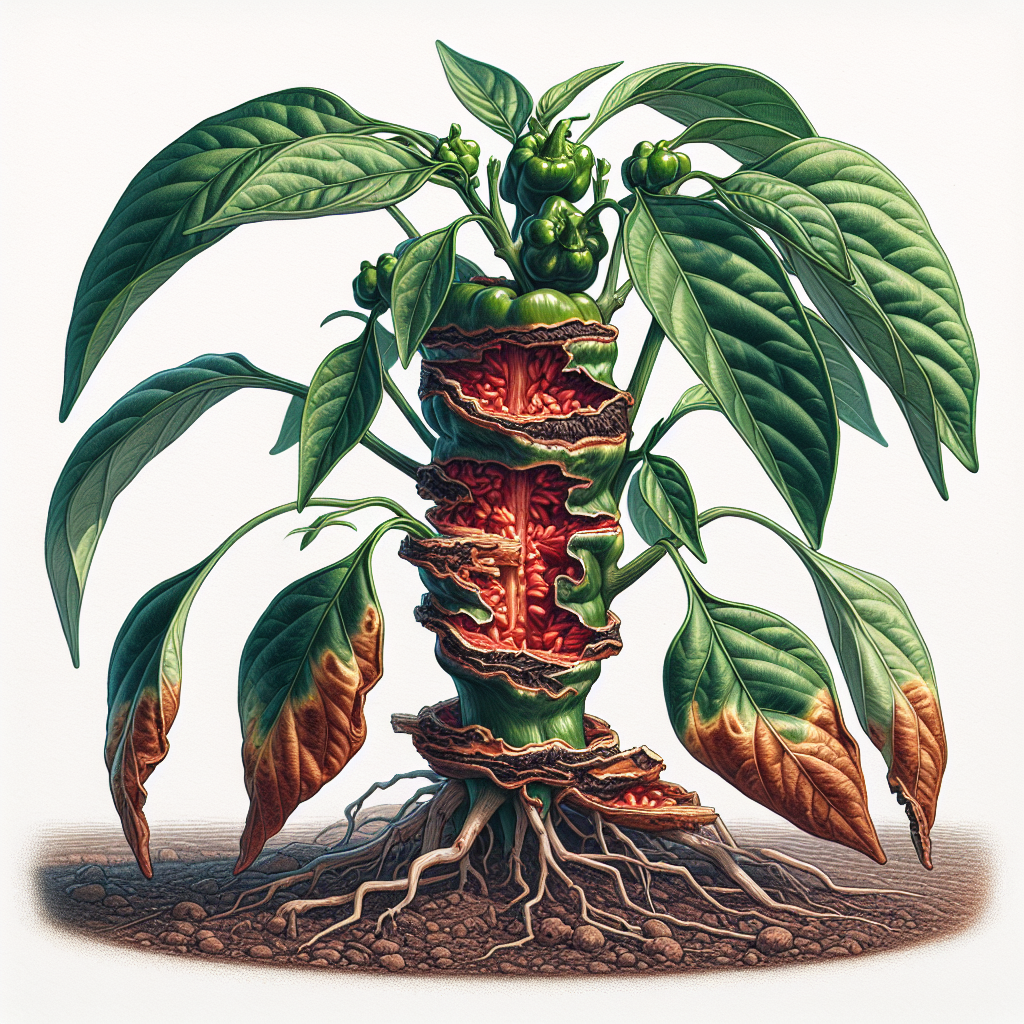
Introduction to Phytophthora crown or fruit rot
Phytophthora crown or fruit rot represents one of the most destructive diseases in modern agriculture, particularly in humid and subtropical growing regions. Caused by oomycete pathogens in the genus Phytophthora, this disease targets the crown—the critical junction between roots and stems—as well as fruits and lower stems, often resulting in sudden plant collapse and total yield losses exceeding 50-100% in severe outbreaks. Unlike true fungi, Phytophthora species thrive in saturated soils, producing waterborne spores that spread rapidly via irrigation, runoff, or splashing rain.
First identified in the early 20th century on crops like peppers and cucurbits, Phytophthora crown or fruit rot has since become a global threat, costing growers billions annually. Species such as P. capsici dominate in vegetables, while P. palmivora and P. citricola plague fruit trees like avocado and citrus. Early diagnosis is crucial, as infected plants rarely recover, but integrated management can suppress spread and protect future plantings. This comprehensive guide equips farmers, agronomists, and gardeners with professional-grade tools for identification, organic control, and prevention, drawing from decades of university extension research and field trials.
Identifying Symptoms & Damage
Accurate diagnosis hinges on recognizing distinct symptoms that differentiate Phytophthora from other rots like root rot or collar rot. Initial signs appear on lower plant parts during prolonged wet periods: dark brown to black lesions on crowns, often with a sharp margin between healthy and diseased tissue. Affected crowns feel soft and water-soaked when cut, exuding a sour, fermented odor unique to Phytophthora infections.
Foliar symptoms follow quickly—wilting of lower leaves that progresses upward, mimicking drought stress but unresponsive to watering. Stems develop brown streaks extending from the crown, and in fruiting crops, immature fruits show firm, leathery brown rot spots that expand rapidly into mushy decay. Advanced stages reveal white, cottony mycelium or sporangia on lesions under humid conditions, confirming the pathogen.
Damage quantification is severe: in peppers, crowns girdle completely, causing plant death within 7-10 days; in squash, fruit rot renders 70% unmarketable. Differentiate via lab tests—Phytophthora produces lemon-shaped sporangia under microscopy—or baiting soil with susceptible host tissue. Field diagnosis tip: scrape bark from crowns; healthy tissue is white and firm, while Phytophthora reveals brick-red discoloration. Prompt removal of infected plants prevents spore dispersal.
Lifecycle and Progression of Phytophthora crown or fruit rot
Phytophthora's lifecycle exploits wet environments, cycling through sexual and asexual phases for explosive spread. Resting spores (oospores) persist in soil for 1-5 years, germinating when saturated. These produce sporangia that release zoospores—motile, biflagellate swimmers that infect roots and crowns within hours via wounds or natural openings.
Under 20-30°C (68-86°F), optimal for most species, disease progresses rapidly: zoospore encystment, germ tube penetration, and mycelial colonization kill crown tissue in 3-5 days. Asexual sporangia form on infected surfaces, splashing to new hosts or releasing secondary zoospores. Sexual reproduction between mating types (+/-) yields durable oospores, ensuring long-term survival.
Progression varies by host: in annuals like tomato, infection starts at transplant, escalating post-fruit set; perennials like avocado show chronic decline with sudden fruit rot flushes. Warm nights (>18°C) and daytime irrigation trigger epidemics, with peak sporulation in 48-72 hours of leaf wetness. Understanding this enables timed interventions, such as fungicide applications during sporangial release.
Environmental Triggers & Risk Factors
Phytophthora thrives where waterlogged soils and high humidity converge, with temperatures of 24-29°C accelerating epidemics. Poor drainage, compacted clay soils, and over-irrigation create anaerobic conditions favoring pathogen over plant roots. Risk spikes in fields with history of root rots, crop residues, or nearby weedy hosts harboring inoculum.
Cultural factors amplify vulnerability: dense planting, excessive nitrogen promoting succulent growth, and overhead watering splashing spores. Susceptible varieties in continuous monoculture face compounded risk, as does planting in cool, wet springs delaying root establishment. Climate change intensifies threats via erratic rains and warmer soils. Soil pH below 6.0 or above 7.5 stresses plants, easing infection. Assess risk with soil tests for Phytophthora via PCR assays; fields testing positive warrant rotation.
Organic Control & Treatment Plans
Organic management emphasizes exclusion, sanitation, and biological suppression, as curative treatments are limited post-infection. Start with certified clean transplants and solarize soil pre-planting (clear plastic, 4-6 weeks at >45°C) to kill oospores. For active outbreaks, rogue infected plants immediately, avoiding soil disturbance to limit zoospore release.
Biological controls shine: apply Trichoderma harzianum or Bacillus subtilis drenches (e.g., 10^9 CFU/ml, 2-4 week intervals) to outcompete Phytophthora. Compost teas rich in antagonistic microbes enhance rhizosphere health. Mulch with coarse organic matter (straw, 4-6 inches) to moderate soil moisture. For fruit rot, potassium phosphite (mono- and di-potassium salts, 2-4 qts/acre foliar) boosts plant defenses via SAR (systemic acquired resistance), applied every 14 days.
Integrated plans: rotate with non-hosts like grains (3-5 years); amend with lime to pH 6.5-7.0; use drip irrigation below canopy. In small farms, Why Misidentifying Plants Costs Small Farms Thousands - And How AI Camera Diagnosis Fixes It Fast highlights tech for early detection. Trials show 60-80% control combining these, versus 20% from single tactics. Monitor with bait traps; suppress with gypsum (2 tons/acre) in sodic soils.
Preventing Phytophthora crown or fruit rot in the Future
Prevention trumps control, focusing on site selection, resistant varieties, and cultural resilience. Choose well-drained fields (>1% slope, percolation >0.5 in/hr); avoid low spots. Plant grafted, resistant rootstocks for perennials—e.g., 'Toro' for citrus, 'Dusa' for avocado. For vegetables, select hybrids like 'Aristotle' peppers or 'Poinsett 76' squash.
Optimize fertility: balance NPK, avoid excess N; incorporate cover crops like mustard for biofumigation. Raised beds (12-18 inches) and tile drainage reduce saturation. Sanitize tools with 10% bleach; quarantine new stock. Long-term, foster soil biology via no-till, diverse rotations including brassicas that suppress via glucosinolates.
Scout weekly during rain events, using sticky traps for sporangia. Hyper-local weather data prevents irrigation during high-risk windows. Build farm resilience with buffer zones and windbreaks to cut splash dispersal. Certified organic programs report 90% incidence reduction via these protocols. Annual soil health audits ensure sustained prevention.
Crops Most Affected by Phytophthora crown or fruit rot
This disease strikes a wide host range, prioritizing solanaceous and cucurbit crops. Peppers (Capsicum spp.) suffer most, with P. capsici causing 100% losses in bell and chili varieties. Tomatoes (tomato) show crown girdling and fruit rot, especially in flood-prone fields. Cucurbits like squash (squash), pumpkins (pumpkin), and cucumbers (cucumber) exhibit rapid fruit decay and vine collapse.
Perennials face chronic threats: avocados (Hass Avocado) with root/crown rot leading to tree decline; citrus (orange, lemon) with gummosis and fruit brown rot. Others include eggplant (eggplant), papaya (papaya), macadamia, and strawberries (strawberry). Tropicals like pineapple (pineapple) and passionfruit report epidemics. Worldwide, $1B+ annual losses underscore urgency across these high-value crops.