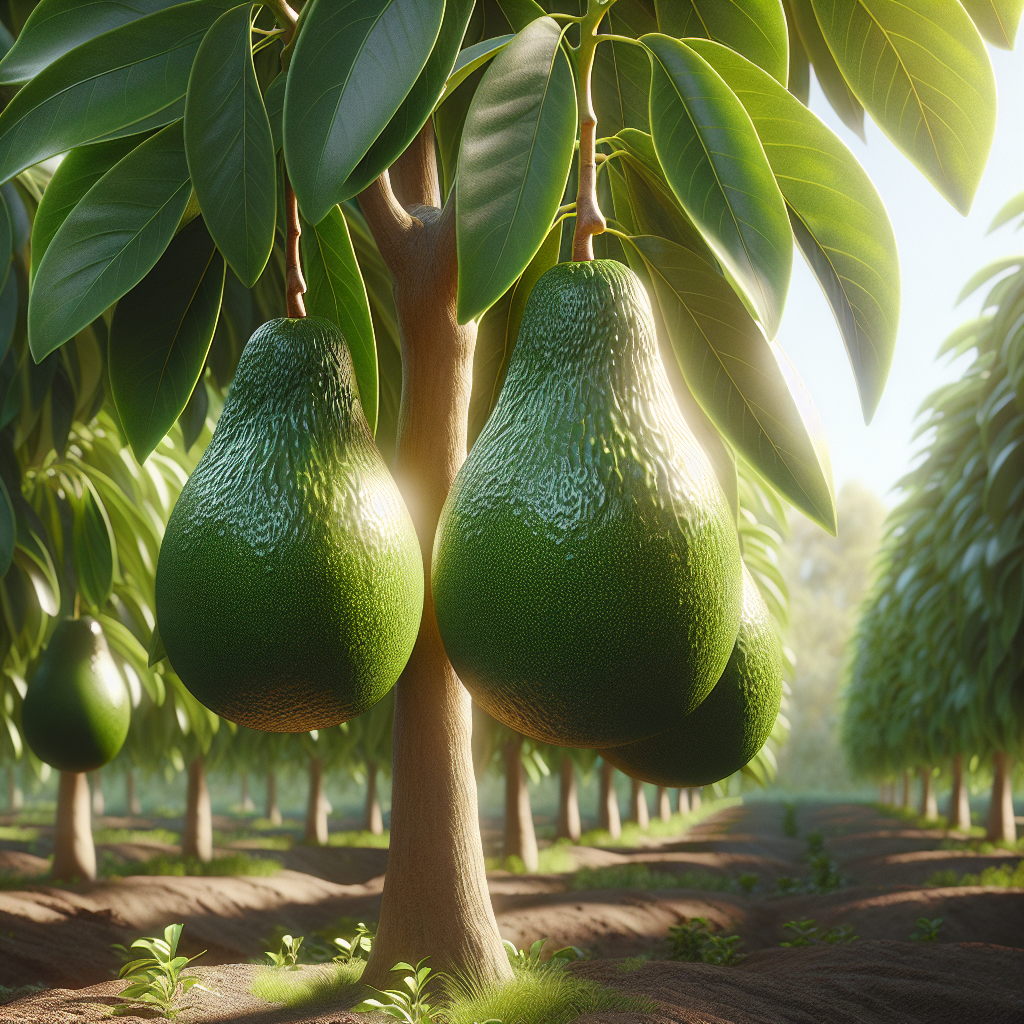
Introduction to Fuerte Avocado
The Fuerte Avocado (Persea americana 'Fuerte') stands as one of the most beloved avocado varieties worldwide, celebrated for its exceptional flavor profile and versatility in both fresh consumption and culinary applications. Introduced commercially in the 1920s by Californian growers Rudolph Hass and George Cellon, who named it 'Fuerte'—Spanish for 'strong'—due to its robust disease resistance and vigorous growth, this cultivar quickly became a staple in the avocado industry. Unlike the pebbly-skinned Hass Avocado, Fuerte maintains its glossy green skin even at peak ripeness, offering a buttery, less fibrous texture that's perfect for guacamole, salads, and slicing.
Fuerte Avocados typically weigh 7-12 ounces, with a higher oil content (around 18-22%) that contributes to their rich, nutty taste. Historically, Fuerte dominated the U.S. market until the 1970s when Hass overtook it due to longer shelf life and year-round production. Today, it's prized for its seasonal harvest window (fall to spring in subtropical zones) and as a key pollinator for other varieties. Growers value its cold tolerance—surviving brief dips to 26°F (-3°C)—making it suitable for marginally cooler climates than pure tropical avocados. This definitive guide dives into every aspect of Fuerte Avocado cultivation, from propagation to harvest, ensuring maximum productivity and fruit quality.
Botanical Profile & Scientific Classification
Kingdom: Plantae | Order: Laurales | Family: Lauraceae | Genus: Persea | Species: americana | Cultivar: 'Fuerte'
Fuerte Avocado is a perennial evergreen tree belonging to the laurel family, sharing lineage with bay laurel and cinnamon. As a Type B flowering cultivar, it produces flowers that open first as female (receptive to pollen) in the morning, then close and reopen as male (pollen-shedding) in the afternoon—a phenomenon known as 'B flowering type' in avocado botany. This complements Type A varieties like Hass, which peak female in the afternoon, enabling cross-pollination for 20-30% higher yields.
Botanically, Fuerte trees exhibit an upright, somewhat spreading canopy reaching 20-40 feet tall and wide at maturity (10-15 years), with alternate, elliptical leaves 4-10 inches long, glossy dark green above and paler beneath. The fruit is pyriform (pear-shaped), with thin, pliable green skin averaging 1/16-inch thick, creamy white flesh encasing a small, elongated seed. Unique to Fuerte is its alternate bearing tendency—heavy crops one year, lighter the next—mitigated by proper pruning. Root systems are shallow and spreading (80% in top 2 feet of soil), fibrous with few laterals, making them sensitive to compaction and waterlogging. Histologically, the mesocarp (flesh) cells are larger and more vacuolated than in Hass, contributing to superior creaminess.
Ideal Soil, pH, and Climate Requirements
Fuerte Avocado thrives in well-draining, loamy soils rich in organic matter, with pH 6.0-7.0 optimal—slightly acidic to neutral. Avoid heavy clays; test soil and amend with 20-30% aged compost or pine bark fines to achieve 40-60% pore space for aeration. Salinity tolerance is low (EC <1.5 dS/m); phytophthora root rot explodes above pH 7.5 or in sodic soils.
Climate: Subtropical to mild temperate (USDA 9-11). Day temps 68-85°F (20-29°C), nights >55°F (13°C). Frost-sensitive below 28°F (-2°C), but recovers from 24-26°F events with leaf drop. Requires 500-1000 chill hours (below 55°F) for consistent flowering, outperforming tropical types in coastal California or Mediterranean zones. Annual rainfall 40-60 inches, evenly distributed; humidity 50-70% prevents pollen sterility. In hotter climates (>95°F peaks), provide 30-50% shade cloth to avert sunburn on young fruit. See Soil Health Mastery for budget amendments.
Step-by-Step Planting & Propagation
Propagation: Seedlings are not true-to-type (variable traits); graft for clones. Use cleft or whip-and-tongue grafting onto disease-resistant rootstocks like Dusa or VC 801—success rate 85-95%. Air-layering works for mature branches: girdle 1-inch stem, apply rooting hormone (IBA 5000 ppm), wrap in moist sphagnum, root in 8-12 weeks.
Planting Steps:
- Site Prep: Dig 3x3x3 ft hole in full sun (6-8 hrs). Mix native soil 50/50 with compost/perlite.
- Timing: Early spring post-frost or fall in mild climates.
- Planting: Set grafted sapling (3-5 ft) 1-2 inches above graft union. Space 15-20 ft apart (20x20 ft for dwarfs). Stake loosely.
- Mulch: 4-6 inches organic mulch (not touching trunk) to 6 ft diameter, retaining moisture.
- Initial Water: Deep soak to 2 ft depth, then weekly.
Care & Maintenance (Specific Watering, Pruning, Fertilizing regimes)
Watering: Critical first 3 years—1-2 inches/week, maintaining 60-70% field capacity (soil crumbles, not muddy). Use tensionometers: irrigate at -10 to -20 cb. Mature trees: 40-60 gal/week/tree in summer, deficit irrigate (ETc x 0.8) to boost oil. Overwatering signs: yellowing leaves, root rot (black mushy roots); underwater: wilting, leaf curl. Drip emitters at drip line.
Pruning: Annual winter structural prune: thin canopy to vase shape, remove 20% crossing/dead wood. Post-harvest, tip-prune to promote flowering. Avoid summer topping—delays fruit set.
Fertilizing: Split 3-4 apps/year. Young trees: 1 lb 6-6-6 + minors (Zn, Fe) per year age. Mature: 1-2 lbs N/tree/year (e.g., 16-4-8). Foliar Zn (chelate, 2 oz/100 gal) monthly Feb-May. Soil test annually; excess N causes vegetative vigor, poor fruit.
Pests, Diseases & Organic Management Strategies
Pests: Avocado thrips (scarrin on fruit)—neem oil + spinosad sprays at petal fall. Persea mite: predatory mites (Neoseiulus californicus), sulfur burns avoided. Root weevils: beneficial nematodes (Heterorhabditis). June drop beetles: kaolin clay barrier.
Diseases: Phytophthora cinnamomi root rot—prevent with raised beds, phosphite drenches (4 gal/acre monthly). Anthracnose: copper fungicide at 50% bloom. Verticillium wilt: resistant rootstocks only.
Organic: Mulch suppresses weeds/pathogens; compost teas boost microbes. BT for Loopers, garlic/chili sprays for Aphids.
Harvesting, Curing & Optimal Storage
Harvest when 25-30% dry matter (flesh firm, 1.1-1.15 specific gravity). Dry-pick at 3-4 inches diameter to avoid stem-end rot; clip with secateurs. Mature green: store 4-6 weeks at 45-48°F (7-9°C), 85-90% RH. Ripen at 60-65°F with ethylene (apple bag) in 5-10 days. Yields: 200-400 lbs/tree at 10 years. Cure cuts with wax.
Companion Planting & Intercropping
Pair Fuerte (Type B) with Hass (Type A) for pollination boost. Nitrogen-fixers like pigeon pea or moringa understory add fertility without competition. Marigolds repel nematodes; nasturtiums trap Aphids. Avoid shallow-rooted brassicas (cabbage) that steal water. Intercrop young groves with annuals (beans, squash) first 3 years for income. See Fall Companion Planting Guide for seasonal tips.