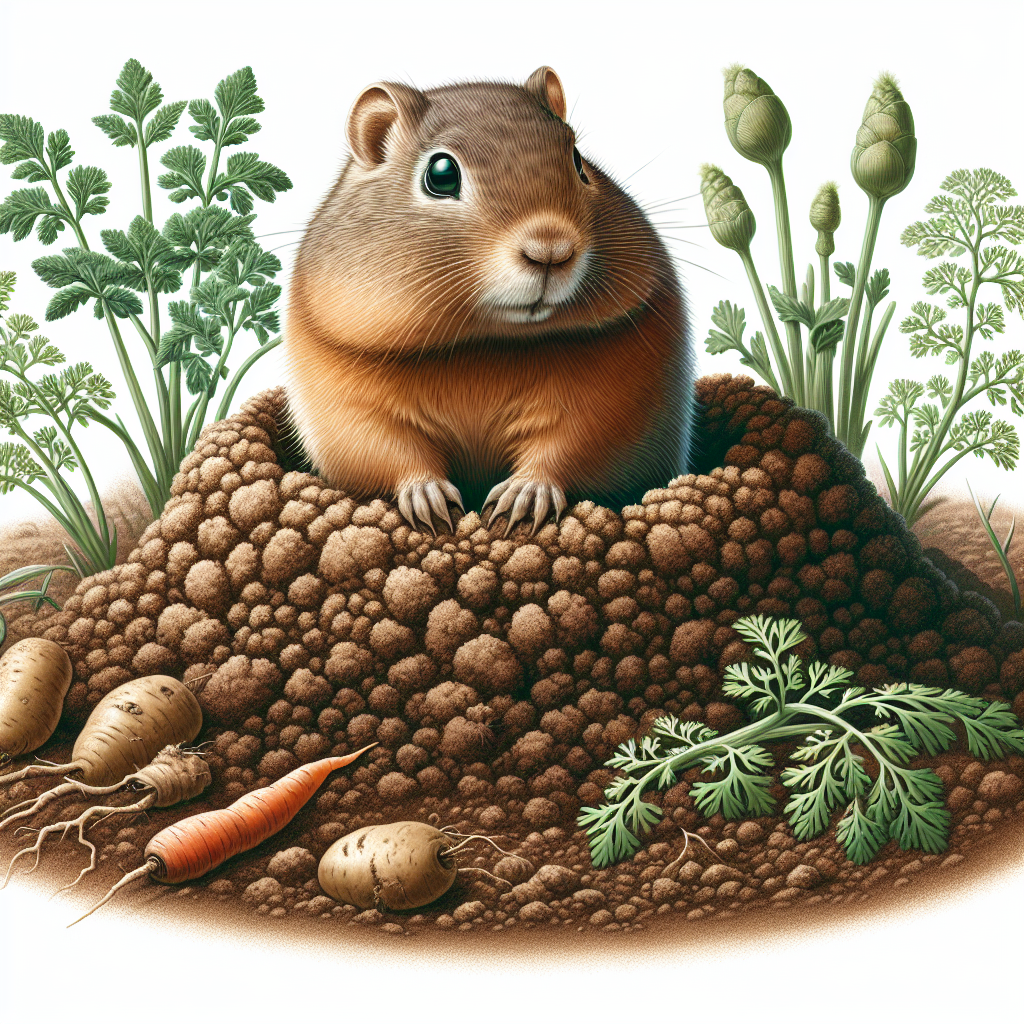
Introduction to gophers
Gophers, often called pocket gophers due to their external cheek pouches for food transport, represent a significant threat to agricultural productivity worldwide. Belonging primarily to genera like Thomomys (western pocket gophers) and Geomys (eastern pocket gophers), these solitary rodents excavate extensive tunnel networks, consuming plant roots and stems while displacing soil in mounds that smother crops. In farming contexts, gophers cause billions in annual losses by undermining irrigation systems, devouring tubers, and girdling tree roots, particularly in orchards and vegetable fields. Effective management hinges on understanding their biology and deploying integrated strategies that balance control with environmental stewardship. This comprehensive guide equips agricultural professionals with diagnostic tools, lifecycle knowledge, organic treatments, and prevention protocols to safeguard yields. For small farms, early detection via Rodents monitoring can prevent escalation, while proactive measures like habitat modification reduce infestation risks.
Identifying Symptoms & Damage
Spotting gopher activity early is crucial for minimizing crop losses. The hallmark sign is fresh, fan-shaped dirt mounds, typically 12-18 inches wide with no visible entry hole, as gophers plug tunnels to avoid predators. Crescent-shaped mounds indicate Thomomys species, while larger, kidney-shaped ones suggest Geomys. Look for sunken vegetation rows where roots have been severed, yellowing or wilting plants without obvious above-ground chewing, and ridges of pushed-up soil along tunnel paths.
Damage manifests differently across crops: in root vegetables like potato fields, tubers disappear entirely, leaving cavities; orchard trees such as avocado suffer girdling at the root crown, leading to canopy dieback; vines like grapes collapse as lateral roots are consumed. Irrigated fields show disrupted water flow from chewed lines. Probe suspect areas with a gopher probe (a metal rod) 6-12 inches from mounds—if it drops into a tunnel 4-8 inches deep, confirm infestation. Differentiate from moles by mound shape and presence of plant debris in gopher ejecta. Use trail cameras for nocturnal confirmation, as gophers are active day and night but solitary. Severe infestations can destroy 20-50% of root mass in affected areas, stunting growth and reducing yields by up to 30% in row crops.
Lifecycle and Progression of gophers
Pocket gophers exhibit a rapid reproductive cycle that amplifies population pressures on farms. Adults measure 6-12 inches long, weigh 4-14 ounces, with coarse brown fur, small eyes, and prominent incisors for digging. Breeding peaks in late winter to spring, with females producing 1-3 litters annually of 3-5 young each after a 19-day gestation. Pups are born hairless, eyes closed, maturing in 30-40 days and dispersing to establish territories by summer.
Lifespan averages 1-3 years in the wild, with high juvenile mortality from predators like owls, snakes, and raccoons. Progression involves constant tunnel expansion: main burrows (4-6 inches diameter) reach 200-600 feet, lateral feeders probe for roots, and chambers store food or nest. Peak activity occurs dawn/dusk, with mound-building signaling feeding forays. Populations explode in favorable conditions, reaching 1 gopher per acre in marginal habitats to 20-60 per acre in prime farmlands. Overwintering adults deepen tunnels, emerging in spring to breed. Monitoring population progression via mound counts (over 50 new mounds/acre indicates heavy infestation) informs timely interventions. Seasonal migration into new fields occurs post-harvest, exploiting disturbed soil.
Environmental Triggers & Risk Factors
Gophers thrive in loose, well-drained soils like sandy loams ideal for carrot, sweet potato, and alfalfa fields, avoiding heavy clays or waterlogged areas. Triggers include recent tillage exposing roots, over-irrigation softening soil for digging, and abundant vegetation like legumes or orchards providing food. Risk factors encompass field edges adjacent to uncultivated areas, weedy fencerows, or native grasslands serving as source populations. Drought-stressed crops with shallow roots are prime targets, as gophers follow moisture lines.
Climate plays a role: mild winters in California and the Midwest boost breeding, while arid Southwest sees booms after rains. Overgrazing or fallowing invites invasion, as does reduced predator presence from habitat fragmentation. High-risk zones include the Great Plains for Geomys, Pacific states for Thomomys, and orchards nationwide. Companion crops like clover attract gophers, exacerbating spread. Assess risks via soil type mapping and historical mound data; fields with prior infestations face 70% reinvasion without barriers.
Organic Control & Treatment Plans
Organic management prioritizes exclusion, repulsion, and biological controls over lethal methods. Exclusion: Install 1/4-inch hardware cloth or galvanized mesh buried 24-36 inches deep around field perimeters, tree bases, or raised beds. Gopher baskets protect orchard saplings like Hass Avocado. Trapping: Use cinch or box traps baited with carrot chunks, peanut butter, or alfalfa in active tunnels—probe, place two traps per tunnel, check daily. Success rates hit 80% with persistence over 2-4 weeks.
Repellents: Castor oil-based granulars (1 lb/1,000 sq ft) or chili-garlic sprays deter feeding; reapply post-rain. Plant deterrents like garlic, onion, nasturtium, or gopher spurge (Euphorbia lathyris) around borders. Biologicals: Encourage predators via owl boxes, kestrel poles, or barn owl nesting. Flood tunnels with water or carbon monoxide via specialized devices (EPA-approved organic). Fumigation: Limited to organic-approved smoke bombs in sealed systems. Integrated plans combine methods: trap during breeding peaks, maintain repellents, and monitor weekly. For large fields, hire certified applicators. Check Spring Pest Patrol: Organic AI Strategies to Shield Your Crops from Common Invaders for tech-enhanced scouting. Expect 60-90% reduction with consistent effort, avoiding rodenticides to preserve soil insects and non-targets.
Preventing gophers in the Future
Long-term prevention focuses on habitat denial and population suppression. Maintain weed-free borders with mowing or cover crops like rye to eliminate food/cover. Erect permanent fencing: 36-inch above/24-inch below ground, angled outward. Vibrating stakes or ultrasonic devices disrupt tunneling, though efficacy varies (30-50%). Rotate crops away from high-risk root veggies, interplanting repellents. Promote biodiversity with predator perches and yarrow hedgerows attracting beneficials.
Soil compaction via rolling reduces burrow viability. Annual audits using probe grids detect low-level activity before mound proliferation. In orchards, trunk guards and deep mulching deter probes. Community efforts like buffer zones between farms curb migration. Monitor via apps tracking mound density thresholds (5/acre triggers action). Sustainable prevention yields 90% efficacy, integrating with IPM for resilient systems. For zoning strategies, see Why Zoning Your Small Farm Chaos into Profit Zones Feels Impossible - And How AI Changes Everything.
Crops Most Affected by gophers
Gophers target root-heavy crops, inflicting severe damage in orchards, vegetables, and forages. Alfalfa and clover suffer 20-50% stand loss from root pruning. Legumes like peas, chickpeas, and lentils see high mortality in early growth. Root crops including potato, carrot, beet, onion, garlic, radish, sweet potato, and cassava are devoured wholesale.
Orchards bear heavy tolls: avocado, almond, walnut, pecan, citrus (roots girdled, trees toppled), apple, peach, cherry, grapes, strawberry, blueberry. Field crops like corn, wheat, soybeans, sunflower, and sugarcane face root/stem damage. Forages (hay, silage) lose tonnage. In high-value settings, Hass Avocado and potato fields warrant priority protection. Yields drop 10-100% untreated; e.g., 30% in almonds, 50% in carrots.