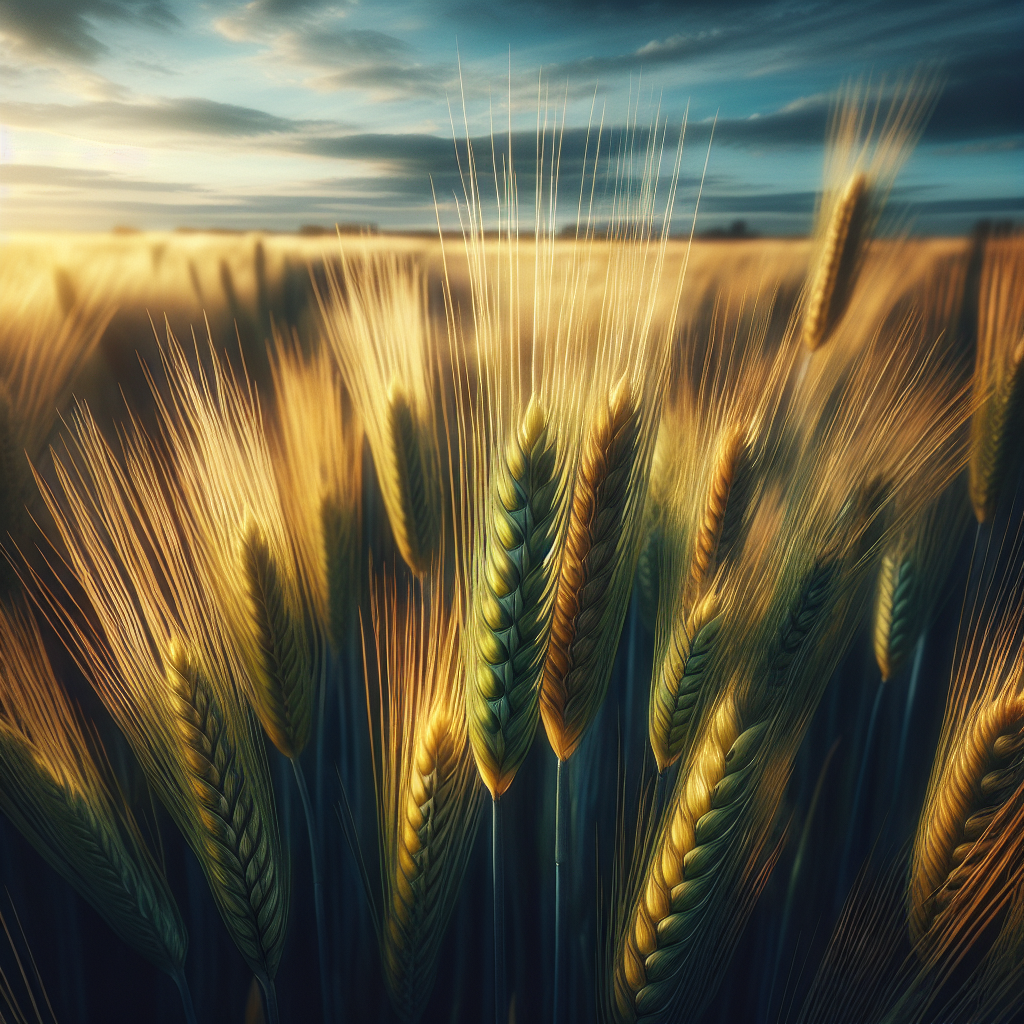
Introduction to Rye
One of the oldest cultivated cereal grains, rye has long been associated with harsh winters, marginal soils, and resilient farming systems. Originating from western Asia and surrounding regions before spreading deeply into Central and Eastern Europe, it became especially important where wheat performed poorly. That historical role still defines its agronomic value today: rye is the grain many growers turn to when cold, droughty, sandy, acidic, or low-fertility fields would limit more demanding cereals.
Rye is grown as a grain, forage, silage crop, grazing crop, and green manure. In commercial agriculture it is also prized as a winter cover crop because it establishes quickly, scavenges residual nitrogen, suppresses weeds through competition and allelopathic effects, and produces abundant biomass. Grain rye is used for bread, whiskey, crispbreads, malt, livestock feed, and specialty whole-grain markets. Compared with wheat, rye generally tolerates poorer conditions, though grain quality and yield ceilings are usually lower under ideal conditions.
For growers, the key to success is understanding that rye rewards timely planting, moderate fertility, good stand establishment, and careful nitrogen management. Push it too hard with lush fertility and lodging becomes a problem; neglect stand timing and winter establishment suffers. Because it matures relatively early and has an aggressive root system, it also fits well into rotations where soil structure, erosion control, and nutrient capture matter.
Botanical Profile of Rye
Rye belongs to the grass family, Poaceae, and is a close relative of wheat, barley, and triticale. The cultivated species Secale cereale is typically an annual, though its physiology is strongly shaped by whether the cultivar is winter or spring type. Winter rye requires vernalization, meaning exposure to cold to trigger normal reproductive development, while spring rye can complete its life cycle without prolonged chilling.
Plants produce fibrous, deep-penetrating roots that often explore soil more aggressively than many other cereals. This robust root architecture explains rye's relative tolerance of drought, nutrient-poor ground, and compacted subsoil layers compared with less rugged grains. Seedlings emerge with narrow leaves and quickly begin tillering when moisture and temperatures are favorable. Tillers are side shoots arising from the crown; more productive tillers often translate into more grain heads per unit area, provided plant density and nutrition remain balanced.
Mature rye plants usually range from about 3 to 6 feet tall depending on cultivar, fertility, moisture, and whether the crop is grown for grain or forage. Traditional varieties can be notably tall, contributing to straw yield but increasing lodging risk. Modern grain cultivars are often bred for improved standability, disease resistance, and uniform maturity. The inflorescence is a slender spike rather than a branched panicle. Flowering is largely wind-pollinated, and rye is more outcrossing than wheat, which means isolation and varietal purity matter more if seed saving is a goal.
The grain itself is elongated, typically gray-brown to greenish-brown at maturity depending on variety and harvest timing. Rye kernels are rich in fiber, especially arabinoxylans, and have distinctive baking behavior compared with wheat because gluten strength is lower and starch-polysaccharide interactions dominate dough structure. Agronomically, growers should know that open flowering can coincide with susceptibility to Ergot infection if wet conditions persist during bloom.
Soil, pH, and Climate Requirements for Rye
Rye excels in temperate climates with cool establishment periods and moderate spring growing conditions. It is among the most winter-hardy cereal grains and can survive temperatures well below freezing once properly established and hardened off in autumn. It performs best where fall growth allows the crop to develop 3 to 5 leaves and several tillers before deep winter dormancy. Seedlings that enter winter too small are more vulnerable to heaving, desiccation, and stand thinning.
The crop is famous for tolerating sandy, gravelly, acidic, and relatively infertile soils, but tolerance should not be mistaken for indifference. For profitable grain yields, rye still benefits from well-drained soils with moderate moisture-holding capacity and good tilth. Ideal textures range from sandy loam to loam, though rye can outperform other cereals on lighter soils. Heavy clay can work if drainage is excellent, but persistent saturation suppresses root function, increases winterkill risk, and encourages root diseases.
A practical target soil pH is 5.5 to 7.0, with 6.0 to 6.5 often ideal for nutrient availability and microbial activity. Rye tolerates acidity better than wheat or barley and can still produce under pH values near 5.0, but phosphorus availability drops in more acidic conditions and aluminum toxicity may become limiting in strongly acid soils. If lime is needed, apply well ahead of planting so the material has time to react. In low-input systems, rye is often chosen specifically because it remains functional where liming budgets are limited.
Moisture requirements are moderate. Rye can establish on less rainfall than many cereals, but consistent soil moisture is still important during germination, tillering, stem elongation, heading, and grain fill. Germination is best when the seed zone is evenly moist but not waterlogged. Field capacity in the top 2 to 3 inches of soil is ideal at planting. If a squeezed handful of soil forms a weak ball that crumbles with light pressure, moisture is usually favorable. If water glistens or the soil smears and compacts easily, it is too wet. During grain fill, prolonged drought can reduce kernel size and test weight, while prolonged saturated conditions can reduce root oxygen and predispose the crop to lodging.
Temperature-wise, rye germinates well in cool soils, often starting at around 34 to 40°F (1 to 4°C), though emergence is faster at 50 to 68°F (10 to 20°C). For winter rye, autumn planting should be early enough to allow establishment before hard freezes, but not so early that excessive top growth develops and increases disease or pest exposure. In hot climates, rye is generally less adapted unless grown during a cool-season window.
For a broader framework on building field resilience and fertility, see soil health strategies.
Step-by-Step Planting & Propagation
Rye is propagated almost exclusively by seed. Successful planting begins with field selection. Choose land with good surface drainage, minimal perennial weed pressure, and a rotation that avoids following another small grain too frequently when disease pressure is high. Rye can follow row crops, vegetables, legumes, or fallow, and it is especially useful after nitrogen-rich crops where it can capture residual nutrients.
Start with a soil test. Even though rye is forgiving, a test will determine whether phosphorus, potassium, sulfur, or lime are needed. Correct major deficiencies before seeding. If manure is used, incorporate it cautiously and account for nitrogen release, especially in systems where lodging has been a recurring problem.
Prepare a fine, firm seedbed if drilling into conventional tillage. The goal is not powdery soil but a level, settled surface that allows good seed-to-soil contact and uniform depth. In reduced-till or no-till systems, rye often establishes very well provided residue distribution is even and the drill can place seed consistently.
Use high-quality, cleaned, disease-free seed with strong germination. Seed treatments may be used in conventional systems where smuts or seedling diseases are a concern, but in organic production the emphasis should be on clean seed lots, rotation, and good drainage. Seeding rate depends on purpose:
- For grain production: commonly 55 to 90 pounds per acre, adjusted for seed size, planting date, and expected tillering.
- For late-planted grain: increase the rate because cooler conditions reduce tiller formation.
- For cover cropping or weed suppression: often 70 to 120 pounds per acre or more, depending on biomass goals.
- For forage: rates may be similar to or slightly higher than grain rates to encourage dense stands.
Plant winter rye roughly 4 to 8 weeks before the average first hard freeze in your area. Spring rye should be planted as early as the soil can be worked in spring, because cool conditions favor tillering and reproductive development. Drill seed 1 to 1.5 inches deep in most soils. In very light, dry soils, depth can be increased to 2 inches to reach moisture, but avoid planting too deeply into cold conditions because emergence becomes slower and less uniform. Broadcast seeding is possible, especially for cover crops, but requires a higher seed rate and preferably light incorporation or rolling to improve contact.
Aim for row spacing of 6 to 8 inches for grain. Narrow spacing improves canopy closure and weed suppression. Wider rows may be used in low-input or intercropped systems, but weed pressure usually rises as row spacing increases. After planting, check emergence within 7 to 14 days depending on temperature. A healthy stand should show uniform green rows, firmly anchored seedlings, and minimal gaps.
Care & Maintenance regimes for Rye
Once established, rye is relatively low-maintenance, but professional management makes a large difference in yield, grain quality, and standability. Fertility is the first major lever. Rye responds well to nitrogen, but it also lodges readily when overfertilized, especially on fertile soils, after manure, or in wet springs. Total nitrogen needs vary by soil type, expected yield, previous crop, and whether the crop is for grain or forage. A modest to moderate program is often sufficient. In many grain systems, around 40 to 100 pounds of actual nitrogen per acre is adequate, with lower rates on fertile fields following legumes and higher rates on sandy, low-organic-matter soils.
For winter rye, avoid very heavy fall nitrogen unless the purpose is grazing or biomass. Excessive autumn nitrogen can create lush growth that is more vulnerable to winter injury and disease. A common approach is a small starter amount at planting if needed, followed by a topdress in late winter or early spring at green-up. Split applications reduce leaching risk on sandy soils and help align nitrogen with demand. If the crop becomes excessively dark green, rank, and tall early in stem elongation, nitrogen may already be too high.
Phosphorus and potassium should be guided by soil test results. Phosphorus supports early root development and winter survival; potassium improves water regulation and lodging resistance. Sulfur may be needed in coarse-textured or low-organic-matter soils, especially where atmospheric sulfur deposition is low.
Water management is usually less intensive than for many other crops because rye is often rainfed, but moisture monitoring is still important. During establishment, the top 1.5 inches of soil should stay evenly moist until roots penetrate deeper. If irrigating, apply enough water to moisten the seed zone without sealing the surface. Once tillering begins, allow the upper soil to dry slightly between irrigations while maintaining subsoil moisture. In practical terms, avoid frequent shallow irrigation; it encourages weak, surface-rooted growth. Instead, irrigate deeply enough to wet the active root zone, then wait until the top few inches begin drying before watering again. Signs of under-watering include bluish-green foliage, reduced tillering, leaf rolling under heat or wind, and shortened plants. Signs of overwatering include yellowing lower leaves despite adequate fertility, soft lush growth, shallow rooting, a sour or anaerobic soil smell, and easy plant lodging after wind.
Weed management is one of rye's strengths. A vigorous stand suppresses many annual weeds through quick canopy formation and competition for light and nitrogen. However, the crop is not immune, particularly if planted late or thin. Control perennial weeds before establishment. In organic systems, stale seedbed techniques, timely drilling, and rotation are essential. As a cover crop, rye is famous for biomass-driven weed suppression and residue mulching effects.
Monitor lodging risk from jointing onward. Lodging is promoted by excessive nitrogen, dense stands, wind exposure, heavy rain, and tall cultivars. If grain production is the goal, choose shorter-strawed or standable varieties in high-fertility fields. Balanced potassium nutrition and moderate seeding rates also help.
Pests, Diseases & Organic Management
Rye generally suffers fewer severe pest issues than some cereals, but several problems deserve close attention. The most economically important disease risk in grain rye is often Ergot, caused by Claviceps purpurea. Because rye is open-pollinated and flowers over a period of time, cool wet weather during bloom can favor infection. Ergot bodies replace kernels and contain toxic alkaloids dangerous to humans and livestock. Management relies on clean seed, crop rotation, controlling grassy weeds that host the pathogen, avoiding repeated rye after rye, and selecting less-susceptible cultivars where available. Harvest and grain cleaning are critical to reduce contamination.
Rusts, Powdery Mildew, Septoria, Fusarium Head Blight, and Leaf Blotches can also occur depending on climate and rotation. Dense, overfertilized canopies tend to increase humidity and disease pressure. Organic management centers on variety selection, air movement, balanced fertility, and rotation away from cereals. Fusarium risk rises in wet flowering and grain-fill periods, especially where corn residue is present.
Seedling Blights and Root Rots are more likely in poorly drained or compacted soils. The best prevention is rapid emergence in a well-prepared seedbed, crop rotation, and avoiding planting into cold saturated ground. Snow Mold may affect lush early-seeded winter stands under prolonged snow cover.
Insect pressure varies by region. Aphids can colonize rye and transmit Barley Yellow Dwarf Virus. Hessian Fly, Armyworms, Wireworms, and Cereal Leaf Beetles may also be relevant. Organic control begins with scouting. Check lower leaves, stems, and heads weekly during vulnerable stages. Encourage beneficial insects with diverse field margins, avoid unnecessary broad-spectrum sprays in neighboring crops, and use rotation to interrupt life cycles. Timely planting matters: extremely early fall planting can increase exposure to Aphids and fly pests.
Birds may feed on newly seeded fields or ripening heads, though damage is often localized. Rodents sometimes use dense winter rye cover as habitat. Good field sanitation, predator habitat, and avoiding excessive unmanaged borders can reduce problems. For integrated cereal systems, lessons from other grains can be useful; see our Barley guide.
Harvesting, Curing & Optimal Storage
Harvest timing depends on end use. For forage or grazing, rye may be used from vegetative growth through boot stage, though feed quality drops as stems elongate and heads emerge. For silage, many growers target boot to early heading for a balance between yield and digestibility. For grain, harvest when kernels reach full maturity and moisture declines to a safe level.
A mature grain crop turns from green to golden-brown, stems dry down, and kernels become hard and difficult to dent with a fingernail. Direct combining usually works well when grain moisture falls to about 13 to 15 percent. Rye can shatter less readily than some cereals, but delayed harvest increases risk of weathering, sprouting in wet conditions, lodging, and Ergot contamination issues becoming harder to manage. Because rye straw can remain tough even when grain is ready, combine settings should be adjusted carefully to avoid cracked grain or excessive unthreshed heads.
If harvesting above safe storage moisture, dry the grain promptly. For long-term storage, target about 12 to 13 percent moisture; for very long storage in warm climates, even slightly lower may be safer. Use unheated or low-heat aeration where possible to preserve quality. Grain stored too wet may develop heating, mold, insect infestation, off odors, and reduced germination if intended for seed. A musty smell, caking, or condensation under bin roofs are warning signs requiring immediate aeration or unloading.
Clean grain before storage if Ergot bodies, chaff, weed seeds, or broken kernels are present. Cleaning improves airflow and reduces hotspots. Store in clean, dry bins protected from rodents and insects. Monitor temperature and moisture regularly, especially during the first 6 to 8 weeks after binning. Cooling the grain mass as outdoor temperatures fall greatly improves shelf life.
Straw quality is another consideration. Rye straw can be used for bedding, mulching, thatching, or erosion control. Bale only when fully dry to prevent heating and mold. If the crop is terminated earlier as a cover crop rather than taken to grain, many growers crimp or mow at anthesis for maximum mulch persistence.
Companion Planting for Rye
In broadacre agriculture, companion planting with rye usually takes the form of intercropping, undersowing, nurse cropping, or rotational pairing rather than close mixed-species garden-style planting. Rye is especially valuable as a companion or preceding crop because of its fast establishment, winter soil cover, and weed suppression.
One classic use is pairing rye with legumes. Hairy vetch, crimson clover, field peas, or winter peas can be sown with or after rye depending on climate and management goals. In these combinations, rye provides structural support, rapid soil coverage, and nitrogen scavenging, while the legume contributes biologically fixed nitrogen and often improves subsequent crop fertility. The balance matters: if rye dominates too strongly, it can suppress the legume, so seeding ratios should be adjusted according to the main goal, whether forage, mulch, or soil improvement.
Rye also works well as a nurse crop for establishing slower species, helping protect the soil from erosion and reducing winter weed flushes. In vegetable systems, a rye cover grown before spring-planted crops can smother weeds and add organic matter, though growers must manage residue carefully because rye allelopathy can inhibit small-seeded crops if planting follows too quickly. Waiting 2 to 3 weeks after termination, using transplants, or strip-tilling into residue can reduce that issue.
For forage systems, rye mixed with winter annual legumes can improve both tonnage and feed value. For pollinator-conscious farms, combine rye rotations with flowering field borders rather than relying on rye itself, since wind-pollinated cereals offer little nectar value. In grain rotations, rye is an excellent predecessor to soybeans, corn under some systems, potatoes, and many vegetables because it leaves the soil covered, scavenges nutrients, and can break certain pest cycles. The best companions are therefore not always simultaneous companions, but crops that benefit from rye's ability to protect and biologically organize the field between cash-crop windows.
Used intelligently, rye is more than a grain; it is a structural crop in the whole farm system, improving resilience, protecting soil, and filling seasonal gaps where many other species fail.