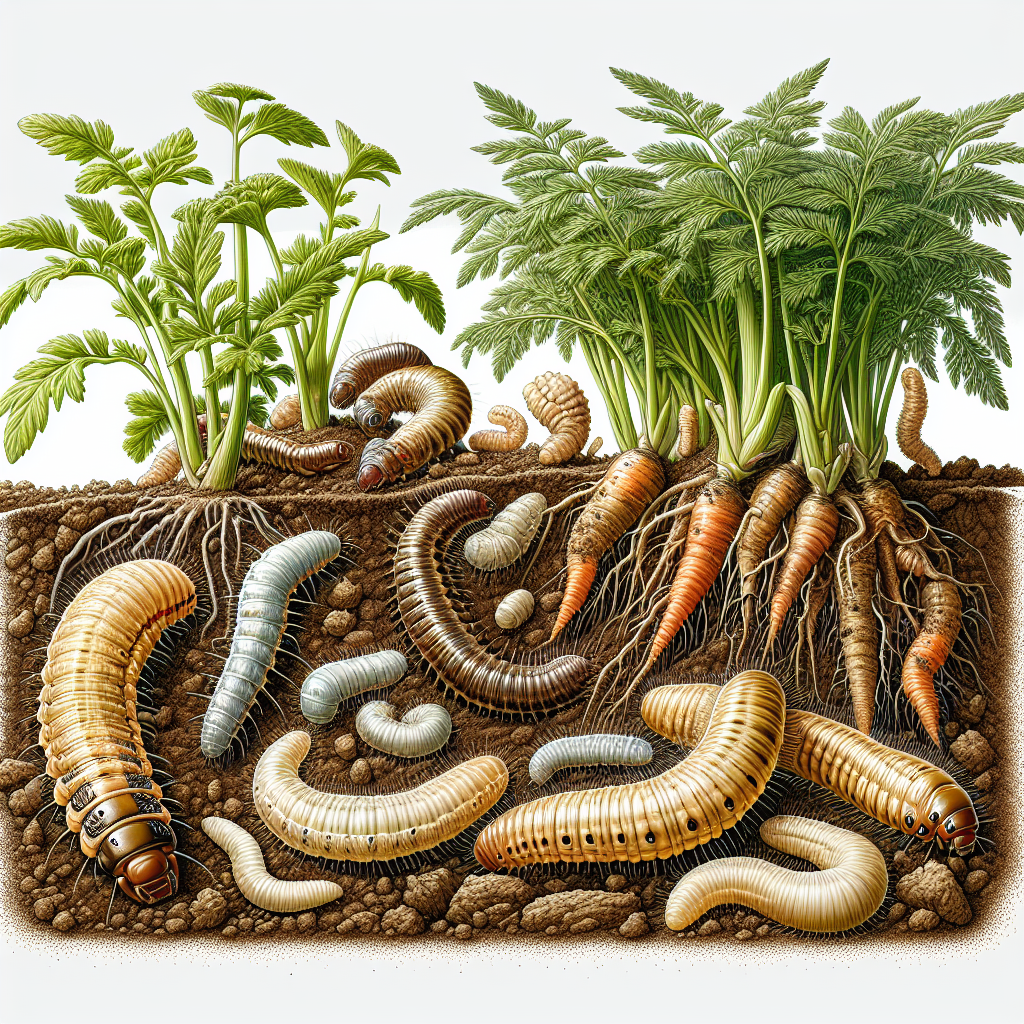
Introduction to soil insects
Soil insects represent a broad category of subterranean pests that inhabit the top 12-18 inches of soil, targeting plant roots, seeds, and underground stems. Common culprits include wireworms (click beetle larvae), white grubs (scarab beetle larvae like Japanese beetle grubs), cutworms (noctuid moth larvae), root maggots (e.g., cabbage root maggot, Delia radicum), fungus gnat larvae, and billbugs. These pests thrive in moist, organic-rich soils and can cause significant yield losses in agriculture, affecting everything from vegetable gardens to large-scale row crops.
Unlike foliar pests, soil insects are hidden from view, making early detection challenging. They feed on germinating seeds, tender roots, and tubers, leading to poor establishment, wilting, and plant death. In severe infestations, populations can explode, with densities exceeding 100 insects per square foot. Annual global crop losses from soil insects are estimated in billions, particularly in potato, corn, and carrot production. Understanding their biology is crucial for integrated pest management (IPM), combining monitoring, cultural controls, and biological agents to minimize chemical use. This guide equips growers with professional diagnostics and organic strategies to protect root systems effectively.
Identifying Symptoms & Damage
Diagnosing soil insect damage requires keen observation of above- and below-ground signs. Common symptoms include:
- Seedling stand reduction: Gaps in rows where seeds fail to germinate or seedlings disappear overnight (classic cutworm or seedcorn maggot activity).
- Wilting and stunting: Plants yellow, lean sideways, or collapse despite adequate water, indicating root pruning by wireworms or grubs.
- Root feeding scars: Excavate roots to reveal tunnels, notches, or missing sections. Wireworms leave clean, cylindrical holes; grubs chew irregular patches.
- Sudden plant death: Seedlings cut off at soil line (cutworms) or roots honeycombed (root maggots).
- Tubers and bulbs damaged: Potato tubers riddled with holes, carrots forked or scarred.
- Secondary issues: Wilting plants often coincide with root rot or root-knot nematodes, complicating diagnosis.
Diagnostic tips:
- Dig bait stations: Bury carrot or potato slices 4-6 inches deep for 3-5 days, then inspect for chew marks.
- Soil sampling: Use a soil probe to extract cores; float larvae in salt water for identification.
- Night scouting: Cutworms surface after dark—use a flashlight to spot greasy, spotted larvae.
- Sticky traps or shake sheets: For fungus gnats emerging from soil.
Differentiate from diseases like Pythium (mushy roots, no chew marks) or drought (uniform wilting). Professional labs can confirm via microscopy if needed.
Lifecycle and Progression of soil insects
Soil insects exhibit complete metamorphosis (egg-larva-pupa-adult), with soil-dwelling larval stages lasting 1-5 years depending on species.
- Wireworms (Agriotes spp.): Eggs laid in soil, larvae (wire-like, golden-brown) feed 2-6 years, pupate in summer, adults (click beetles) emerge to lay eggs.
- White grubs (Phyllophaga spp.): Eggs hatch in 2 weeks, C-shaped larvae feed on roots 1-4 years, peak damage in 2nd/3rd instar.
- Cutworms (e.g., Agrotis ipsilon): Eggs on foliage/soil, larvae nocturnal, pupate in soil after 4-6 weeks; multiple generations/year.
- Root maggots (Delia spp.): Eggs near plant base, maggots tunnel roots 2-4 weeks, pupate in soil.
- Fungus gnats (Bradysia spp.): Eggs in moist media, tiny maggots feed 1-3 weeks, rapid cycles in greenhouses.
Progression: Damage peaks during larval feeding (spring-fall), influenced by soil temperature (optimal 60-75°F). Adults are short-lived but mobile, spreading via flight or tillage. Overwinter as large larvae or pupae. Monitoring generational timing via degree-day models predicts peak activity.
Environmental Triggers & Risk Factors
Soil insects flourish under specific conditions:
- High organic matter/moisture: No-till fields, mulched beds retain larvae (e.g., grubs love turfgrass residues).
- Cool, compacted soils: Wireworms persist in pastures converted to crops.
- Previous hosts: Grubs from turf or corn residues attack new plantings.
- Poor drainage: Fungus gnats explode in overwatered pots.
- Weeds/grass: Cutworms hide in weedy patches.
Risk factors include continuous cropping (e.g., potato rotations), reduced tillage, and mild winters. Climate change extends active periods, increasing populations. Read more on Spring Pest Patrol: Organic AI Strategies to Shield Your Crops from Common Invaders for timely interventions.
Organic Control & Treatment Plans
IPM prioritizes non-chemical methods:
Cultural controls:
- Rotate crops: Avoid grass/roots for 2-3 years post-infestation.
- Tillage: Shallow fall plowing exposes larvae to predators/birds.
- Cover crops: Mustard biofumigants suppress nematodes/wireworms.
- Solarization: Clear plastic 4-6 weeks summer kills 80% larvae.
Biological controls:
- Nematodes (Heterorhabditis bacteriophora): Apply to moist soil evenings, targets grubs/cutworms.
- Bt (Bacillus thuringiensis): For surface cutworms.
- Predatory beetles (ground beetles), rove beetles.
Organic treatments:
- Diatomaceous earth: Barrier around stems.
- Neem oil drenches: Repels maggots.
- Spinosad baits: For cutworms.
Treatment plan:
- Scout weekly.
- Threshold: 5-10 larvae/sq ft.
- Apply nematodes + solarize.
- Monitor 4-6 weeks.
Avoid overwatering; encourage natural enemies like birds (wireworms).
Preventing soil insects in the Future
Long-term prevention builds resilient systems:
- Crop rotation: 3-4 year cycles with non-hosts like onion or brassicas.
- Soil health: Add compost for beneficial microbes; Soil Health Mastery: 5 Proven Strategies for Small Farms to Build Fertile Ground Without Breaking the Bank.
- Seed treatments: Organic coatings (e.g., Beauveria bassiana).
- Trap crops: Plant mustard to lure maggots away.
- Mulch strategically: Avoid thick organic mulches; use straw sparingly.
- Resistant varieties: Choose grub-tolerant corn hybrids.
- Sanitation: Remove debris, till residues.
Annual monitoring with bait stations prevents outbreaks. Integrate with companion planting (nasturtium) to deter.
Crops Most Affected by soil insects
Soil insects devastate root/tuber crops:
| Crop | Key Pests | Damage |
|---|---|---|
| Potato | Wireworms, grubs, cutworms | Tuber scarring, stand loss |
| Carrot | Root maggots, wireworms | Forking, unmarketable roots |
| Corn | Corn rootworm, grubs | Lodging, yield drop 30-50% |
| Tomato | Cutworms, root maggots | Seedling death |
| Onion | Maggots, thrips larvae | Bulb damage |
| Turf/Grasses | Billbugs, grubs | Patchy die-off |
Others: Sweet potato, beet, strawberries. Grubs hit broadleaf crops; wireworms cereals.
(Word count: 1452)